
Bitter bolete (bitter tylopilus)
Tylopilus felleus · Boletaceae

The bitter bolete (Tylopilus felleus) is a brown-capped, stout-stemmed bolete that looks very like the porcini (Boletus edulis). Its pores turn pink with age and its stem carries a coarse, dark brown net pattern. It is not poisonous, but it is so bitter that a single mushroom can ruin a whole dish. In Turkey there are GBIF records from Istanbul and one iNaturalist observation.
Also called: bitter tylopilus Turkish: Acı çörek mantarı
Last updated: Prepared by the Poros Mantar editorial team4 sources checkedReport a correction
Bitter bolete photos
-
© mycobel · CC BY 4.0
-

© K.P. · CC BY 4.0
-

Pores© Thomas Dreux · CC BY 4.0
-

Stem© Elena A. Kizilova (Елена А. Кизилова) · CC BY 4.0
-

© Shirley Zundell · CC BY 4.0
-

© Nina Filippova · CC BY 4.0
-

Stem© creaturefeature97 · CC0
-
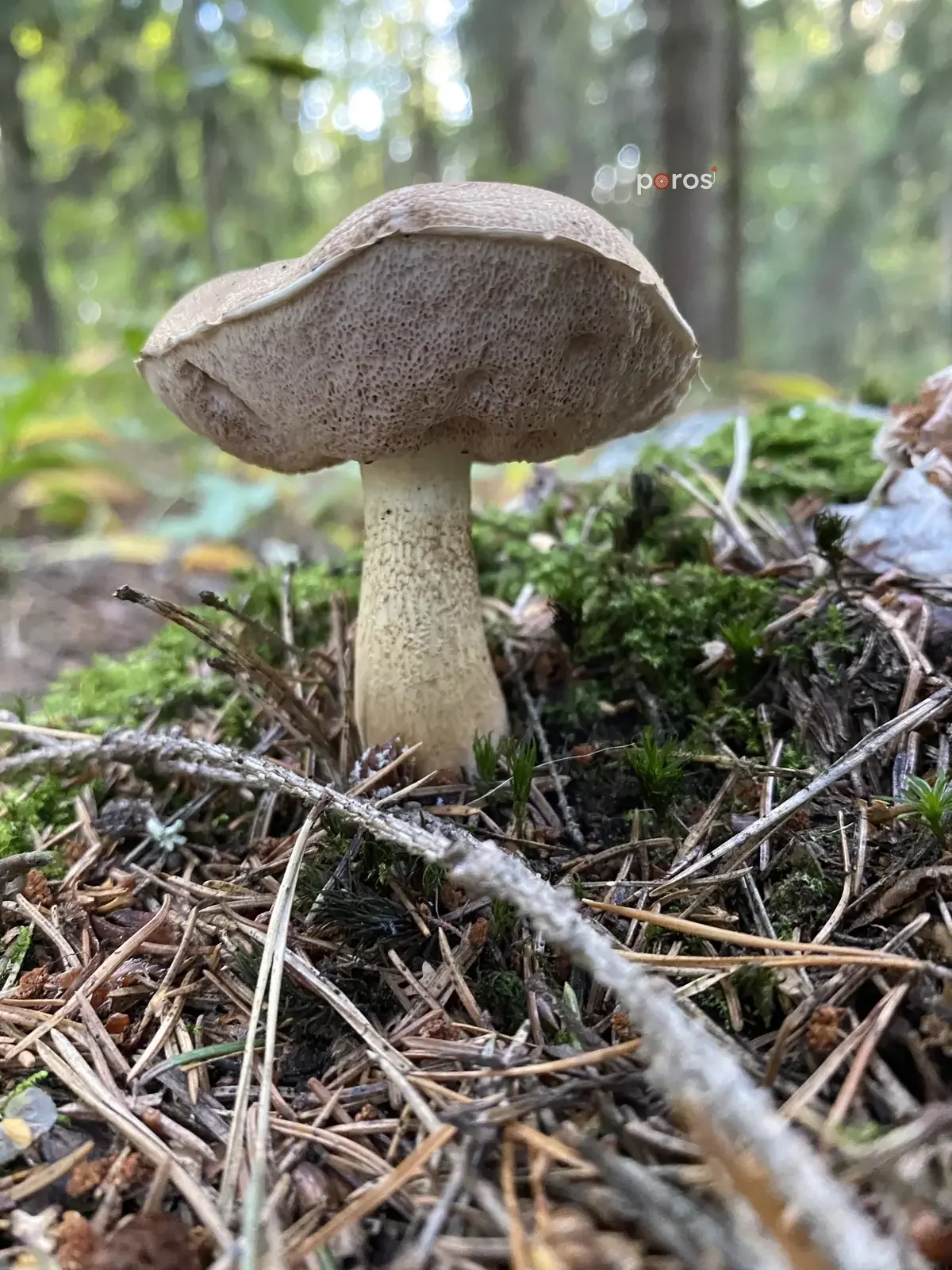
In habitat© Alex Sosnovshchenko · CC BY 4.0
-

Cap© rangersara · CC0
-

Pores© Gonzalo Ganda Álvarez · CC BY 4.0


These are licensed records of this species; photos alone are not enough to identify a mushroom.
Are bitter boletes poisonous?
It is not poisonous, but it is intensely bitter and inedible; large amounts can upset the stomach.
Are bitter boletes edible?
We advise against eating it. The bitter bolete is not poisonous but is inedible because of its intense bitterness; sources report that large amounts can upset the stomach. Its real significance is ending up in porcini pickers' baskets and ruining the meal. Touching a tiny crumb of a doubtful bolete to the tongue and spitting it out at once reveals the bitterness; this only separates these two species by taste and does not detect poisonous ones.
How to recognise it
Appearance of bitter boletes
No ring or volva Spore print: Pinkish brown Pleasant; taste very bitter (detectable by touching a crumb to the tongue and spitting it out).
Where do bitter boletes grow?
Mycorrhizal with conifers (pine, spruce) and broadleaf trees such as beech and oak; grows on acid soil, sometimes at the base of rotting stumps.
Where is bitter boletes found in Turkey?
Our map data holds two GBIF records from Turkey (Istanbul) and one research-grade iNaturalist observation. Its Turkish name on iNaturalist is Acı Çörek Mantarı (bitter porcini).
Which months
- Jan0
- Feb0
- Mar0
- Apr0
- May0
- Jun0
- Jul0
- Aug0
- Sep0
- Oct1
- Nov0
- Dec0
1 provinces, 1 observations (GBIF, iNaturalist); months from observation dates. Record density also reflects where observers work.
Latest bitter bolete observations
Look-alikes
What could it be confused with?
Bitter bolete can be mistaken for the species below. Each comparison shows Bitter bolete on the left, the look-alike on the right, and how to tell them apart.
Take care when foraging: Poisonous look-alikes of Bitter bolete come first. If in doubt, leave it.

Devil's bolete Rubroboletus satanas
How to tell Satan's bolete has red pores, a red-netted stem and flesh that blues when cut; it is poisonous.
Other look-alikes (7)
 Edible species
not Bitter bolete
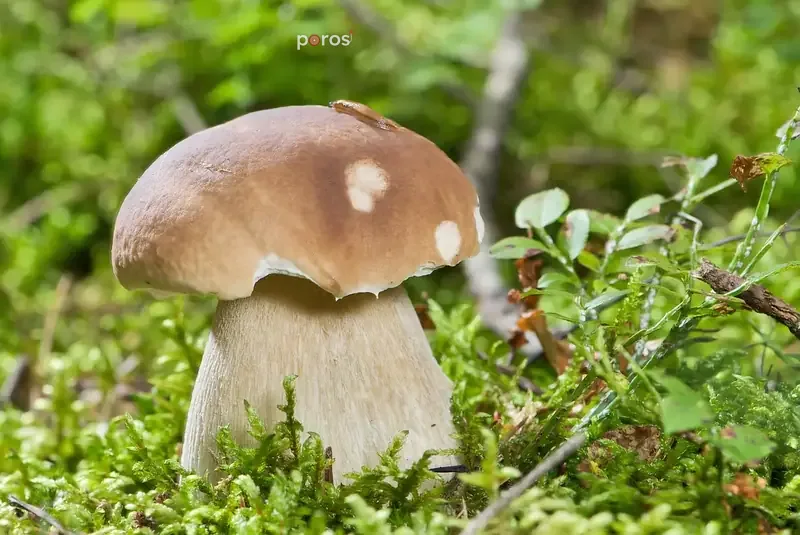
Porcini Boletus edulis
The porcini's pores turn from white to yellow-olive, the net on its stem is fine and whitish, and its taste is mild.
 Edible species
not Bitter bolete
Red-capped scaber stalk Leccinum aurantiacum
Its cap is bright orange to reddish orange and its stem carries scabers that darken to reddish brown or blackish, not a net; its pores are whitish to cream and do not turn pink, and its flesh turns pinkish grey then purplish black when cut.
 Edible species
not Bitter bolete
Bronze bolete Boletus aereus
Its cap is dark bronze to chocolate brown; its pores go from white to yellow and olive-green, never pink; the net on its stem is fine and pale brown, and it tastes mild.
 Edible species
not Bitter bolete
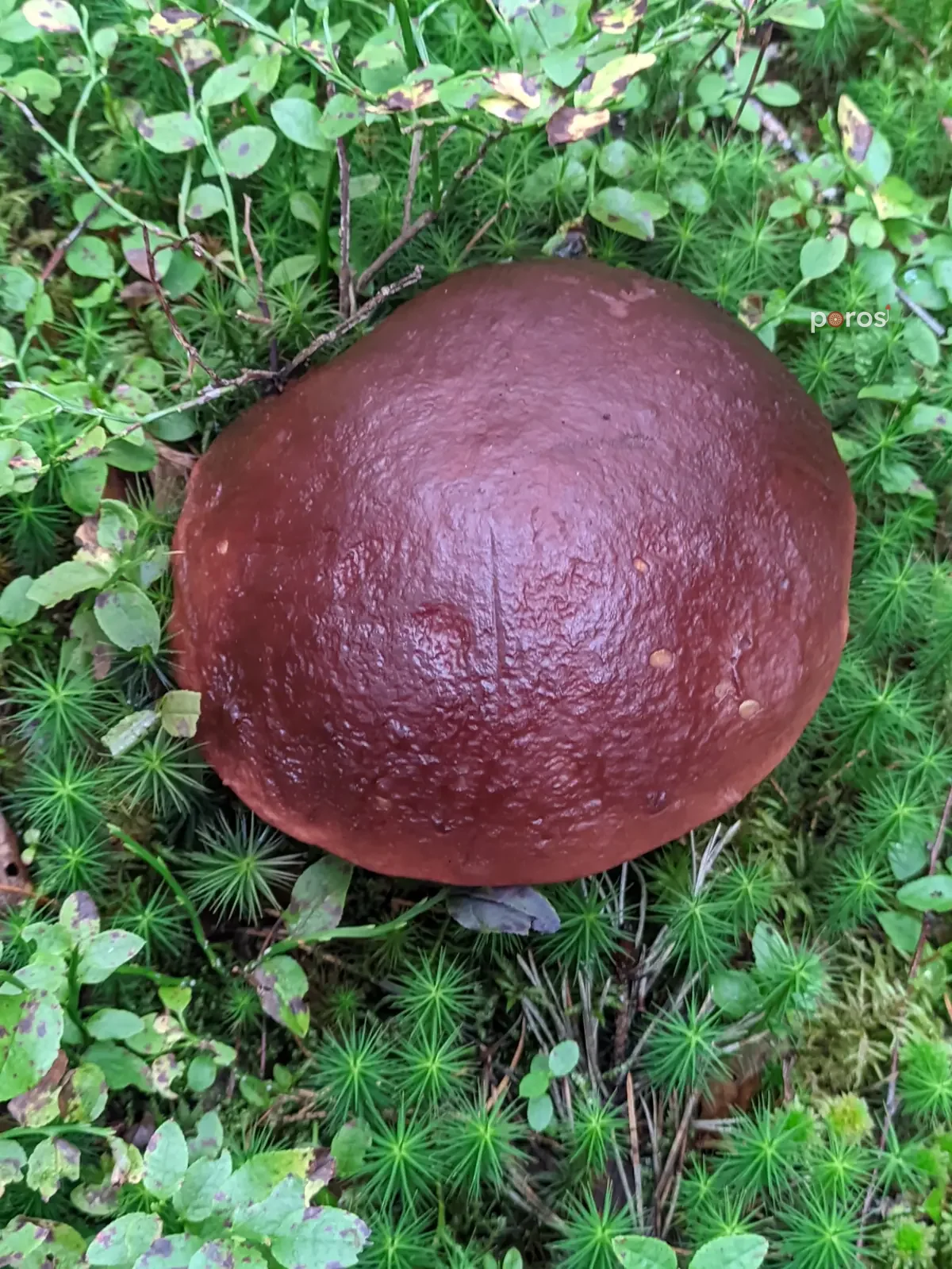
Pine bolete Boletus pinophilus
Its cap is wine red to mahogany; its pores go from white to yellow and olive-green, never pink; its stem net is fine and pale, it grows under pines and it tastes mild.
 Edible species
not Bitter bolete
Brown birch bolete Leccinum scabrum
Its stem carries blackish-brown scabers on a white background rather than a net; its pores are whitish to greyish cream and do not turn pink, and it grows under birch.
 Edible species
not Bitter bolete
Bay bolete Imleria badia
Its pores are cream to yellow-green and bruise blue-green when pressed, never pink; its stem has no net and is streaked brown.
 Edible species
not Bitter bolete
Summer cep Boletus reticulatus
Its cap is pale hazel to brown and matt; its pores go from white to yellow and olive-green, never pink; its stem net is white or pale brown, it grows under broadleaf trees and it tastes mild.
Bitter bolete and its look-alikes compared
| Species | Status | Underside | Spore print | Season |
|---|---|---|---|---|
| Bitter boleteTylopilus felleus | Inedible | Pores whitish when young, pink to pinkish brown with age | Pinkish brown | Jul–Oct |
| PorciniBoletus edulis | Edible species | No gills: tubes with small round pores, white and "stuffed" when young, then yellow, finally olive-green | Olive brown | Jun–Nov |
| Devil’s boleteRubroboletus satanas | Poisonous | Pores yellow when young, then blood-red to orange-red | Olive-brown | Jul–Oct |
| Red-capped scaber stalkLeccinum aurantiacum | Edible species | Pores whitish to cream, bruising brownish when pressed | Brown | Jun–Oct |
| Bronze boleteBoletus aereus | Edible species | Pores white when young, then yellow to olive-green | Olive-brown | Jun–Oct |
| Pine boleteBoletus pinophilus | Edible species | Pores white when young, then yellow to olive-green | Olive-brown | Jun–Oct |
| Brown birch boleteLeccinum scabrum | Edible species | Pores whitish to greyish cream, bruising brownish when pressed | Brown | Jun–Oct |
| Bay boleteImleria badia | Edible species | Pores cream to yellow-green, bruising clearly blue-green when pressed | Olive-brown | Aug–Nov |
| Summer cepBoletus reticulatus | Edible species | Pores white when young, then yellow to olive-green | Olive-brown | May–Sep |
The table is compiled from each species page. The status column is a guide only; do not eat a wild mushroom unless an expert has seen it in person. Compare look-alikes side by side
The bitter bolete is not poisonous but is inedible because of its intense bitterness; sources report that large amounts can upset the stomach. Its real significance is ending up in porcini pickers' baskets and ruining the meal. Touching a tiny crumb of a doubtful bolete to the tongue and spitting it out at once reveals the bitterness; this only separates these two species by taste and does not detect poisonous ones.
Frequently asked questions
Are bitter boletes poisonous?
It is not poisonous, but it is intensely bitter and inedible; large amounts can upset the stomach.
Are bitter boletes edible?
We advise against eating it. The bitter bolete is not poisonous but is inedible because of its intense bitterness; sources report that large amounts can upset the stomach. Its real significance is ending up in porcini pickers' baskets and ruining the meal. Touching a tiny crumb of a doubtful bolete to the tongue and spitting it out at once reveals the bitterness; this only separates these two species by taste and does not detect poisonous ones.
How is it told from porcini?
Its pores turn pink with age and its stem has a coarse dark brown net. Porcini pores turn yellow-olive and its stem net is fine and whitish.
Does cooking remove the bitterness?
No, cooking makes it worse; a single mushroom can spoil the whole dish.
Is it found in Turkey?
Yes. GBIF holds two records from Istanbul and iNaturalist one observation. Its Turkish name on iNaturalist is Acı Çörek Mantarı.
What colour is the spore print?
Pinkish brown; the porcini's is olive-brown.
Where does it grow?
In conifer and mixed forests on acid soil, sometimes at the base of rotting stumps.
Is a taste test safe?
Only to separate these two species, a tiny crumb can be touched to the tongue and spat out at once; it does not reveal poisonous species and should not be used on other mushrooms.
When is bitter bolete season in Turkey?
In our calendar, bitter bolete season runs Jul–Oct. Fruits from July to October in conifer and mixed forests.
Where do bitter boletes grow?
Mycorrhizal with conifers (pine, spruce) and broadleaf trees such as beech and oak; grows on acid soil, sometimes at the base of rotting stumps.
Where are bitter boletes found in Turkey?
Our map data holds two GBIF records from Turkey (Istanbul) and one research-grade iNaturalist observation. Its Turkish name on iNaturalist is Acı Çörek Mantarı (bitter porcini).
What can the bitter bolete be confused with?
The bitter bolete can be confused with porcini (Boletus edulis, edible species), Devil's bolete (Rubroboletus satanas, poisonous), red-capped scaber stalk (Leccinum aurantiacum, edible species), bronze bolete (Boletus aereus, edible species), pine bolete (Boletus pinophilus, edible species), brown birch bolete (Leccinum scabrum, edible species), bay bolete (Imleria badia, edible species) and summer cep (Boletus reticulatus, edible species). Look-alikes are compared on this page.
What is the bitter bolete called in Turkish?
In Turkish, the bitter bolete (Tylopilus felleus) is called Acı çörek mantarı.
Related species
-
 Scarletina boleteNeoboletus erythropusInedible
-
Bay boleteImleria badiaEdible species
-
Bronze boleteBoletus aereusEdible species
-
Brown birch boleteLeccinum scabrumEdible species
-
Devil’s boleteRubroboletus satanasPoisonous
-
Pine boleteBoletus pinophilusEdible species
-
PorciniBoletus edulisEdible species
-
Red-capped scaber stalkLeccinum aurantiacumEdible species
Sources
- Wikipedia (EN): Tylopilus felleus en.wikipedia.org
- First Nature: Tylopilus felleus, Bitter Bolete first-nature.com
- iNaturalist: Tylopilus felleus (Türkçe ad) inaturalist.org
All sources (4)
- GBIF: Türkiye kayıtları gbif.org
Photo credits (11)
- File:Tylopilus felleus collection.jpg · mycobel · CC BY 4.0
- Tylopilus felleus · iNaturalist #389399221 · K.P. · CC BY 4.0
- Tylopilus felleus · iNaturalist #86621064 · Thomas Dreux · CC BY 4.0
- Tylopilus felleus · iNaturalist #182589139 · Elena A. Kizilova (Елена А. Кизилова) · CC BY 4.0
- Tylopilus felleus · iNaturalist #142724564 · Shirley Zundell · CC BY 4.0
- Tylopilus felleus · iNaturalist #54951252 · Nina Filippova · CC BY 4.0
- File:Tylopilus felleus 3.jpg · creaturefeature97 · CC0
- Tylopilus felleus · iNaturalist #180407062 · Alex Sosnovshchenko · CC BY 4.0
- File:Tylopilus felleus 2.jpg · rangersara · CC0
- Tylopilus felleus · iNaturalist #394411261 · Gonzalo Ganda Álvarez · CC BY 4.0
- iNaturalist: İstanbul, 5 Oct 2024 · Umut Nuri Erdoğan · CC BY


