
Black morel (conifer morel)
Morchella elata · Morchellaceae

The black morel (Morchella elata) is a morel with a dark brown to blackish, pointed conical cap whose vertical ridges enclose honeycomb pits. Like all morels it is hollow from top to bottom. It is poisonous raw and edible when well cooked. A DNA study of Turkish morels (Taşkın et al., 2010) placed most samples in the black morel group.
Also called: black morel, conifer morel Turkish: Siyah göbek, siyah kuzugöbeği
Last updated: Prepared by the Poros Mantar editorial team5 sources checkedReport a correction
Black morel photos
-
© MaxForager · CC0
-

© Dan Molter (shroomydan) at Mushroom Observer, a source for mycologica · CC BY-SA 3.0
-

Cap© Holger Krisp · CC BY 3.0
-

© czech_mushrooms · CC0
-

© claudekolwelter · CC BY 4.0
-
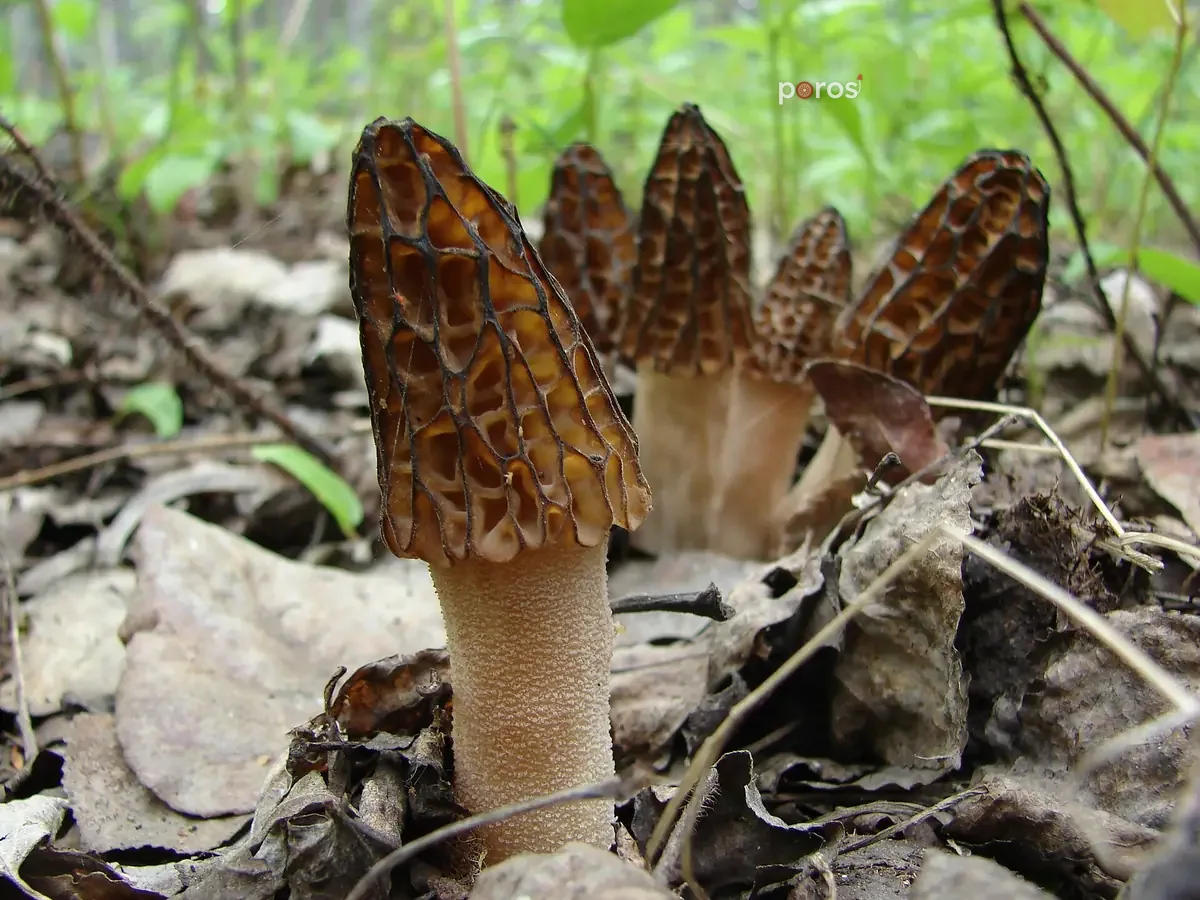
In habitat© Johannes Harnisch (jrussula) · CC BY-SA 3.0
-

Cap© Len Worthington · CC BY-SA 2.0
-

Stem© Filip Żuchowski · CC BY 4.0
-

© Allar Antson · CC BY-SA 4.0
-
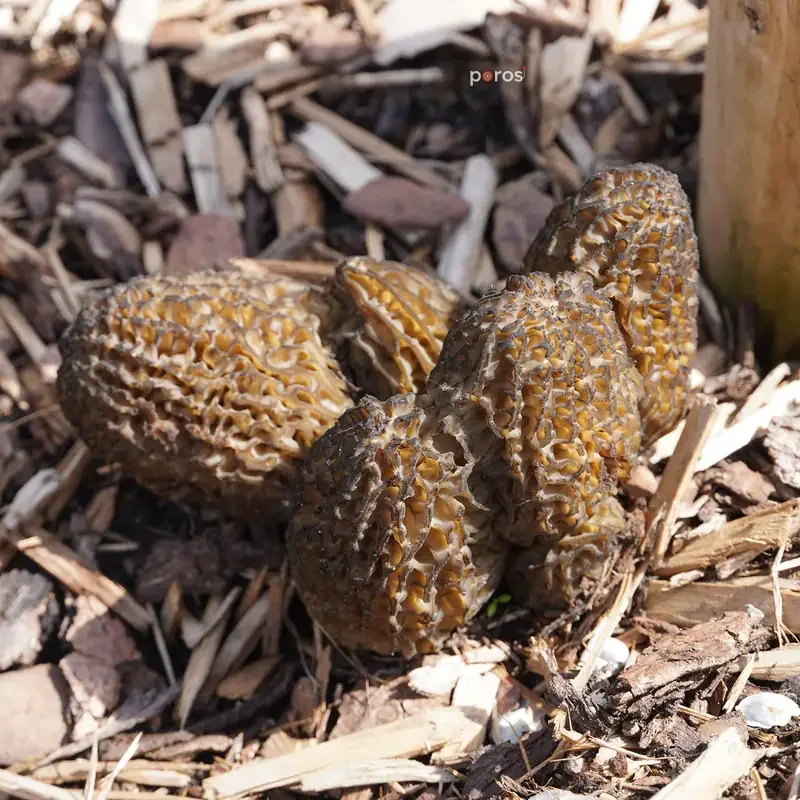
In habitat© nbasargin · CC BY 4.0
-

Stem© Holger Krisp · CC BY 3.0


These are licensed records of this species; photos alone are not enough to identify a mushroom.
Are black morels poisonous?
Black morels are not listed as poisonous in our sources. The black morel is poisonous raw and must be cooked thoroughly; even cooked, it can cause mild adverse effects when eaten with alcohol. The real risk is confusing them with false morel (Gyromitra esculenta) and early false morel (Verpa bohemica), so never eat wild ones without certain identification. If poisoning is suspected, call 112 at once (Turkish poison centre: 114) and keep any leftover mushroom.
Are black morels edible?
Black morels are listed as edible in our sources; even so, never eat wild ones without certain identification: they have poisonous look-alikes, such as false morel (Gyromitra esculenta) and early false morel (Verpa bohemica). Do not eat them without an expert's approval. The black morel is poisonous raw and must be cooked thoroughly; even cooked, it can cause mild adverse effects when eaten with alcohol. It can be confused with the deadly false morel: cut every mushroom lengthwise and do not eat it unless it is hollow from top to bottom.
How to recognise it
Appearance of black morels
No ring or volva Spore print: Cream to pale ochre Pleasant and earthy.
When and where
When to find black morels
Apr–Jun
It fruits in spring after the snow melts, especially in the first years after a forest fire or logging; in the mountains it lasts into June.
Type Edible
Where do black morels grow?
It grows in conifer and mixed forests, especially under fir, spruce and pine, on burnt or logged ground and calcareous or sandy soil.
Where is black morels found in Turkey?
Our map data holds 2 Turkish GBIF records (one from Malatya) and 2 research-grade iNaturalist observations. The name Morchella elata was long used for all black morels; DNA studies since 2011 have restricted it to a European species living with conifers. Which species Turkey's black morels belong to is still being studied.
- Malatya1
- Kayseri1
Which months
- Jan0
- Feb0
- Mar0
- Apr1
- May1
- Jun0
- Jul0
- Aug0
- Sep0
- Oct0
- Nov0
- Dec0
2 provinces, 2 observations (GBIF, iNaturalist); months from observation dates. Record density also reflects where observers work.
Latest black morel observations
-
 Illustrative
Malatya1 May 2026 · iNaturalist
-
 Illustrative
Kayseri29 Apr 2026 · iNaturalist
- See on the map
On "illustrative" cards the image is a photo of the species; the observation photo cannot be shown here because of its licence, but can be seen at the source.
Look-alikes
What could it be confused with?
Black morel can be mistaken for the species below. Each comparison shows Black morel on the left, the look-alike on the right, and how to tell them apart.
Take care when foraging: Poisonous look-alikes of Black morel come first. If in doubt, leave it.

False morel Gyromitra esculenta
How to tell Its cap is brain-like and folded rather than pitted; cut lengthwise, it is chambered with cottony tissue. It is deadly.
Early false morel Verpa bohemica
How to tell Its cap sits on the stem like a thimble attached only at the tip, and the stem is stuffed with cottony tissue. It is considered poisonous.
Other look-alikes (1)
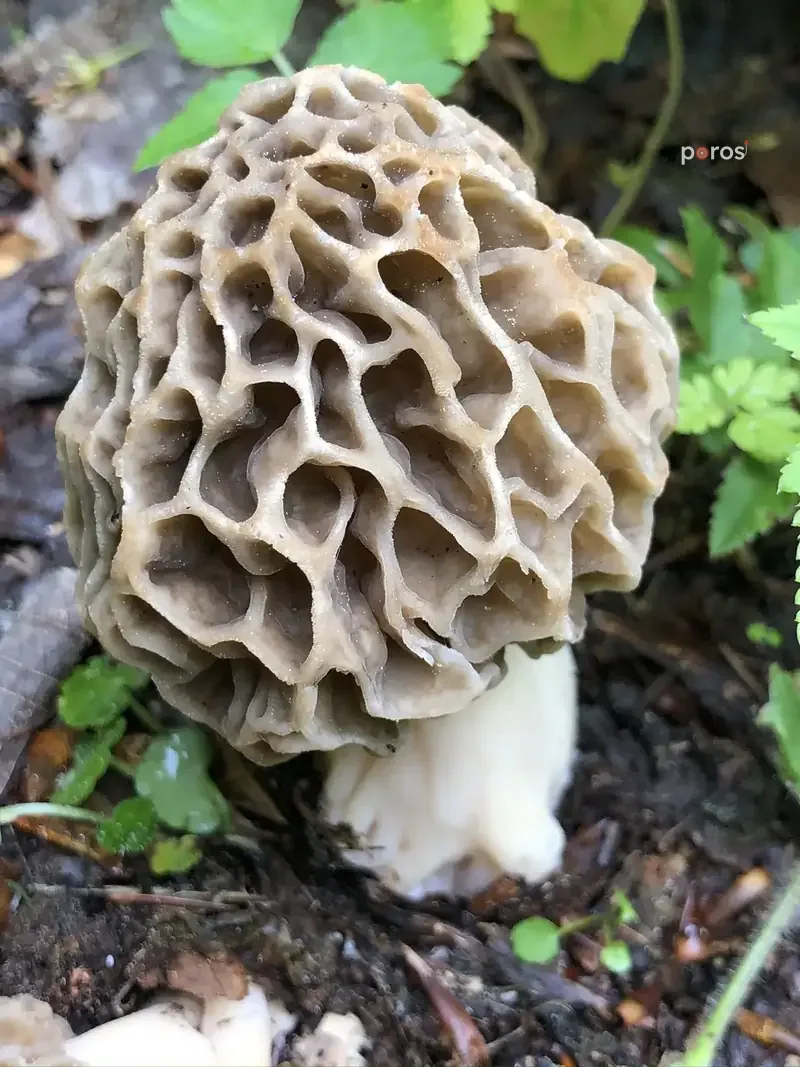 Edible species
not Black morel
Morel Morchella esculenta
Its cap is rounder, yellowish to pale brown with irregular pits, and it usually grows under broadleaf trees.
Black morel and its look-alikes compared
| Species | Status | Underside | Spore print | Season |
|---|---|---|---|---|
| Black morelMorchella elata | Edible species | There is no separate underside | Cream to pale ochre | Apr–Jun |
| False morelGyromitra esculenta | Deadly poisonous | No gills or pits | Whitish to yellowish buff | Mar–May |
| MorelMorchella esculenta | Edible species | No gills or pores | Creamy white to pale ochre (hard to obtain) | Mar–May |
The table is compiled from each species page. The status column is a guide only; do not eat a wild mushroom unless an expert has seen it in person. Compare look-alikes side by side
How to cook and eat black morels
Safety first. The black morel is poisonous raw and must be cooked thoroughly; even cooked, it can cause mild adverse effects when eaten with alcohol. It can be confused with the deadly false morel: cut every mushroom lengthwise and do not eat it unless it is hollow from top to bottom. If poisoning is suspected, call 112 or the poison centre on 114 and keep any leftover mushroom.
How to store black morels
Grow it, buy it
Black morel price list
| Product | Poros Mantar | Market |
|---|---|---|
| Fresh black morels | Made to order · ask | — |
| Dried black morels | Made to order · ask | — |
We make our black morels products in small batches, to order; send a request and we email you the price and delivery date. The market column shows prices seen on other sellers' pages on the date given; they are not our prices and may have changed.
Frequently asked questions
Are black morels poisonous?
Black morels are not listed as poisonous in our sources. The black morel is poisonous raw and must be cooked thoroughly; even cooked, it can cause mild adverse effects when eaten with alcohol. The real risk is confusing them with false morel (Gyromitra esculenta) and early false morel (Verpa bohemica), so never eat wild ones without certain identification. If poisoning is suspected, call 112 at once (Turkish poison centre: 114) and keep any leftover mushroom.
Are black morels edible?
Black morels are listed as edible in our sources; even so, never eat wild ones without certain identification: they have poisonous look-alikes, such as false morel (Gyromitra esculenta) and early false morel (Verpa bohemica). Do not eat them without an expert's approval. The black morel is poisonous raw and must be cooked thoroughly; even cooked, it can cause mild adverse effects when eaten with alcohol. It can be confused with the deadly false morel: cut every mushroom lengthwise and do not eat it unless it is hollow from top to bottom.
How is the black morel different from the yellow morel?
The black morel's cap is pointed, dark brown to blackish, with vertical ridges. The yellow morel (M. esculenta) has a rounder, paler cap with irregular pits.
How do you tell it from the false morel?
Cut it lengthwise. A true morel is one single hollow from cap to stem base; the false morel is filled with cottony chambers and its cap is folded rather than pitted.
Where does the black morel grow?
In conifer and mixed forests under fir, spruce and pine; it is especially abundant in the first years after a fire or logging.
When is it gathered?
In spring after the snow melts, from April to June; later in the mountains.
Why is the name Morchella elata disputed?
The name was long given to all black morels. DNA studies since 2011 have shown that black morels are many separate species and restricted M. elata to one European species.
How are dried black morels used?
Soak them in warm water for 20–30 minutes, rinse the grit out well and cook thoroughly; the strained soaking water can go into the sauce.
When is black morel season in Turkey?
In our calendar, black morel season runs Apr–Jun. It fruits in spring after the snow melts, especially in the first years after a forest fire or logging; in the mountains it lasts into June.
Where do black morels grow?
It grows in conifer and mixed forests, especially under fir, spruce and pine, on burnt or logged ground and calcareous or sandy soil.
Where are black morels found in Turkey?
Our map data holds 2 Turkish GBIF records (one from Malatya) and 2 research-grade iNaturalist observations. The name Morchella elata was long used for all black morels; DNA studies since 2011 have restricted it to a European species living with conifers. Which species Turkey's black morels belong to is still being studied.
What can the black morel be confused with?
The black morel can be confused with false morel (Gyromitra esculenta, deadly), early false morel (Verpa bohemica, poisonous) and morel (Morchella esculenta, edible species). Look-alikes are compared on this page.
What is the black morel called in Turkish?
In Turkish, the black morel (Morchella elata) is called Siyah göbek; other local names include siyah kuzugöbeği.
Related species
-
MorelMorchella esculentaEdible species
-
 Almond mushroomAgaricus subrufescensEdible species
-
 Anatolian matsutakeTricholoma anatolicumEdible species
-
 Aniseed funnelClitocybe odoraEdible species
-
 Bay boleteImleria badiaEdible species
-
 Beefsteak fungusFistulina hepaticaEdible species
-
 Black trumpetCraterellus cornucopioidesEdible species
-
 Bloody milk capLactarius sanguifluusEdible species
Sources
- Taşkın ve ark. (2010), Fungal Genetics and Biology 47(8): 672-682: A multigene molecular phylogenetic assessment of true morels (Morchella) in Turkey doi.org
- Richard ve ark. (2015), Mycologia 107(2): 359-382: True morels (Morchella) — nomenclatural revision doi.org
- Wikipedia (EN): Morchella elata en.wikipedia.org
All sources (5)
- iNaturalist: Morchella elata (Türkçe ad ve Türkiye gözlemleri) inaturalist.org
- GBIF: Türkiye kayıtları gbif.org
Photo credits (11)
- Morchella elata · iNaturalist #405433712 · MaxForager · CC0
- File:Morchella elata 83497.jpg · Dan Molter (shroomydan) at Mushroom Observer, a source for mycologica · CC BY-SA 3.0
- File:Morchella elata Spitzmorchel Morchella conica.jpg · Holger Krisp · CC BY 3.0
- File:Morchella elata two.jpg · czech_mushrooms · CC0
- File:Morchella elata 01.jpg · claudekolwelter · CC BY 4.0
- File:Morchella elata group 38336.jpg · Johannes Harnisch (jrussula) · CC BY-SA 3.0
- File:Morchella elata (25069906747).jpg · Len Worthington · CC BY-SA 2.0
- Morchella elata · iNaturalist #278962143 · Filip Żuchowski · CC BY 4.0
- File:Morchella elata 001.jpg · Allar Antson · CC BY-SA 4.0
- Morchella elata · iNaturalist #157763311 · nbasargin · CC BY 4.0
- File:Spitz-Morchel Morchella elata.jpg · Holger Krisp · CC BY 3.0


