
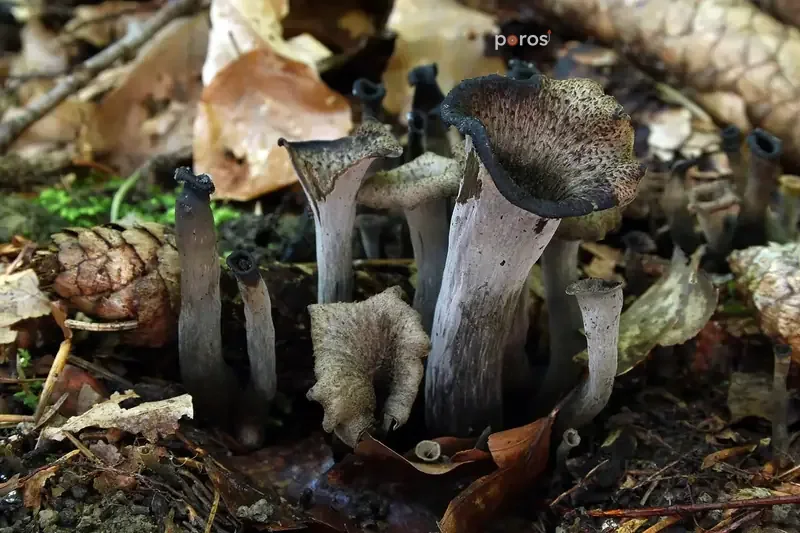


Black trumpet
Craterellus cornucopioides · Cantharellaceae
The black trumpet (Craterellus cornucopioides), borazan mantarı in Turkish, is a prized edible mushroom: black to grey, trumpet- or funnel-shaped, found under beech and oak in broadleaf woods, and eaten only once identified with certainty.
Last updated: Prepared by the Poros Mantar editorial team6 sources checkedReport a correction
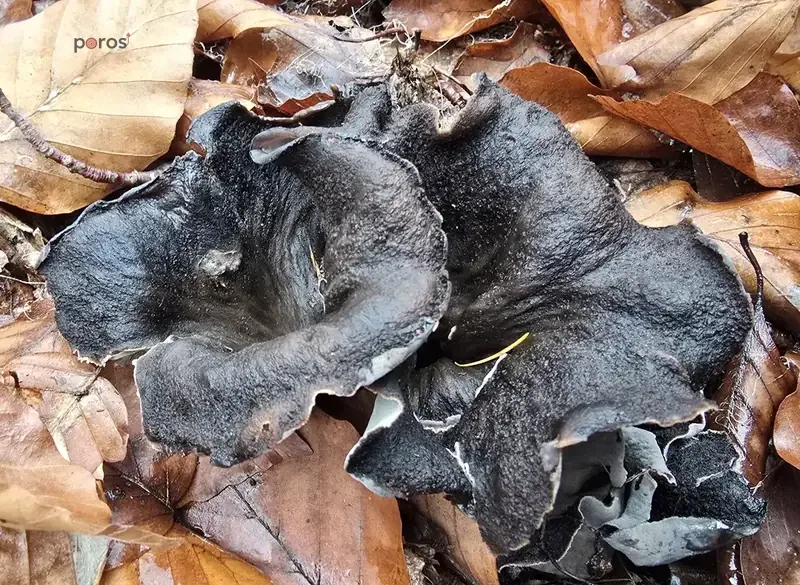
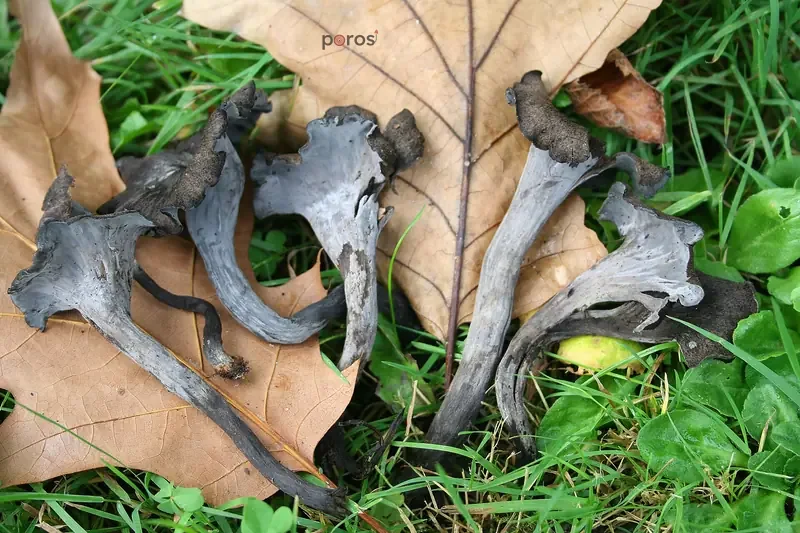
The black trumpet (Craterellus cornucopioides), borazan mantarı in Turkish, is a prized edible mushroom: black to grey, trumpet- or funnel-shaped, found under beech and oak in broadleaf woods, and eaten only once identified with certainty. It is also called horn of plenty and trumpet of the dead. It has no gills, only a smooth or slightly wrinkled outer surface. Its dark colour makes it hard to spot in leaf litter, and its aroma grows stronger when dried.
Also called: horn of plenty, trumpet of the dead, black chanterelle Turkish: Borazan mantarı, ölü borazanı, siyah borazan
How to recognise it
Black trumpet, part by part
No ring or volva Spore print: White to very pale cream Pleasant and fruity; stronger when dried.


When and where
Aug–Jan
- Janin season
- Feb
- Mar
- Apr
- May
- Jun
- Jul
- Augin season
- Sepin season
- Octin season
- Novin season
- Decin season
The black trumpet fruits from late summer to late autumn in Europe. In Turkey, GBIF records run from August to January and peak in October and November.
Type Edible
In season AugustSeptemberOctoberNovemberDecemberJanuary
Regions Black Sea RegionAegean RegionMarmara RegionDüzceTrabzonMuğlaSakaryaBoluIstanbul
Where does black trumpet grow?
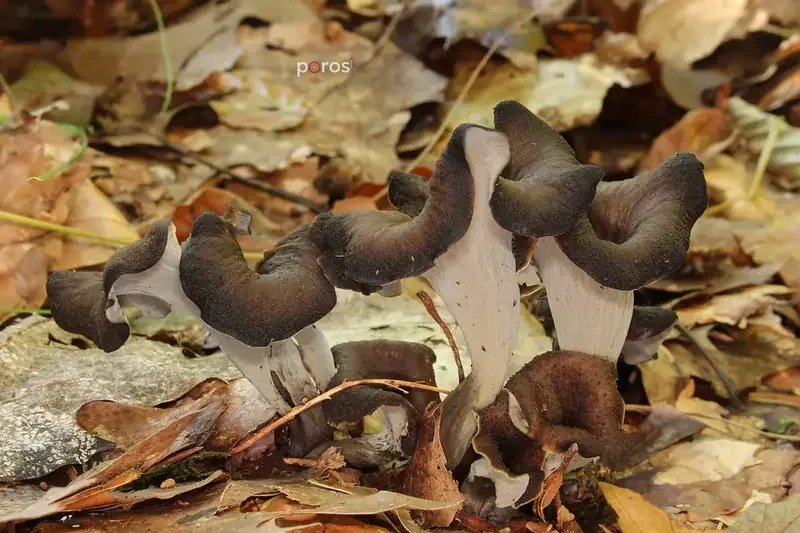
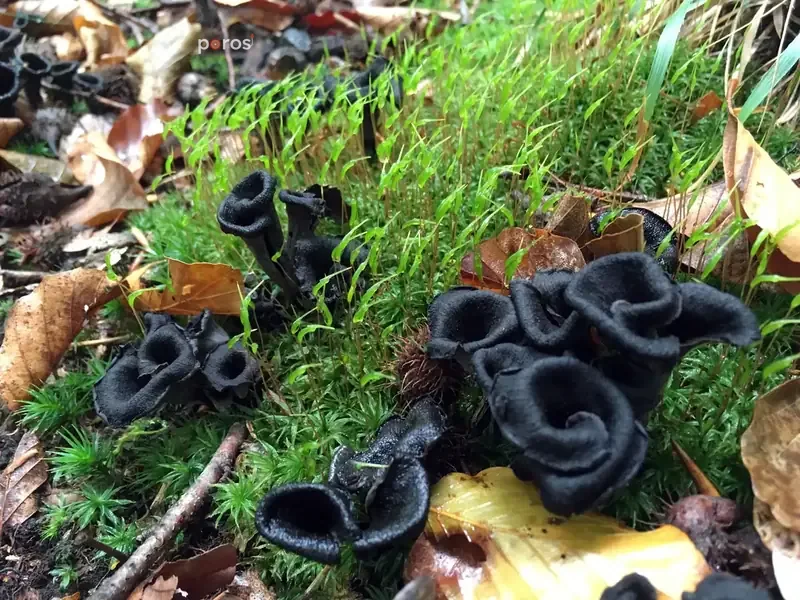
The black trumpet grows in broadleaf woods, especially under beech and oak, on mossy, damp soil, often in large groups.
Where is black trumpet found in Turkey?
The black trumpet is recorded in Turkey; its 17 Turkish GBIF records come from İstanbul, Düzce, Trabzon, Kırklareli and Muğla.
Which months
- Jan3
- Feb0
- Mar0
- Apr0
- May0
- Jun0
- Jul0
- Aug2
- Sep2
- Oct9
- Nov2
- Dec2
black trumpet map of Turkey: all provinces and months →
6 provinces, 20 observations (GBIF, iNaturalist); months from observation dates. Record density also reflects where observers work.
Latest black trumpet observations
-
 Bolu29 Oct 2026 · iNaturalist© no rights reserved · CC0
-
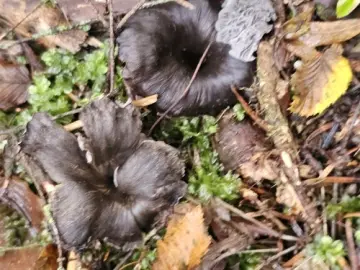 Bolu29 Oct 2026 · iNaturalist© no rights reserved · CC0
-
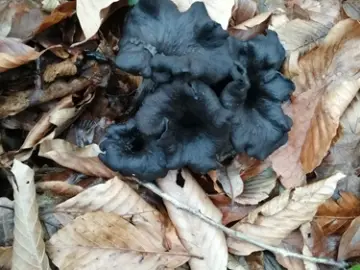 İstanbul11 Jan 2024 · iNaturalist© Umut Nuri Erdoğan · CC BY
-
 Illustrative
Bolu29 Oct 2026 · iNaturalist
-
 Illustrative
Bolu29 Oct 2026 · iNaturalist
-
 Illustrative
Bolu25 Oct 2026 · iNaturalist
-
 Illustrative
Trabzon3 Oct 2024 · iNaturalist
-
 Illustrative
İstanbul10 Jan 2024 · iNaturalist
- See on the map
On "illustrative" cards the image is a photo of the species; the observation photo cannot be shown here because of its licence, but can be seen at the source.
Look-alikes
What could it be confused with?
Black trumpet can be mistaken for the species below. Each card shows the look-alike and how it differs from Black trumpet.
 Edible species
not Black trumpet
Ashen chanterelle Craterellus cinereus
Has distinct, forking false gills on the outside; the black trumpet's outer surface is smooth or only slightly wrinkled.
 Inedible
not Black trumpet
Devil's urn Urnula craterium
A thick-fleshed black cup on buried wood in spring, with a hairy outside.
 Edible species
not Black trumpet
Sinuous chanterelle Pseudocraterellus undulatus
Smaller and thinner, grey-brown with a very wavy edge; not hollow.
How to cook and eat black trumpet
How to prepare it
Split lengthwise and wipe out the soil and needles with a damp cloth.
How to cook it
Eat it cooked; it suits simple dishes such as risotto. Dried, it takes on black truffle notes and can be crumbled as a seasoning.
What goes with it?
- black trumpets
- arborio rice
- onion
- garlic
- olive oil
- vegetable stock
- dry white wine
- unsalted butter
- grated Parmesan
- parsley
Source: Wikipedia · practical details from our recipes.
Recipe
How to store black trumpet
Grow it, buy it
Black trumpet price list
| Product | Us | Market (sourced, dated) |
|---|---|---|
| Fresh black trumpet | Made to order · ask | — |
| Dried black trumpet | Made to order · ask | — |
We make our black trumpet products in small batches, to order; send a request and we email you the price and delivery date. The market column shows prices seen on other sellers' pages on the date given; they are not our prices and may have changed.
Frequently asked questions
Is the black trumpet edible?
Yes, the black trumpet is edible and highly valued in the kitchen, but only once identified with certainty. It is eaten cooked, and its aroma grows stronger when dried.
How do you recognise a black trumpet?
The black trumpet is a black to grey, hollow trumpet or funnel. It has no gills; its outer surface is smooth or slightly wrinkled and ash grey, and its spore print is nearly white.
Where and when does the black trumpet grow?
It grows in broadleaf woods, especially under beech and oak, from late summer to late autumn. In Turkey it is recorded from İstanbul, Düzce and Trabzon.
Why is it called the trumpet of the dead?
The name comes from the French trompette des morts; it is linked to its black colour and its autumn season close to All Souls' Day. The name does not mean it is poisonous.
Are black mushrooms poisonous?
Colour alone tells you nothing about safety. The black trumpet is an edible black mushroom, but some dark species such as the common ink cap can be poisonous. Our black mushrooms page shows the look-alikes together.
How do you clean and cook black trumpets?
Because it is hollow, split it lengthwise and brush out soil and insects. Sauté it in butter, add it to pasta and risotto, or dry it and grind it to a powder.
How do we use dried black trumpets?
We soak dried black trumpets in warm water for about twenty minutes, rinse them to remove any grit and chop them. We add them to sauces, risotto and egg dishes, and use the strained soaking water as stock.
Are black trumpets and king trumpets the same?
No. The black trumpet (Craterellus cornucopioides) is a thin, hollow, black wild mushroom of the forest floor. The king trumpet is the king oyster mushroom (Pleurotus eryngii), with a thick white stem. We cook black trumpets briefly in butter; king trumpets need longer and suit roasting or slicing into rounds.
Is the horn of plenty the same as the black trumpet?
Yes. Horn of plenty, black trumpet, black chanterelle and trumpet of the dead are all names for Craterellus cornucopioides. The Latin name cornucopioides means 'like a cornucopia', the horn of plenty.
Is black trumpet edible?
Yes, black trumpet is an edible species. Eat a wild one only after an expert has identified it with certainty.
When is black trumpet season in Turkey?
In our calendar, black trumpet season runs Aug–Jan. The black trumpet fruits from late summer to late autumn in Europe. In Turkey, GBIF records run from August to January and peak in October and November.
Where does black trumpet grow?
The black trumpet grows in broadleaf woods, especially under beech and oak, on mossy, damp soil, often in large groups.
Where is black trumpet found in Turkey?
The black trumpet is recorded in Turkey; its 17 Turkish GBIF records come from İstanbul, Düzce, Trabzon, Kırklareli and Muğla.
What can black trumpet be confused with?
Black trumpet can be confused with ashen chanterelle (Craterellus cinereus, edible species), Devil's urn (Urnula craterium, inedible) and sinuous chanterelle (Pseudocraterellus undulatus, edible species). Look-alikes are compared on this page.
What is black trumpet called in Turkish?
In Turkish, black trumpet (Craterellus cornucopioides) is called Borazan mantarı; other local names include ölü borazanı and siyah borazan.
Related species
-
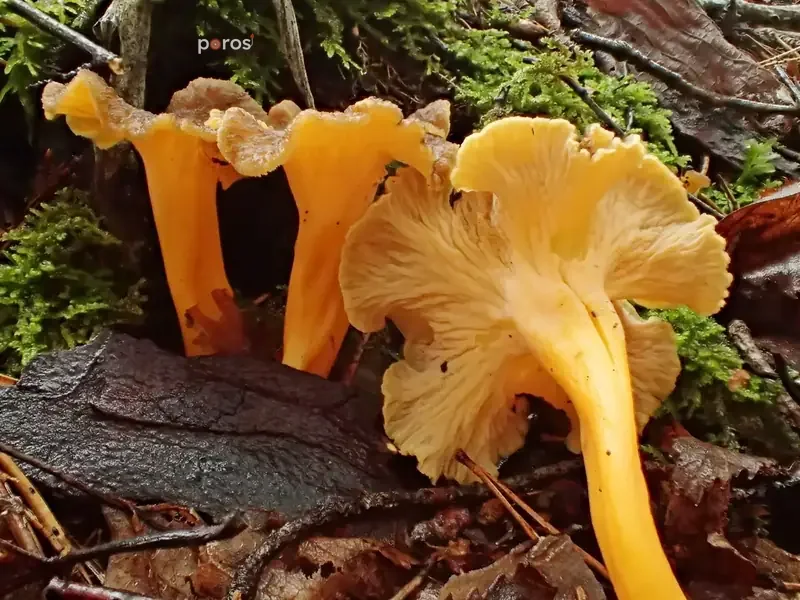 Yellow foot chanterelleCraterellus lutescensEdible species
-
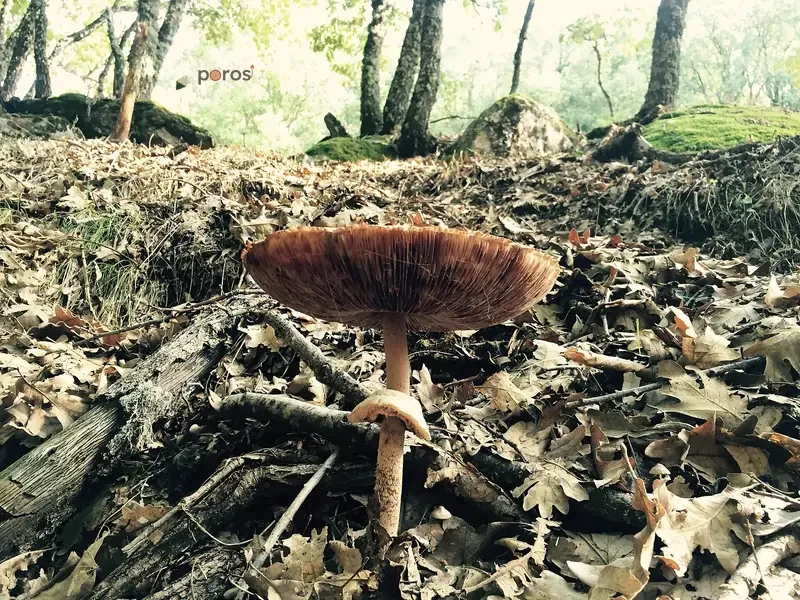 Anatolian matsutakeTricholoma anatolicumEdible species
-
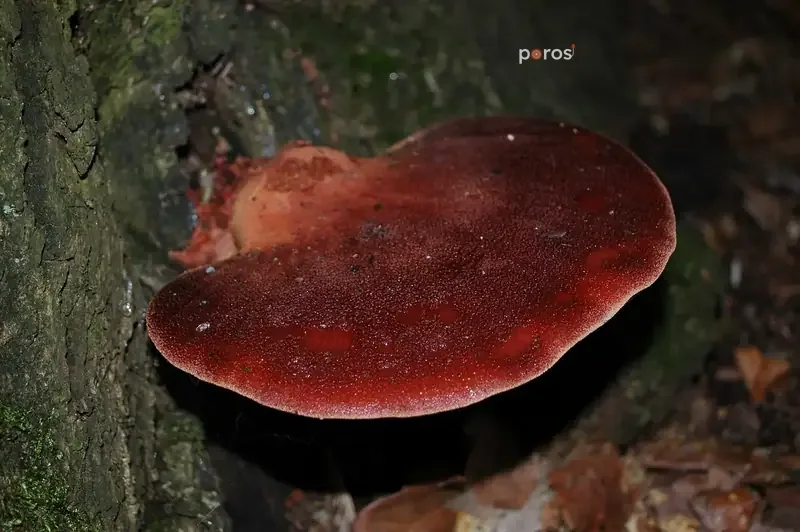 Beefsteak fungusFistulina hepaticaEdible species
-
 Bloody milk capLactarius sanguifluusEdible species
-
 Button mushroomAgaricus bisporusEdible species
-
 Caesar’s mushroomAmanita caesareaEdible species
-
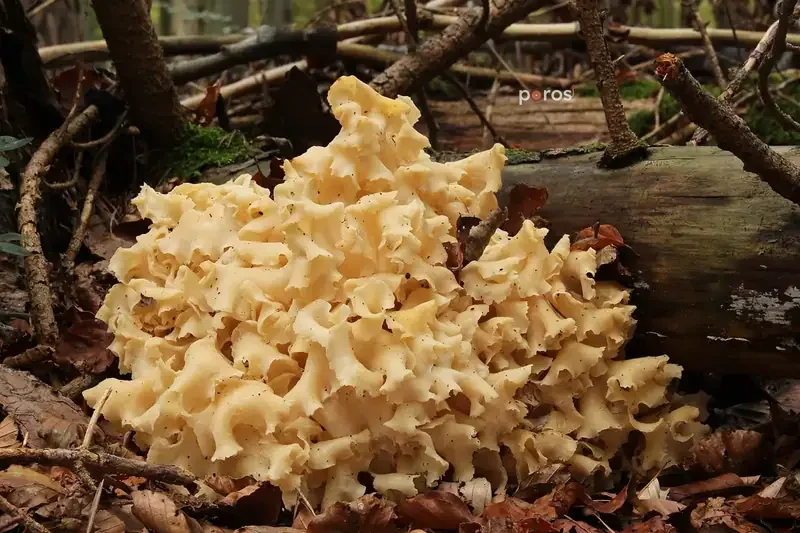 Cauliflower mushroomSparassis crispaEdible species
-
 ChanterelleCantharellus cibariusEdible species
Sources
- Bumbu ve ark. (2024), Nutrients: Craterellus cornucopioides derlemesi pubmed.ncbi.nlm.nih.gov
- Arslan ve ark. (2021), Turkish Journal of Forest Science: Yenilebilir yabani mantar ticareti, İstanbul Orman Bölge Müdürlüğü örneği dergipark.org.tr
- Erdoğan, Soylu ve Başer (2017), Nevşehir Bilim ve Teknoloji Dergisi: Bazı yabani mantarların antioksidan özellikleri dergipark.org.tr
All sources (6)
- Wikipedia (EN): Craterellus cornucopioides en.wikipedia.org
- First Nature: Craterellus cornucopioides first-nature.com
- GBIF: Türkiye kayıtları gbif.org
Photo credits (11)
- File:Black trumpet Craterellus cornucopioides.jpg · Holger Krisp · CC BY 3.0
- Craterellus cornucopioides · iNaturalist #369641829 · Kate Senatskaya · CC BY 4.0
- Craterellus cornucopioides · iNaturalist #225185984 · Kristian Bosak · CC BY 4.0
- Craterellus cornucopioides · iNaturalist #327396920 · Paula Nimigean · CC BY 4.0
- File:Herbsttrompete Craterellus cornucopioides 3.jpg · Holger Krisp · CC BY 4.0
- Craterellus cornucopioides · iNaturalist #33753618 · preinzi · CC0
- Craterellus cornucopioides · iNaturalist #369641829 · Kate Senatskaya · CC BY 4.0
- File:Craterellus cornucopioides Eestis.JPG · Marko Vainu · CC BY-SA 3.0
- iNaturalist: Bolu, 29 Oct 2026 · no rights reserved · CC0
- iNaturalist: Bolu, 29 Oct 2026 · no rights reserved · CC0
- iNaturalist: İstanbul, 11 Jan 2024 · Umut Nuri Erdoğan · CC BY


