
Blistered cup (bladder cup)
Peziza vesiculosa · Pezizaceae

The blistered cup (Peziza vesiculosa) is a brittle cup fungus 3–8 cm across, pale cream to light brown with an incurved edge, that grows in clusters on manure, straw, compost and manured soil; when young it is swollen like a blister. Its Turkish name means 'dung cup'. It is poisonous raw and is not considered edible even when cooked.
Also called: blistered cup, bladder cup Turkish: Fışkı fincanı, fışkı fincanı Synonyms: Aleuria vesiculosa
Last updated: Prepared by the Poros Mantar editorial team5 sources checkedReport a correction
Blistered cup photos
-
© Katie Muldowney · CC BY 4.0
-

© Annie Weissman · CC BY 4.0
-

© Tanner Parker · CC BY 4.0
-

© Полина Полежанкина · CC BY 4.0
-

© Francesco Cecere · CC0
-

© Ulises Emmanuel Martínez Burgos · CC BY 4.0
-

© Steve Llewellyn · CC BY 4.0
-

© Manuel Nicolás Madrigal Pérez · CC BY 4.0
-

Cap© Francesco Cecere · CC0
-

Smooth underside© J Castillo · CC BY 4.0
-
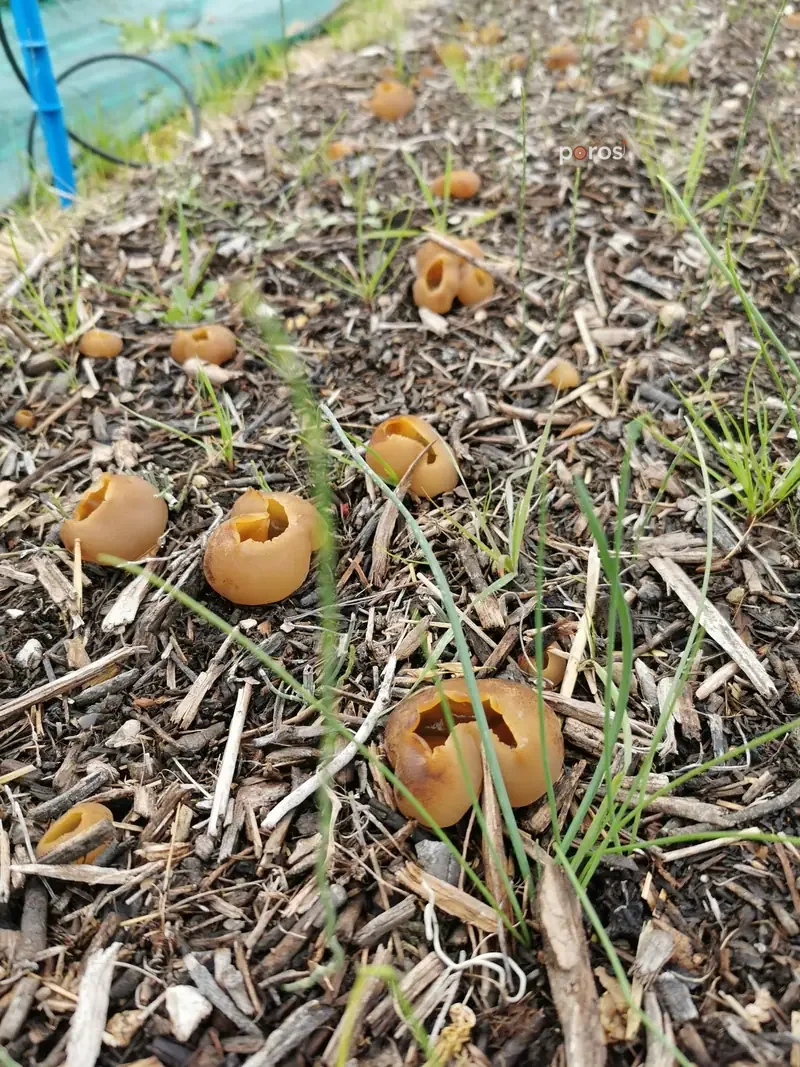
In habitat© Yves Bas · CC BY 4.0


These are licensed records of this species; photos alone are not enough to identify a mushroom.
Is the blistered cup poisonous?
The blistered cup is poisonous raw and is not considered edible even when cooked.
Is the blistered cup edible?
No. It is poisonous raw and is not considered edible even when cooked.
How to recognise it
Appearance of blistered cup
No ring or volva Spore print: White Not distinctive.
When and where
When to find blistered cup
Jun
It fruits from spring to autumn whenever dung and compost stay moist; the single Turkish record is from June.
Where does blistered cup grow?
It grows on horse and cow dung, straw heaps, compost, spent mushroom substrate and manured garden soil.
Where is blistered cup found in Turkey?
Our map data (GBIF and iNaturalist) holds 1 Turkish record: İzmir (1). The records are from June.
Which months
- Jan0
- Feb0
- Mar0
- Apr0
- May0
- Jun1
- Jul0
- Aug0
- Sep0
- Oct0
- Nov0
- Dec0
1 provinces, 1 observations (GBIF, iNaturalist); months from observation dates. Record density also reflects where observers work.
Latest blistered cup observations
 Illustrative
On "illustrative" cards the image is a photo of the species; the observation photo cannot be shown here because of its licence, but can be seen at the source.
Look-alikes
What could it be confused with?
Blistered cup can be mistaken for the species below. Each comparison shows Blistered cup on the left, the look-alike on the right, and how to tell them apart.
Take care when foraging: Poisonous look-alikes of Blistered cup come first. If in doubt, leave it.

Violet crown cup Sarcosphaera coronaria
How to tell The violet crown cup starts as a half-buried ball in soil, opens with a star-toothed edge and is violet-lilac inside; it is poisonous.
Other look-alikes (2)
 Inedible
not Blistered cup
Cedar cup Geopora sumneriana
The cedar cup emerges buried in soil, is covered in thick brown hairs outside and appears under cedars in winter and spring.
 Inedible
not Blistered cup
Hare's ear Otidea onotica
The hare's ear grows on the forest floor rather than dung, is a tall ear split on one side and is yellow-orange.
Blistered cup and its look-alikes compared
| Species | Status | Underside | Spore print | Season |
|---|---|---|---|---|
| Blistered cupPeziza vesiculosa | Inedible | The spore-bearing surface is the inside of the cup, blistered in the centre | White | Jun |
| Violet crown cupSarcosphaera coronaria | Poisonous | The inner surface of the cup is smooth and matt, lilac-violet when young and brownish-purple with age | White | Mar–Jun |
| Cedar cupGeopora sumneriana | Inedible | The spore-bearing surface is the smooth, cream inside of the cup | White | Feb–May |
| Hare’s earOtidea onotica | Inedible | The spore-bearing surface is the inner face of the ear, smooth | White | Nov |
The table is compiled from each species page. The status column is a guide only; do not eat a wild mushroom unless an expert has seen it in person. Compare look-alikes side by side
The blistered cup is poisonous raw and is not considered edible even when cooked. Telling Peziza species apart needs a microscope and some cause gastrointestinal poisoning. Do not eat it. If poisoning is suspected, call poison control.
Frequently asked questions
Is the blistered cup poisonous?
The blistered cup is poisonous raw and is not considered edible even when cooked.
Is the blistered cup edible?
No. It is poisonous raw and is not considered edible even when cooked.
How do you identify it?
Clusters of brittle cups 3–8 cm across on dung, straw or compost, pale cream-brown, with incurved edges and blistered centres.
What can it be confused with?
The main look-alikes are: Violet crown cup, Cedar cup. The differences are listed in the look-alikes section; with poisonous look-alikes, always check the cross-section and habitat.
Where does it grow?
It grows on horse and cow dung, straw heaps, compost, spent mushroom substrate and manured garden soil.
When does it appear?
It fruits from spring to autumn whenever dung and compost stay moist; the single Turkish record is from June.
Is it harmful in garden compost?
No, it is a harmless decomposer of compost and dung. Just make sure children and pets do not eat it.
Is it found in Turkey?
Our map data holds a single June record from İzmir; growing on dung and compost, it is seldom recorded.
When is blistered cup season in Turkey?
In our calendar, blistered cup season runs Jun. It fruits from spring to autumn whenever dung and compost stay moist; the single Turkish record is from June.
Where does blistered cup grow?
It grows on horse and cow dung, straw heaps, compost, spent mushroom substrate and manured garden soil.
Where is blistered cup found in Turkey?
Our map data (GBIF and iNaturalist) holds 1 Turkish record: İzmir (1). The records are from June.
What can blistered cup be confused with?
Blistered cup can be confused with violet crown cup (Sarcosphaera coronaria, poisonous), cedar cup (Geopora sumneriana, inedible) and Hare's ear (Otidea onotica, inedible). Look-alikes are compared on this page.
What is blistered cup called in Turkish?
In Turkish, blistered cup (Peziza vesiculosa) is called Fışkı fincanı.
Related species
-
 Desert truffleTerfezia spp.Edible species
-
Violet crown cupSarcosphaera coronariaPoisonous
-
 Amethyst deceiverLaccaria amethystinaInedible
-
 Anemone stinkhornAseroe rubraInedible
-
 Artist’s bracketGanoderma applanatumInedible
-
 Barometer earthstarAstraeus hygrometricusInedible
-
 Birch polyporeFomitopsis betulinaInedible
-
 Bitter boleteTylopilus felleusInedible
Sources
- Wikipedia (EN): Peziza vesiculosa en.wikipedia.org
- iNaturalist: Peziza vesiculosa (takson, adlar ve fotoğraflar) inaturalist.org
- GBIF: Peziza vesiculosa gbif.org
All sources (5)
- GBIF: Türkiye kayıtları gbif.org
- iNaturalist: Türkiye gözlemleri (araştırma düzeyi) inaturalist.org
Photo credits (11)
- Peziza vesiculosa · iNaturalist #321420800 · Katie Muldowney · CC BY 4.0
- Peziza vesiculosa · iNaturalist #73897099 · Annie Weissman · CC BY 4.0
- Peziza vesiculosa · iNaturalist #101432860 · Tanner Parker · CC BY 4.0
- Peziza vesiculosa · iNaturalist #374298316 · Полина Полежанкина · CC BY 4.0
- Peziza vesiculosa · iNaturalist #4614871 · Francesco Cecere · CC0
- Peziza vesiculosa · iNaturalist #95566541 · Ulises Emmanuel Martínez Burgos · CC BY 4.0
- Peziza vesiculosa · iNaturalist #224302187 · Steve Llewellyn · CC BY 4.0
- Peziza vesiculosa · iNaturalist #85656107 · Manuel Nicolás Madrigal Pérez · CC BY 4.0
- File:Peziza vesiculosa 5582942.jpg · Francesco Cecere · CC0
- Peziza vesiculosa · iNaturalist #260177149 · J Castillo · CC BY 4.0
- Peziza vesiculosa · iNaturalist #326328948 · Yves Bas · CC BY 4.0
