
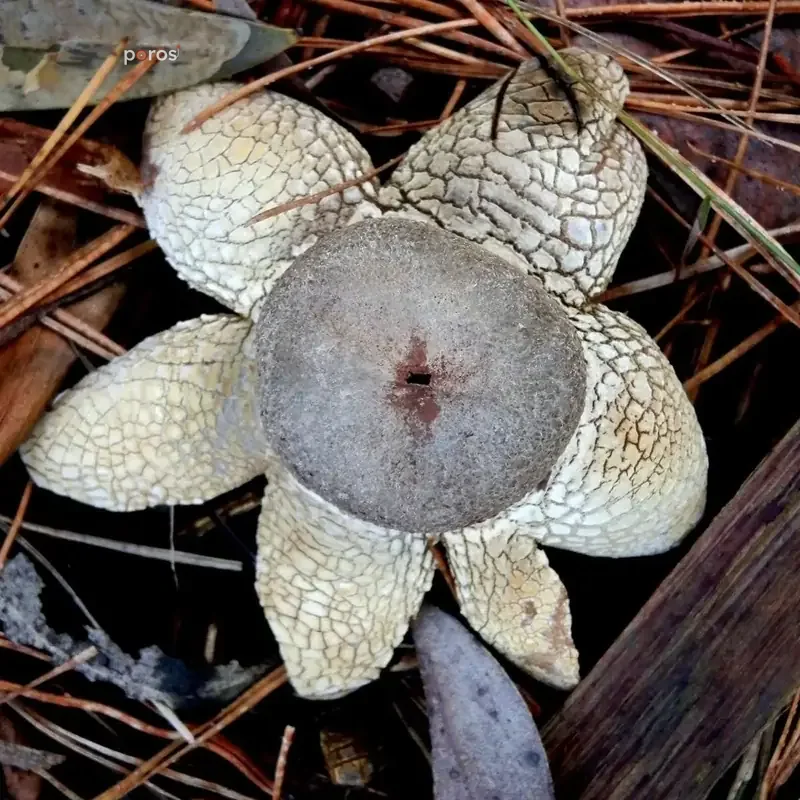


Barometer earthstar
Astraeus hygrometricus · Diplocystidiaceae
The barometer earthstar (Astraeus hygrometricus) is a small puffball of sandy and stony soil whose thick outer skin splits into star-like rays.
Last updated: Prepared by the Poros Mantar editorial team6 sources checkedReport a correction
The barometer earthstar (Astraeus hygrometricus) is a small puffball of sandy and stony soil whose thick outer skin splits into star-like rays. The rays curl inwards over the spore sac in dry weather and open again when it is damp, hence the name. It is not edible: it is tough and tasteless, and the young closed balls look like poisonous earthballs.
Also called: hygroscopic earthstar, false earthstar Turkish: Yer yıldızı mantarı, çatlak yer yıldızı Synonyms: Geastrum hygrometricum
How to recognise it
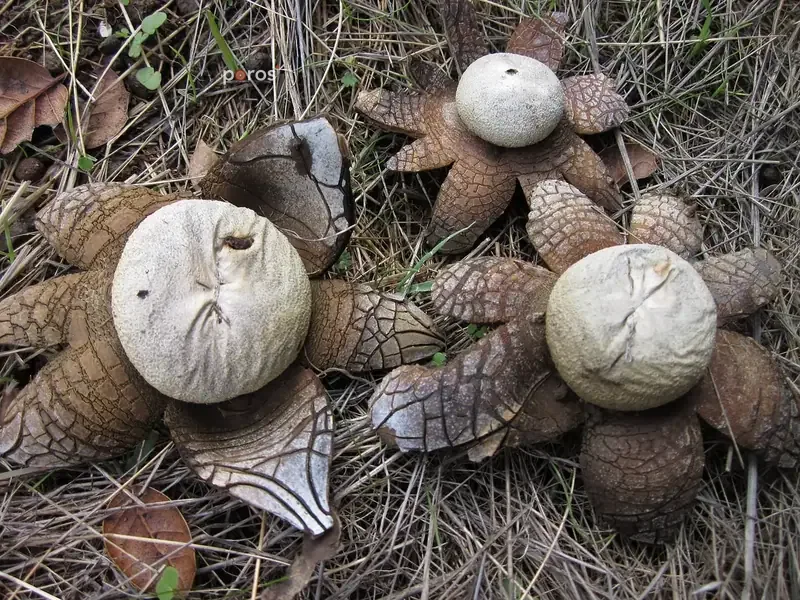
Barometer earthstar, part by part
No ring or volva Spore print: Brown No distinctive smell; the rays are hard when dry and flexible when damp.

When and where
Mar–Apr, Dec–Jan
- Janin season
- Feb
- Marin season
- Aprin season
- May
- Jun
- Jul
- Aug
- Sep
- Oct
- Nov
- Decin season
The barometer earthstar's fruit body lasts for months, so it can be seen all year; our Turkish records fall between December and April, most of them in January.
Type Inedible
Months seen DecemberJanuaryMarchApril
Regions Central Anatolia RegionMediterranean RegionAegean RegionMarmara RegionManisaAntalyaMuğlaAnkaraIstanbulKırklareli
Where does barometer earthstar grow?
On sandy, stony, lime-free and dry soils; it forms partnerships with trees such as pines and oaks. It grows singly or in small groups on path edges, in open woodland and in scrub.
Where is barometer earthstar found in Turkey?
Our map data (GBIF and iNaturalist) holds 15 Turkish records, mostly from Muğla and Kırklareli, plus Manisa, Afyonkarahisar, Ankara, Antalya, Denizli and Istanbul. They cluster on the dry, sandy slopes of the Aegean and Mediterranean regions.
Which months
- Jan6
- Feb0
- Mar3
- Apr2
- May0
- Jun0
- Jul0
- Aug0
- Sep0
- Oct0
- Nov0
- Dec4
barometer earthstar map of Turkey: all provinces and months →
8 provinces, 15 observations (GBIF, iNaturalist); months from observation dates. Record density also reflects where observers work.
Latest barometer earthstar observations
-
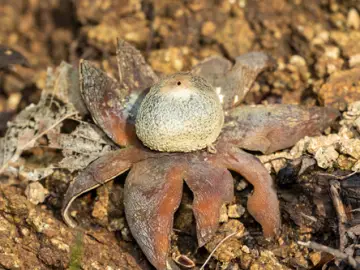 Kırklareli5 Apr 2026 · iNaturalist© Asrın Akıncıoğlu · CC BY
-
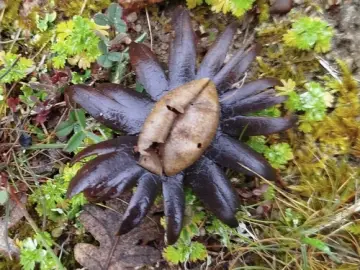 Kırklareli29 Mar 2026 · iNaturalist© Asrın Akıncıoğlu · CC BY
-
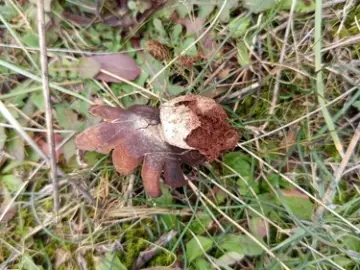 Manisa24 Jan 2026 · iNaturalist© Umut Nuri Erdoğan · CC BY
-
 Illustrative
Kırklareli5 Apr 2026 · iNaturalist
-
 Illustrative
Ankara12 Dec 2025 · iNaturalist
-
 Illustrative
Antalya24 Dec 2024 · iNaturalist
-
 Illustrative
Denizli20 Jan 2024 · iNaturalist
-
 Illustrative
Afyonkarahisar19 Mar 2023 · iNaturalist
- See on the map
On "illustrative" cards the image is a photo of the species; the observation photo cannot be shown here because of its licence, but can be seen at the source.
Look-alikes
What could it be confused with?
Barometer earthstar can be mistaken for the species below. Each card shows the look-alike and how it differs from Barometer earthstar.
 Poisonous
not Barometer earthstar
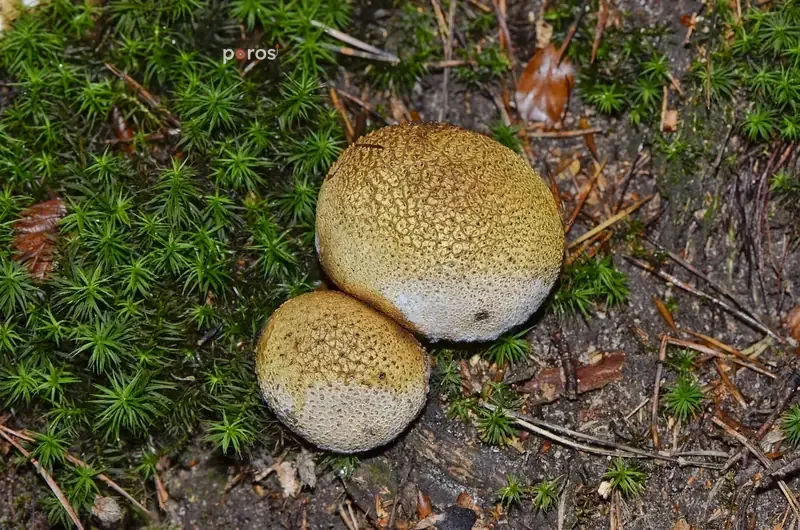
Common earthball Scleroderma citrinum
An unopened barometer earthstar looks like a small hard ball and can be mistaken for the common earthball. The earthball has a yellowish, scaly skin and a purple-black interior when young, and never splits into rays; the earthstar's outer skin eventually opens into a star.
 Inedible
not Barometer earthstar
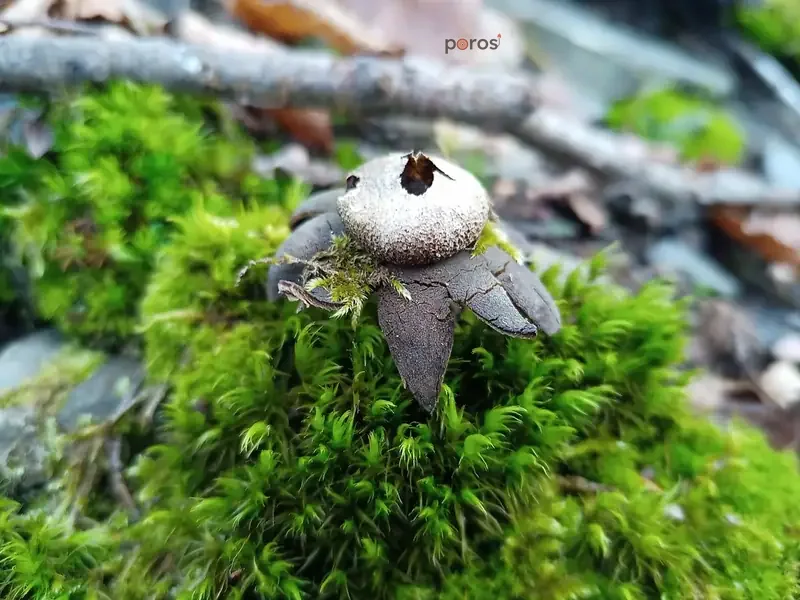
Earthstars Geastrum spp.
Geastrum earthstars do not close up again when dry, and the mouth of the inner sac is usually neat, pointed or grooved. The barometer earthstar's rays close in dry weather and their inner faces are crazed like a net.
 Edible species
not Barometer earthstar
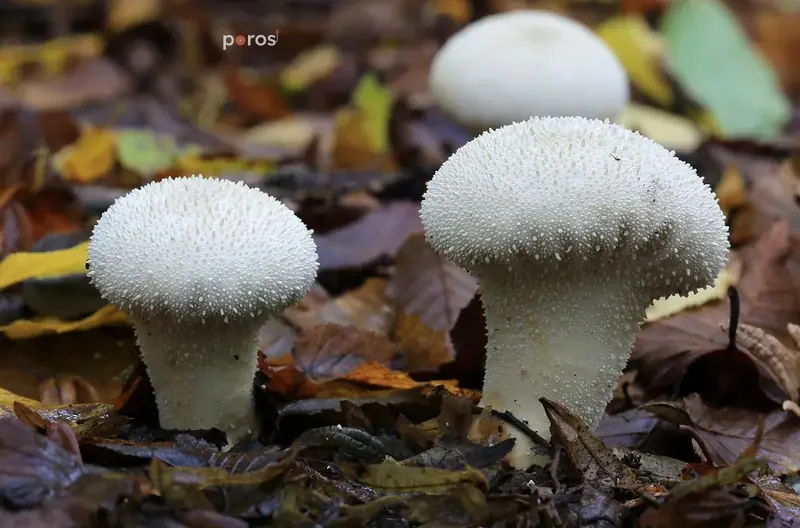
Common puffball Lycoperdon perlatum
The common puffball never opens into a star; when young it is pure white and soft inside, with small pointed spines on the surface. The young barometer earthstar is hard and its thick outer skin splits into rays.
What it contains
Mature specimens are leathery and powdery and have no culinary value. Young balls are reported to be eaten in parts of Asia, but those populations have since been described as separate species.
General information, not a health claim.
The barometer earthstar is not considered poisonous, but it is tough and tasteless, and its young closed balls are hard to tell from poisonous earthballs. Cut one in half: a purple-black interior means an earthball. It should not be picked. If poisoning is suspected, call poison control and keep any leftover mushroom.
Frequently asked questions
Is the barometer earthstar edible?
No. Mature specimens are tough, leathery and tasteless, and young ones can be confused with poisonous earthballs, so they should not be picked.
Is it poisonous?
It is not known to be poisonous itself. The danger lies in mistaking the closed young balls for poisonous earthballs.
Why is it called a barometer?
Its rays react to humidity: they curl inwards over the ball in dry weather and open again after rain or dew.
How do you tell it from an earthball?
Cut it in half: an earthball is purple-black inside when young and its skin never splits into rays. The earthstar's outer skin splits into thick rays around a thin-walled inner sac.
Where does it grow?
On sandy, stony, dry soils, usually near pines and oaks; along paths and in scrub.
When can you see it?
Its fruit body lasts for months, so it can be found all year; our Turkish records run from December to April.
Where is it found in Turkey?
Our map data has 15 records from Muğla, Kırklareli, Manisa, Afyonkarahisar, Ankara, Antalya, Denizli and Istanbul.
What is its Turkish name?
Its Turkish name on iNaturalist is çatlak yer yıldızı; people usually search for it as yer yıldızı mantarı.
Is the barometer earthstar an earthstar fungus?
It looks like one, but it is not a true earthstar. True earthstars belong to the genus Geastrum; the barometer earthstar (Astraeus) is closer to boletes, and its rays open in wet weather and close when dry.
What is the collared earthstar?
The collared earthstar (Geastrum triplex) is a different species from the barometer earthstar. Its outer skin splits into rays and often leaves a collar-like saucer under the central spore sac. It grows in leaf litter and is not eaten.
Is a star mushroom an earthstar?
Usually. 'Star mushroom' and 'star-shaped mushroom' most often mean an earthstar: the outer skin splits into star-like rays around a puffball-like spore sac. The barometer earthstar is one of them; most other earthstars belong to the genus Geastrum. None of them are eaten.
When is barometer earthstar season in Turkey?
In our calendar, barometer earthstar season runs Mar–Apr, Dec–Jan. The barometer earthstar's fruit body lasts for months, so it can be seen all year; our Turkish records fall between December and April, most of them in January.
Where does barometer earthstar grow?
On sandy, stony, lime-free and dry soils; it forms partnerships with trees such as pines and oaks. It grows singly or in small groups on path edges, in open woodland and in scrub.
Where is barometer earthstar found in Turkey?
Our map data (GBIF and iNaturalist) holds 15 Turkish records, mostly from Muğla and Kırklareli, plus Manisa, Afyonkarahisar, Ankara, Antalya, Denizli and Istanbul. They cluster on the dry, sandy slopes of the Aegean and Mediterranean regions.
What can barometer earthstar be confused with?
Barometer earthstar can be confused with common earthball (Scleroderma citrinum, poisonous), earthstars (Geastrum spp., inedible) and common puffball (Lycoperdon perlatum, edible species). Look-alikes are compared on this page.
What is barometer earthstar called in Turkish?
In Turkish, barometer earthstar (Astraeus hygrometricus) is called Yer yıldızı mantarı; other local names include çatlak yer yıldızı.
Related species
-
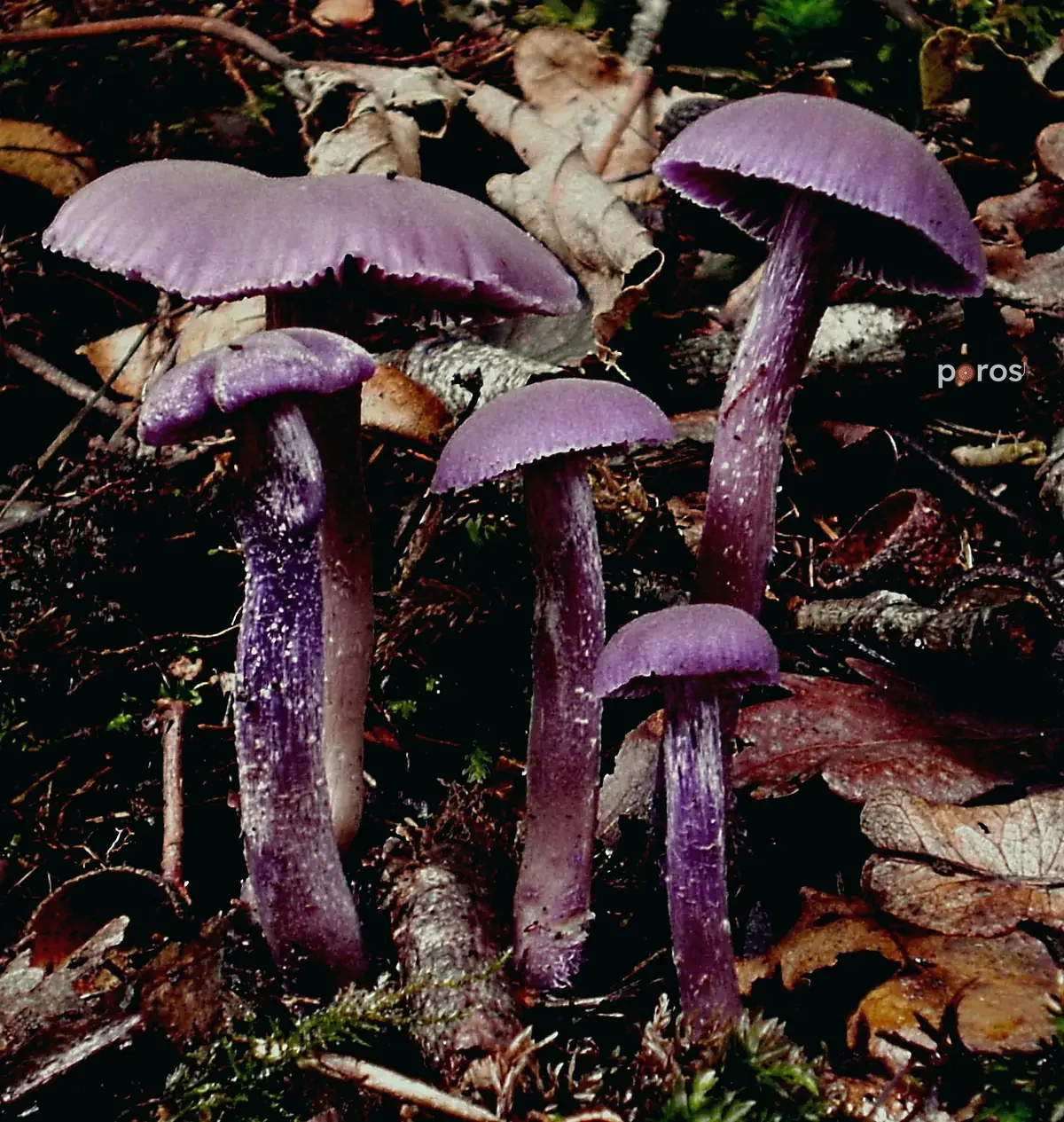 Amethyst deceiverLaccaria amethystinaInedible
-
 Artist’s bracketGanoderma applanatumInedible
-
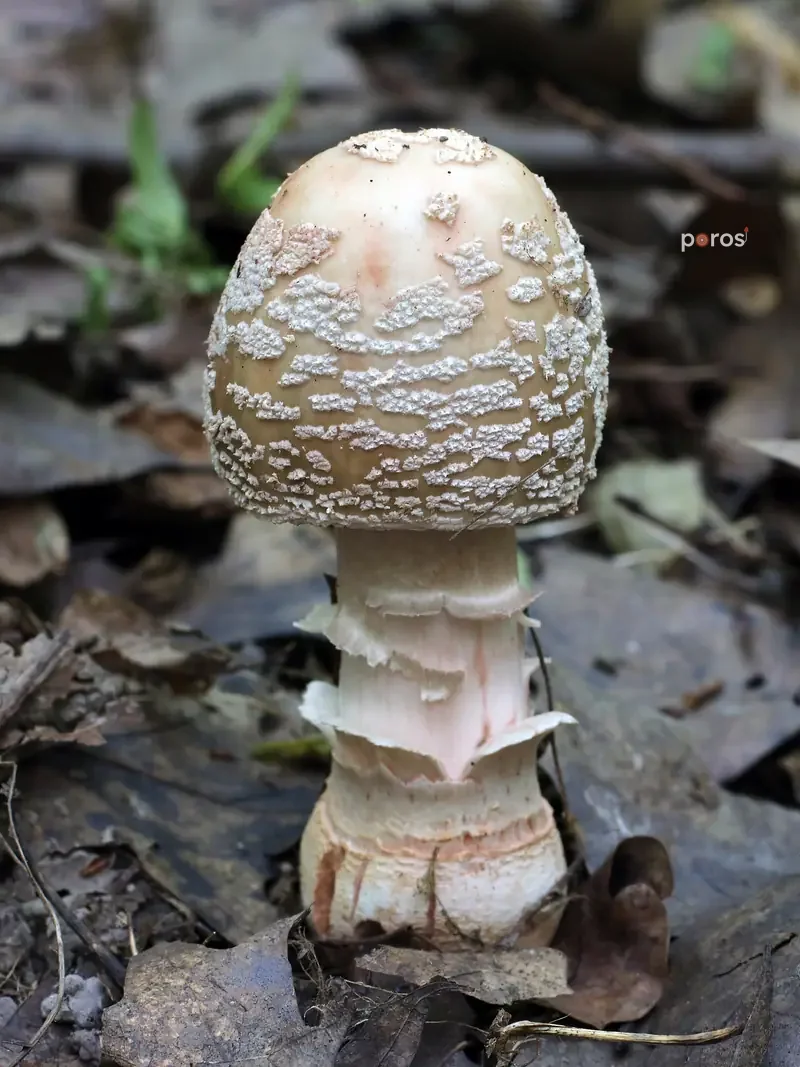 BlusherAmanita rubescensInedible
-
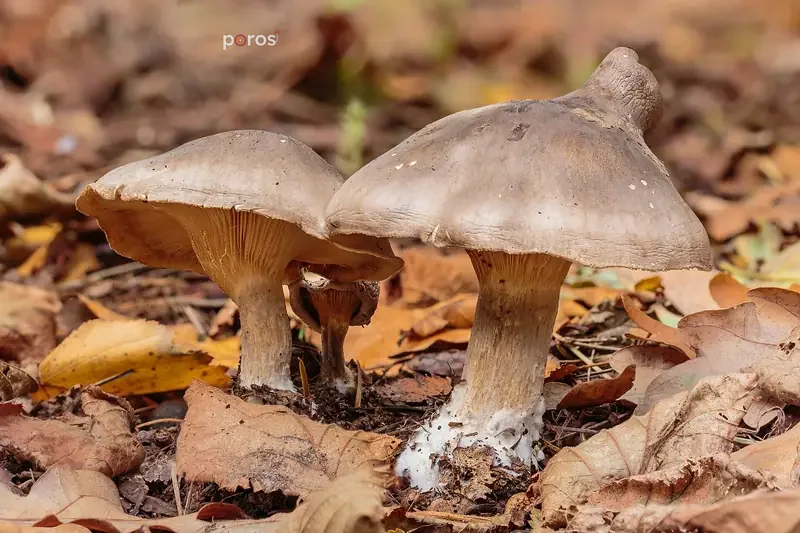 Clouded funnelClitocybe nebularisInedible
-
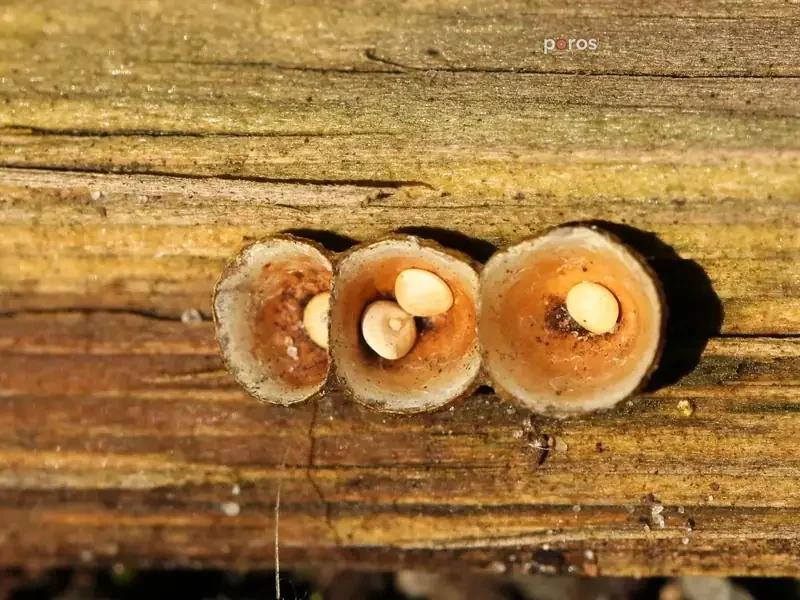 Common bird’s nest fungusCrucibulum laeveInedible
-
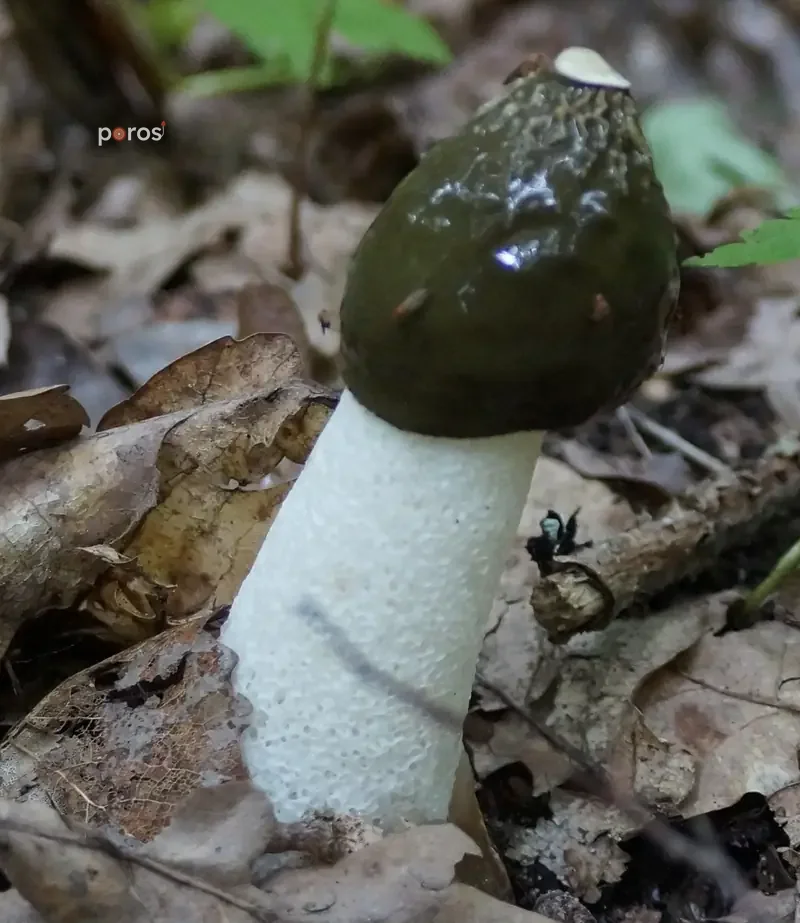 Common stinkhornPhallus impudicusInedible
-
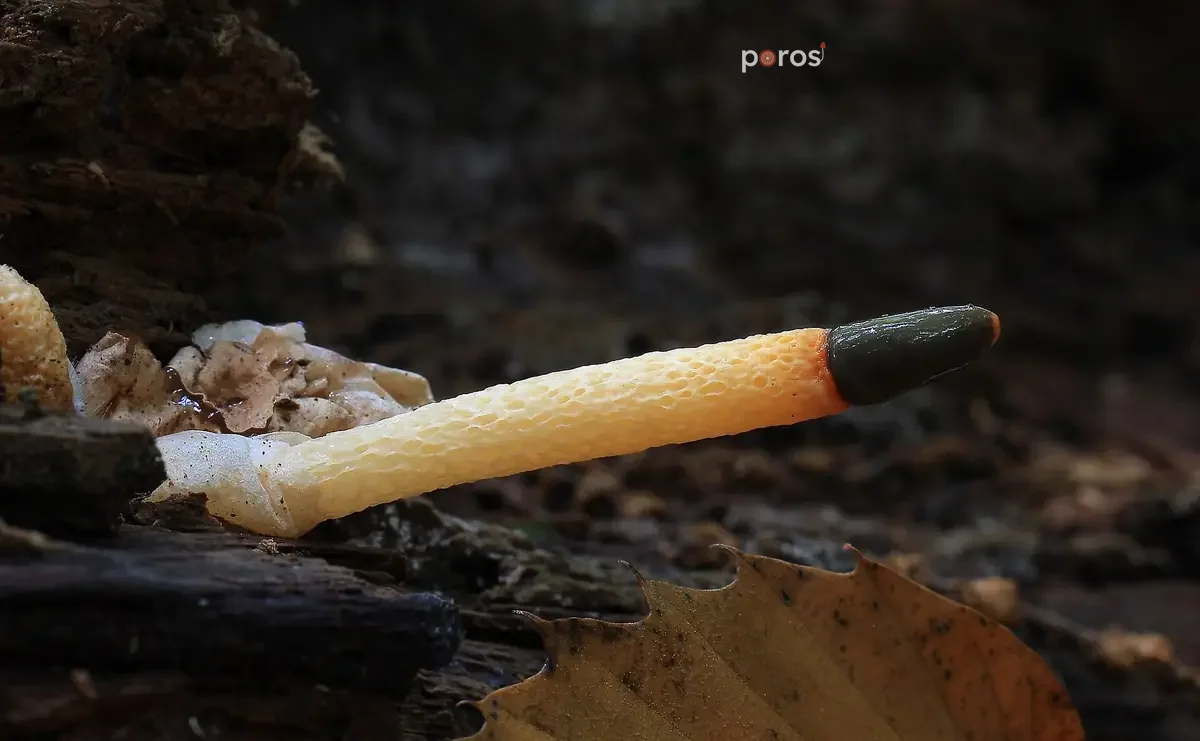 Dog stinkhornMutinus caninusInedible
-
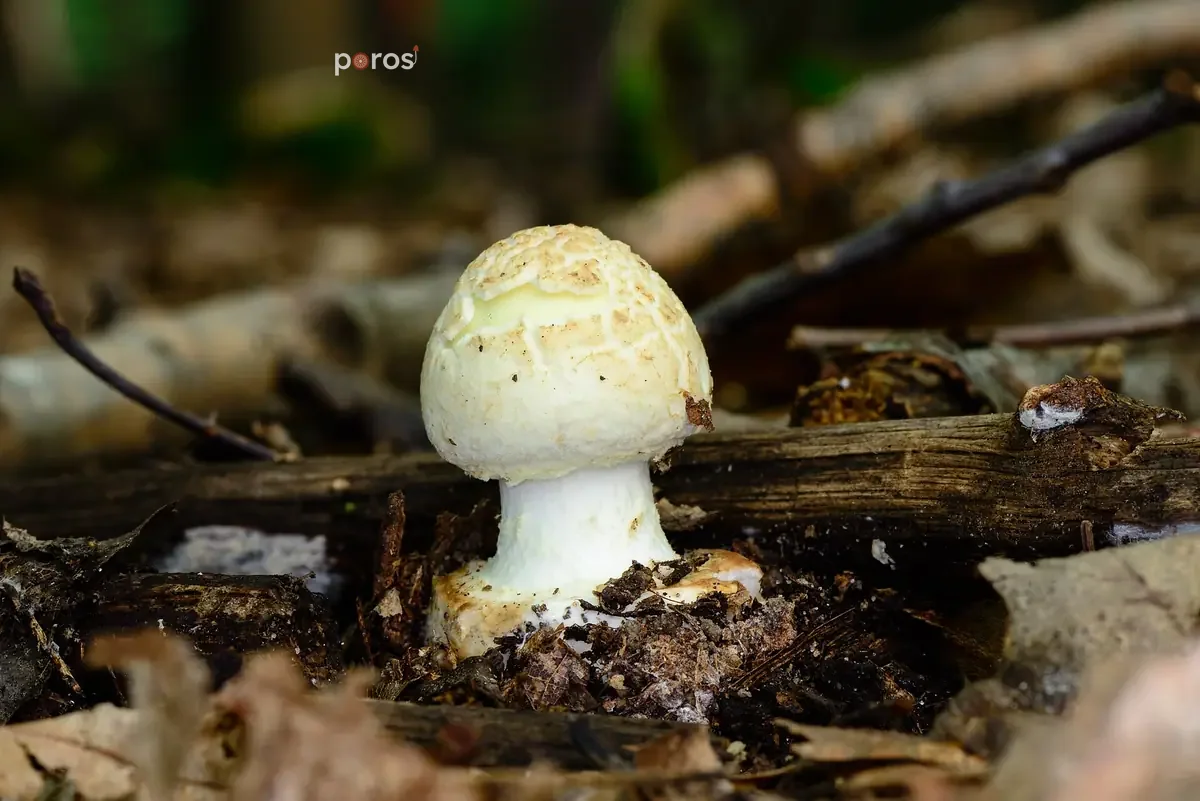 False death capAmanita citrinaInedible
Sources
- Pavithra ve ark. (2016), Mycology: Astraeus hygrometricus biyoaktif potansiyeli pubmed.ncbi.nlm.nih.gov
- Adanacıoğlu ve ark. (2014), ANADOLU (Ege Tarımsal Araştırma Enstitüsü): Türkiye makromantar genetik kaynakları I. Ege Bölgesi dergipark.org.tr
- Wikipedia (EN): Astraeus hygrometricus en.wikipedia.org
All sources (6)
- First Nature: Astraeus hygrometricus first-nature.com
- iNaturalist: Astraeus hygrometricus (Türkçe ad ve Türkiye gözlemleri) inaturalist.org
- GBIF: Türkiye kayıtları gbif.org
Photo credits (11)
- File:Astraeus hygrometricus 74387270.jpg · Leuba Ridgway · CC BY 4.0
- File:Astraeus hygrometricus 122239.jpg · Richard Sullivan (enchplant) · CC BY-SA 3.0
- File:Astraeus hygrometricus 57729786.jpg · garmonb0zia · CC0
- Astraeus hygrometricus · iNaturalist #37486750 · Björn Sothmann · CC BY-SA 4.0
- Astraeus hygrometricus · iNaturalist #37486750 · Björn Sothmann · CC BY-SA 4.0
- File:Astraeus hygrometricus 6166372.jpg · Millie Basden · CC BY 4.0
- Astraeus hygrometricus · iNaturalist #254512883 · Michal Honskus · CC BY 4.0
- Astraeus hygrometricus · iNaturalist #261213613 · mel letterman · CC BY 4.0
- iNaturalist: Kırklareli, 5 Apr 2026 · Asrın Akıncıoğlu · CC BY
- iNaturalist: Kırklareli, 29 Mar 2026 · Asrın Akıncıoğlu · CC BY
- iNaturalist: Manisa, 24 Jan 2026 · Umut Nuri Erdoğan · CC BY


