
Cedar cup
Geopora sumneriana · Pyronemataceae

The cedar cup (Geopora sumneriana) develops in late winter and spring as a hollow ball buried in the soil under cedars, then splits open at the surface like a star into a cup 3–7 cm across. Its outside is covered in thick brown hairs with soil stuck to them, and the inside is cream to pale grey. In Turkey most records come from cedars in Istanbul and Kayseri. It is not edible.
Also called: cedar cup Turkish: Koca dalgatopu mantarı, koca dalgatopu mantarı Synonyms: Peziza sumneriana, Sepultaria sumneriana
Last updated: Prepared by the Poros Mantar editorial team5 sources checkedReport a correction
Cedar cup photos
-
© Django Grootmyers · CC BY-SA 4.0
-

© Björn Sothmann · CC BY-SA 4.0
-

© Björn Sothmann · CC BY-SA 4.0
-

© Kristof Zyskowski · CC BY 4.0
-

© Umut Nuri Erdoğan · CC BY 4.0
-

© Jason Grant · CC BY 4.0
-

© Anne Taylor · CC0
-

© Cara Ennis · CC BY 4.0
These are licensed records of this species; photos alone are not enough to identify a mushroom.
Is the cedar cup poisonous?
Among cup fungi that open from the soil, the violet crown cup is poisonous and others are poisonous raw. If poisoning is suspected, call 112 at once (Turkish poison centre: 114) and keep any leftover mushroom.
Is the cedar cup edible?
No. Its edibility is unknown and it is treated as inedible.
How to recognise it
Appearance of cedar cup
No ring or volva Spore print: White Not distinctive.
When and where
When to find cedar cup
Feb–May
It appears in late winter and spring, February to May; our Turkish records fall in these months too.
Where does cedar cup grow?
It grows buried in soil under cedars (Cedrus), mostly planted cedars in parks, gardens and cemeteries, and is mycorrhizal with them.
Where is cedar cup found in Turkey?
Our map data (GBIF and iNaturalist) holds 21 Turkish records: Istanbul (12), Kayseri (6), Diyarbakır (1), Ankara (1), Muğla (1). The records are from February, March, April, May. GBIF lists 63 Turkish records in total, including literature surveys.
- İstanbul10
- Kayseri6
- Diyarbakır1
- Ankara1
- Muğla1
Which months
- Jan0
- Feb2
- Mar9
- Apr6
- May2
- Jun0
- Jul0
- Aug0
- Sep0
- Oct0
- Nov0
- Dec0
5 provinces, 19 observations (GBIF, iNaturalist); months from observation dates. Record density also reflects where observers work.
Latest cedar cup observations
-
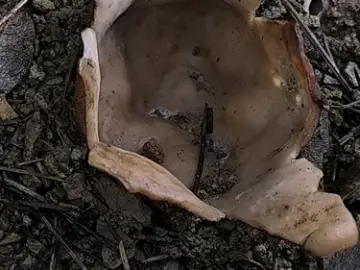 İstanbul28 Mar 2026 · iNaturalist© Umut Nuri Erdoğan · CC BY
-
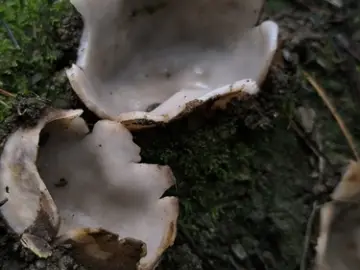 İstanbul28 Mar 2026 · iNaturalist© Umut Nuri Erdoğan · CC BY
-
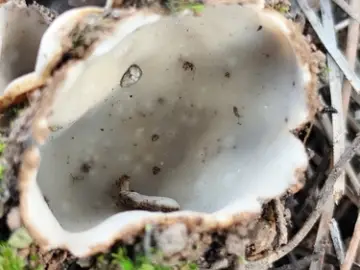 Diyarbakır24 Mar 2026 · iNaturalist© Mustafa Arisli · CC BY
-
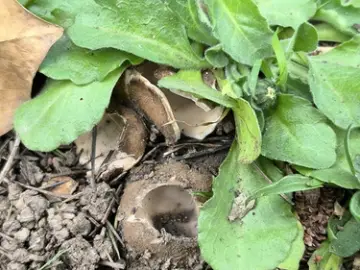 İstanbul16 Mar 2026 · iNaturalist© Umut Nuri Erdoğan · CC BY
-
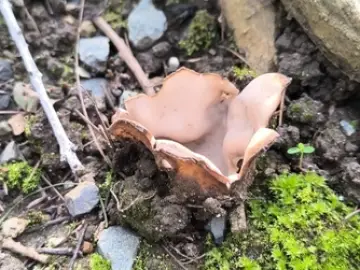 İstanbul6 Mar 2026 · iNaturalist© Umut Nuri Erdoğan · CC BY
-
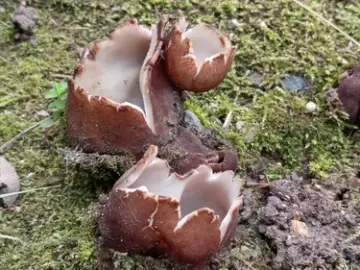 İstanbul28 Feb 2025 · iNaturalist© Umut Nuri Erdoğan · CC BY
-
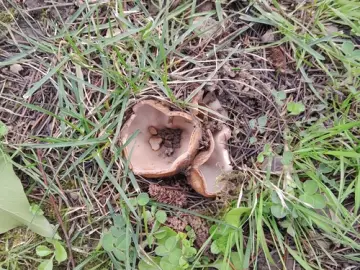 İstanbul26 Mar 2024 · iNaturalist© Güneş Bodur · CC BY
-
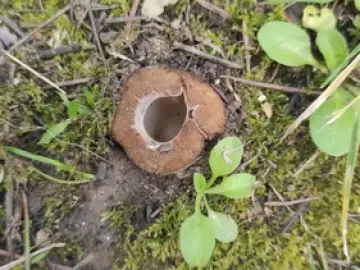 İstanbul14 Mar 2024 · iNaturalist© Umut Nuri Erdoğan · CC BY
- See on the map
Look-alikes
What could it be confused with?
Cedar cup can be mistaken for the species below. Each comparison shows Cedar cup on the left, the look-alike on the right, and how to tell them apart.
Take care when foraging: Poisonous look-alikes of Cedar cup come first. If in doubt, leave it.

Violet crown cup Sarcosphaera coronaria
How to tell The violet crown cup also starts as a half-buried ball and opens like a star, but it is violet-lilac inside, smooth outside and not tied to cedars; it is poisonous.
Other look-alikes (2)
 Inedible
not Cedar cup
Sooty cup Dissingia leucomelaena
The sooty cup is dark grey-brown to blackish inside with a short, white, ribbed stem.
 Inedible
not Cedar cup
Blistered cup Peziza vesiculosa
The blistered cup grows on dung and compost, is mealy rather than hairy outside and blistered inside; it is poisonous raw.
Cedar cup and its look-alikes compared
| Species | Status | Underside | Spore print | Season |
|---|---|---|---|---|
| Cedar cupGeopora sumneriana | Inedible | The spore-bearing surface is the smooth, cream inside of the cup | White | Feb–May |
| Violet crown cupSarcosphaera coronaria | Poisonous | The inner surface of the cup is smooth and matt, lilac-violet when young and brownish-purple with age | White | Mar–Jun |
| Sooty cupDissingia leucomelaena | Inedible | The spore-bearing surface is the inside of the cup, smooth | White | Jan–May |
| Blistered cupPeziza vesiculosa | Inedible | The spore-bearing surface is the inside of the cup, blistered in the centre | White | Jun |
The table is compiled from each species page. The status column is a guide only; do not eat a wild mushroom unless an expert has seen it in person. Compare look-alikes side by side
The edibility of the cedar cup is unknown, so treat it as inedible. Among cup fungi that open from the soil, the violet crown cup is poisonous and others are poisonous raw. If poisoning is suspected, call 112 or the Turkish poison centre (114).
Frequently asked questions
Is the cedar cup poisonous?
Among cup fungi that open from the soil, the violet crown cup is poisonous and others are poisonous raw. If poisoning is suspected, call 112 at once (Turkish poison centre: 114) and keep any leftover mushroom.
Is the cedar cup edible?
No. Its edibility is unknown and it is treated as inedible.
How do you identify it?
In late winter or spring under a cedar, a cup 3–7 cm across opening star-like from the soil, thickly brown-hairy and soil-covered outside, cream inside.
What can it be confused with?
The main look-alikes are: Violet crown cup, Sooty cup, Blistered cup. The differences are listed in the look-alikes section; with poisonous look-alikes, always check the cross-section and habitat.
Where does it grow?
It grows buried in soil under cedars (Cedrus), mostly planted cedars in parks, gardens and cemeteries, and is mycorrhizal with them.
When does it appear?
It appears in late winter and spring, February to May; our Turkish records fall in these months too.
Why does it grow under cedars?
It is mycorrhizal with cedars, exchanging nutrients with their roots, so it appears under planted cedars in parks and gardens as well as in natural cedar forests.
Where is it found in Turkey?
Our map data holds 21 records: Istanbul (12), Kayseri (6) and one each from Diyarbakır, Ankara and Muğla.
When is cedar cup season in Turkey?
In our calendar, cedar cup season runs Feb–May. It appears in late winter and spring, February to May; our Turkish records fall in these months too.
Where does cedar cup grow?
It grows buried in soil under cedars (Cedrus), mostly planted cedars in parks, gardens and cemeteries, and is mycorrhizal with them.
Where is cedar cup found in Turkey?
Our map data (GBIF and iNaturalist) holds 21 Turkish records: Istanbul (12), Kayseri (6), Diyarbakır (1), Ankara (1), Muğla (1). The records are from February, March, April, May. GBIF lists 63 Turkish records in total, including literature surveys.
What can cedar cup be confused with?
Cedar cup can be confused with violet crown cup (Sarcosphaera coronaria, poisonous), sooty cup (Dissingia leucomelaena, inedible) and blistered cup (Peziza vesiculosa, inedible). Look-alikes are compared on this page.
What is cedar cup called in Turkish?
In Turkish, cedar cup (Geopora sumneriana) is called Koca dalgatopu mantarı.
Related species
-
 Orange peel fungusAleuria aurantiaInedible
-
 Amethyst deceiverLaccaria amethystinaInedible
-
 Anemone stinkhornAseroe rubraInedible
-
 Artist’s bracketGanoderma applanatumInedible
-
 Barometer earthstarAstraeus hygrometricusInedible
-
 Birch polyporeFomitopsis betulinaInedible
-
 Bitter boleteTylopilus felleusInedible
-
 Bitter oysterPanellus stipticusInedible
Sources
- Wikipedia (EN): Geopora sumneriana en.wikipedia.org
- iNaturalist: Geopora sumneriana (takson, adlar ve fotoğraflar) inaturalist.org
- GBIF: Geopora sumneriana gbif.org
All sources (5)
- GBIF: Türkiye kayıtları gbif.org
- iNaturalist: Türkiye gözlemleri (araştırma düzeyi) inaturalist.org
Photo credits (16)
- Geopora sumneriana · iNaturalist #42212189 · Django Grootmyers · CC BY-SA 4.0
- Geopora sumneriana · iNaturalist #72277522 · Björn Sothmann · CC BY-SA 4.0
- Geopora sumneriana · iNaturalist #39649860 · Björn Sothmann · CC BY-SA 4.0
- Geopora sumneriana · iNaturalist #74463192 · Kristof Zyskowski · CC BY 4.0
- Geopora sumneriana · iNaturalist #202395121 · Umut Nuri Erdoğan · CC BY 4.0
- Geopora sumneriana · iNaturalist #265691201 · Jason Grant · CC BY 4.0
- Geopora sumneriana · iNaturalist #347251413 · Anne Taylor · CC0
- Geopora sumneriana · iNaturalist #340463398 · Cara Ennis · CC BY 4.0
- iNaturalist: İstanbul, 28 Mar 2026 · Umut Nuri Erdoğan · CC BY
- iNaturalist: İstanbul, 28 Mar 2026 · Umut Nuri Erdoğan · CC BY
- iNaturalist: Diyarbakır, 24 Mar 2026 · Mustafa Arisli · CC BY
- iNaturalist: İstanbul, 16 Mar 2026 · Umut Nuri Erdoğan · CC BY
- iNaturalist: İstanbul, 6 Mar 2026 · Umut Nuri Erdoğan · CC BY
- iNaturalist: İstanbul, 28 Feb 2025 · Umut Nuri Erdoğan · CC BY
- iNaturalist: İstanbul, 26 Mar 2024 · Güneş Bodur · CC BY
- iNaturalist: İstanbul, 14 Mar 2024 · Umut Nuri Erdoğan · CC BY