
Hare’s ear (hare's ear, donkey ear)
Otidea onotica · Otideaceae

The hare's ear (Otidea onotica) is a cup fungus 3–10 cm tall, shaped like a tall, upright ear split down one side, yellow-orange to pinkish, that grows in clusters on the forest floor; it is also called donkey ear. The inner surface often shows pink tones. Its edibility is disputed; our advice is not to eat it.
Also called: hare's ear, donkey ear Turkish: Otidea onotica Synonyms: Peziza onotica
Last updated: Prepared by the Poros Mantar editorial team5 sources checkedReport a correction
Other orange mushrooms → · Other yellow mushrooms → · Other pink mushrooms →
Hare’s ear photos
-
© Leanne Stacy Reitan · CC0
-

© Татьяна Максимова · CC BY 4.0
-

© Erwin Sieben · CC0
-

© Piermario Maculan · CC0
-

© Matthew Rozanoff · CC BY 4.0
-

© Rosie · CC0
-

© Max Polak · CC BY 4.0
-

© Dmitriy Bochkov · CC BY 4.0
-
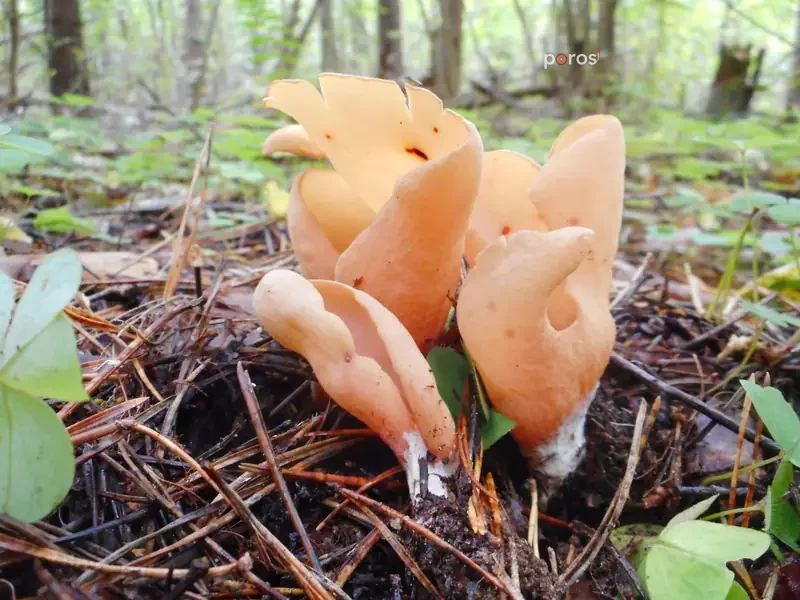
In habitat© Eugene Popov · CC BY 4.0
-

Stem© Manuela Fiorini · CC BY 4.0
-

Cap© Adam Bryant · CC BY-SA 4.0


These are licensed records of this species; photos alone are not enough to identify a mushroom.
Is the hare's ear poisonous?
Some cup fungi are poisonous raw. If poisoning is suspected, call 112 at once (Turkish poison centre: 114) and keep any leftover mushroom.
Is the hare's ear edible?
Its edibility is disputed; our advice is not to eat it.
How to recognise it
Appearance of hare's ear
No ring or volva Spore print: White Not distinctive.
Where does hare's ear grow?
It grows in clusters in leaf litter and on mossy soil in broadleaf and mixed woods, especially under beech and oak.
Where is hare's ear found in Turkey?
Our map data (GBIF and iNaturalist) holds 1 Turkish record: Ankara (1). The records are from November.
Which months
- Jan0
- Feb0
- Mar0
- Apr0
- May0
- Jun0
- Jul0
- Aug0
- Sep0
- Oct0
- Nov1
- Dec0
1 provinces, 1 observations (GBIF, iNaturalist); months from observation dates. Record density also reflects where observers work.
Latest hare's ear observations
 Illustrative
On "illustrative" cards the image is a photo of the species; the observation photo cannot be shown here because of its licence, but can be seen at the source.
Look-alikes
What could it be confused with?
Hare’s ear can be mistaken for the species below. Each comparison shows Hare’s ear on the left, the look-alike on the right, and how to tell them apart.

Orange peel fungus Aleuria aurantia
How to tell The orange peel fungus is a brighter orange, an open cup or saucer rather than a split ear, and grows on bare soil.

Blistered cup Peziza vesiculosa
How to tell The blistered cup is a cream-brown, blistered cup on dung or compost; it is poisonous raw.
Hare’s ear and its look-alikes compared
| Species | Status | Underside | Spore print | Season |
|---|---|---|---|---|
| Hare’s earOtidea onotica | Inedible | The spore-bearing surface is the inner face of the ear, smooth | White | Nov |
| Orange peel fungusAleuria aurantia | Inedible | No gills or pores | White | Sep–Jan |
| Blistered cupPeziza vesiculosa | Inedible | The spore-bearing surface is the inside of the cup, blistered in the centre | White | Jun |
The table is compiled from each species page. The status column is a guide only; do not eat a wild mushroom unless an expert has seen it in person. Compare look-alikes side by side
The edibility of the hare's ear is disputed: some sources call it edible, others inedible. Some cup fungi are poisonous raw. Our advice is not to eat it. If poisoning is suspected, call 112 or the Turkish poison centre (114).
Frequently asked questions
Is the hare's ear poisonous?
Some cup fungi are poisonous raw. If poisoning is suspected, call 112 at once (Turkish poison centre: 114) and keep any leftover mushroom.
Is the hare's ear edible?
Its edibility is disputed; our advice is not to eat it.
How do you identify it?
Clusters of tall, upright, ear-shaped cups split on one side, yellow-orange with pink tones inside, on the forest floor.
What can it be confused with?
The main look-alikes are: Orange peel fungus, Blistered cup. The differences are listed in the look-alikes section; with poisonous look-alikes, always check the cross-section and habitat.
Where does it grow?
It grows in clusters in leaf litter and on mossy soil in broadleaf and mixed woods, especially under beech and oak.
When does it appear?
It fruits from late summer to late autumn; the single Turkish record is from November.
Why is it called hare's ear?
Its cup splits on one side and grows into a tall, upright ear; the Latin onotica also means like a donkey's ear.
Is it found in Turkey?
Our map data holds a single November record from Ankara.
When is hare's ear season in Turkey?
In our calendar, hare's ear season runs Nov. It fruits from late summer to late autumn; the single Turkish record is from November.
Where does hare's ear grow?
It grows in clusters in leaf litter and on mossy soil in broadleaf and mixed woods, especially under beech and oak.
Where is hare's ear found in Turkey?
Our map data (GBIF and iNaturalist) holds 1 Turkish record: Ankara (1). The records are from November.
What can hare's ear be confused with?
Hare's ear can be confused with orange peel fungus (Aleuria aurantia, inedible) and blistered cup (Peziza vesiculosa, inedible). Look-alikes are compared on this page.
What is hare's ear called in Turkish?
In Turkish, hare's ear (Otidea onotica) is called Otidea onotica.
Related species
-
 Amethyst deceiverLaccaria amethystinaInedible
-
 Anemone stinkhornAseroe rubraInedible
-
 Artist’s bracketGanoderma applanatumInedible
-
 Barometer earthstarAstraeus hygrometricusInedible
-
 Birch polyporeFomitopsis betulinaInedible
-
 Bitter boleteTylopilus felleusInedible
-
 Bitter oysterPanellus stipticusInedible
-
 Black witches’ butterExidia glandulosaInedible
Sources
- Wikipedia (EN): Otidea onotica en.wikipedia.org
- iNaturalist: Otidea onotica (takson, adlar ve fotoğraflar) inaturalist.org
- GBIF: Otidea onotica gbif.org
All sources (5)
- GBIF: Türkiye kayıtları gbif.org
- iNaturalist: Türkiye gözlemleri (araştırma düzeyi) inaturalist.org
Photo credits (11)
- Otidea onotica · iNaturalist #245871013 · Leanne Stacy Reitan · CC0
- Otidea onotica · iNaturalist #307917695 · Татьяна Максимова · CC BY 4.0
- Otidea onotica · iNaturalist #189319153 · Erwin Sieben · CC0
- Otidea onotica · iNaturalist #191301270 · Piermario Maculan · CC0
- Otidea onotica · iNaturalist #177036746 · Matthew Rozanoff · CC BY 4.0
- Otidea onotica · iNaturalist #138321391 · Rosie · CC0
- Otidea onotica · iNaturalist #137001061 · Max Polak · CC BY 4.0
- Otidea onotica · iNaturalist #237263962 · Dmitriy Bochkov · CC BY 4.0
- Otidea onotica · iNaturalist #93571755 · Eugene Popov · CC BY 4.0
- Otidea onotica · iNaturalist #320739002 · Manuela Fiorini · CC BY 4.0
- File:Otidea onotica 47845004.jpg · Adam Bryant · CC BY-SA 4.0
