


Violet crown cup
Sarcosphaera coronaria · Pezizaceae
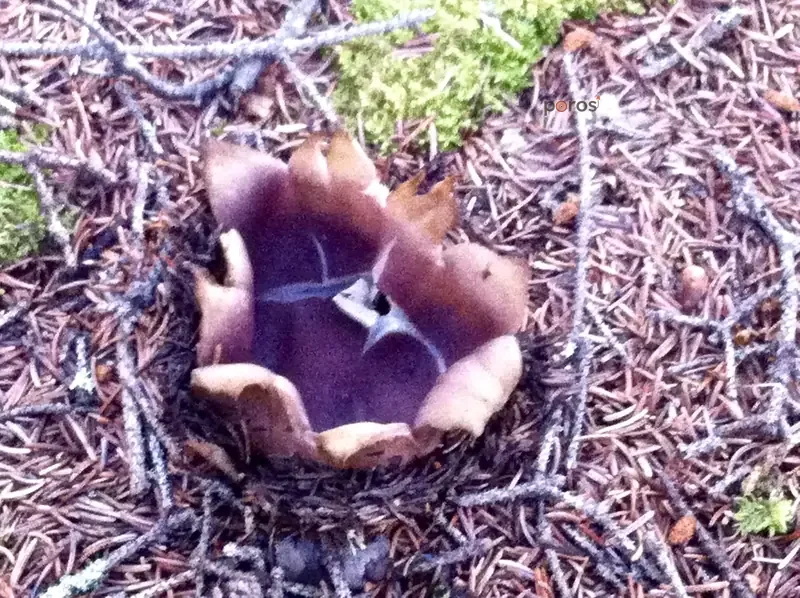
The violet crown cup (Sarcosphaera coronaria) starts life as a hollow ball inside the soil, then breaks the surface and splits into a star-shaped cup with a violet-lilac inside.
Last updated: Prepared by the Poros Mantar editorial team8 sources checkedReport a correction
POISONOUS — do not eat.
The violet crown cup is poisonous. It accumulates arsenic from the soil, and fatal poisonings after eating it raw or undercooked have been reported in Europe. Some old sources call it edible when cooked, but this is no longer recommended. Do not pick or eat it; if poisoning is suspected, call poison control and keep any leftover mushroom.
The violet crown cup (Sarcosphaera coronaria) starts life as a hollow ball inside the soil, then breaks the surface and splits into a star-shaped cup with a violet-lilac inside. In Turkey it is also called çukurçanak, and the Ordu provincial agriculture directorate's poisonous mushroom leaflet lists it as kuzu kulağı. It accumulates arsenic, and fatal poisonings after eating it raw or undercooked have been reported, so it is treated as poisonous.
Also called: pink crown, crown fungus Turkish: Kurt kulağı mantarı, çukurçanak, kuzu kulağı mantarı Synonyms: Sarcosphaera crassa, Sarcosphaera eximia
Which species is kuzu kulağı mantarı?
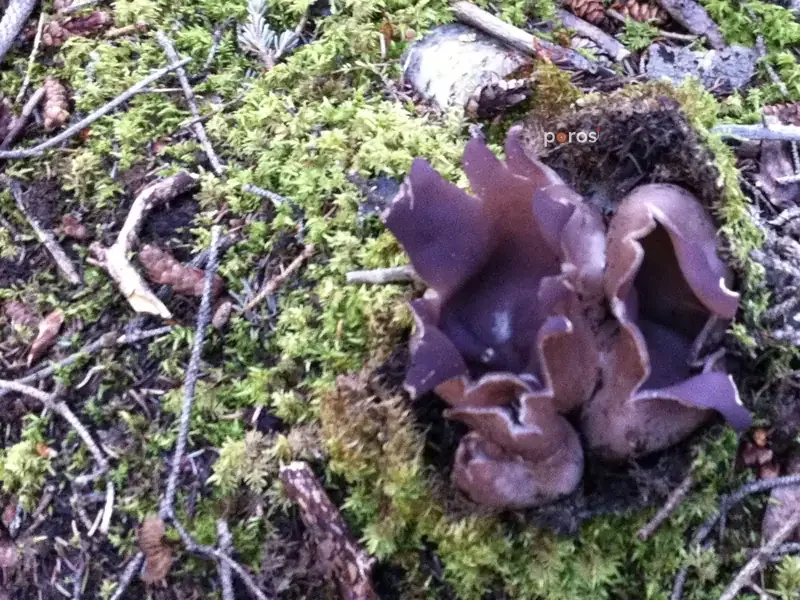
We find the name kuzu kulağı ("lamb's ear") in an official source for Sarcosphaera coronaria: the Ordu provincial agriculture directorate's poisonous mushroom leaflet lists this species as kuzu kulağı. In Turkey the same species is also called kurt kulağı ("wolf's ear") and çukurçanak. So the kuzu kulağı on this page is the toxic species that opens in the soil as a violet-lined cup.
In everyday Turkish the name is often confused with kuzugöbeği, the morel (Morchella): many people searching for "kuzu kulağı mantarı" actually mean the honeycomb-capped morel picked in spring. The names sound alike but the species are completely different; the morel is edible, the violet crown cup is poisonous. Kuzukulağı is also the Turkish name of sorrel (Rumex), a plant with no link to mushrooms.
Violet crown cup or morel: how to tell them apart
Both appear in spring, often near conifers, so they can end up in the same basket. The difference is shape. A morel has a clear stem and a honeycomb-pitted, conical or egg-shaped cap; cut lengthwise, stem and cap form one continuous hollow.
The violet crown cup has no stem. It develops as a hollow ball in the soil, then splits open at the top into 7–10 star-like lobes; its inner surface is smooth and lilac-violet, its outside whitish and soiled. If you see no pits, ridges or stem, it is not a morel. Another poisonous spring look-alike to watch for when picking morels is the brain-like false morel.
Does cooking make it safe?
No. Some old sources call the cooked violet crown cup edible, but the species' main problem is the arsenic it takes up from the soil: studies have measured more than 1 gram of arsenic per kilogram of dry matter. Arsenic is an element and is not destroyed by heat. Fatal poisonings after eating it raw or undercooked have also been reported in Europe. For these reasons this mushroom, whether called kuzu kulağı or kurt kulağı, is not recommended however it is cooked.
How to recognise it
Violet crown cup, part by part
No ring or volva Spore print: White No distinctive smell; the flesh is white, brittle and 2–3 mm thick.

When and where
Mar–Jun
- Jan
- Feb
- Marin season
- Aprin season
- Mayin season
- Junin season
- Jul
- Aug
- Sep
- Oct
- Nov
- Dec
The violet crown cup appears in spring, soon after snowmelt; Turkish records fall between February and June, most often in March and May.
Type Poisonous
Regions Southeastern Anatolia RegionBlack Sea RegionCentral Anatolia RegionMediterranean RegionAegean RegionGaziantepAntalyaOsmaniyeMuğlaKaramanAnkaraKastamonu
Where does violet crown cup grow?
On calcareous soil, mostly under conifers such as pine, spruce and cedar, sometimes in beech woods; it is thought to be mycorrhizal. It develops half-buried in the soil and appears singly or in small groups.
Where is violet crown cup found in Turkey?
Our map data (GBIF and iNaturalist) holds 10 Turkish records: Ankara, Osmaniye, Antalya, Kastamonu, Gaziantep, Muğla, Uşak and Karaman. They cluster in the conifer forests of Central Anatolia and the Mediterranean region.
Which months
- Jan0
- Feb1
- Mar3
- Apr2
- May3
- Jun1
- Jul0
- Aug0
- Sep0
- Oct0
- Nov0
- Dec0
8 provinces, 10 observations (GBIF, iNaturalist); months from observation dates. Record density also reflects where observers work.
Latest violet crown cup observations
-
 Illustrative
Ankara2 May 2026 · iNaturalist
-
 Illustrative
Ankara25 Apr 2026 · iNaturalist
-
 Illustrative
Antalya22 Feb 2026 · iNaturalist
-
 Illustrative
Kastamonu10 Jun 2024 · GBIF
-
 Illustrative
Gaziantep22 Mar 2024 · iNaturalist
-
 Illustrative
Osmaniye20 Mar 2024 · iNaturalist
-
 Illustrative
Muğla15 Mar 2024 · iNaturalist
-
 Illustrative
Osmaniye8 Apr 2023 · iNaturalist
- See on the map
On "illustrative" cards the image is a photo of the species; the observation photo cannot be shown here because of its licence, but can be seen at the source.
Look-alikes
What is it mistaken for?
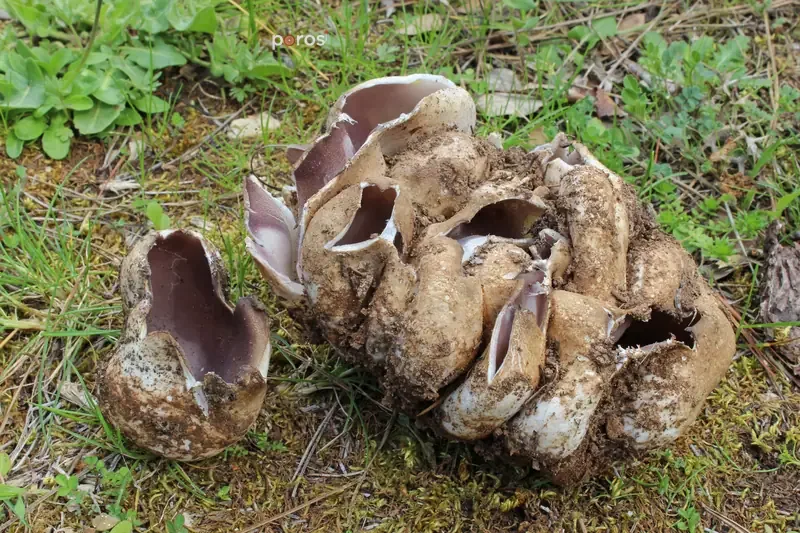
Violet crown cup can be mistaken for the species below. Each card shows the look-alike and how it differs from Violet crown cup.
 Inedible
not Violet crown cup
Cup fungi Peziza spp.
Peziza cups are usually brown or beige, open above ground and do not split into a star. The violet crown cup starts as a buried ball and has a lilac-violet inside.
 Inedible
not Violet crown cup
Cedar cup Geopora sumneriana
This cup also appears half-buried under cedar in spring, but its inside is cream-beige and its outside brown and hairy, with no violet tone.
 Inedible
not Violet crown cup
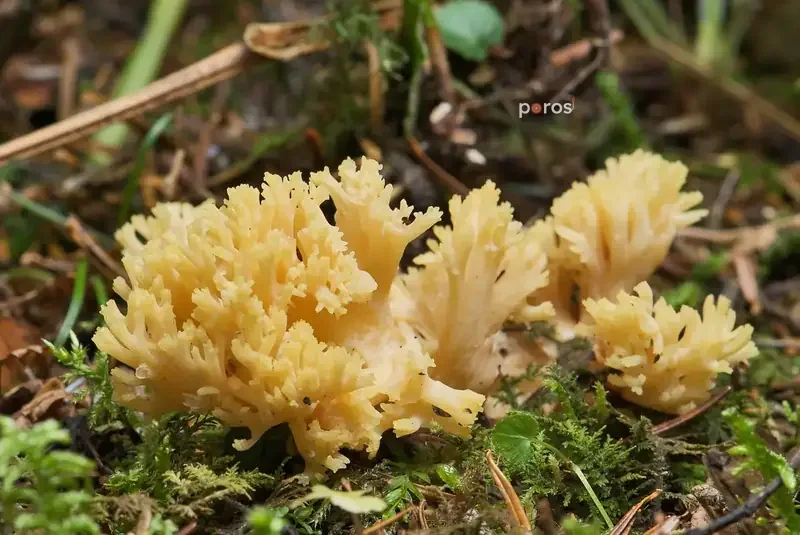
Yellow coral fungus Ramaria flava
Apart from a shared folk name it looks nothing alike: the yellow coral fungus is branched like coral. Some local sources use saçaklı mantar for the violet crown cup as well; go by shape, not name.
Toxins
This species matters only for its toxicity; studies have found more than 1 gram of arsenic per kilogram of dry matter, mostly as methylarsonic acid.
Frequently asked questions
Is kuzu kulağı the same as the morel (kuzugöbeği)?
Kuzu kulağı mantarı is not the morel. The name belongs to the toxic Sarcosphaera coronaria; the morel (Morchella) is a separate, edible species with a stem and a honeycomb cap.
Is the violet crown cup edible?
No. It accumulates arsenic, and fatal poisonings after eating it raw or undercooked have been reported; it is treated as poisonous.
Which mushroom is kuzu kulağı mantarı?
The Ordu provincial agriculture directorate's poisonous mushroom leaflet gives the name kuzu kulağı to Sarcosphaera coronaria, the violet crown cup. Kuzu kulağı is also the name of a plant (sorrel) and should not be confused with kuzugöbeği (morel).
Are çukurçanak and kurt kulağı the same?
Yes. Both are Turkish names for Sarcosphaera coronaria.
Is saçaklı mantar the violet crown cup?
Some local sources also give the name saçaklı mantar to this species, but saçak mantarı is mostly used for coral-shaped Ramaria and Clavaria species. Shape matters, not the name: the violet crown cup is a cup with a violet inside.
How do you identify it?
A half-buried cup split like a star; whitish outside, lilac-violet inside; no stem and brittle flesh.
When and where does it appear?
In spring, on calcareous soil, mostly under pine, spruce and cedar. Turkish records fall between February and June.
Where is it found in Turkey?
Our map data has records from Ankara, Osmaniye, Antalya, Kastamonu, Gaziantep, Muğla, Uşak and Karaman.
Can it be cultivated?
No. It is a wild species thought to live in partnership with tree roots, and being poisonous it is not grown.
Is kuzu kulağı mantarı edible?
Kuzu kulağı mantarı is not edible. It is a poisonous, arsenic-accumulating species, and fatal poisonings after eating it raw or undercooked have been reported.
How is kuzu kulağı mantarı cooked?
Kuzu kulağı mantarı should not be cooked at all; the arsenic it holds is not destroyed by heat. If you are looking for morel recipes, see our morel page.
Does kuzu kulağı mantarı have health benefits?
No benefits are known for kuzu kulağı mantarı; it is a poisonous species and is not eaten. It should not be used for any health purpose.
Is violet crown cup poisonous?
Yes, violet crown cup is poisonous and must not be eaten. The violet crown cup is poisonous. It accumulates arsenic from the soil, and fatal poisonings after eating it raw or undercooked have been reported in Europe. Some old sources call it edible when cooked, but this is no longer recommended. Do not pick or eat it; if poisoning is suspected, call poison control and keep any leftover mushroom.
When is violet crown cup season in Turkey?
In our calendar, violet crown cup season runs Mar–Jun. The violet crown cup appears in spring, soon after snowmelt; Turkish records fall between February and June, most often in March and May.
Where does violet crown cup grow?
On calcareous soil, mostly under conifers such as pine, spruce and cedar, sometimes in beech woods; it is thought to be mycorrhizal. It develops half-buried in the soil and appears singly or in small groups.
Where is violet crown cup found in Turkey?
Our map data (GBIF and iNaturalist) holds 10 Turkish records: Ankara, Osmaniye, Antalya, Kastamonu, Gaziantep, Muğla, Uşak and Karaman. They cluster in the conifer forests of Central Anatolia and the Mediterranean region.
What can violet crown cup be confused with?
Violet crown cup can be confused with cup fungi (Peziza spp., inedible), cedar cup (Geopora sumneriana, inedible) and yellow coral fungus (Ramaria flava, inedible). Look-alikes are compared on this page.
What is violet crown cup called in Turkish?
In Turkish, violet crown cup (Sarcosphaera coronaria) is called Kurt kulağı mantarı; other local names include çukurçanak and kuzu kulağı mantarı.
Related species
-
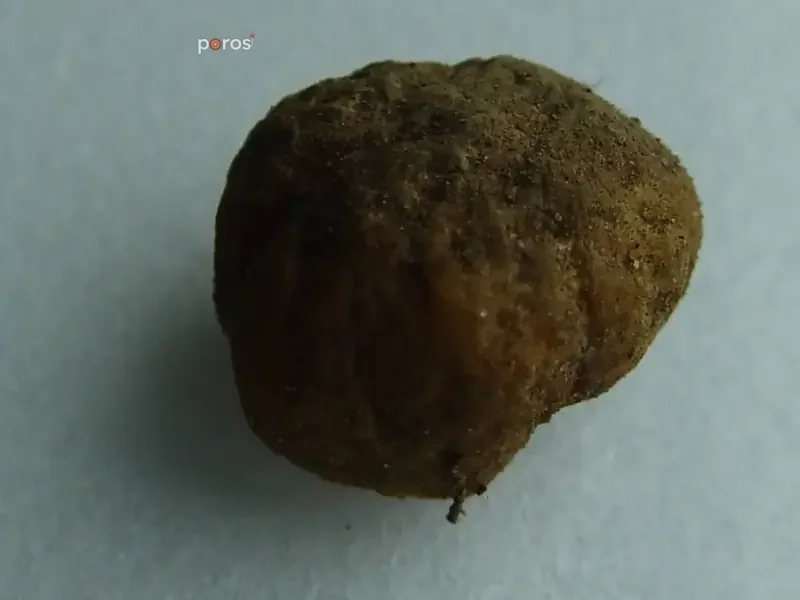 Desert truffleTerfezia spp.Edible species
-
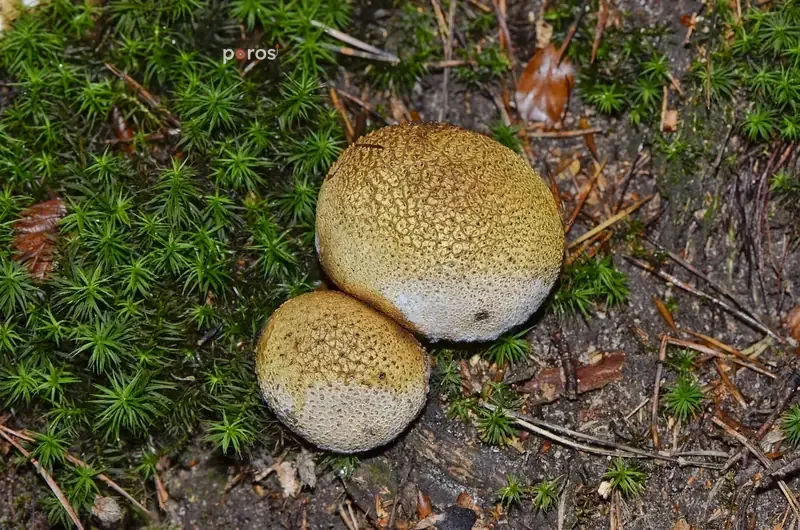 Common earthballScleroderma citrinumPoisonous
-
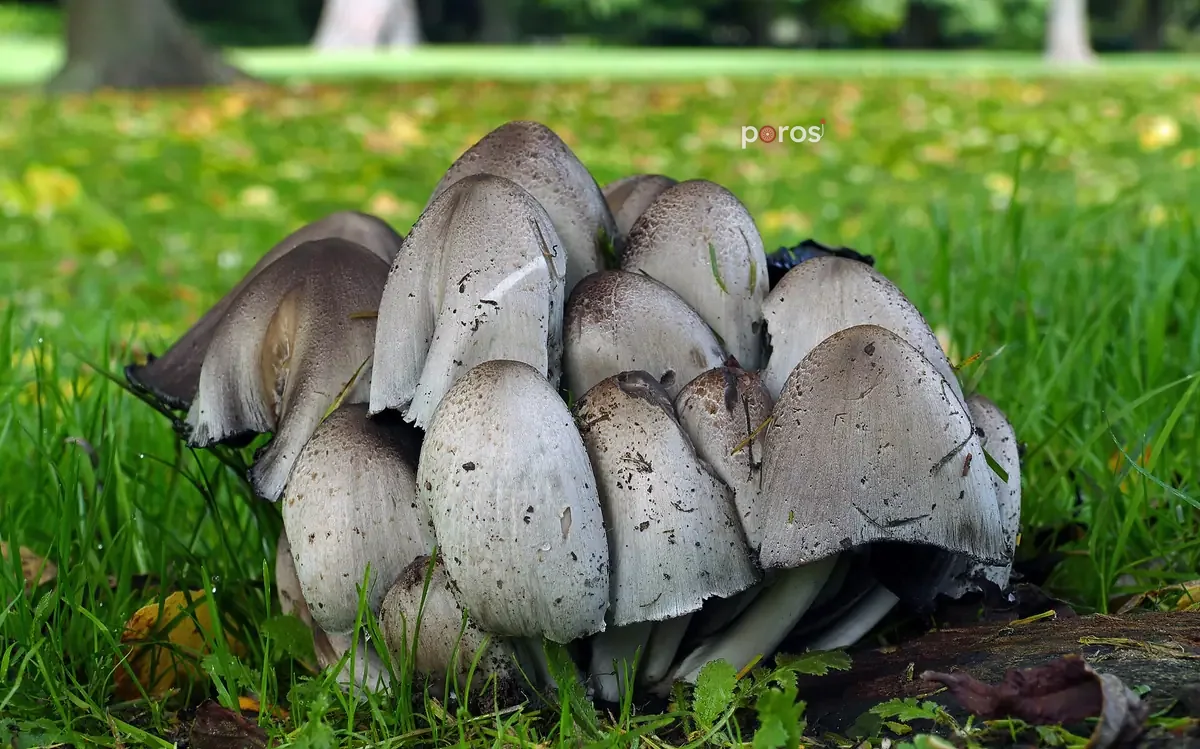 Common ink capCoprinopsis atramentariaPoisonous
-
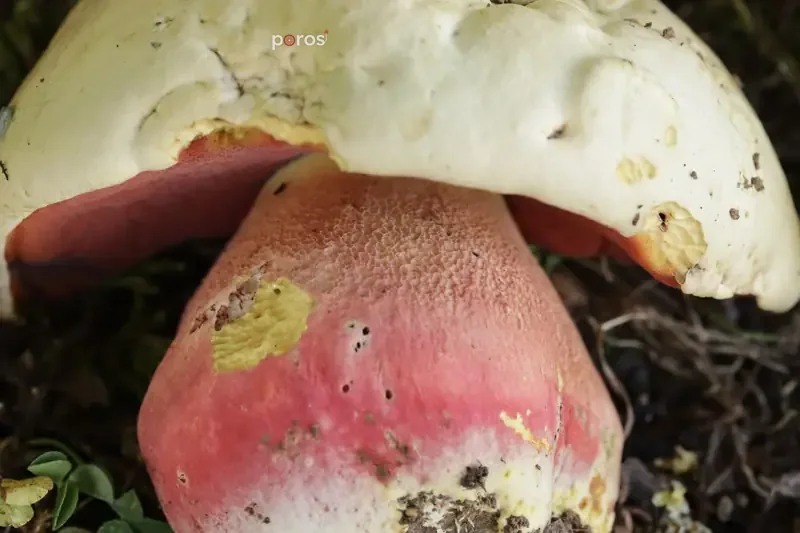 Devil’s boleteRubroboletus satanasPoisonous
-
 Fly agaricAmanita muscariaPoisonous
-
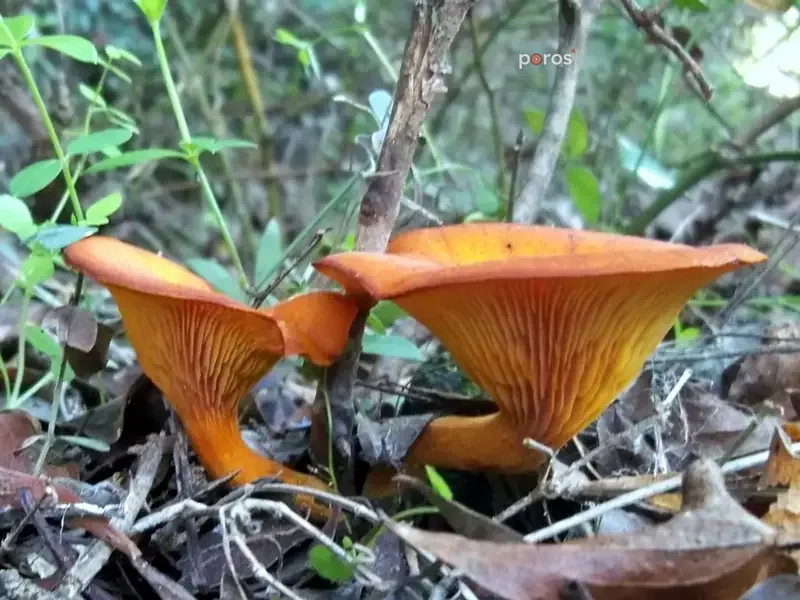 Jack-o’-lantern mushroomOmphalotus oleariusPoisonous
-
 Livid pinkgillEntoloma sinuatumPoisonous
-
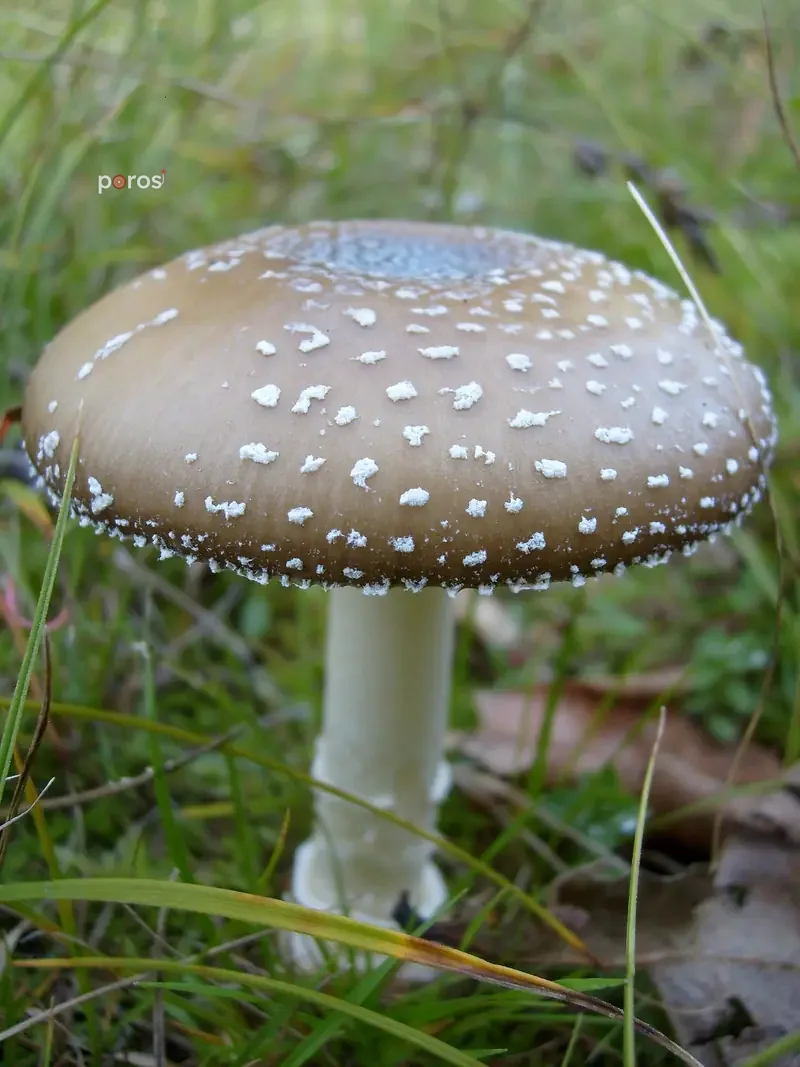 Panther capAmanita pantherinaPoisonous
Sources
- Braeuer ve ark. (2020), Science of the Total Environment: Sarcosphaera coronaria toksisitesinde arsenik pubmed.ncbi.nlm.nih.gov
- Adanacıoğlu ve ark. (2014), ANADOLU (Ege Tarımsal Araştırma Enstitüsü): Türkiye makromantar genetik kaynakları I. Ege Bölgesi dergipark.org.tr
- Wikipedia (EN): Sarcosphaera coronaria en.wikipedia.org
All sources (8)
- iNaturalist: Sarcosphaera coronaria (Türkçe ad ve Türkiye gözlemleri) inaturalist.org
- GBIF: Türkiye kayıtları gbif.org
- Vikipedi (TR): Kuzugöbeği (Morchella esculenta) tr.wikipedia.org
- Ordu İl Tarım ve Orman Müdürlüğü: Mantar zehirlenmeleri ve başlıca zehirli mantarlar (PDF) web.archive.org
- MushroomExpert: Sarcosphaera coronaria mushroomexpert.com
Photo credits (8)
- Sarcosphaera coronaria · iNaturalist #3746176 · Cheryl McCleary-Catalano · CC BY 4.0
- Sarcosphaera coronaria · iNaturalist #3746176 · Cheryl McCleary-Catalano · CC BY 4.0
- File:Sarcosphaera coronaria 42754.jpg · Ron Pastorino (Ronpast) at Mushroom Observer, a source for mycologica · CC BY-SA 3.0
- Sarcosphaera coronaria · iNaturalist #204406035 · Denis Bastianelli · CC BY 4.0
- File:Sarcosphaera coronaria 218302804.jpg · Kathleen Dobson · CC BY 4.0
- Sarcosphaera coronaria · iNaturalist #10726841 · Davide Puddu · CC BY 4.0
- Sarcosphaera coronaria · iNaturalist #370293552 · Jeff Clark · CC BY 4.0
- Sarcosphaera coronaria · iNaturalist #283629167 · Matej Frančeškin · CC BY 4.0

