
Cinnabar chanterelle (red chanterelle, cinnabar-red chanterelle)
Cantharellus cinnabarinus · Hydnaceae

Cantharellus cinnabarinus is a small chanterelle coloured cinnabar red to pinkish red. Instead of true gills it has thick, forking ridges running down the stem. It is an edible and well-liked species in eastern North America; it is smaller and thinner-fleshed than the golden chanterelle.
Also called: red chanterelle, cinnabar-red chanterelle Turkish: Cantharellus cinnabarinus, kırmızı horozmantarı (yaygın karşılık)
Last updated: Prepared by the Poros Mantar editorial team3 sources checkedReport a correction
Cinnabar chanterelle photos
-
© Michael J. Papay · CC BY 4.0
-

Gills© Michael J. Papay · CC BY 4.0
-

© Deana Tempest Thomas · CC BY 4.0
-

© {{{2}}} at Mushroom Observer, a source for mycological images.You can · CC BY-SA 3.0
-

Gills© Katja Schulz · CC BY 4.0
-

Cap© Zihao Wang · CC BY 4.0
-
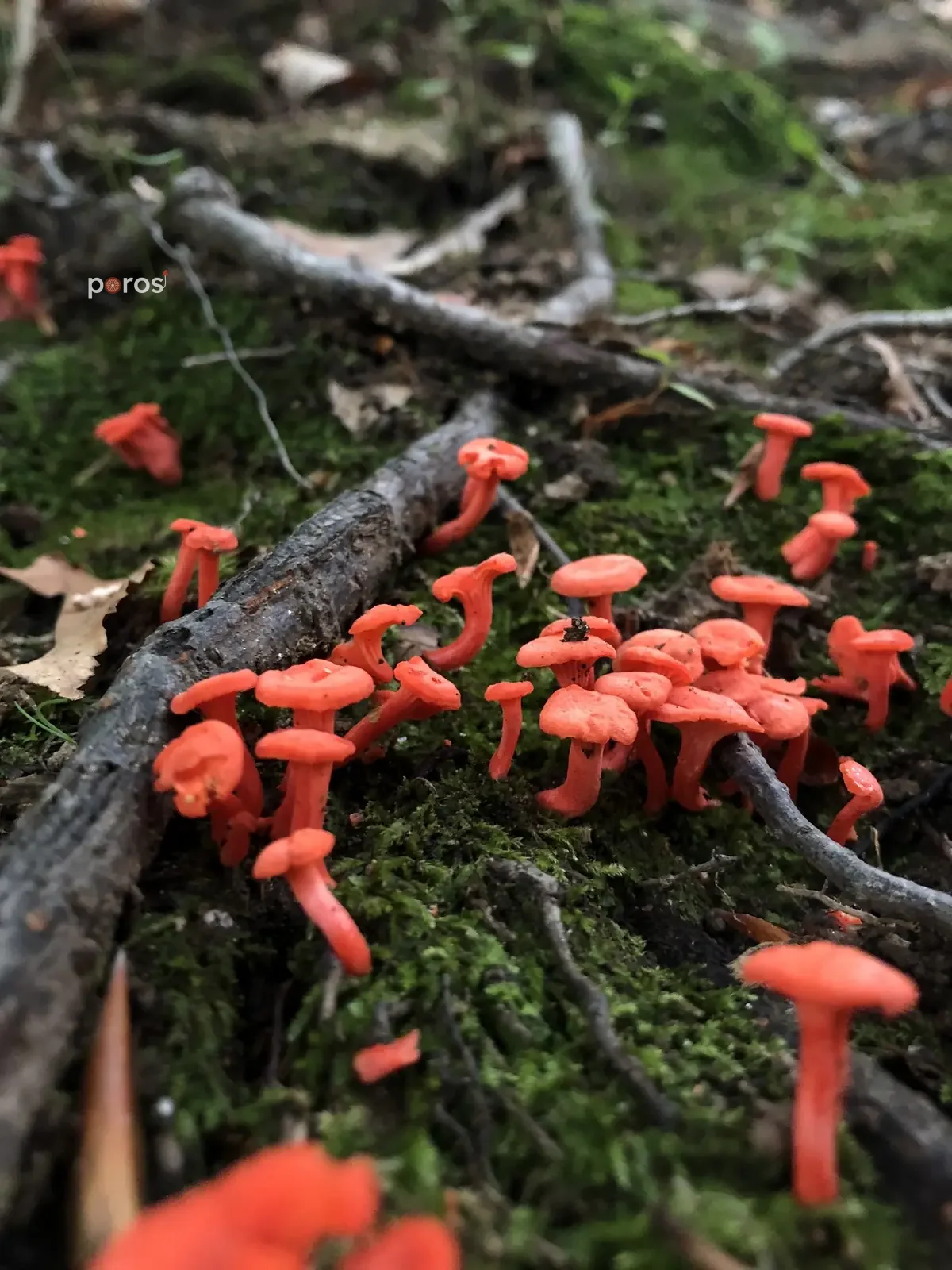
In habitat© Bethany Teigen · CC0
-

© Jeff · CC BY 4.0
-

Stem© steve b · CC0
-
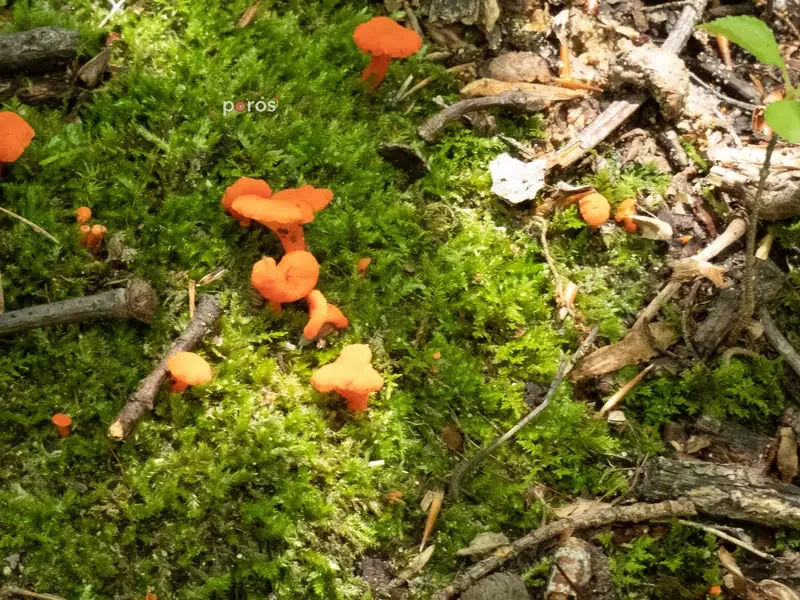
In habitat© Brian White · CC BY 4.0


These are licensed records of this species; photos alone are not enough to identify a mushroom.
Are cinnabar chanterelles poisonous?
Cinnabar chanterelles are not listed as poisonous in our sources. The real risk is confusing them with jack-o'-lantern mushroom (Omphalotus olearius), so never eat wild ones without certain identification. If poisoning is suspected, call 112 at once (Turkish poison centre: 114) and keep any leftover mushroom.
Are cinnabar chanterelles edible?
Cinnabar chanterelles are listed as edible in our sources; even so, never eat wild ones without certain identification: they have poisonous look-alikes, such as jack-o'-lantern mushroom (Omphalotus olearius). Do not eat them without an expert's approval. Cantharellus cinnabarinus is an edible North American species. Do not eat a wild one an expert has not checked: the orange-red jack-o'-lantern is poisonous.
How to recognise it
Appearance of cinnabar chanterelles
No ring or volva Spore print: Pinkish cream Faintly fruity.
Where do cinnabar chanterelles grow?
It forms partnerships with oak and other broadleaf trees, sometimes pine, and grows singly or in groups on the forest floor, along paths and on mossy soil.
In Turkey
No record from Turkey: GBIF and iNaturalist hold no Turkish records. It ranges through eastern North America, from southern Canada to the Gulf of Mexico. If you see a reddish chanterelle in Turkey, think of the jack-o'-lantern first.
Our map has no observations of cinnabar chanterelles from Turkey yet.
Look-alikes
What could it be confused with?
Cinnabar chanterelle can be mistaken for the species below. Each comparison shows Cinnabar chanterelle on the left, the look-alike on the right, and how to tell them apart.
Take care when foraging: Poisonous look-alikes of Cinnabar chanterelle come first. If in doubt, leave it.

Jack-o'-lantern mushroom Omphalotus olearius
How to tell It is larger, grows in dense clusters on wood or at tree bases, and has sharp, true gills; it is poisonous.
Other look-alikes (2)
 Edible species
not Cinnabar chanterelle
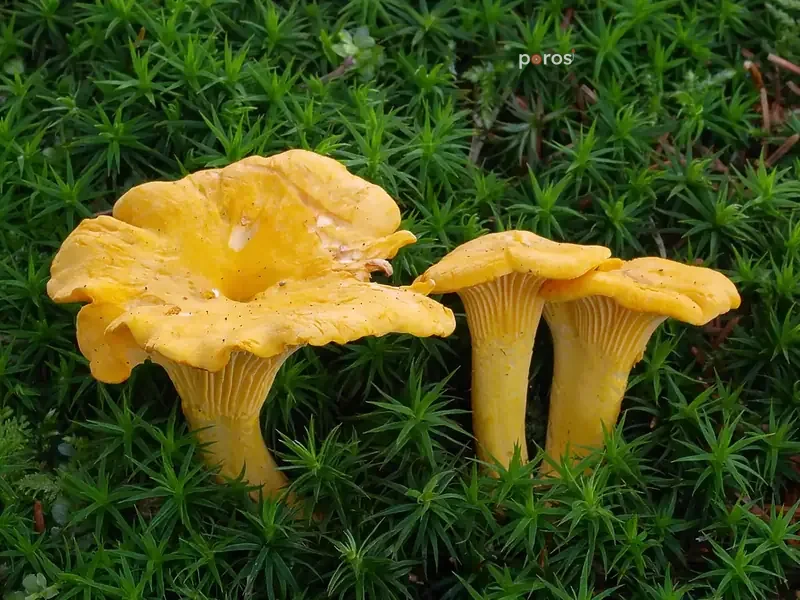
Chanterelle Cantharellus cibarius
It is egg-yolk to golden yellow and larger and fleshier.
 Inedible
not Cinnabar chanterelle
False chanterelle Hygrophoropsis aurantiaca
It is orange, with thin, crowded, forking true gills, and often grows under pine or on rotting wood.
Cinnabar chanterelle and its look-alikes compared
| Species | Status | Underside | Spore print | Season |
|---|---|---|---|---|
| Cinnabar chanterelleCantharellus cinnabarinus | Edible species | Not true gills: thick, blunt, forking pinkish-red ridges that run down the stem | Pinkish cream | Jun–Oct |
| Jack-o’-lantern mushroomOmphalotus olearius | Poisonous | Crowded, thin, true gills running down the stem (decurrent), the same orange as the cap | Creamy white | Oct–Jan |
| ChanterelleCantharellus cibarius | Edible species | No true gills: thick, blunt, forking ridges (false gills) running down the stem | Pale yellow to creamy white | Jun–Nov |
| False chanterelleHygrophoropsis aurantiaca | Inedible | Long-decurrent, crowded, thin, repeatedly forking, bright orange true gills | White to cream | Aug–Dec |
The table is compiled from each species page. The status column is a guide only; do not eat a wild mushroom unless an expert has seen it in person. Compare look-alikes side by side
How to cook and eat cinnabar chanterelles
Safety first. Cantharellus cinnabarinus is an edible North American species. Do not eat a wild one an expert has not checked: the orange-red jack-o'-lantern is poisonous. If poisoning is suspected, call 112 or the poison centre on 114 and keep any leftover mushroom.
How to store cinnabar chanterelles
Grow it, buy it
Cinnabar chanterelle price list
| Product | Poros Mantar | Market |
|---|---|---|
| Fresh cinnabar chanterelles | Made to order · ask | — |
| Dried cinnabar chanterelles | Made to order · ask | — |
We make our cinnabar chanterelles products in small batches, to order; send a request and we email you the price and delivery date. The market column shows prices seen on other sellers' pages on the date given; they are not our prices and may have changed.
Frequently asked questions
Are cinnabar chanterelles poisonous?
Cinnabar chanterelles are not listed as poisonous in our sources. The real risk is confusing them with jack-o'-lantern mushroom (Omphalotus olearius), so never eat wild ones without certain identification. If poisoning is suspected, call 112 at once (Turkish poison centre: 114) and keep any leftover mushroom.
Are cinnabar chanterelles edible?
Cinnabar chanterelles are listed as edible in our sources; even so, never eat wild ones without certain identification: they have poisonous look-alikes, such as jack-o'-lantern mushroom (Omphalotus olearius). Do not eat them without an expert's approval. Cantharellus cinnabarinus is an edible North American species. Do not eat a wild one an expert has not checked: the orange-red jack-o'-lantern is poisonous.
Is there a red chanterelle in Turkey?
Cantharellus cinnabarinus has no Turkish record; it is an eastern North American species. A clustered orange-red mushroom seen in Turkey may be the poisonous jack-o'-lantern.
How do you tell it from the jack-o'-lantern?
The jack-o'-lantern is large and clustered, grows on wood or tree bases and has sharp, true gills. The cinnabar chanterelle is small, grows singly from soil and has blunt, forking ridges.
How is it different from the golden chanterelle?
The golden chanterelle is egg-yolk yellow and larger and fleshier. C. cinnabarinus is reddish, smaller and thinner-fleshed.
When and where does it fruit?
In eastern North America from early summer to mid-autumn, in oak woods and along mossy paths.
What are the ridges underneath for?
In chanterelles the spores form on blunt ridges running down the stem rather than on true gills. These ridges are the key identification feature.
Can it be cultivated?
No. Chanterelles live in partnership with tree roots and cannot be grown commercially.
When is cinnabar chanterelle season in Turkey?
In our calendar, cinnabar chanterelle season runs Jun–Oct. In North America it fruits from early summer to mid-autumn, after rain.
Where do cinnabar chanterelles grow?
It forms partnerships with oak and other broadleaf trees, sometimes pine, and grows singly or in groups on the forest floor, along paths and on mossy soil.
Where are cinnabar chanterelles found in Turkey?
No record from Turkey: GBIF and iNaturalist hold no Turkish records. It ranges through eastern North America, from southern Canada to the Gulf of Mexico. If you see a reddish chanterelle in Turkey, think of the jack-o'-lantern first.
What can the cinnabar chanterelle be confused with?
The cinnabar chanterelle can be confused with jack-o'-lantern mushroom (Omphalotus olearius, poisonous), chanterelle (Cantharellus cibarius, edible species) and false chanterelle (Hygrophoropsis aurantiaca, inedible). Look-alikes are compared on this page.
What is the cinnabar chanterelle called in Turkish?
In Turkish, the cinnabar chanterelle (Cantharellus cinnabarinus) is called Cantharellus cinnabarinus; other local names include kırmızı horozmantarı (yaygın karşılık).
Related species
-
ChanterelleCantharellus cibariusEdible species
-
 Hedgehog mushroomHydnum repandumEdible species
-
 Winter chanterelleCraterellus tubaeformisEdible species
-
 Crested coral fungusClavulina coralloidesInedible
-
 Almond mushroomAgaricus subrufescensEdible species
-
 Anatolian matsutakeTricholoma anatolicumEdible species
-
 Aniseed funnelClitocybe odoraEdible species
-
 Bay boleteImleria badiaEdible species
Sources
- Wikipedia (EN): Cantharellus cinnabarinus en.wikipedia.org
- iNaturalist: Cantharellus cinnabarinus (Türkçe ad ve Türkiye gözlemleri) inaturalist.org
- GBIF: Türkiye kayıtları gbif.org
Photo credits (10)
- Cantharellus cinnabarinus · iNaturalist #173802729 · Michael J. Papay · CC BY 4.0
- Cantharellus cinnabarinus · iNaturalist #179190012 · Michael J. Papay · CC BY 4.0
- Cantharellus cinnabarinus · iNaturalist #178983098 · Deana Tempest Thomas · CC BY 4.0
- File:2011-07-12 Cantharellus cinnabarinus 71498 cropped.jpg · {{{2}}} at Mushroom Observer, a source for mycological images.You can · CC BY-SA 3.0
- Cantharellus cinnabarinus · iNaturalist #28207206 · Katja Schulz · CC BY 4.0
- Cantharellus cinnabarinus · iNaturalist #291981136 · Zihao Wang · CC BY 4.0
- Cantharellus cinnabarinus · iNaturalist #87456749 · Bethany Teigen · CC0
- Cantharellus cinnabarinus · iNaturalist #172790134 · Jeff · CC BY 4.0
- Cantharellus cinnabarinus · iNaturalist #86919443 · steve b · CC0
- Cantharellus cinnabarinus · iNaturalist #50477740 · Brian White · CC BY 4.0
