
Winter chanterelle (yellowfoot, funnel chanterelle)
Craterellus tubaeformis · Hydnaceae

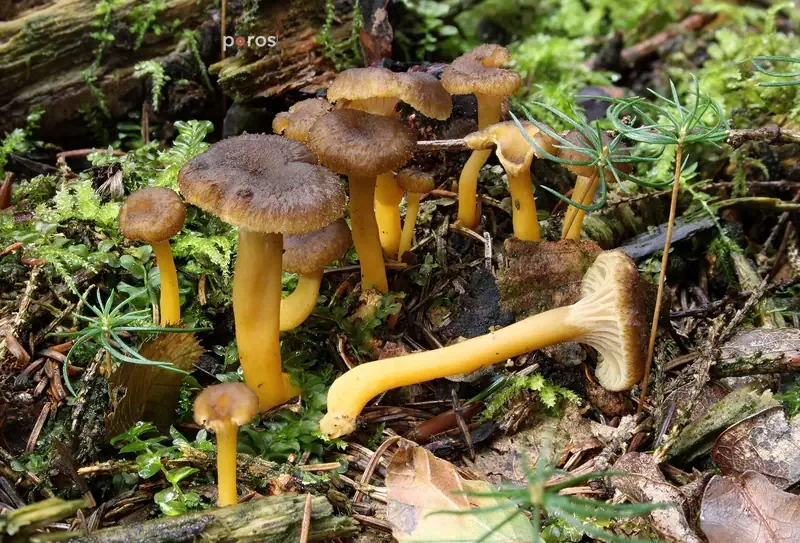
The winter chanterelle (Craterellus tubaeformis) is a small chanterelle relative recognised by its dark brown, funnel-shaped cap with a hole in the centre and a yellow to orange, hollow stem. Instead of true gills it has forking ridges running down the stem. It grows in large troops in damp, mossy conifer forests and is edible.
Also called: yellowfoot, funnel chanterelle, trumpet chanterelle Turkish: Civciv ayağı mantarı Synonyms: Cantharellus tubaeformis
Last updated: Prepared by the Poros Mantar editorial team4 sources checkedReport a correction
Winter chanterelle photos
-
© Ken-ichi Ueda · CC BY 4.0
-

© Erin Springinotic · CC0
-
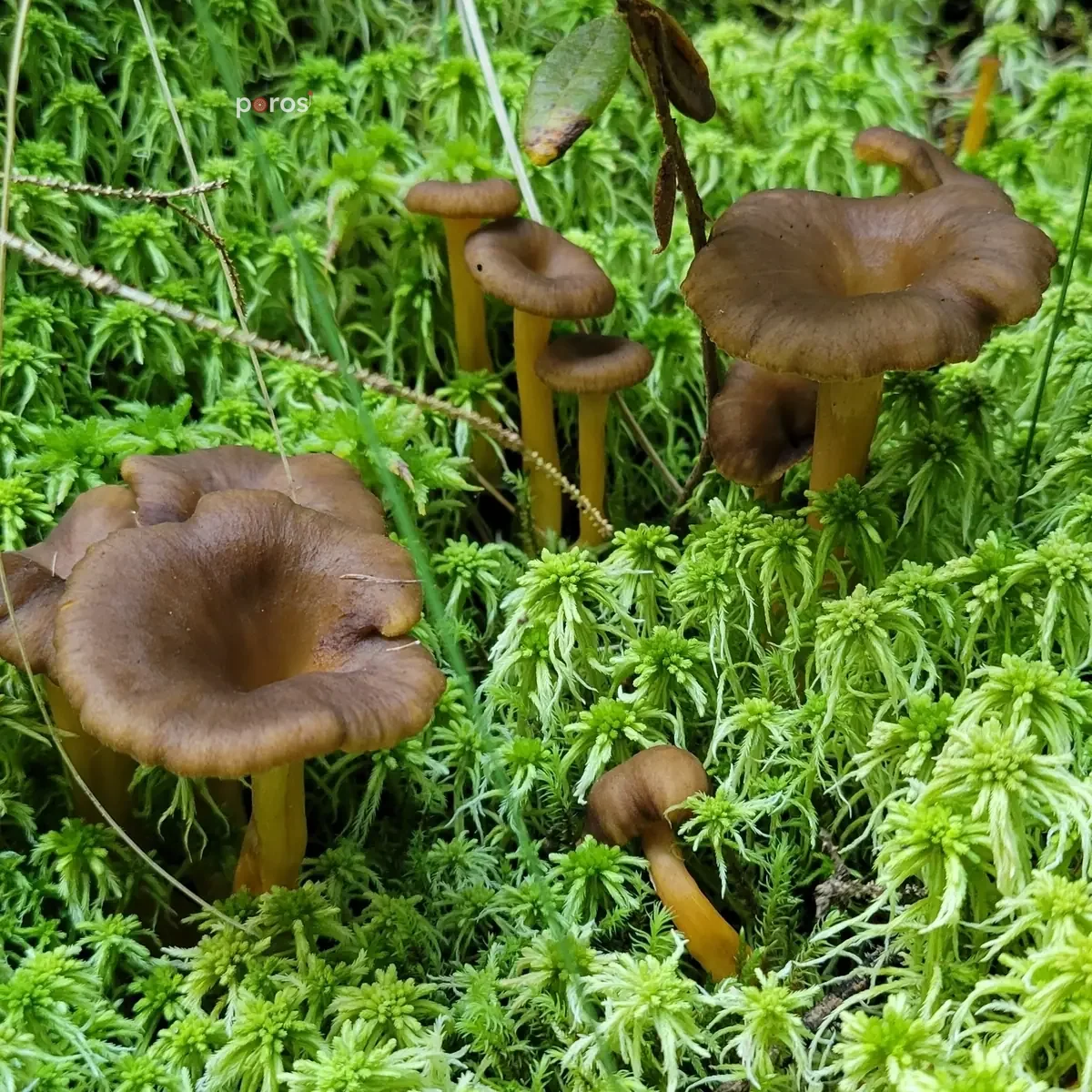
In habitat© Jason Webb · CC0
-

© Holger Krisp · CC BY 3.0
-

© Strobilomyces · CC BY-SA 3.0
-

Gills© Matej Frančeškin · CC BY 4.0
-

Gills© Mandy Hackney · CC BY 4.0
-

© Ken-ichi Ueda · CC BY 4.0
-

Gills© Colton Veltkamp · CC BY 4.0
-

© Jörg Hempel · CC BY-SA 3.0 de
-
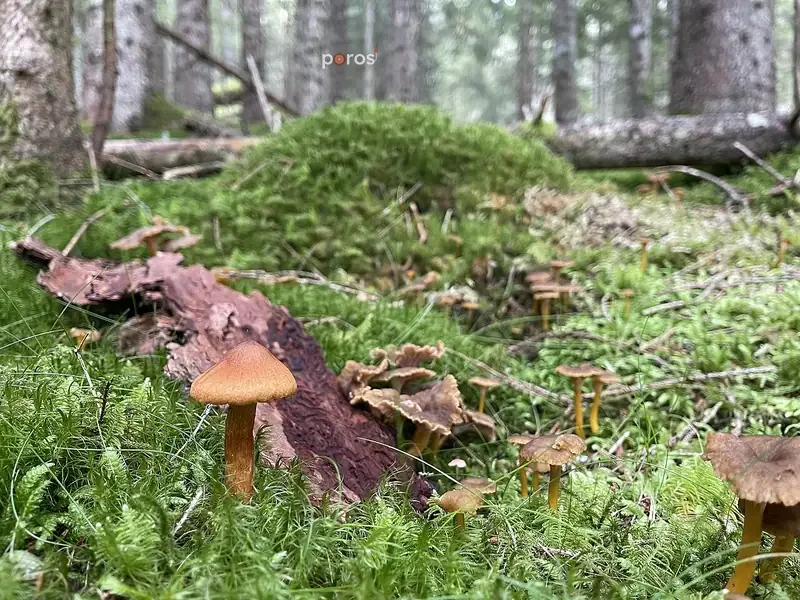
In habitat© Wkee4ager · CC BY-SA 4.0


These are licensed records of this species; photos alone are not enough to identify a mushroom.
Are winter chanterelles poisonous?
Winter chanterelles are not listed as poisonous in our sources. The winter chanterelle is edible when well cooked. The real risk is confusing them with deadly galerina (Galerina marginata) and deadly webcap (Cortinarius rubellus), so never eat wild ones without certain identification. If poisoning is suspected, call 112 at once (Turkish poison centre: 114) and keep any leftover mushroom.
Are winter chanterelles edible?
Winter chanterelles are listed as edible in our sources; even so, never eat wild ones without certain identification: they have poisonous look-alikes, such as deadly galerina (Galerina marginata) and deadly webcap (Cortinarius rubellus). Do not eat them without an expert's approval. The winter chanterelle is edible when well cooked. To avoid confusion with little brown mushrooms, make sure it has blunt, forking ridges and a yellow, hollow stem; the deadly Galerina and the kidney-damaging Cortinarius rubellus grow in the same habitat. Do not eat a wild one an expert has not checked.
How to recognise it
Appearance of winter chanterelles
No ring or volva Spore print: White to cream Mild, pleasant and earthy.
Where do winter chanterelles grow?
It grows in large troops among moss and rotting wood in damp conifer and mixed forests under spruce, pine and beech.
Where is winter chanterelles found in Turkey?
Our map data holds 47 Turkish GBIF records (45 of them DNA records from 2016 soil samples, two mushroom sightings from Istanbul) and 2 research-grade iNaturalist observations. Worldwide it ranges through the cool, damp forests of Europe, Asia and North America.
Which months
- Jan1
- Feb0
- Mar0
- Apr0
- May0
- Jun0
- Jul0
- Aug0
- Sep0
- Oct0
- Nov0
- Dec1
1 provinces, 2 observations (GBIF, iNaturalist); months from observation dates. Record density also reflects where observers work.
Latest winter chanterelle observations
-
 Illustrative
İstanbul12 Jan 2020 · Mushroom Observer
-
 Illustrative
İstanbul20 Dec 2014 · iNaturalist
- See on the map
On "illustrative" cards the image is a photo of the species; the observation photo cannot be shown here because of its licence, but can be seen at the source.
Look-alikes
What could it be confused with?
Winter chanterelle can be mistaken for the species below. Each comparison shows Winter chanterelle on the left, the look-alike on the right, and how to tell them apart.
Take care when foraging: Poisonous look-alikes of Winter chanterelle come first. If in doubt, leave it.

Deadly galerina Galerina marginata
How to tell It is brown, small and grows on rotting wood, but it has sharp, true gills, a thin ring and a rusty-brown spore print. It is deadly.

Deadly webcap Cortinarius rubellus
How to tell Its cap is orange-brown, conical with a pointed umbo; underneath it has true, attached gills (ochre, then rusty brown) and yellow veil (cortina) remnants on the lower half of the stem. It grows among moss in damp conifer woods, and in Sweden it has been picked by mistake for the winter chanterelle and caused poisonings. It contains orellanine: symptoms start days later and it can cause kidney failure. It is deadly.
Other look-alikes (2)
 Edible species
not Winter chanterelle
Yellow foot chanterelle Craterellus lutescens
Its cap is paler, brownish to orange, its underside almost smooth and orange-pink; it prefers boggy and calcareous ground.
 Edible species
not Winter chanterelle
Black trumpet Craterellus cornucopioides
It is entirely grey-black and trumpet-shaped, its stem is not yellow, and its underside is almost smooth.
Winter chanterelle and its look-alikes compared
| Species | Status | Underside | Spore print | Season |
|---|---|---|---|---|
| Winter chanterelleCraterellus tubaeformis | Edible species | Not true gills: sparse, forking, grey to yellowish-grey ridges running down the stem | White to cream | Sep–Dec |
| Yellow foot chanterelleCraterellus lutescens | Edible species | No gills; an almost smooth or faintly veined, pale orange to pinkish-yellow surface | White to pale pinkish cream | Sep–Feb |
| Black trumpetCraterellus cornucopioides | Edible species | No true gills | White to very pale cream | Aug–Jan |
| Deadly galerinaGalerina marginata | Deadly poisonous | Crowded, pale brown when young, tawny when mature | Rusty (snuff) brown | Aug–Nov |
| Deadly webcapCortinarius rubellus | Deadly poisonous | Distant, thick, adnate gills | Rusty brown | Aug–Oct |
The table is compiled from each species page. The status column is a guide only; do not eat a wild mushroom unless an expert has seen it in person. Compare look-alikes side by side
How to cook and eat winter chanterelles
Safety first. The winter chanterelle is edible when well cooked. To avoid confusion with little brown mushrooms, make sure it has blunt, forking ridges and a yellow, hollow stem; the deadly Galerina and the kidney-damaging Cortinarius rubellus grow in the same habitat. Do not eat a wild one an expert has not checked. If poisoning is suspected, call 112 (Turkey poison centre: 114) and keep any leftover mushroom.
What goes with it?
- olive oil
- onion
- garlic
- white wine or water
- thyme
- sage
- hot vegetable stock
- cream or coconut cream
Recipe
How to store winter chanterelles
Grow it, buy it
Winter chanterelle price list
| Product | Poros Mantar | Market |
|---|---|---|
| Fresh winter chanterelles | Made to order · ask | — |
| Dried winter chanterelles | Made to order · ask | — |
We make our winter chanterelles products in small batches, to order; send a request and we email you the price and delivery date. The market column shows prices seen on other sellers' pages on the date given; they are not our prices and may have changed.
Frequently asked questions
Are winter chanterelles poisonous?
Winter chanterelles are not listed as poisonous in our sources. The winter chanterelle is edible when well cooked. The real risk is confusing them with deadly galerina (Galerina marginata) and deadly webcap (Cortinarius rubellus), so never eat wild ones without certain identification. If poisoning is suspected, call 112 at once (Turkish poison centre: 114) and keep any leftover mushroom.
Are winter chanterelles edible?
Winter chanterelles are listed as edible in our sources; even so, never eat wild ones without certain identification: they have poisonous look-alikes, such as deadly galerina (Galerina marginata) and deadly webcap (Cortinarius rubellus). Do not eat them without an expert's approval. The winter chanterelle is edible when well cooked. To avoid confusion with little brown mushrooms, make sure it has blunt, forking ridges and a yellow, hollow stem; the deadly Galerina and the kidney-damaging Cortinarius rubellus grow in the same habitat. Do not eat a wild one an expert has not checked.
Why is it called chick's foot in Turkish?
Its Turkish name comes from iNaturalist Turkey and likens its thin yellow stem to a chick's foot. In English it is also called yellowfoot.
When does the winter chanterelle fruit?
Late in autumn, from September to December; it lasts until the first frosts, hence the name winter chanterelle.
Where has it been recorded in Turkey?
GBIF holds 47 records (45 of them DNA records from soil samples, two mushroom sightings from Istanbul) and iNaturalist has 2 research-grade observations.
How is it different from Craterellus lutescens?
The winter chanterelle has a dark brown cap and distinct grey ridges underneath. Craterellus lutescens has a paler cap and an almost smooth, orange-pink underside.
How do you tell it from the deadly Galerina?
Galerina has sharp, true gills, a thin ring and a rusty-brown spore print. The winter chanterelle has blunt, forking ridges and a yellow, hollow stem.
How is the winter chanterelle cooked?
Clean it and sauté it in butter, or use it in soups, sauces and risotto; soak the dried mushroom in warm water.
What are the English names of the winter chanterelle?
It is called the winter chanterelle, yellowfoot, funnel chanterelle or trumpet chanterelle. Its Latin name is Craterellus tubaeformis; the older name is Cantharellus tubaeformis.
When is winter chanterelle season in Turkey?
In our calendar, winter chanterelle season runs Sep–Dec. It appears late in autumn and lasts until the first frosts, hence the name winter chanterelle.
Where do winter chanterelles grow?
It grows in large troops among moss and rotting wood in damp conifer and mixed forests under spruce, pine and beech.
Where are winter chanterelles found in Turkey?
Our map data holds 47 Turkish GBIF records (45 of them DNA records from 2016 soil samples, two mushroom sightings from Istanbul) and 2 research-grade iNaturalist observations. Worldwide it ranges through the cool, damp forests of Europe, Asia and North America.
What can the winter chanterelle be confused with?
The winter chanterelle can be confused with yellow foot chanterelle (Craterellus lutescens, edible species), black trumpet (Craterellus cornucopioides, edible species), deadly galerina (Galerina marginata, deadly) and deadly webcap (Cortinarius rubellus, deadly). Look-alikes are compared on this page.
What is the winter chanterelle called in Turkish?
In Turkish, the winter chanterelle (Craterellus tubaeformis) is called Civciv ayağı mantarı.
Related species
-
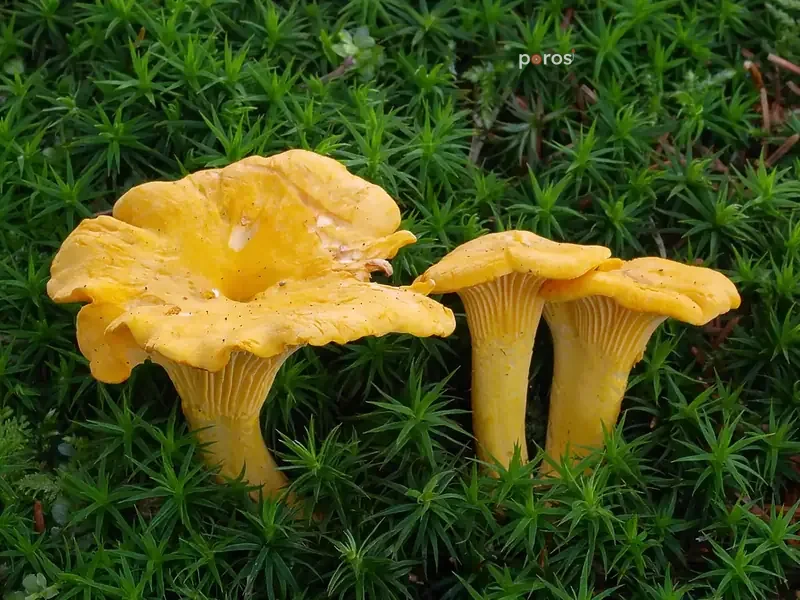 ChanterelleCantharellus cibariusEdible species
-
 Cinnabar chanterelleCantharellus cinnabarinusEdible species
-
 Hedgehog mushroomHydnum repandumEdible species
-
 Crested coral fungusClavulina coralloidesInedible
-
 Almond mushroomAgaricus subrufescensEdible species
-
 Anatolian matsutakeTricholoma anatolicumEdible species
-
 Aniseed funnelClitocybe odoraEdible species
-
 Bay boleteImleria badiaEdible species
Sources
- Wikipedia (EN): Craterellus tubaeformis en.wikipedia.org
- iNaturalist: Craterellus tubaeformis (Türkçe ad ve Türkiye gözlemleri) inaturalist.org
- GBIF: Türkiye kayıtları gbif.org
All sources (4)
- Wikipedia (EN): Cortinarius rubellus en.wikipedia.org
Photo credits (11)
- Craterellus tubaeformis · iNaturalist #38286302 · Ken-ichi Ueda · CC BY 4.0
- Craterellus tubaeformis · iNaturalist #98817790 · Erin Springinotic · CC0
- Craterellus tubaeformis · iNaturalist #310910047 · Jason Webb · CC0
- File:Trompetenpfifferling Craterellus tubaeformis.jpg · Holger Krisp · CC BY 3.0
- File:Craterellus tubaeformis 110921w.JPG · Strobilomyces · CC BY-SA 3.0
- File:Craterellus tubaeformis 447324163.jpg · Matej Frančeškin · CC BY 4.0
- Craterellus tubaeformis · iNaturalist #103161819 · Mandy Hackney · CC BY 4.0
- Craterellus tubaeformis · iNaturalist #4553729 · Ken-ichi Ueda · CC BY 4.0
- File:Craterellus tubaeformis 349432898.jpg · Colton Veltkamp · CC BY 4.0
- File:Craterellus tubaeformis LC0374.jpg · Jörg Hempel · CC BY-SA 3.0 de
- File:Cortinarius rubellus with Craterellus tubaeformis.jpg · Wkee4ager · CC BY-SA 4.0


