
Pale oyster (Indian oyster, Italian oyster)
Pleurotus pulmonarius · Pleurotaceae

The pale oyster (Pleurotus pulmonarius) is a wood mushroom very like the oyster mushroom, but paler, thinner-fleshed and fruiting in the warm season. Its cap is white, cream or pale buff and its gills run down the stem. It is easy to cultivate.
Also called: Indian oyster, Italian oyster, phoenix oyster, lung oyster Turkish: Kayın mantarı
Last updated: Prepared by the Poros Mantar editorial team3 sources checkedReport a correction
Pale oyster photos
-
Gills© Adam J. Searcy · CC BY 4.0
-

© Rugged Research · CC0
-

Gills© Alex Wilson · CC BY 4.0
-

© Alex Wilson · CC BY 4.0
-

© wearethechampignons · CC BY 4.0
-

Gills© Tim Kennedy · CC BY 4.0
-
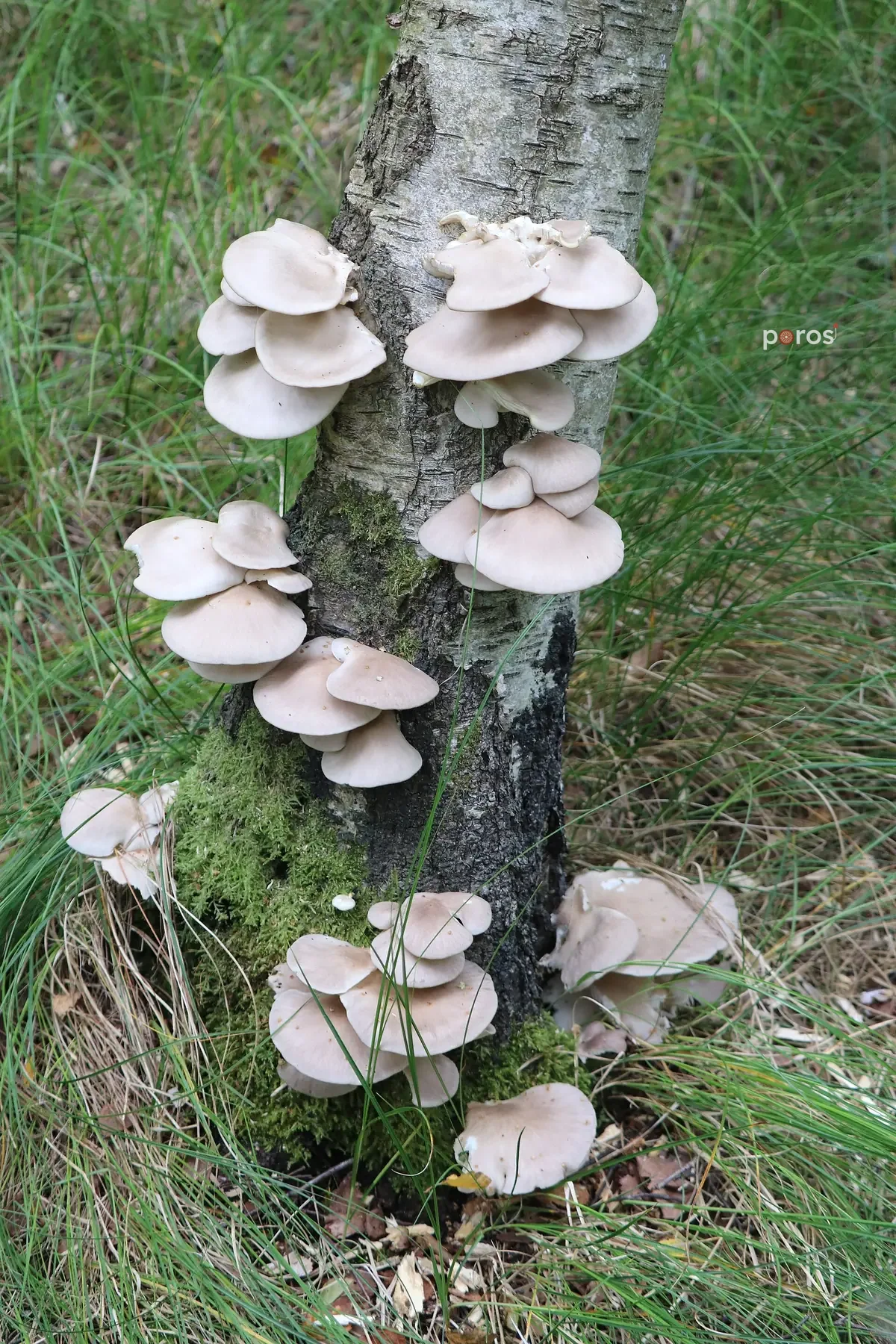
In habitat© Rudolphous · CC BY-SA 4.0
-

© Amanita77 · CC BY-SA 3.0
-

Gills© barbarab · CC BY 4.0
-
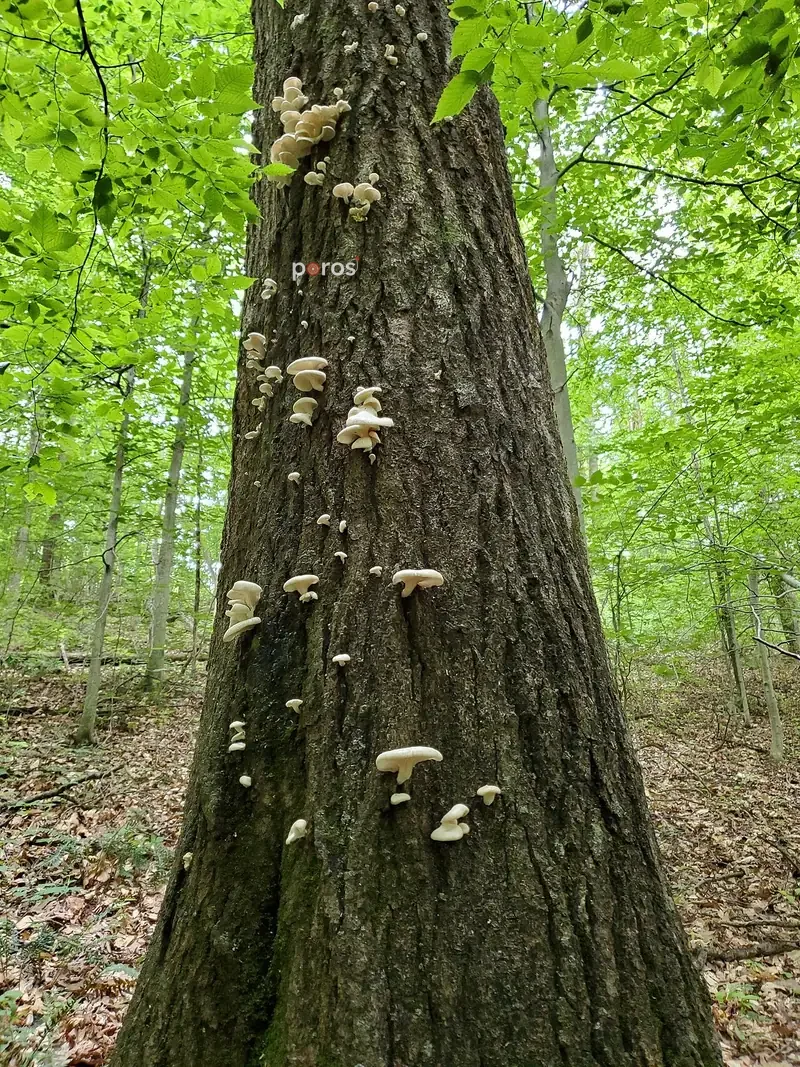
In habitat© Tim Kennedy · CC BY 4.0
-

© Jörg Hempel · CC BY-SA 3.0 de


These are licensed records of this species; photos alone are not enough to identify a mushroom.
Is the pale oyster poisonous?
The pale oyster is not listed as poisonous in our sources. The pale oyster is edible when well cooked, and cultivated ones are safe. Oyster mushroom spores can cause respiratory allergy in some people in indoor growing rooms. The real risk is confusing it with angel wing (Pleurocybella porrigens) and jack-o'-lantern mushroom (Omphalotus olearius), so never eat a wild one without certain identification. If poisoning is suspected, call 112 at once (Turkish poison centre: 114) and keep any leftover mushroom.
Is the pale oyster edible?
The pale oyster is listed as edible in our sources and is cultivated; even so, never eat a wild one without certain identification: it has poisonous look-alikes, such as angel wing (Pleurocybella porrigens) and jack-o'-lantern mushroom (Omphalotus olearius). Do not eat it without an expert's approval. The pale oyster is edible when well cooked, and cultivated ones are safe. In the wild, the thin white angel wing and the orange jack-o'-lantern, both found on wood, are poisonous. Oyster mushroom spores can cause respiratory allergy in some people in indoor growing rooms. Do not eat a wild one an expert has not checked.
How to recognise it
Appearance of pale oyster
No ring or volva Spore print: White to pale lilac-grey Mild and pleasant, sometimes faintly of aniseed.
Where does pale oyster grow?
It grows in overlapping shelves on the trunks and branches of dead or weakened broadleaf trees, especially beech, oak and poplar, sometimes on conifers.
In Turkey
Our map data holds 10 Turkish GBIF records (without a province) and one research-grade iNaturalist observation. Its Turkish name comes from iNaturalist Turkey. Worldwide it ranges through the temperate and warm forests of Europe, Asia, North America and Africa.
GBIF lists 10 records from Turkey; none yet has verified coordinates for our map.
Look-alikes
What could it be confused with?
Pale oyster can be mistaken for the species below. Each comparison shows Pale oyster on the left, the look-alike on the right, and how to tell them apart.
Take care when foraging: Poisonous look-alikes of Pale oyster come first. If in doubt, leave it.
Angel wing Pleurocybella porrigens
How to tell It is smaller, very thin and pure white, growing on conifer wood; it has been linked to deaths in people with kidney disease in Japan.

Jack-o'-lantern mushroom Omphalotus olearius
How to tell It is bright orange and grows in clusters at tree bases; it is poisonous.
Other look-alikes (1)
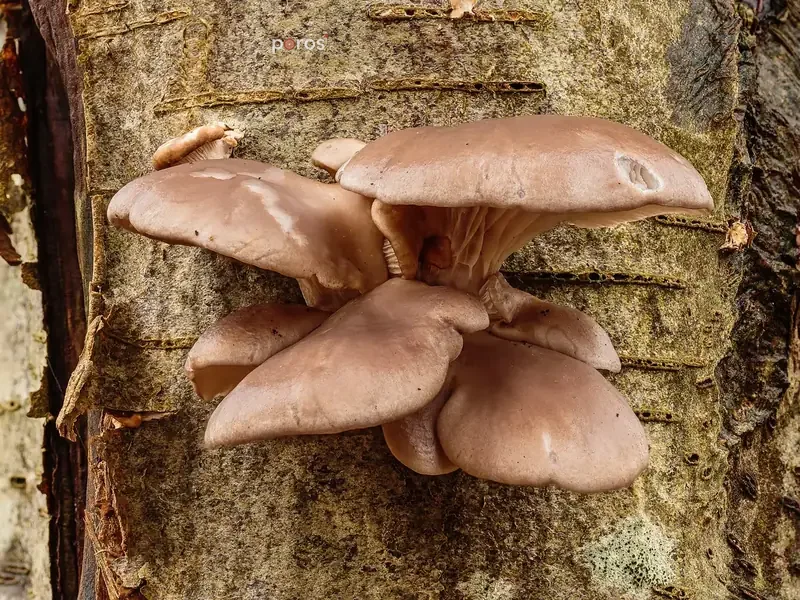 Edible species
not Pale oyster
Oyster mushroom Pleurotus ostreatus
Its cap is darker, grey, bluish grey or brown, its flesh thicker, and it fruits in the cool season, autumn and winter.
Pale oyster and its look-alikes compared
| Species | Status | Underside | Spore print | Season |
|---|---|---|---|---|
| Pale oysterPleurotus pulmonarius | Edible species | White to cream gills running down the stem | White to pale lilac-grey | May–Oct |
| Oyster mushroomPleurotus ostreatus | Edible species | Gills whitish, sometimes yellowing | White to pale lilac-grey | Oct–Mar |
| Jack-o’-lantern mushroomOmphalotus olearius | Poisonous | Crowded, thin, true gills running down the stem (decurrent), the same orange as the cap | Creamy white | Oct–Jan |
The table is compiled from each species page. The status column is a guide only; do not eat a wild mushroom unless an expert has seen it in person. Compare look-alikes side by side
How to cook and eat pale oyster
Safety first. The pale oyster is edible when well cooked, and cultivated ones are safe. In the wild, the thin white angel wing and the orange jack-o'-lantern, both found on wood, are poisonous. Oyster mushroom spores can cause respiratory allergy in some people in indoor growing rooms. Do not eat a wild one an expert has not checked. If poisoning is suspected, call 112 (Turkey poison centre: 114) and keep any leftover mushroom.
What goes with it?
- fennel seeds
- ghee or vegetable oil
- cumin seeds
- garlic
- tomato
- ground turmeric
- onion
- bell pepper
- green chilli
- curry leaves
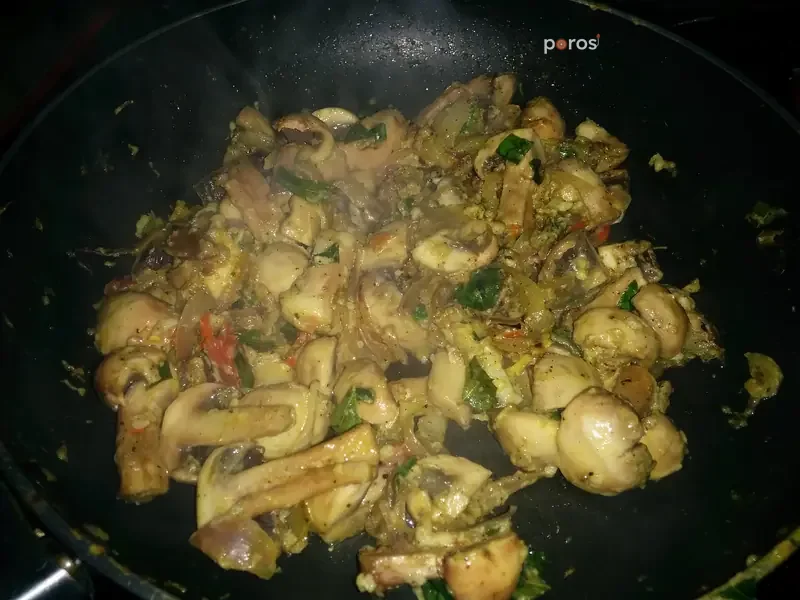
Recipe
How to store pale oyster
Grow it, buy it
Pale oyster price list
| Product | Poros Mantar | Market |
|---|---|---|
| Fresh pale oyster | Made to order · ask | — |
| Dried pale oyster | Made to order · ask | — |
We make our pale oyster products in small batches, to order; send a request and we email you the price and delivery date. The market column shows prices seen on other sellers' pages on the date given; they are not our prices and may have changed.
Frequently asked questions
Is the pale oyster poisonous?
The pale oyster is not listed as poisonous in our sources. The pale oyster is edible when well cooked, and cultivated ones are safe. Oyster mushroom spores can cause respiratory allergy in some people in indoor growing rooms. The real risk is confusing it with angel wing (Pleurocybella porrigens) and jack-o'-lantern mushroom (Omphalotus olearius), so never eat a wild one without certain identification. If poisoning is suspected, call 112 at once (Turkish poison centre: 114) and keep any leftover mushroom.
Is the pale oyster edible?
The pale oyster is listed as edible in our sources and is cultivated; even so, never eat a wild one without certain identification: it has poisonous look-alikes, such as angel wing (Pleurocybella porrigens) and jack-o'-lantern mushroom (Omphalotus olearius). Do not eat it without an expert's approval. The pale oyster is edible when well cooked, and cultivated ones are safe. In the wild, the thin white angel wing and the orange jack-o'-lantern, both found on wood, are poisonous. Oyster mushroom spores can cause respiratory allergy in some people in indoor growing rooms. Do not eat a wild one an expert has not checked.
How is it different from the oyster mushroom?
The pale oyster is paler and thinner-fleshed and fruits in warm weather. The oyster mushroom has a darker grey or brown cap and fruits in autumn and winter.
Why is it called the beech mushroom in Turkish?
Its Turkish name comes from iNaturalist Turkey; it often grows on beech and other broadleaf wood. In English, shimeji is also called beech mushroom, so do not confuse the two.
Does it grow in Turkey?
GBIF holds 10 Turkish records (without a province) and iNaturalist has one research-grade observation.
How is the phoenix oyster grown?
It grows easily on pasteurised straw, sawdust or coffee grounds and fruits at warmer temperatures (20–30 °C) than the oyster mushroom.
Is it the same as Pleurotus sajor-caju?
Cultivated strains sold as 'sajor-caju' are largely Pleurotus pulmonarius; the true Lentinus sajor-caju is a separate species.
When does the phoenix oyster fruit?
From late spring to autumn, after warm, rainy days.
What other names does the pale oyster have?
Its Latin name is Pleurotus pulmonarius. In English it is also called the phoenix oyster, Indian oyster, Italian oyster or lung oyster. Cultivated strains sold as 'sajor-caju' are largely this species too.
When is pale oyster season in Turkey?
In our calendar, pale oyster season runs May–Oct. It is the warmth-loving relative of the oyster mushroom, fruiting from late spring to autumn after warm, rainy days.
Where does pale oyster grow?
It grows in overlapping shelves on the trunks and branches of dead or weakened broadleaf trees, especially beech, oak and poplar, sometimes on conifers.
Where is pale oyster found in Turkey?
Our map data holds 10 Turkish GBIF records (without a province) and one research-grade iNaturalist observation. Its Turkish name comes from iNaturalist Turkey. Worldwide it ranges through the temperate and warm forests of Europe, Asia, North America and Africa.
What can pale oyster be confused with?
Pale oyster can be confused with oyster mushroom (Pleurotus ostreatus, edible species), angel wing (Pleurocybella porrigens, poisonous) and jack-o'-lantern mushroom (Omphalotus olearius, poisonous). Look-alikes are compared on this page.
What is pale oyster called in Turkish?
In Turkish, pale oyster (Pleurotus pulmonarius) is called Kayın mantarı.
Related species
-
 Golden oyster mushroomPleurotus citrinopileatusEdible species
-
 King oyster mushroomPleurotus eryngiiEdible species
-
Oyster mushroomPleurotus ostreatusEdible species
-
 Pink oyster mushroomPleurotus djamorEdible species
-
 Almond mushroomAgaricus subrufescensEdible species
-
 Anatolian matsutakeTricholoma anatolicumEdible species
-
 Aniseed funnelClitocybe odoraEdible species
-
 Bay boleteImleria badiaEdible species
Sources
- Wikipedia (EN): Pleurotus pulmonarius en.wikipedia.org
- iNaturalist: Pleurotus pulmonarius (Türkçe ad ve Türkiye gözlemleri) inaturalist.org
- GBIF: Türkiye kayıtları gbif.org
Photo credits (11)
- Pleurotus pulmonarius · iNaturalist #28098689 · Adam J. Searcy · CC BY 4.0
- Pleurotus pulmonarius · iNaturalist #83305487 · Rugged Research · CC0
- Pleurotus pulmonarius · iNaturalist #81968967 · Alex Wilson · CC BY 4.0
- Pleurotus pulmonarius · iNaturalist #81968967 · Alex Wilson · CC BY 4.0
- File:Pleurotus pulmonarius 133642508.jpg · wearethechampignons · CC BY 4.0
- File:Pleurotus pulmonarius 134572137.jpg · Tim Kennedy · CC BY 4.0
- File:Schiermonnikoog - Bleke oesterzwam (Pleurotus pulmonarius?).jpg · Rudolphous · CC BY-SA 4.0
- File:Pleurotus pulmonarius.001.COPY.jpg · Amanita77 · CC BY-SA 3.0
- File:Pleurotus pulmonarius 124997459.jpg · barbarab · CC BY 4.0
- File:Pleurotus pulmonarius 134572309.jpg · Tim Kennedy · CC BY 4.0
- File:Pleurotus pulmonarius LC0228.jpg · Jörg Hempel · CC BY-SA 3.0 de


