

Look-alikes · comparison
Oyster mushroom vs pale oyster: how to tell them apart
The oyster mushroom (Pleurotus ostreatus; Turkish: istiridye mantarı) and the pale oyster (Pleurotus pulmonarius; Turkish: kayın mantarı) are close relatives that grow on wood. The oyster mushroom has a darker grey or brown cap, thicker flesh and a cool-season habit. The pale oyster is white, cream or pale buff, thin-fleshed and appears in the warm months.

Oyster mushroom vs pale oyster: the three signs that matter
-
Cap colour: grey-brown or cream?
The oyster mushroom's cap ranges from white through grey to brown; next to the pale oyster it is darker, in grey, bluish-grey or brown tones. The pale oyster's cap is white, cream or pale buff, only slightly darker at the centre. In both, the gills are white to cream and run down the stem, so we look at the upper colour of the cap, not the gills.
-
Flesh and size: thick or thin?
The oyster mushroom's cap measures 2–30 cm and its flesh is thicker than the pale oyster's; the edge of a young cap is inrolled and wavy. The pale oyster forms a fan- or lung-shaped cap of 3–12 cm with a thin edge and thin white flesh that does not change colour when cut. In both species the stem is short, off to one side or missing altogether, so it is no help in separating them.
-
Season: cool months or warm months?
The wild oyster mushroom fruits in the cool months, and Turkish records cluster between October and March. The pale oyster is its warmth-loving relative: it appears from late spring to autumn, after warm, rainy days. A pale, thin-fleshed specimen found in midsummer points to the pale oyster; a dark, thick-fleshed one found in midwinter points to the oyster mushroom.
Both are listed in the sources as edible species, but they have poisonous lookalikes on wood. Never trust a single sign; if in doubt, do not eat it and show wild finds to an expert.
Side-by-side differences
This table is built from the sourced descriptions on the two species pages.
| Feature | Oyster mushroom | Pale oyster |
|---|---|---|
| Cap | 2–30 cm, fan- or oyster-shaped; white to grey or brown; margin inrolled when young, often wavy. | 3–12 cm, fan- or lung-shaped with a thin margin; white, cream or pale buff, slightly darker at the base. |
| Gills | Gills whitish, sometimes yellowing; decurrent, running down the stem. | White to cream gills running down the stem. |
| Stem | Short or absent; when present up to 4 cm, off-centre and attached sideways to the wood. | Short and off-centre, or absent. |
| Ring | None. | None. |
| Volva (cup at the base) | None. | None. |
| Flesh, cut open | — | The flesh is white and thin and does not change colour when cut. |
| Smell and taste | Mild; a hint of bitter almond (benzaldehyde) or anise. | Mild and pleasant, sometimes faintly of aniseed. |
| Spore print | White to pale lilac-grey. | White to pale lilac-grey. |
| Habitat | The oyster mushroom is a saprotroph, a wood decomposer that causes white rot. It grows in clusters on dead or dying trunks and branches of broadleaf trees, especially beech and oak. | It grows in overlapping shelves on the trunks and branches of dead or weakened broadleaf trees, especially beech, oak and poplar, sometimes on conifers. |
| Season | Oct–Mar | May–Oct |
| Edibility | Edible species | Edible species |
The same view of both species


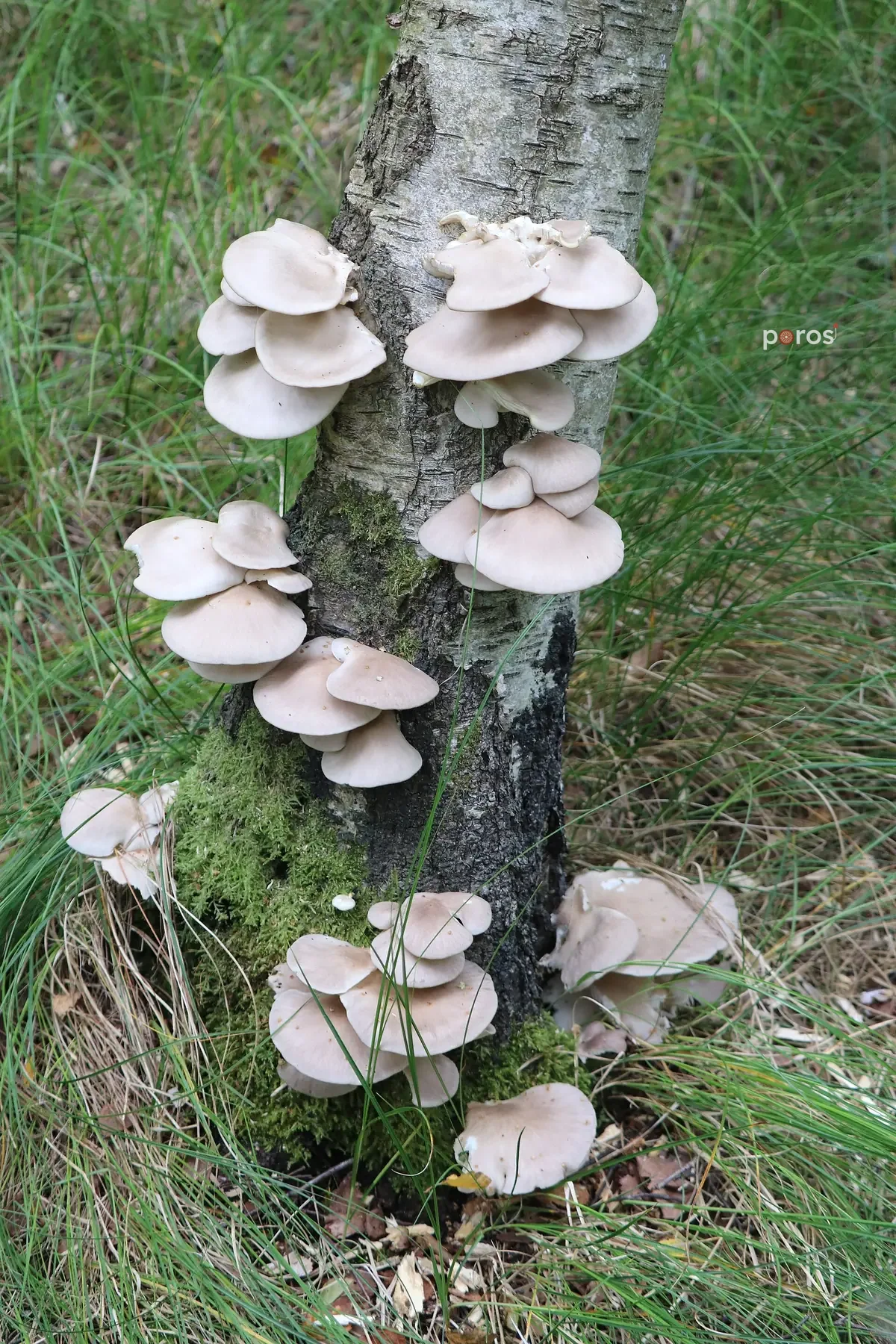
This page is not a definitive identification. The signs we describe help separate these two species, but they do not prove what your mushroom is; both have other look-alikes.
Frequently asked questions
Are the oyster mushroom and the pale oyster the same?
No. They are two separate species in the same genus: the oyster mushroom is Pleurotus ostreatus and the pale oyster is Pleurotus pulmonarius. Names add to the confusion, because in Turkish the name kayın mantarı is used for the oyster mushroom as well. The pale oyster is lighter in colour, thinner-fleshed and fruits in the warm season.
How do you tell an oyster mushroom from a pale oyster?
We look at three signs together. The oyster mushroom has a darker grey or brown cap and thicker flesh, and it fruits in the cool season, in autumn and winter. The pale oyster has a white, cream or pale buff cap and thin flesh, and it appears from late spring to autumn.
Where do the oyster mushroom and the pale oyster grow?
Both grow on wood. The oyster mushroom forms clusters on the dead or dying trunks and branches of broadleaf trees, especially beech and oak. The pale oyster grows in overlapping shelves on the trunks and branches of dead or weakened broadleaf trees, especially beech, oak and poplar, and sometimes on conifers.
When do the oyster mushroom and the pale oyster appear?
The wild oyster mushroom belongs to the cool months: Turkish records cluster between October and March, and in southern Europe it carries on into January and February. The pale oyster appears from late spring to autumn, after warm, rainy days. Both are also cultivated.
Can the oyster mushroom and the pale oyster be cultivated?
Yes, both are cultivated species. The oyster mushroom is one of the most widely grown mushrooms in the world and is counted among the easiest species to start growing at home; it is also widely cultivated in Turkey. The pale oyster is easy to cultivate as well.
What are the dangerous lookalikes of the oyster mushroom and the pale oyster?
For both, the poisonous lookalike in Turkey is the jack-o'-lantern mushroom (Omphalotus olearius), which is bright orange and grows in clusters at the foot of trees. The pale oyster can also be confused with the poisonous angel wing (Pleurocybella porrigens), which is smaller, very thin, pure white and grows on conifer wood. The oyster mushroom may also be mistaken for some Lentinellus species and the ivory funnel (Clitocybe dealbata).
Do the oyster mushroom and the pale oyster smell different?
Smell is not enough to separate them. The oyster mushroom has a faint scent with a hint of bitter almond or aniseed, and the pale oyster also smells faint and pleasant, sometimes with a trace of aniseed. Their spore prints match too: white to pale lilac-grey in both.
Can you tell an oyster mushroom from a pale oyster in a photo?
A photo helps, but it is not a firm identification. Cap colour shows in a picture, but flesh thickness does not, and light-coloured oyster mushrooms resemble the pale oyster. Knowing the season the photo was taken is useful; even so, we suggest showing anything picked in the wild to an expert.
Sources
The facts in this comparison come from the sourced data on our oyster mushroom and pale oyster pages:
More comparisons
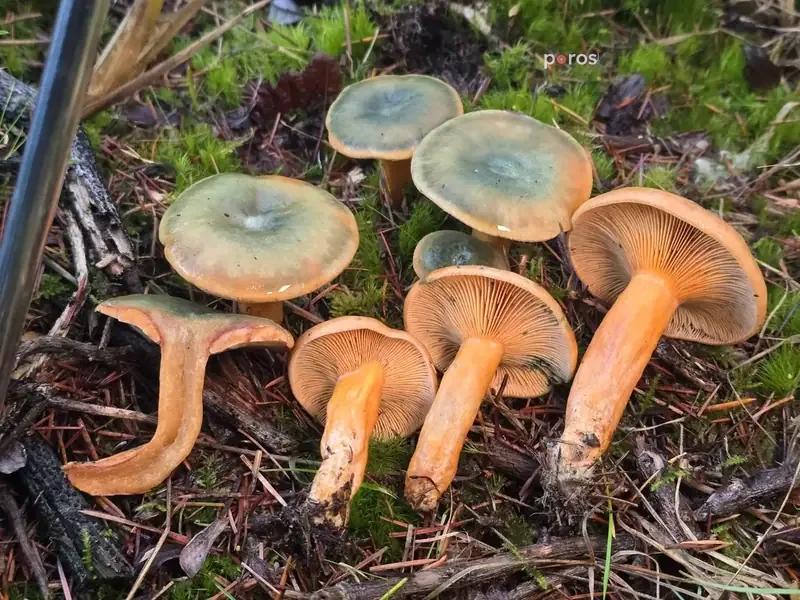
 ≠Saffron milk cap vs woolly milkcapLactarius deliciosus · Lactarius torminosusPoisonous
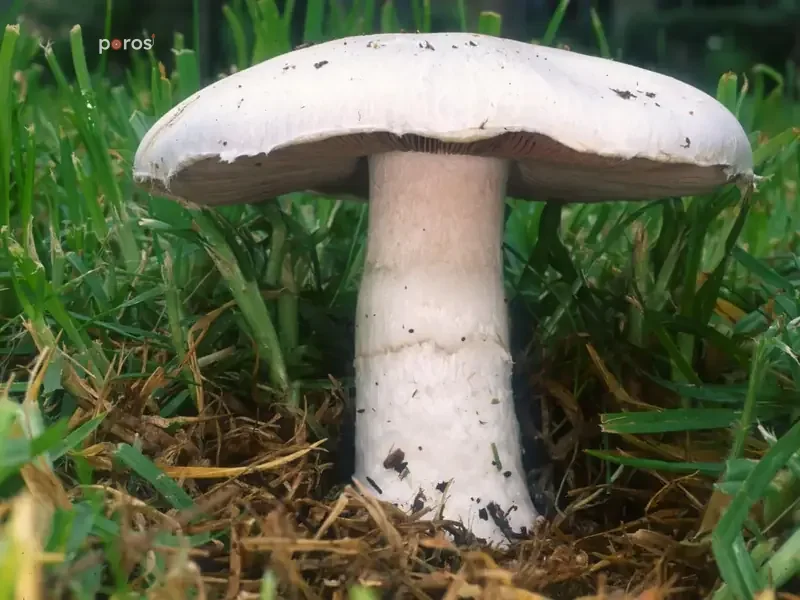
 ≠Field mushroom vs death capAgaricus campestris · Amanita phalloidesDeadly poisonous
 ≠Field mushroom vs yellow stainerAgaricus campestris · Agaricus xanthodermusPoisonous
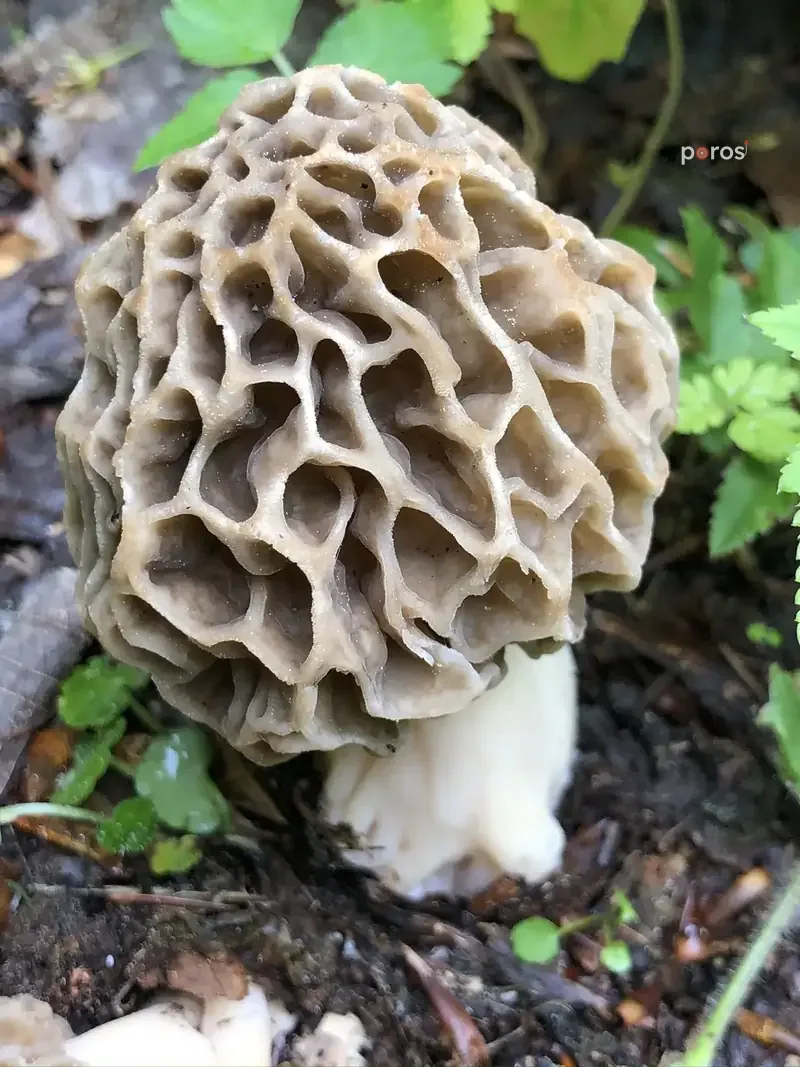
 ≠Morel vs false morelMorchella esculenta · Gyromitra esculentaDeadly poisonous
 ≠Parasol mushroom vs green-spored parasolMacrolepiota procera · Chlorophyllum molybditesPoisonous
 ≠Parasol mushroom vs deadly dapperlingMacrolepiota procera · Lepiota brunneoincarnataDeadly poisonous
Last updated: Prepared by the Poros Mantar editorial teamReport a correction