
Pixie’s parasol (pixie's parasol)
Mycena interrupta · Mycenaceae

Pixie's parasol (Mycena interrupta) is a tiny gilled mushroom with a bright cobalt-blue, slimy cap. It grows on rotting wood in Australia, New Zealand, New Caledonia and Chile, and its blue fades with age. Its edibility is unknown, so treat it as inedible.
Also called: pixie's parasol Turkish: Mycena interrupta Synonyms: Agaricus interruptus
Last updated: Prepared by the Poros Mantar editorial team5 sources checkedReport a correction
Pixie’s parasol photos
-
© Brendan Costello · CC BY 4.0
-

© Brendan Costello · CC BY 4.0
-

© Alan Rockefeller · CC BY 4.0
-

© Jesse de Vries · CC BY 4.0
-

© Grey Smith · CC BY 4.0
-

© Saryu Mae 前 朝琉 · CC BY 4.0
-

© Hayden Jones · CC BY 4.0
-

© Sigrid Jakob · CC0
-

Stem© Yoav Daniel Bar-Ness · CC BY 4.0
-
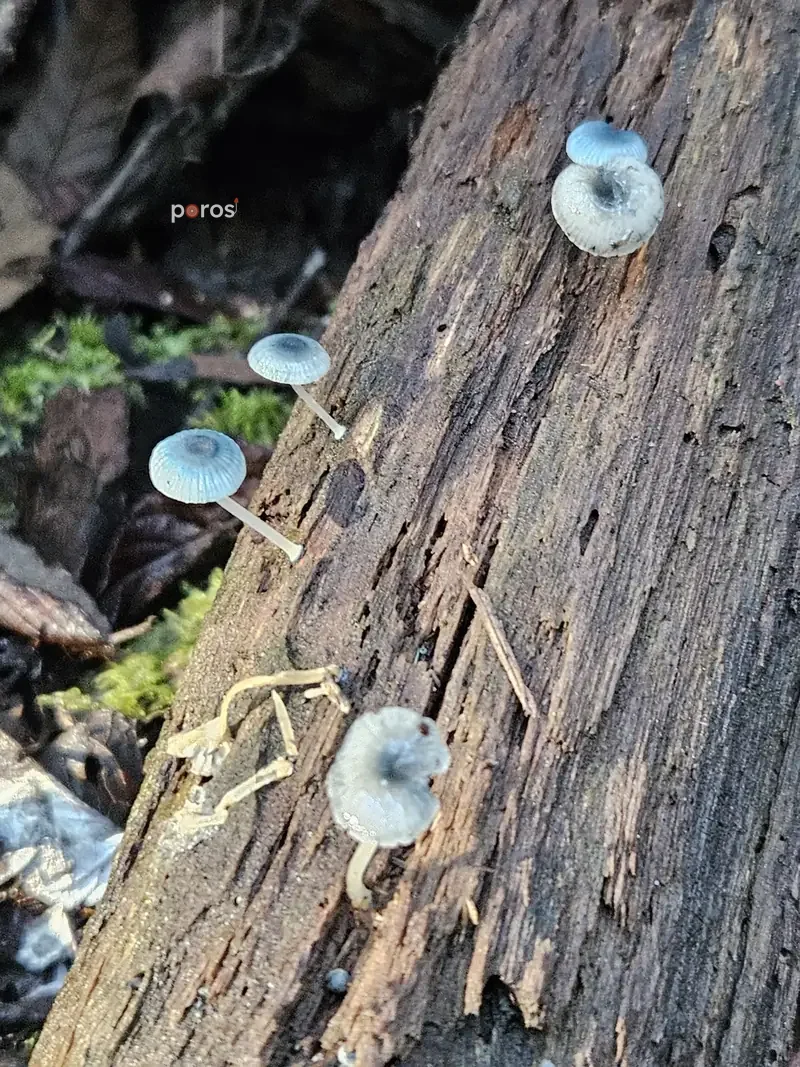
In habitat© Harley · CC0
-

Cap© Pengo · CC BY-SA 3.0


These are licensed records of this species; photos alone are not enough to identify a mushroom.
Are pixie's parasols poisonous?
Whether pixie's parasol is poisonous is unknown.
Are pixie's parasols edible?
Its edibility is unknown; it is tiny and treated as inedible.
How to recognise it
Appearance of pixie's parasols
No ring or volva Spore print: White Not distinctive.
Where do pixie's parasols grow?
It grows, usually in groups, on rotting logs, twigs and bark in damp temperate rainforests.
In Turkey
There are no Turkish records on GBIF or iNaturalist (checked 2026-11-11). Mycena interrupta is not known from Turkey; its natural range lies on other continents.
Our map has no observations of pixie's parasols from Turkey yet.
Look-alikes
What could it be confused with?
Pixie’s parasol can be mistaken for the species below. Each comparison shows Pixie’s parasol on the left, the look-alike on the right, and how to tell them apart.

Blue pinkgill Entoloma hochstetteri
How to tell The blue pinkgill has blue stem and gills too, a sharply conical cap and grows on soil; its gills turn pinkish.
Whether pixie's parasol is poisonous is unknown. It is tiny and treated as inedible; some Mycena species contain muscarine. If poisoning is suspected, call poison control.
Frequently asked questions
Are pixie's parasols poisonous?
Whether pixie's parasol is poisonous is unknown.
Are pixie's parasols edible?
Its edibility is unknown; it is tiny and treated as inedible.
How do you identify it?
A bright blue, slimy cap a few millimetres to two centimetres across, white gills and a short stem, on rotting wood.
What can it be confused with?
The main look-alikes are: Blue pinkgill. The differences are listed in the look-alikes section; with poisonous look-alikes, always check the cross-section and habitat.
Where does it grow?
It grows, usually in groups, on rotting logs, twigs and bark in damp temperate rainforests.
When does it appear?
In Australia and New Zealand it appears in autumn and winter. It has no Turkish record, so it is not on our month lists.
Does pixie's parasol glow?
No, it is not bioluminescent; what stands out is its vivid blue colour.
Is it found in Turkey?
There are no Turkish records on GBIF or iNaturalist; it is a Southern Hemisphere species.
When is pixie's parasol season in Turkey?
In Australia and New Zealand it appears in autumn and winter. It has no Turkish record, so it is not on our month lists.
Where do pixie's parasols grow?
It grows, usually in groups, on rotting logs, twigs and bark in damp temperate rainforests.
Where are pixie's parasols found in Turkey?
There are no Turkish records on GBIF or iNaturalist (checked 2026-11-11). Mycena interrupta is not known from Turkey; its natural range lies on other continents.
What can the pixie's parasol be confused with?
The pixie's parasol can be confused with blue pinkgill (Entoloma hochstetteri, inedible). Look-alikes are compared on this page.
What is the pixie's parasol called in Turkish?
In Turkish, the pixie's parasol (Mycena interrupta) is called Mycena interrupta.
Related species
-
 Bitter oysterPanellus stipticusInedible
-
 Green pepeMycena chlorophosInedible
-
 Mycena seyniiMycena seyniiInedible
-
 Lilac bonnetMycena puraPoisonous
-
 Amethyst deceiverLaccaria amethystinaInedible
-
 Anemone stinkhornAseroe rubraInedible
-
 Artist’s bracketGanoderma applanatumInedible
-
 Barometer earthstarAstraeus hygrometricusInedible
Sources
- Wikipedia (EN): Mycena interrupta en.wikipedia.org
- iNaturalist: Mycena interrupta (takson, adlar ve fotoğraflar) inaturalist.org
- GBIF: Mycena interrupta gbif.org
All sources (5)
- GBIF: Türkiye kayıtları gbif.org
- iNaturalist: Türkiye gözlemleri (araştırma düzeyi) inaturalist.org
Photo credits (11)
- Mycena interrupta · iNaturalist #111077254 · Brendan Costello · CC BY 4.0
- Mycena interrupta · iNaturalist #120925297 · Brendan Costello · CC BY 4.0
- Mycena interrupta · iNaturalist #170675281 · Alan Rockefeller · CC BY 4.0
- Mycena interrupta · iNaturalist #142344894 · Jesse de Vries · CC BY 4.0
- Mycena interrupta · iNaturalist #6461385 · Grey Smith · CC BY 4.0
- Mycena interrupta · iNaturalist #294050818 · Saryu Mae 前 朝琉 · CC BY 4.0
- Mycena interrupta · iNaturalist #219933066 · Hayden Jones · CC BY 4.0
- Mycena interrupta · iNaturalist #208670293 · Sigrid Jakob · CC0
- Mycena interrupta · iNaturalist #290526986 · Yoav Daniel Bar-Ness · CC BY 4.0
- Mycena interrupta · iNaturalist #289196530 · Harley · CC0
- File:Mycena interrupta 01 Pengo.jpg · Pengo · CC BY-SA 3.0
