
Mycena seynii (Seyne's bonnet)
Mycena seynii · Mycenaceae

Mycena seynii is a small bonnet mushroom with a cap 1–3 cm across, pale pink-lilac to brownish-violet with a striate margin, that grows only on fallen pine cones in Mediterranean climates. In autumn and winter it appears cone by cone under Turkish red pine and stone pine. It is one of the most observed bonnets on iNaturalist in Turkey. It is not edible.
Also called: Seyne's bonnet Turkish: Tekne kukulcuk mantarı, tekne kukulcuk mantarı
Last updated: Prepared by the Poros Mantar editorial team4 sources checkedReport a correction
Other pink mushrooms → · Other purple mushrooms → · Other brown mushrooms →
Mycena seynii photos
-
© Thierry Arbault · CC0
-

© zebedeugalinha · CC BY 4.0
-

© pmgaspar · CC BY 4.0
-

© moorebuesing · CC0
-

© Andreas Manz · CC0
-

© Roberto Mourente Blanco · CC BY 4.0
-

© Umut Nuri Erdoğan · CC BY 4.0
-

© Davide Puddu · CC BY 4.0
-

Gills© Virn Stothers · CC BY 4.0
-

Cap© Óscar Sampedro · CC BY 4.0
-

Stem© Julia Ariadna · CC0


These are licensed records of this species; photos alone are not enough to identify a mushroom.
Is Mycena seynii poisonous?
Whether Mycena seynii is poisonous is not well known; it is tiny and not edible. If poisoning is suspected, call 112 at once (Turkish poison centre: 114) and keep any leftover mushroom.
Is Mycena seynii edible?
No. It is tiny and not edible; whether it is poisonous is not well known.
How to recognise it
Appearance of mycena seynii
No ring or volva Spore print: White Not distinctive.
When and where
When to find mycena seynii
Oct–Feb
It fruits in autumn and winter, October to February; our Turkish records peak in December and January.
Where does mycena seynii grow?
It grows on fallen pine cones, especially under Turkish red pine (Pinus brutia), Aleppo pine and stone pine, and is common in coastal and lowland pine woods.
Where is mycena seynii found in Turkey?
Our map data (GBIF and iNaturalist) holds 49 Turkish records: Istanbul (20), Manisa (16), İzmir (3), Muğla (3), Balıkesir (2), Antalya (1), Sakarya (1), Aydın (1), Denizli (1), Osmaniye (1). The records are from January, February, October, November, December.
Which months
- Jan16
- Feb1
- Mar0
- Apr0
- May0
- Jun0
- Jul0
- Aug0
- Sep0
- Oct8
- Nov7
- Dec11
10 provinces, 43 observations (GBIF, iNaturalist); months from observation dates. Record density also reflects where observers work.
Latest mycena seynii observations
-
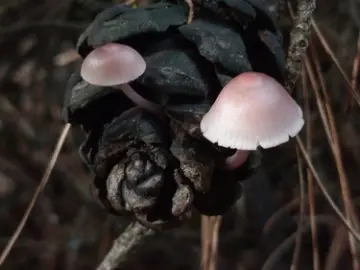 Manisa28 Jan 2026 · iNaturalist© Umut Nuri Erdoğan · CC BY
-
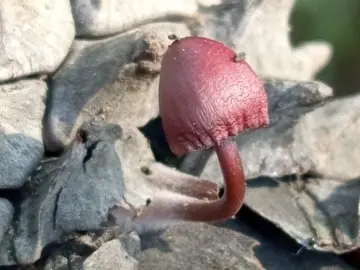 İstanbul3 Nov 2025 · iNaturalist© Umut Nuri Erdoğan · CC BY
-
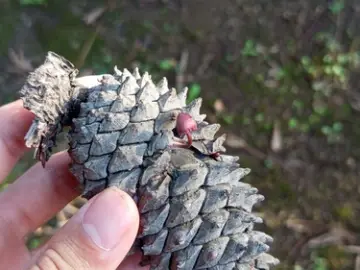 İstanbul3 Nov 2025 · iNaturalist© Umut Nuri Erdoğan · CC BY
-
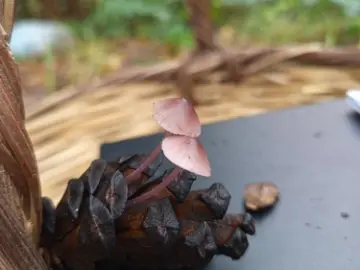 İstanbul5 Dec 2024 · iNaturalist© Umut Nuri Erdoğan · CC BY
-
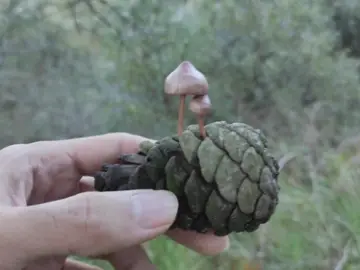 Manisa14 Jan 2024 · iNaturalist© Umut Nuri Erdoğan · CC BY
-
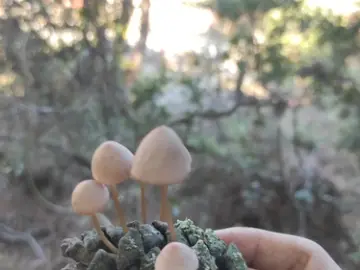 Manisa20 Dec 2023 · iNaturalist© Umut Nuri Erdoğan · CC BY
-
 Illustrative
İzmir4 Nov 2026 · iNaturalist
-
 Illustrative
İstanbul26 Oct 2026 · iNaturalist
- See on the map
On "illustrative" cards the image is a photo of the species; the observation photo cannot be shown here because of its licence, but can be seen at the source.
Look-alikes
What could it be confused with?
Mycena seynii can be mistaken for the species below. Each comparison shows Mycena seynii on the left, the look-alike on the right, and how to tell them apart.
Take care when foraging: Poisonous look-alikes of Mycena seynii come first. If in doubt, leave it.
Rosy bonnet Mycena rosea
How to tell The rosy bonnet is larger (2–6 cm), pink and radish-scented, and grows in leaf litter rather than on cones; it contains muscarine and is considered poisonous.
Other look-alikes (2)
 Inedible
not Mycena seynii
Amethyst deceiver Laccaria amethystina
The amethyst deceiver is deep violet all over, has thick, distant gills and grows on soil.
not Mycena seynii
Pine cone cap Strobilurus tenacellus
The pine cone cap also grows on pine cones, but its cap is grey-brown rather than pink and it appears in spring.
Whether Mycena seynii is poisonous is not well known; it is tiny and not edible. Some Mycena species contain muscarine. If poisoning is suspected, call 112 or the Turkish poison centre (114).
Frequently asked questions
Is Mycena seynii poisonous?
Whether Mycena seynii is poisonous is not well known; it is tiny and not edible. If poisoning is suspected, call 112 at once (Turkish poison centre: 114) and keep any leftover mushroom.
Is Mycena seynii edible?
No. It is tiny and not edible; whether it is poisonous is not well known.
How do you identify it?
In autumn or winter under pines, a pink-lilac to brownish-violet cap 1–3 cm across with a striate margin on a thin stem, growing from a fallen cone.
What can it be confused with?
The main look-alikes are: Rosy bonnet, Amethyst deceiver, Pine cone cap. The differences are listed in the look-alikes section; with poisonous look-alikes, always check the cross-section and habitat.
Where does it grow?
It grows on fallen pine cones, especially under Turkish red pine (Pinus brutia), Aleppo pine and stone pine, and is common in coastal and lowland pine woods.
When does it appear?
It fruits in autumn and winter, October to February; our Turkish records peak in December and January.
Why does it grow only on cones?
It is a specialist decomposer of pine cones; its mycelium lives inside the cone and produces its fruit bodies from it.
Where is it found in Turkey?
Our map data holds 49 records: Istanbul (20), Manisa (16), İzmir and Muğla (3 each), Balıkesir (2) and one each from Antalya, Sakarya, Aydın, Denizli and Osmaniye.
When is mycena seynii season in Turkey?
In our calendar, mycena seynii season runs Oct–Feb. It fruits in autumn and winter, October to February; our Turkish records peak in December and January.
Where does mycena seynii grow?
It grows on fallen pine cones, especially under Turkish red pine (Pinus brutia), Aleppo pine and stone pine, and is common in coastal and lowland pine woods.
Where is mycena seynii found in Turkey?
Our map data (GBIF and iNaturalist) holds 49 Turkish records: Istanbul (20), Manisa (16), İzmir (3), Muğla (3), Balıkesir (2), Antalya (1), Sakarya (1), Aydın (1), Denizli (1), Osmaniye (1). The records are from January, February, October, November, December.
What can mycena seynii be confused with?
Mycena seynii can be confused with rosy bonnet (Mycena rosea, poisonous), amethyst deceiver (Laccaria amethystina, inedible) and pine cone cap (Strobilurus tenacellus, inedible). Look-alikes are compared on this page.
What is mycena seynii called in Turkish?
In Turkish, mycena seynii (Mycena seynii) is called Tekne kukulcuk mantarı.
Related species
-
 Bitter oysterPanellus stipticusInedible
-
 Green pepeMycena chlorophosInedible
-
 Pixie’s parasolMycena interruptaInedible
-
 Lilac bonnetMycena puraPoisonous
-
Amethyst deceiverLaccaria amethystinaInedible
-
 Anemone stinkhornAseroe rubraInedible
-
 Artist’s bracketGanoderma applanatumInedible
-
 Barometer earthstarAstraeus hygrometricusInedible
Sources
- iNaturalist: Mycena seynii (takson, adlar ve fotoğraflar) inaturalist.org
- GBIF: Mycena seynii gbif.org
- GBIF: Türkiye kayıtları gbif.org
All sources (4)
- iNaturalist: Türkiye gözlemleri (araştırma düzeyi) inaturalist.org
Photo credits (17)
- Mycena seynii · iNaturalist #196770435 · Thierry Arbault · CC0
- Mycena seynii · iNaturalist #323292308 · zebedeugalinha · CC BY 4.0
- Mycena seynii · iNaturalist #246235437 · pmgaspar · CC BY 4.0
- Mycena seynii · iNaturalist #140095038 · moorebuesing · CC0
- Mycena seynii · iNaturalist #155879928 · Andreas Manz · CC0
- Mycena seynii · iNaturalist #253740557 · Roberto Mourente Blanco · CC BY 4.0
- Mycena seynii · iNaturalist #336480680 · Umut Nuri Erdoğan · CC BY 4.0
- Mycena seynii · iNaturalist #19154841 · Davide Puddu · CC BY 4.0
- Mycena seynii · iNaturalist #400509826 · Virn Stothers · CC BY 4.0
- Mycena seynii · iNaturalist #139324856 · Óscar Sampedro · CC BY 4.0
- Mycena seynii · iNaturalist #254204937 · Julia Ariadna · CC0
- iNaturalist: Manisa, 28 Jan 2026 · Umut Nuri Erdoğan · CC BY
- iNaturalist: İstanbul, 3 Nov 2025 · Umut Nuri Erdoğan · CC BY
- iNaturalist: İstanbul, 3 Nov 2025 · Umut Nuri Erdoğan · CC BY
- iNaturalist: İstanbul, 5 Dec 2024 · Umut Nuri Erdoğan · CC BY
- iNaturalist: Manisa, 14 Jan 2024 · Umut Nuri Erdoğan · CC BY
- iNaturalist: Manisa, 20 Dec 2023 · Umut Nuri Erdoğan · CC BY