
Bitter oyster (luminescent panellus, astringent panus)
Panellus stipticus · Mycenaceae

The bitter oyster (Panellus stipticus) is a small, kidney- or fan-shaped, pale cinnamon mushroom 1–3 cm across that grows in tiers on dead hardwood branches and stumps. Some strains in eastern North America glow green from their gills in the dark; European strains rarely or never do. It tastes bitter and astringent and is not edible.
Also called: bitter oyster, luminescent panellus, astringent panus Turkish: Panellus stipticus Synonyms: Agaricus stipticus, Panus stipticus
Last updated: Prepared by the Poros Mantar editorial team5 sources checkedReport a correction
Bitter oyster photos
-
© Alexis Williams · CC BY 4.0
-

© Beth Ace · CC BY 4.0
-

© Alan Rockefeller · CC BY 4.0
-

© Alan Rockefeller · CC BY 4.0
-

© Garrett Taylor · CC0
-

© John Brown · CC0
-

© RD · CC BY 4.0
-

© lizfrost47 · CC BY 4.0
These are licensed records of this species; photos alone are not enough to identify a mushroom.
Is the bitter oyster poisonous?
The bitter oyster is not known to be poisonous, but it is bitter and astringent and not edible; some sources mention a purgative effect. If poisoning is suspected, call 112 at once (Turkish poison centre: 114) and keep any leftover mushroom.
Is the bitter oyster edible?
No. It is bitter and astringent and not edible; some sources mention a purgative effect.
How to recognise it
Appearance of bitter oyster
No ring or volva Spore print: White Not distinctive; taste bitter and astringent.
When and where
When to find bitter oyster
Apr, Aug–Sep, Jan–Feb
The fruit bodies can dry out and revive, so they can be seen all year, mostly in autumn and winter.
Where does bitter oyster grow?
It grows in dense clusters on dead branches, stumps and felled trunks of oak, beech, birch and other hardwoods, causing white rot.
Where is bitter oyster found in Turkey?
Our map data (GBIF and iNaturalist) holds 8 Turkish records: Istanbul (2), Kırklareli (1), Trabzon (1), Düzce (1), Bolu (1), Samsun (1), Tekirdağ (1). The records are from January, February, April, August, September. GBIF lists 9 Turkish records in total, including literature surveys.
Which months
- Jan2
- Feb1
- Mar0
- Apr1
- May0
- Jun0
- Jul0
- Aug2
- Sep2
- Oct0
- Nov0
- Dec0
7 provinces, 8 observations (GBIF, iNaturalist); months from observation dates. Record density also reflects where observers work.
Latest bitter oyster observations
-
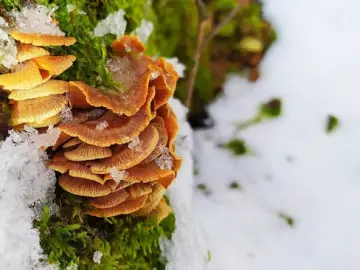 Kırklareli1 Jan 2020 · iNaturalist© Asrın Akıncıoğlu · CC BY
-
 Illustrative
İstanbul24 Feb 2025 · iNaturalist
-
 Illustrative
İstanbul15 Jan 2023 · iNaturalist
-
 Illustrative
Trabzon26 Sep 1997 · University of Tennessee Fungal Herbarium
-
 Illustrative
Tekirdağ3 Sep 1972 · Agaricales externi
-
 Illustrative
Bolu30 Aug 1972 · Agaricales externi
-
 Illustrative
Samsun26 Aug 1972 · Agaricales externi
-
 Illustrative
Düzce12 Apr 1972 · Agaricales externi
- See on the map
On "illustrative" cards the image is a photo of the species; the observation photo cannot be shown here because of its licence, but can be seen at the source.
Look-alikes
What could it be confused with?
Bitter oyster can be mistaken for the species below. Each comparison shows Bitter oyster on the left, the look-alike on the right, and how to tell them apart.

Split gill Schizophyllum commune
How to tell The split gill has a white-grey, hairy top and gills that are split lengthwise down the middle.

Green pepe Mycena chlorophos
How to tell Mycena chlorophos also glows, but it is a tropical species with a central stem and bell-shaped cap.
Bitter oyster and its look-alikes compared
| Species | Status | Underside | Spore print | Season |
|---|---|---|---|---|
| Bitter oysterPanellus stipticus | Inedible | Crowded, narrow cinnamon gills ending sharply at the stem | White | Jan–Feb, Apr, Aug–Sep |
| Split gillSchizophyllum commune | Inedible | Pinkish-grey or pale brown gills radiating from one point | White | Oct–May |
| Green pepeMycena chlorophos | Inedible | Whitish, fairly distant gills that glow in the dark | White | — |
The table is compiled from each species page. The status column is a guide only; do not eat a wild mushroom unless an expert has seen it in person. Compare look-alikes side by side
The bitter oyster is not known to be poisonous, but it is bitter and astringent and not edible; some sources mention a purgative effect. Do not collect small wood-rotting mushrooms to eat. If poisoning is suspected, call 112 or the Turkish poison centre (114).
Frequently asked questions
Is the bitter oyster poisonous?
The bitter oyster is not known to be poisonous, but it is bitter and astringent and not edible; some sources mention a purgative effect. If poisoning is suspected, call 112 at once (Turkish poison centre: 114) and keep any leftover mushroom.
Is the bitter oyster edible?
No. It is bitter and astringent and not edible; some sources mention a purgative effect.
How do you identify it?
Tiers of small cinnamon fans 1–3 cm across on dead hardwood, with crowded gills and a short side stem; bitter, astringent taste.
What can it be confused with?
The main look-alikes are: Split gill, Green pepe. The differences are listed in the look-alikes section; with poisonous look-alikes, always check the cross-section and habitat.
Where does it grow?
It grows in dense clusters on dead branches, stumps and felled trunks of oak, beech, birch and other hardwoods, causing white rot.
When does it appear?
The fruit bodies can dry out and revive, so they can be seen all year, mostly in autumn and winter.
Does the bitter oyster glow?
Some strains do. Specimens from eastern North America glow green from their gills; strains from Europe and the Pacific coast mostly do not.
What does stipticus mean?
Latin stipticus means astringent or styptic, from its astringent taste and its old reputation for stopping bleeding.
Is it found in Turkey?
Our map data (GBIF and iNaturalist) holds 8 Turkish records: Istanbul (2), Kırklareli (1), Trabzon (1), Düzce (1), Bolu (1), Samsun (1), Tekirdağ (1). The records are from January, February, April, August, September. GBIF lists 9 Turkish records in total, including literature surveys.
When is bitter oyster season in Turkey?
In our calendar, bitter oyster season runs Apr, Aug–Sep, Jan–Feb. The fruit bodies can dry out and revive, so they can be seen all year, mostly in autumn and winter.
Where does bitter oyster grow?
It grows in dense clusters on dead branches, stumps and felled trunks of oak, beech, birch and other hardwoods, causing white rot.
Where is bitter oyster found in Turkey?
Our map data (GBIF and iNaturalist) holds 8 Turkish records: Istanbul (2), Kırklareli (1), Trabzon (1), Düzce (1), Bolu (1), Samsun (1), Tekirdağ (1). The records are from January, February, April, August, September. GBIF lists 9 Turkish records in total, including literature surveys.
What can bitter oyster be confused with?
Bitter oyster can be confused with split gill (Schizophyllum commune, inedible) and green pepe (Mycena chlorophos, inedible). Look-alikes are compared on this page.
What is bitter oyster called in Turkish?
In Turkish, bitter oyster (Panellus stipticus) is called Panellus stipticus.
Related species
-
Green pepeMycena chlorophosInedible
-
 Mycena seyniiMycena seyniiInedible
-
 Pixie’s parasolMycena interruptaInedible
-
 Lilac bonnetMycena puraPoisonous
-
 Amethyst deceiverLaccaria amethystinaInedible
-
 Anemone stinkhornAseroe rubraInedible
-
 Artist’s bracketGanoderma applanatumInedible
-
 Barometer earthstarAstraeus hygrometricusInedible
Sources
- Wikipedia (EN): Panellus stipticus en.wikipedia.org
- iNaturalist: Panellus stipticus (takson, adlar ve fotoğraflar) inaturalist.org
- GBIF: Panellus stipticus gbif.org
All sources (5)
- GBIF: Türkiye kayıtları gbif.org
- iNaturalist: Türkiye gözlemleri (araştırma düzeyi) inaturalist.org
Photo credits (9)
- Panellus stipticus · iNaturalist #135756935 · Alexis Williams · CC BY 4.0
- Panellus stipticus · iNaturalist #10272840 · Beth Ace · CC BY 4.0
- Panellus stipticus · iNaturalist #24362822 · Alan Rockefeller · CC BY 4.0
- Panellus stipticus · iNaturalist #37479172 · Alan Rockefeller · CC BY 4.0
- Panellus stipticus · iNaturalist #142021805 · Garrett Taylor · CC0
- Panellus stipticus · iNaturalist #102953858 · John Brown · CC0
- Panellus stipticus · iNaturalist #61513463 · RD · CC BY 4.0
- Panellus stipticus · iNaturalist #253191561 · lizfrost47 · CC BY 4.0
- iNaturalist: Kırklareli, 1 Jan 2020 · Asrın Akıncıoğlu · CC BY