
Lilac bonnet
Mycena pura · Mycenaceae

Mycena pura, the lilac bonnet, is a small woodland bonnet with a 2–5 cm lilac, pink or purplish, striate cap, growing in leaf and needle litter. Crushed, it smells strongly of radish. It carries muscarine, and sweating, salivation and gastrointestinal symptoms are reported after eating it. Its lilac colour lets it be confused with the edible wood blewit (Lepista nuda) and the amethyst deceiver. In Turkey there are GBIF records from Gaziantep, Samsun, Bolu and Trabzon.
Turkish: Mycena pura
Last updated: Prepared by the Poros Mantar editorial team4 sources checkedReport a correction
POISONOUS — do not eat.
Mycena pura is poisonous. According to sources it carries muscarine; within 15 minutes to 2 hours of eating it, sweating, salivation, tears, blurred vision, abdominal pain and diarrhoea can occur. It is too small to be eaten on its own, but it can end up in a basket of wood blewits. If poisoning is suspected, call 112 (Turkish poison centre UZEM: 114) and keep any leftover mushroom.
Lilac bonnet photos
-
© Jerzy Opioła · CC BY-SA 4.0
-

© Eugene Popov · CC BY 4.0
-

Gills© Garry Lydon · CC BY 4.0
-

© mycowalt · CC BY-SA 4.0
-

© debk · CC BY-SA 4.0
-

Gills© Alex Heyman · CC0
-

Stem© mycowalt · CC BY-SA 4.0
-
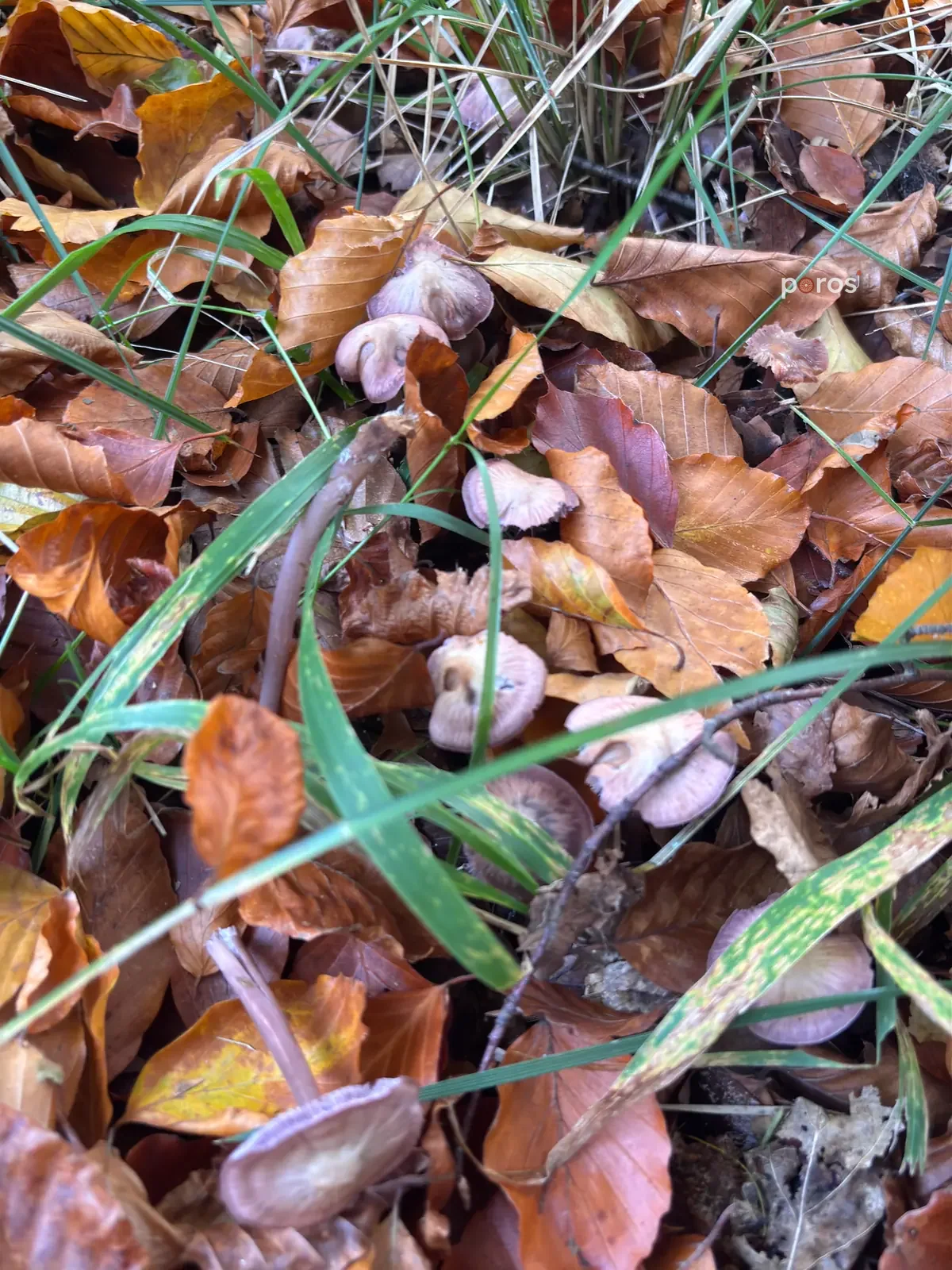
In habitat© Garry Lydon · CC BY 4.0
These are licensed records of this species; photos alone are not enough to identify a mushroom.
Is the lilac bonnet poisonous?
Yes, the lilac bonnet is poisonous and must not be eaten. It carries muscarine and can cause sweating, salivation and gastrointestinal symptoms. If poisoning is suspected, call 112 at once (Turkish poison centre: 114) and keep any leftover mushroom.
Is the lilac bonnet edible?
No, the lilac bonnet must not be eaten; it is poisonous. It can be picked by mistake for wood blewit (Lepista nuda). If poisoning is suspected, call 112 at once (Turkish poison centre: 114) and keep any leftover mushroom.
How to recognise it
Appearance of lilac bonnet
No ring or volva Spore print: White Strongly of radish.
Where does lilac bonnet grow?
A saprotroph of deciduous and conifer woodland, growing singly or in small groups among leaf and needle litter.
Where is lilac bonnet found in Turkey?
Our map data holds 10 GBIF records from Turkey (Gaziantep, Samsun, Bolu, Trabzon) and eight research-grade iNaturalist observations; it appears to be widespread in Turkish woodland.
Which months
- Jan3
- Feb0
- Mar0
- Apr0
- May0
- Jun0
- Jul0
- Aug1
- Sep1
- Oct3
- Nov1
- Dec2
5 provinces, 11 observations (GBIF, iNaturalist); months from observation dates. Record density also reflects where observers work.
Latest lilac bonnet observations
-
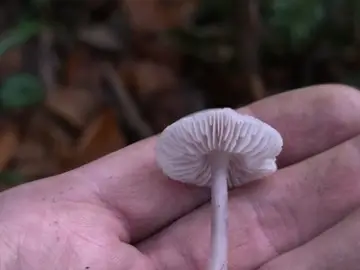 Bolu29 Oct 2026 · iNaturalist© Umut Nuri Erdoğan · CC BY
-
 Illustrative
Bolu29 Oct 2026 · iNaturalist
-
 Illustrative
Bolu10 Oct 2025 · iNaturalist
-
 Illustrative
Samsun13 Nov 2024 · iNaturalist
-
 Illustrative
Samsun16 Aug 2024 · iNaturalist
-
 Illustrative
Gaziantep22 Jan 2024 · iNaturalist
-
 Illustrative
Gaziantep22 Jan 2024 · iNaturalist
-
 Illustrative
Manisa13 Jan 2024 · Mushroom Observer
- See on the map
On "illustrative" cards the image is a photo of the species; the observation photo cannot be shown here because of its licence, but can be seen at the source.
Look-alikes
What is it mistaken for?
Lilac bonnet can be mistaken for the species below. Each comparison shows Lilac bonnet on the left, the look-alike on the right, and how to tell them apart.
Poisoning risk: Lilac bonnet gets picked by people who think they have found one of the edible species below. If even one feature does not match, do not eat it.

Wood blewit Lepista nuda
How to tell The wood blewit is much fleshier and larger, with crowded notched gills, a pinkish-buff spore print and a fruity smell.
Other look-alikes (2)
 Inedible
not Lilac bonnet
Amethyst deceiver Laccaria amethystina
The amethyst deceiver has thick, very distant, deep purple gills, an unstriated cap and no radish smell.
 Poisonous
not Lilac bonnet
White fibrecap Inocybe geophylla
The lilac form of the white fibrecap is also confused; its gills turn brown and its spore print is brown.
Lilac bonnet and its look-alikes compared
| Species | Status | Underside | Spore print | Season |
|---|---|---|---|---|
| Lilac bonnetMycena pura | Poisonous | Adnate, fairly distant, whitish-pinkish gills, with cross-veins between them | White | Jun–Dec |
| Wood blewitLepista nuda | Edible species | Grey-violet, pale lilac or light brown | White to pale pink | Sep–Dec |
| Amethyst deceiverLaccaria amethystina | Inedible | Thick, widely spaced, waxy-looking purple gills, lightly dusted with white spores when mature | White | Jan, Jul–Nov |
| White fibrecapInocybe geophylla | Poisonous | Crowded gills, pale grey-cream when young, later earthy brown | Earth brown | Jul–Nov |
The table is compiled from each species page. The status column is a guide only; do not eat a wild mushroom unless an expert has seen it in person. Compare look-alikes side by side
Frequently asked questions
Is the lilac bonnet poisonous?
Yes, the lilac bonnet is poisonous and must not be eaten. It carries muscarine and can cause sweating, salivation and gastrointestinal symptoms. If poisoning is suspected, call 112 at once (Turkish poison centre: 114) and keep any leftover mushroom.
Is the lilac bonnet edible?
No, the lilac bonnet must not be eaten; it is poisonous. It can be picked by mistake for wood blewit (Lepista nuda). If poisoning is suspected, call 112 at once (Turkish poison centre: 114) and keep any leftover mushroom.
How do you recognise it?
A small lilac-pink cap with a striate margin, pale gills, a slender hollow stem and a strong radish smell.
Is it found in Turkey?
Yes. GBIF holds 10 records from Gaziantep, Samsun, Bolu and Trabzon and iNaturalist eight observations.
How is it told from the wood blewit?
The wood blewit is large and fleshy with crowded purplish gills and a fruity smell. Mycena pura is small and slender and smells of radish.
When do symptoms start?
In muscarine poisoning, according to sources, within 15 minutes to 2 hours. If in doubt, call 112.
Is it always lilac?
No. It has pink, purple, bluish and almost white forms; the radish smell and striate cap margin are more reliable.
Where does it grow?
In deciduous and conifer woodland, among the litter.
When is lilac bonnet season in Turkey?
In our calendar, lilac bonnet season runs Jun–Dec. Fruits from June to December, mostly in autumn.
Where does lilac bonnet grow?
A saprotroph of deciduous and conifer woodland, growing singly or in small groups among leaf and needle litter.
Where is lilac bonnet found in Turkey?
Our map data holds 10 GBIF records from Turkey (Gaziantep, Samsun, Bolu, Trabzon) and eight research-grade iNaturalist observations; it appears to be widespread in Turkish woodland.
What can lilac bonnet be confused with?
Lilac bonnet can be confused with wood blewit (Lepista nuda, edible species), amethyst deceiver (Laccaria amethystina, inedible) and white fibrecap (Inocybe geophylla, poisonous). Look-alikes are compared on this page.
What is lilac bonnet called in Turkish?
In Turkish, lilac bonnet (Mycena pura) is called Mycena pura.
Related species
-
 Bitter oysterPanellus stipticusInedible
-
 Green pepeMycena chlorophosInedible
-
 Mycena seyniiMycena seyniiInedible
-
 Pixie’s parasolMycena interruptaInedible
-
 Cinnamon bracketHapalopilus rutilansPoisonous
-
 Common earthballScleroderma citrinumPoisonous
-
 Common ink capCoprinopsis atramentariaPoisonous
-
 Devil’s boleteRubroboletus satanasPoisonous
Sources
- Wikipedia (EN): Mycena pura en.wikipedia.org
- First Nature: Mycena pura, Lilac Bonnet first-nature.com
- iNaturalist: Mycena pura inaturalist.org
All sources (4)
- GBIF: Türkiye kayıtları gbif.org
Photo credits (9)
- File:Mycena pura a3 (2).JPG · Jerzy Opioła · CC BY-SA 4.0
- Mycena pura · iNaturalist #31002921 · Eugene Popov · CC BY 4.0
- Mycena pura · iNaturalist #250392562 · Garry Lydon · CC BY 4.0
- Mycena pura pura · iNaturalist #9592598 · mycowalt · CC BY-SA 4.0
- Mycena pura · iNaturalist #39392169 · debk · CC BY-SA 4.0
- Mycena pura · iNaturalist #20763323 · Alex Heyman · CC0
- Mycena pura pura · iNaturalist #9592598 · mycowalt · CC BY-SA 4.0
- Mycena pura · iNaturalist #250392562 · Garry Lydon · CC BY 4.0
- iNaturalist: Bolu, 29 Oct 2026 · Umut Nuri Erdoğan · CC BY
