

Look-alikes · comparison
Honey fungus vs deadly galerina: how to tell them apart
Honey fungus (Turkish: bal mantarı) and the deadly galerina (Turkish: ölümcül galerina) are most reliably separated by spore print: white in honey fungus, rusty brown in the galerina. Honey fungus is larger, with a white, cottony, persistent ring; the galerina's ring is thin, membranous and often lost with age. The galerina contains amatoxins and can grow mixed into a cluster.

Honey fungus vs deadly galerina: the three signs that matter
-
Spore print: white or rusty brown?
Honey fungus leaves a white spore print; its gills are whitish to cream, slightly decurrent and spotted pinkish-brown with age. The deadly galerina's spore print is rusty brown, and its crowded gills go from pale brown when young to tawny when mature. Gill colour shifts with age, so we do not judge by gills alone; the spore print is the clearest sign in this pair.
-
Size and cap: large or small?
A honey fungus cap is 3–15 cm, honey-yellow to brownish-yellow with small dark scales in the centre, on a fibrous stem of 5–15 cm. The deadly galerina is smaller: its cap is 1–6 cm, brown to yellow-brown and fading as it dries, on a slender brownish stem of 2–8 cm. The ranges overlap, so a small honey fungus and a large galerina can be confused.
-
Ring: cottony or thin membrane?
The honey fungus ring is white, cottony and persistent, with a yellowish edge. Young deadly galerinas have a clear but thin, membranous ring that is often lost with age. Smell differs as well: honey fungus smells mildly mushroomy, the galerina mealy, and the galerina must never be tasted. Since both species can carry a ring, we look at what the ring is like, not whether there is one.
Because a deadly galerina can grow mixed into a cluster, we check every mushroom singly and leave any without a white spore print or with a thin membranous ring. If in doubt, do not eat it; ask an expert.
Side-by-side differences
This table is built from the sourced descriptions on the two species pages.
| Feature | Honey fungus | Deadly galerina |
|---|---|---|
| Cap | 3–15 cm, convex to flat; honey-yellow to brownish-yellow, with small dark scales in the centre. | 1–6 cm; brown to yellow-brown, fading as it dries; convex then flat, sometimes with a boss. |
| Gills | Whitish to cream gills, slightly decurrent; spotted pinkish-brown with age. | Crowded, pale brown when young, tawny when mature. |
| Stem | 5–15 cm, fibrous, cream above and browner below; stems fused at the base in clusters. | 2–8 cm, slender, brownish. |
| Ring | White, cottony, persistent ring with a yellowish edge. | A clear membranous ring on young specimens; often lost with age. |
| Volva (cup at the base) | None. | None. |
| Smell and taste | Mild mushroomy smell; raw flesh tastes astringent to bitter. | Mealy smell and taste. Never taste it. |
| Spore print | White. | Rusty (snuff) brown. |
| Habitat | Honey fungus grows on the roots and trunk bases of broadleaf trees, less often conifers, and on stumps; it spreads through the soil with black, bootlace-like strands called rhizomorphs. | The deadly galerina grows on rotting conifer (sometimes hardwood) stumps, trunks and fallen branches. It usually grows in small clusters, sometimes scattered or singly. |
| Season | Sep–Jan | Aug–Nov |
| Edibility | Edible species | Deadly poisonous |
The same view of both species


This page is not a definitive identification. The signs we describe help separate these two species, but they do not prove what your mushroom is; other poisonous species can grow in the same place.
Frequently asked questions
Are honey fungus and the deadly galerina the same?
No. Honey fungus (Armillaria mellea) is listed in our sources as edible only when thoroughly cooked, while the deadly galerina (Galerina marginata) is an extremely poisonous species carrying the same amatoxins as the death cap. Both grow on wood and have a ring, which is where the confusion comes from.
Honey fungus or deadly galerina: which one is poisonous?
The galerina is the deadly one; it contains amatoxins and causes severe liver damage. Honey fungus is not listed as poisonous in our sources, but raw or undercooked it causes stomach upsets, and even well cooked it disagrees with some people.
How do you tell honey fungus from a deadly galerina?
We check three signs together: spore print, size and ring. Honey fungus has a white spore print, a 3–15 cm cap and a white, cottony ring. The deadly galerina has a rusty brown spore print, a 1–6 cm cap and a thin, membranous ring that older specimens may have lost.
What happens if you eat a deadly galerina?
The result is amatoxin poisoning: vomiting, diarrhoea, hypothermia and death if untreated. The deadly galerina carries the same amatoxins as the death cap and causes severe liver damage. If poisoning is suspected, medical help is sought without delay and any leftover mushroom is kept.
Do honey fungus and the deadly galerina grow in the same places?
Yes, both grow on wood. Honey fungus grows on the roots and trunk bases of broadleaf trees, less often conifers, and on stumps. The deadly galerina grows on rotting conifer, sometimes hardwood, stumps, trunks and fallen branches. According to our data, a galerina can grow mixed into a honey fungus cluster.
What time of year do honey fungus and the deadly galerina appear?
Honey fungus fruits from September to January. The deadly galerina's months are August, September, October and November. From September to November the two can be up at the same time, so in autumn the season does nothing to separate them.
Where are honey fungus and the deadly galerina found in Turkey?
Honey fungus records come mostly from the northern forests of İstanbul, with others from Bolu, Düzce and Yalova. The deadly galerina has also been recorded in Turkey, but most records give no province; our map data names İstanbul and Kastamonu.
Can you tell honey fungus from a deadly galerina in a photo?
A photo helps, but it is not a firm identification. The clearest sign in this pair, the spore print, cannot be seen in a picture, and most shots do not show whether a ring is cottony or membranous. A single galerina inside a cluster is easily missed. We suggest showing the mushrooms to an expert.
Sources
The facts in this comparison come from the sourced data on our honey fungus and deadly galerina pages:
More comparisons
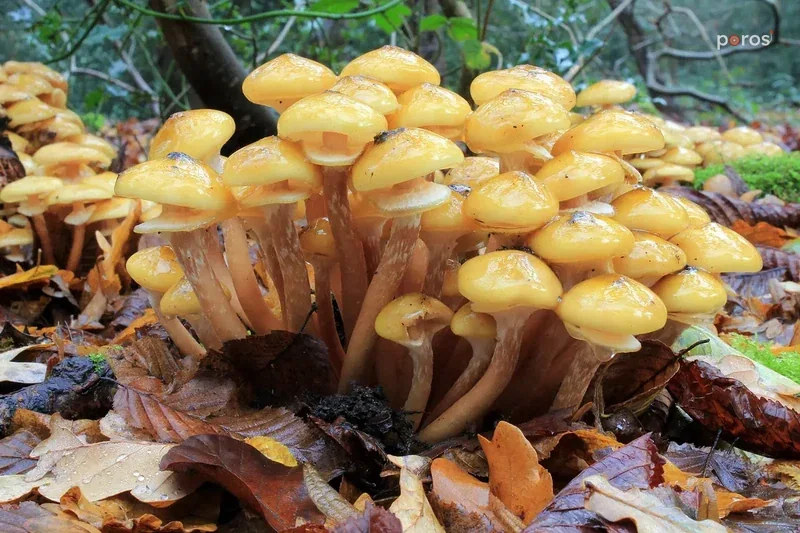
 ≠Honey fungus vs sulphur tuftArmillaria mellea · Hypholoma fascicularePoisonous
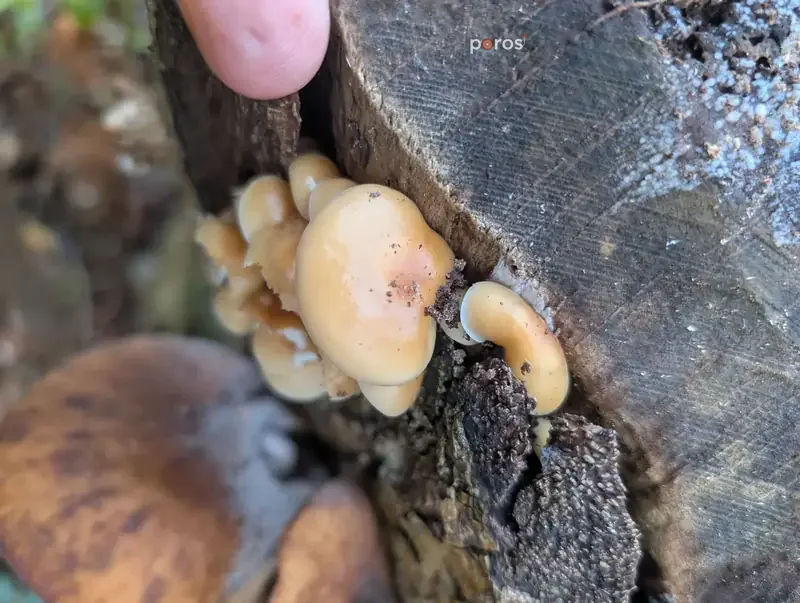 ≠Enoki vs deadly galerinaFlammulina filiformis · Galerina marginataDeadly poisonous
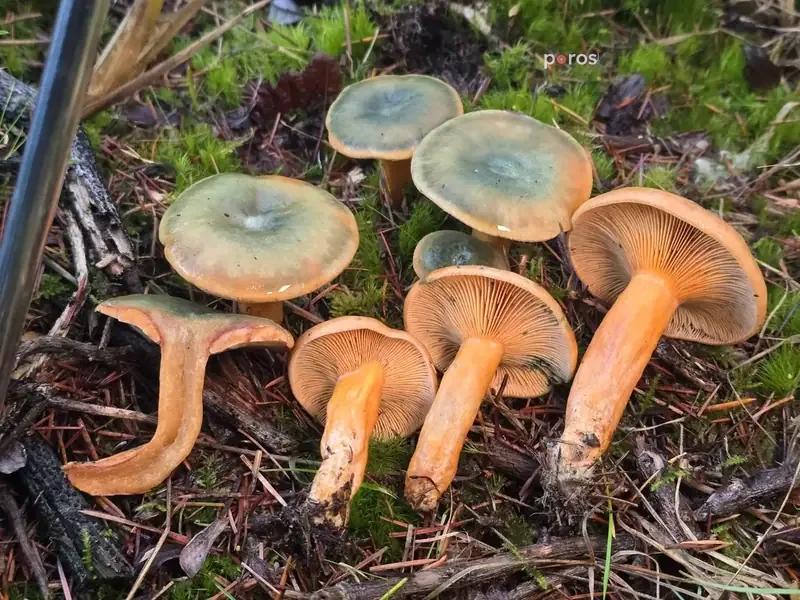
 ≠Saffron milk cap vs woolly milkcapLactarius deliciosus · Lactarius torminosusPoisonous
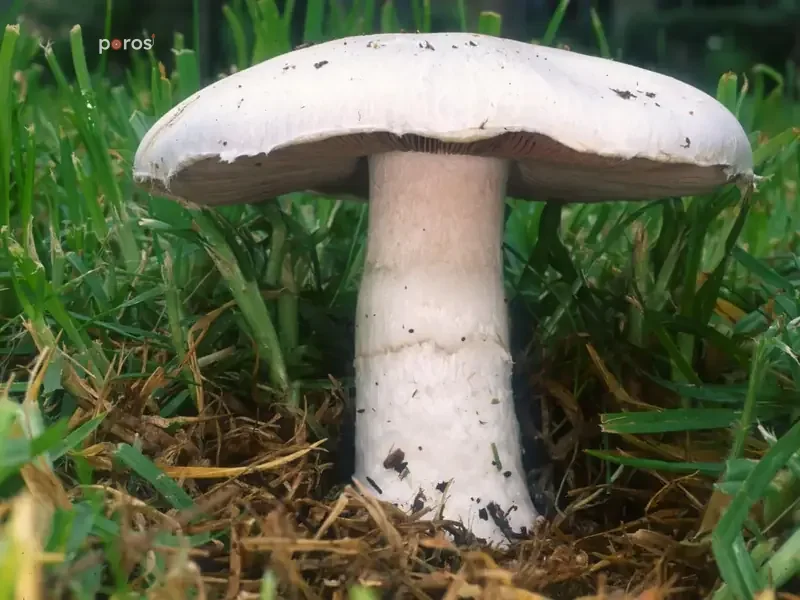
 ≠Field mushroom vs death capAgaricus campestris · Amanita phalloidesDeadly poisonous
 ≠Field mushroom vs yellow stainerAgaricus campestris · Agaricus xanthodermusPoisonous
 ≠Morel vs false morelMorchella esculenta · Gyromitra esculentaDeadly poisonous
Last updated: Prepared by the Poros Mantar editorial teamReport a correction