

Look-alikes · comparison
Honey fungus vs sulphur tuft: how to tell them apart
Honey fungus (Turkish: bal mantarı) and sulphur tuft (Turkish: kükürt sarısı demet mantarı) both grow in clusters on stumps, but their gills differ: cream-white in honey fungus, greenish yellow in sulphur tuft. Honey fungus has a distinct ring on the stem and small dark scales on the cap; sulphur tuft has no ring, a purple-brown spore print, and is poisonous.

Honey fungus vs sulphur tuft: the three signs that matter
-
Gill colour: cream or greenish?
Honey fungus gills are whitish to cream, slightly decurrent and spotted pinkish-brown with age. Sulphur tuft has crowded gills that start greenish yellow and later turn olive and purple-brown. The spore print backs this up: white in honey fungus, purple-brown in sulphur tuft. Once we see a greenish tint in the gills, we no longer treat the mushroom as honey fungus.
-
Ring: distinct or missing?
Honey fungus carries a white, cottony, persistent ring with a yellowish edge. Sulphur tuft has no true ring; only a faint veil zone, darkened by spores, may remain on the stem. The stems differ too: 5–15 cm, fibrous, cream above and browner below in honey fungus; 4–10 cm, slender and often curved, yellow above and orange-brown below in sulphur tuft.
-
Cap: honey-yellow or sulphur yellow?
A honey fungus cap is 3–15 cm, honey-yellow to brownish-yellow, with small dark scales in the centre. The sulphur tuft cap is smaller, 2–7 cm, sulphur yellow with an orange-brown centre, and smooth, without scales. Young caps may carry veil remnants at the margin. Both species form dense clusters, so we look at individual caps, not at the clump.
We never rely on a single sign: a cluster with greenish gills and ringless stems is left where it stands. If in doubt, do not eat it; we suggest showing any find to an expert first.
Side-by-side differences
This table is built from the sourced descriptions on the two species pages.
| Feature | Honey fungus | Sulphur tuft |
|---|---|---|
| Cap | 3–15 cm, convex to flat; honey-yellow to brownish-yellow, with small dark scales in the centre. | 2–7 cm, convex to flat; sulphur yellow with an orange-brown centre; young caps carry veil remnants at the margin. |
| Gills | Whitish to cream gills, slightly decurrent; spotted pinkish-brown with age. | Crowded, adnate gills; greenish yellow at first, later olive and purple-brown. |
| Stem | 5–15 cm, fibrous, cream above and browner below; stems fused at the base in clusters. | 4–10 cm, slender and often curved; yellow above, orange-brown below; joined together in tufts. |
| Ring | White, cottony, persistent ring with a yellowish edge. | No true ring; a faint veil zone, darkened by spores, may remain on the stem. |
| Volva (cup at the base) | None. | Absent. |
| Smell and taste | Mild mushroomy smell; raw flesh tastes astringent to bitter. | Not distinctive; the taste is very bitter. |
| Spore print | White. | Purple-brown. |
| Habitat | Honey fungus grows on the roots and trunk bases of broadleaf trees, less often conifers, and on stumps; it spreads through the soil with black, bootlace-like strands called rhizomorphs. | It grows in crowded clusters on dead stumps, buried roots and rotting wood of both broadleaf trees and conifers, as a wood-decay (saprotrophic) fungus. |
| Season | Sep–Jan | Feb–Apr, Jun, Aug, Oct–Dec |
| Edibility | Edible species | Poisonous |
The same view of both species


This page is not a definitive identification. The signs we describe help separate these two species, but they do not prove what your mushroom is; other poisonous species can grow in the same place.
Frequently asked questions
Are honey fungus and sulphur tuft the same?
No. Honey fungus (Armillaria mellea) is listed in our sources as edible only when thoroughly cooked, while sulphur tuft (Hypholoma fasciculare) is a poisonous species. Both form dense clusters on stumps and roots and are yellowish, which is why they get confused.
Honey fungus or sulphur tuft: which one is poisonous?
Sulphur tuft is the poisonous one; it causes vomiting, diarrhoea and abdominal pain, and visual disturbance and paralysis have been reported in severe cases. Honey fungus is not listed as poisonous in our sources, but raw or undercooked it causes stomach upsets.
How do you tell honey fungus from sulphur tuft?
We look at gills, ring and cap together. Honey fungus has cream-white gills, a white spore print, a distinct ring on the stem and small dark scales on the cap. Sulphur tuft has greenish-yellow gills, a purple-brown spore print, no true ring and a smooth cap.
What happens if you eat sulphur tuft?
Symptoms usually start within a few hours: nausea, vomiting, diarrhoea and abdominal pain. Severe cases with visual disturbance and paralysis have been reported. Cooking does not remove the bitterness and does not make this species harmless. If poisoning is suspected, keep any leftover mushroom.
Do honey fungus and sulphur tuft grow in the same places?
Yes, both cluster on wood. Honey fungus grows on the roots and trunk bases of broadleaf trees, less often conifers, and on stumps. Sulphur tuft grows on dead stumps, buried roots and rotting wood of both broadleaf trees and conifers. In Turkey most records of both species come from the forests of İstanbul.
What time of year do honey fungus and sulphur tuft appear?
Honey fungus fruits from September to January. Sulphur tuft records are spread over much of the year: February to April, June, August and October to December. The two overlap in October, November and December, when yellow clusters on stumps deserve a closer look.
Can you tell honey fungus from sulphur tuft by taste?
We do not recommend it. In our data sulphur tuft tastes very bitter, but raw honey fungus is also described as astringent to bitter, so bitterness alone separates nothing. What is more, the deadly galerina, which can grow in the same places, must never be tasted. We rely on gills, ring and spore print.
Can you tell honey fungus from sulphur tuft in a photo?
A photo helps, but it is not a firm identification. The greenish tint of the gills can vanish depending on the light, and the spore print never shows. Side views are useful for the ring and shots from below for the gills, but we still suggest showing the mushrooms to an expert.
Sources
The facts in this comparison come from the sourced data on our honey fungus and sulphur tuft pages:
More comparisons
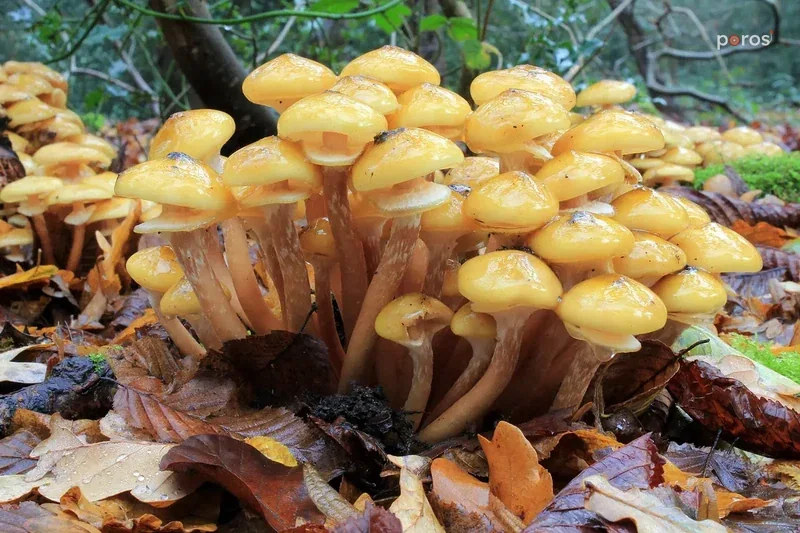
 ≠Honey fungus vs deadly galerinaArmillaria mellea · Galerina marginataDeadly poisonous
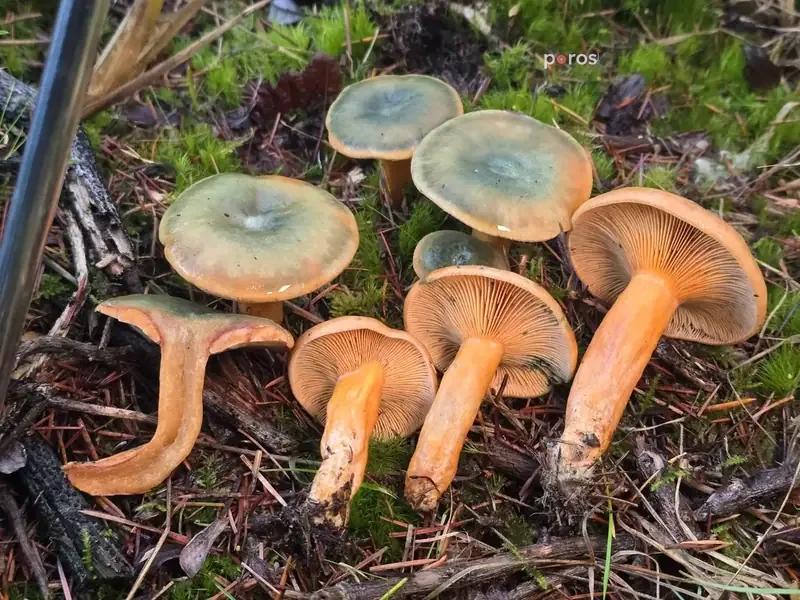
 ≠Saffron milk cap vs woolly milkcapLactarius deliciosus · Lactarius torminosusPoisonous
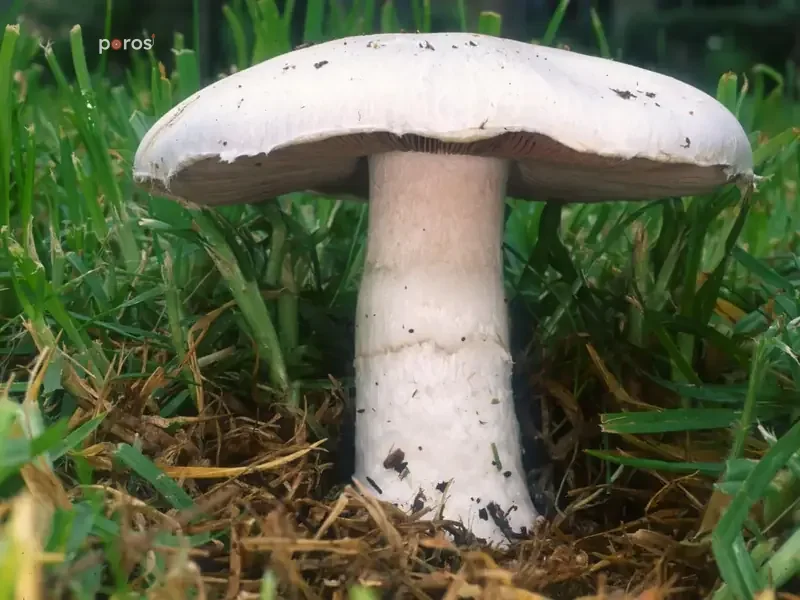
 ≠Field mushroom vs death capAgaricus campestris · Amanita phalloidesDeadly poisonous
 ≠Field mushroom vs yellow stainerAgaricus campestris · Agaricus xanthodermusPoisonous
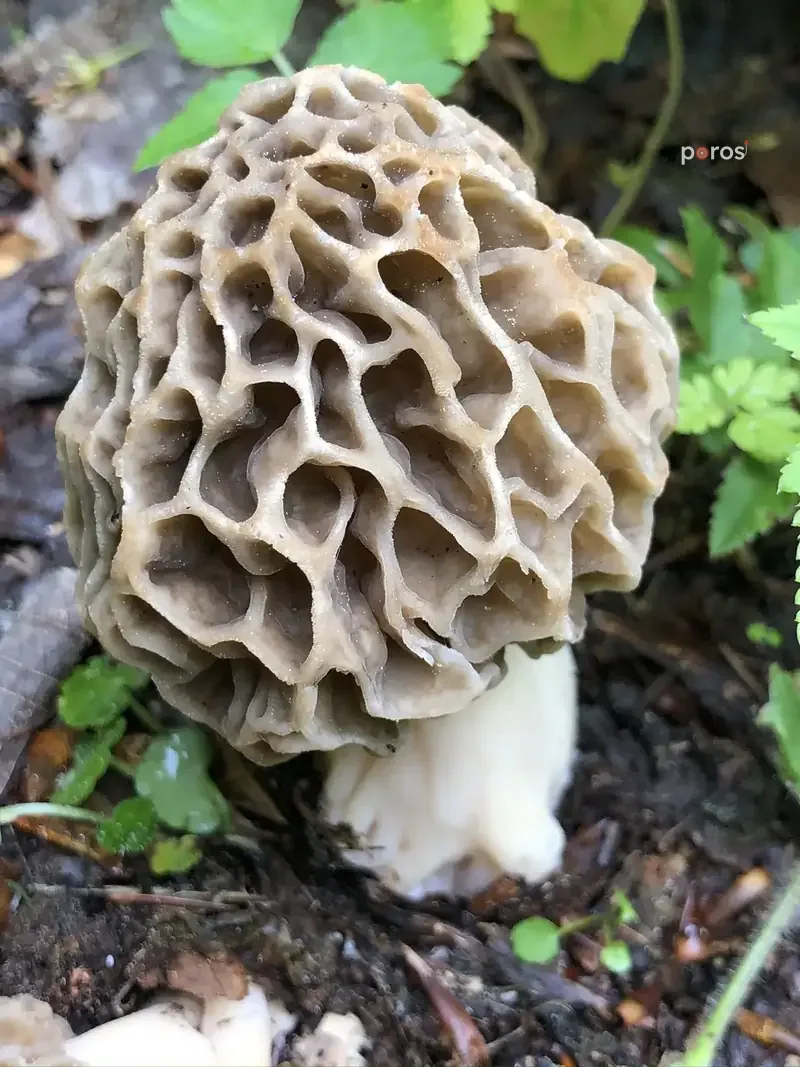
 ≠Morel vs false morelMorchella esculenta · Gyromitra esculentaDeadly poisonous
 ≠Parasol mushroom vs green-spored parasolMacrolepiota procera · Chlorophyllum molybditesPoisonous
Last updated: Prepared by the Poros Mantar editorial teamReport a correction