

Look-alikes · comparison
Lion's mane vs coral tooth fungus: how to tell them apart
Lion's mane (Turkish: aslan yelesi) and the coral tooth fungus (Turkish: dedesakalı mantarı) are two wood-dwelling relatives with hanging white spines. Lion's mane does not branch: long spines hang from a single clump. Coral tooth branches like coral, with short spines lined up beneath the branches. Both are listed as eaten species and are scarce in the wild.

Lion's mane vs coral tooth fungus: the three signs that matter
-
Body: single clump or branched cluster?
Lion's mane (Hericium erinaceus) has no cap; it forms one irregular, rounded white clump 5–40 cm across, fixed to the wood by a short base. The coral tooth fungus (Hericium coralloides) is a white, much-branched, coral-like cluster 10–30 cm wide growing from a shared base. We look at this overall shape first: branched means coral tooth, a single lump means lion's mane.
-
Spine length: long or short?
Instead of gills or pores, lion's mane has crowded spines 1–5 cm long that hang down from the single body like hair. The coral tooth's spines are shorter: white, hanging spines 0.5–1.5 cm long, set in rows along the underside of the branches. Both species leave a white spore print, so we look for the difference in the length and arrangement of the spines.
-
Colour with age and host trees
Lion's mane turns yellowish brown as it ages; coral tooth goes from cream to light brown. Lion's mane grows on wounds of old broadleaf trees, especially beech and oak and also maple, and on stumps and fallen trunks. Coral tooth grows on dead or fallen beech, oak, elm and birch trunks, often in old, damp forests. Beech and oak are shared, so the tree alone does not separate them.
Both are scarce in the wild and protected in many European countries, so we photograph them and leave them in place. We never rely on a single sign, and wild finds are not eaten without being shown to an expert.
Side-by-side differences
This table is built from the sourced descriptions on the two species pages.
| Feature | Lion's mane | Coral tooth fungus |
|---|---|---|
| Cap | No cap; an irregular round white mass 5–40 cm across, yellowing to tan with age. | A 10–30 cm, much-branched, coral-like white cluster rising from a common base; it turns cream to pale tan with age. |
| Spines | Instead of gills or pores, crowded hanging spines 1–5 cm long. | Rows of hanging white spines 0.5–1.5 cm long along the undersides of the branches. |
| Stem | No real stem; attached to the wood by a short base. | A short, shared base. |
| Ring | None. | None. |
| Volva (cup at the base) | None. | None. |
| Flesh, cut open | — | The flesh is white and soft, toughening with age. |
| Smell and taste | Not distinctive. | Mild and pleasant. |
| Spore print | White. | White. |
| Habitat | Lion's mane grows in wounds on old broadleaf trees (especially beech and oak, also maple) and on stumps and fallen trunks. It has been seen fruiting on and off on the same dead tree for 20 years. | It grows on dead or fallen beech, oak, elm and birch trunks, usually in old, damp forests, causing a white rot in the wood. |
| Season | Aug–Nov | Aug–Nov |
| Edibility | Edible species | Edible species |
The same view of both species


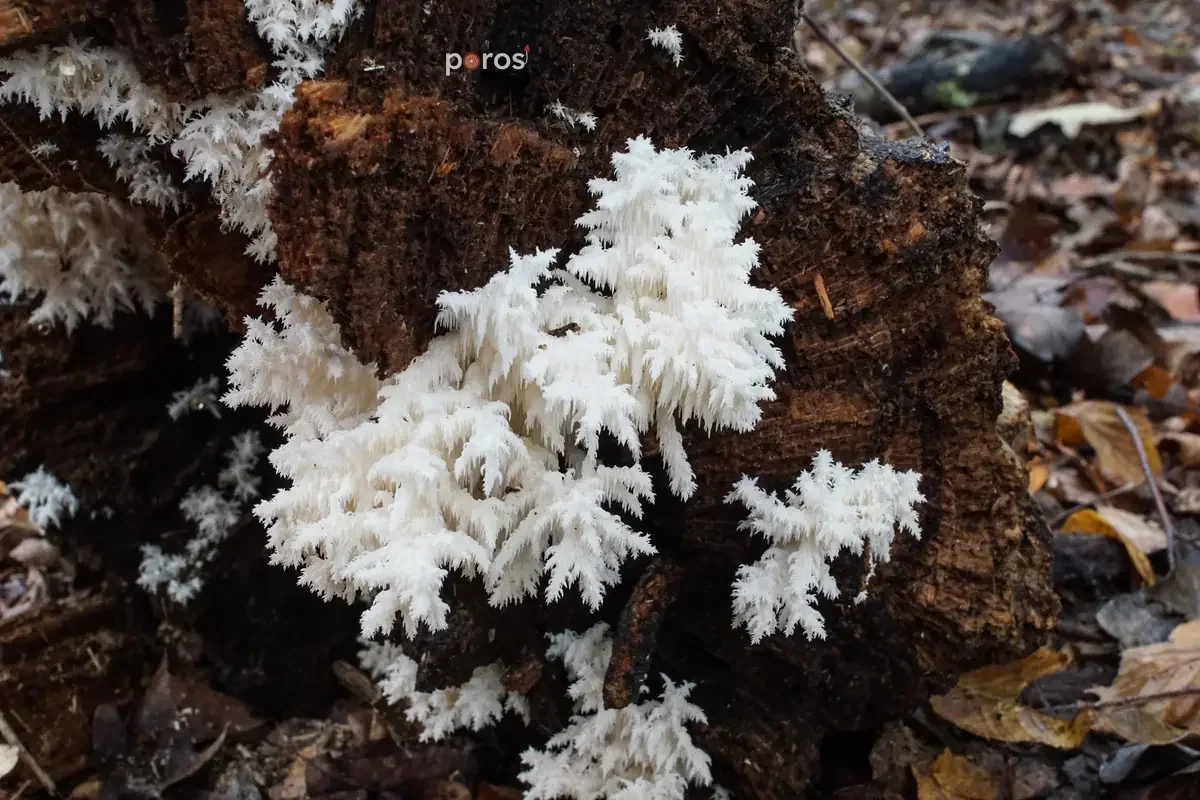
This page is not a definitive identification. The signs we describe help separate these two species, but they do not prove what your mushroom is; both have other look-alikes.
Frequently asked questions
Are lion's mane and coral tooth the same mushroom?
No, but they are relatives. Both belong to the genus Hericium: lion's mane is Hericium erinaceus and coral tooth is Hericium coralloides. Lion's mane is a single, unbranched clump, while coral tooth branches like coral and has shorter spines. Neither has a cap or gills, and both have white spines.
How do we tell lion's mane from coral tooth?
We look at the body and the spines. Lion's mane does not branch; hair-like spines 1–5 cm long hang from a single lump. Coral tooth is much branched, and its short spines, 0.5–1.5 cm long, are set in rows beneath the branches. Both are white and grow on the dead or ageing wood of broadleaf trees.
Are lion's mane and coral tooth poisonous?
Neither is listed as a poisonous species in our sources; both are listed as eaten species. For coral tooth the sources refer to young specimens that are well cooked. Even so, we do not eat wild finds without firm identification by an expert, and as both species are scarce in the wild it is better not to pick them at all.
Do lion's mane and coral tooth have a dangerous look-alike?
No poisonous look-alike with hanging white spines is known on wood. The coral fungi (Ramaria) that grow from the soil have no spines, and some of them cause stomach and bowel upsets. Ramaria flava, for example, is yellow, grows from the ground with branches pointing upwards and has no spines; our sources list it as not eaten.
Do lion's mane and coral tooth grow in the same places?
Both grow on broadleaf wood, most often beech and oak, so they can appear in the same kind of forest. Both are rarely recorded in Turkey. For coral tooth there is one GBIF record from Balıkesir and two research-grade observations from Turkey on iNaturalist.
When do lion's mane and coral tooth appear?
Lion's mane fruits from August to November in Europe; GBIF records from Turkey fall in June, September and October. Coral tooth appears from late summer to the end of autumn on dead beech and other broadleaf trunks. The two seasons therefore largely overlap.
Can lion's mane and coral tooth be cultivated?
Yes, both are cultivated. Coral tooth can be grown like lion's mane, in bags of sawdust or on logs. As both species are scarce in the wild and red-listed in many European countries, we suggest cultivated mushrooms rather than picking them in the forest.
Can we tell lion's mane from coral tooth in a photo?
A photo helps, but it is not a firm identification. The difference between a single clump and a branched cluster usually shows in a picture, yet young specimens or old, discoloured ones can mislead. We suggest photographing a wild find and leaving it in place, and showing any mushroom meant for the table to an expert.
Sources
The facts in this comparison come from the sourced data on our lion's mane and coral tooth fungus pages:
- Wikipedia (EN): Hericium erinaceus
- First Nature: Hericium erinaceus
- MushroomExpert: Hericium erinaceus
- GBIF: Türkiye kayıtları
- Wikipedia (EN): Hericium coralloides
- iNaturalist: Hericium coralloides (Türkçe ad ve Türkiye gözlemleri)
- GBIF: Türkiye kayıtları
- Boddy, Crockatt ve Ainsworth (2011), Fungal Ecology 4(2): Ecology of Hericium cirrhatum, H. coralloides and H. erinaceus in the UK (birkaç Avrupa ülkesinde kırmızı listede)
More comparisons
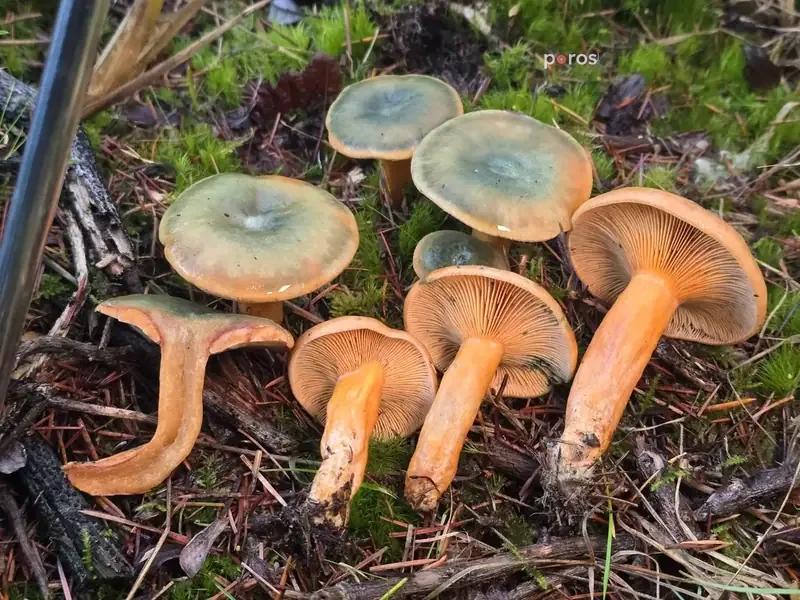
 ≠Saffron milk cap vs woolly milkcapLactarius deliciosus · Lactarius torminosusPoisonous
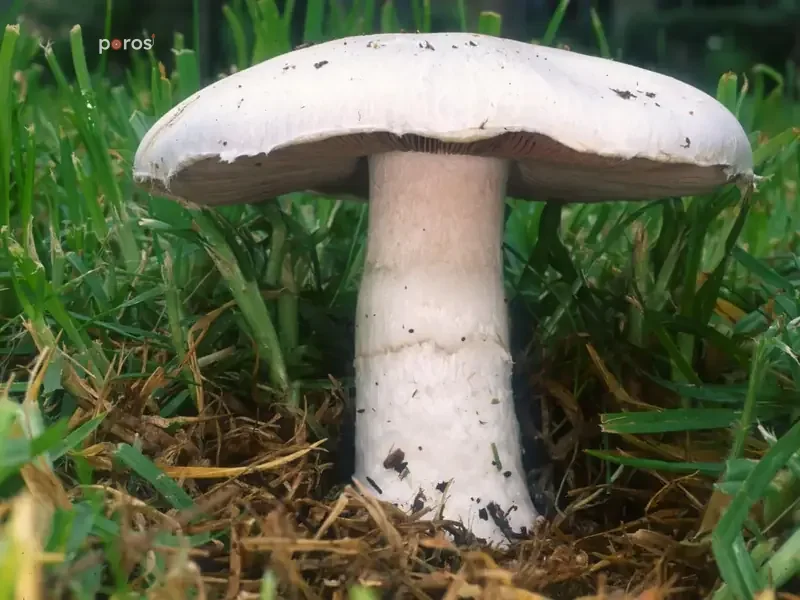
 ≠Field mushroom vs death capAgaricus campestris · Amanita phalloidesDeadly poisonous
 ≠Field mushroom vs yellow stainerAgaricus campestris · Agaricus xanthodermusPoisonous
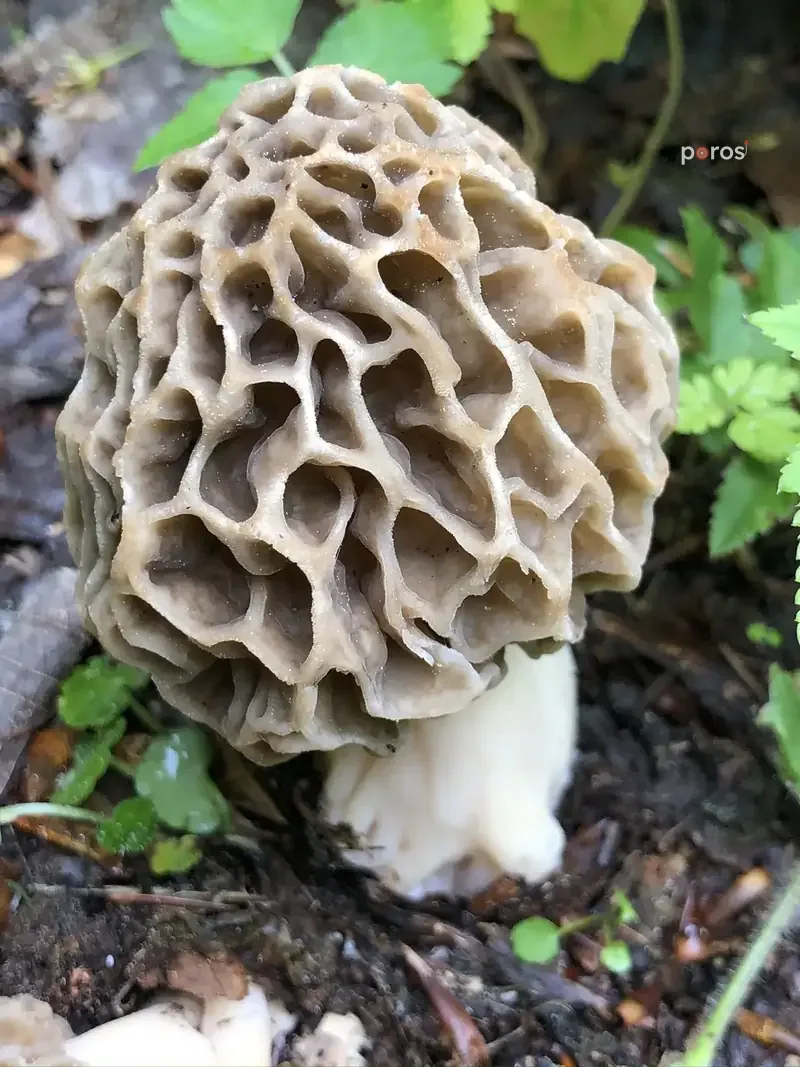
 ≠Morel vs false morelMorchella esculenta · Gyromitra esculentaDeadly poisonous
 ≠Parasol mushroom vs green-spored parasolMacrolepiota procera · Chlorophyllum molybditesPoisonous
 ≠Parasol mushroom vs deadly dapperlingMacrolepiota procera · Lepiota brunneoincarnataDeadly poisonous
Last updated: Prepared by the Poros Mantar editorial teamReport a correction