
Coral tooth fungus (comb tooth, coral hedgehog)
Hericium coralloides · Hericiaceae

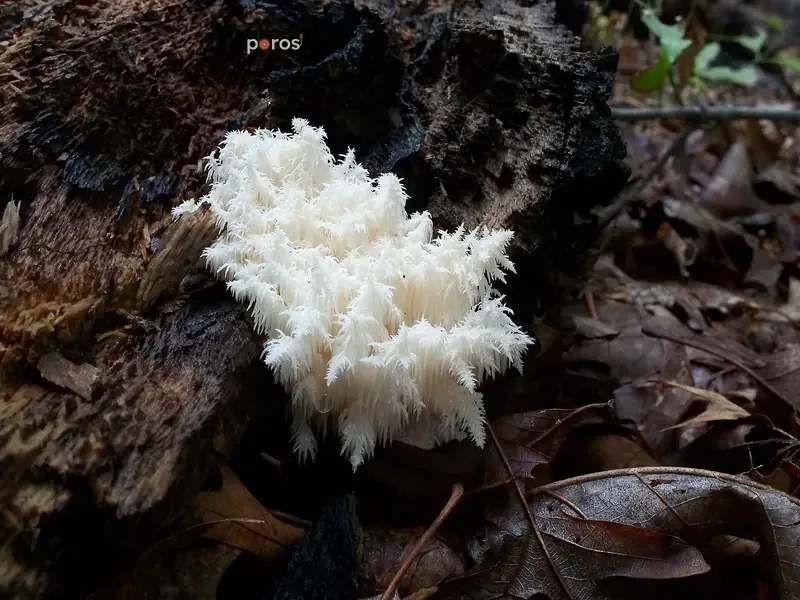
The coral tooth fungus (Hericium coralloides) is a wood fungus whose fine branches carry short white spines hanging like coral or icicles. It is a relative of lion's mane; it is edible when young and its taste is often compared to seafood. It is rarely recorded in Europe and red-listed in several European countries: if you find one, photograph it rather than pick it.
Also called: coral tooth, comb tooth, coral hedgehog Turkish: Dedesakalı mantarı Synonyms: Hericium clathroides
Last updated: Prepared by the Poros Mantar editorial team4 sources checkedReport a correction
Coral tooth fungus photos
-
© pynklynx · CC0
-

© Henry Mulligan · CC BY 4.0
-

Spines© Patrick Harvey (pg_harvey) at Mushroom Observer, a source for mycolog · CC BY-SA 3.0
-

Spines© Tatiana Strus · CC BY 4.0
-
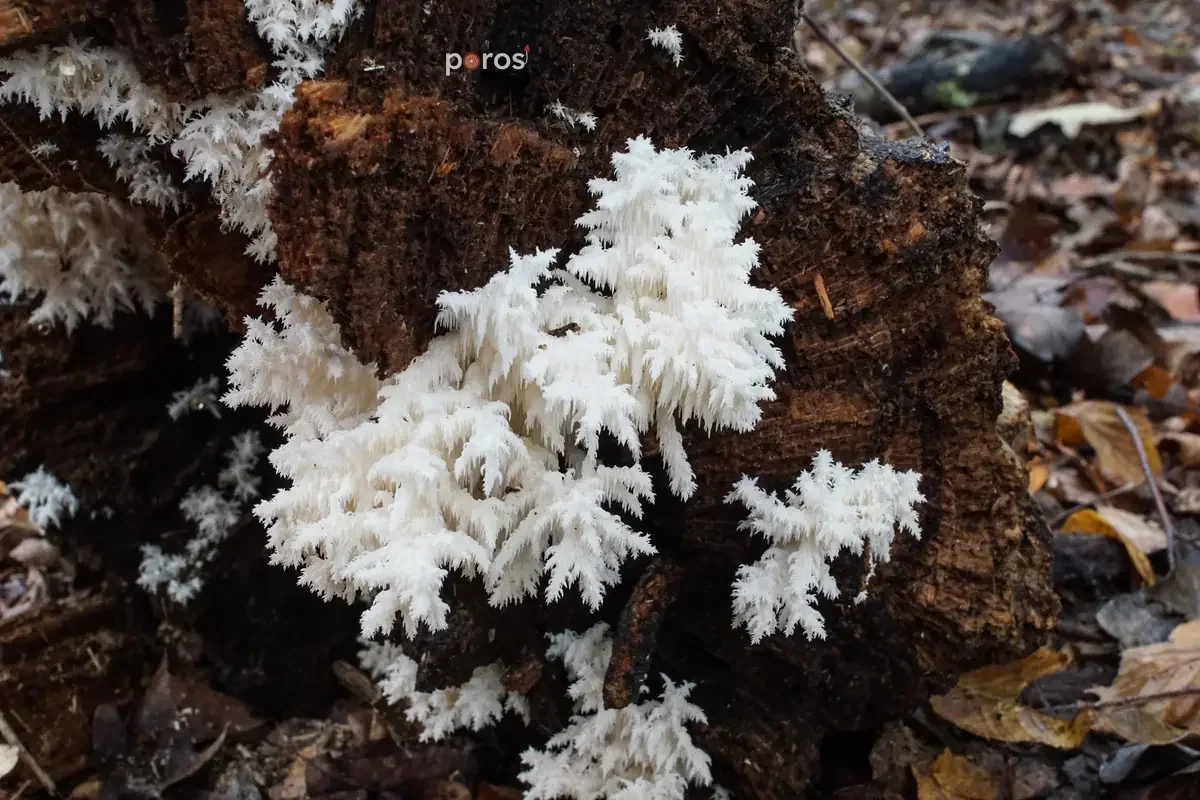
In habitat© Bill Sheehan · CC BY-SA 4.0
-

© Garnhami · CC BY-SA 4.0
-

© Mike English · CC BY-SA 4.0
-

Spines© Paul Roots · CC BY 4.0
-
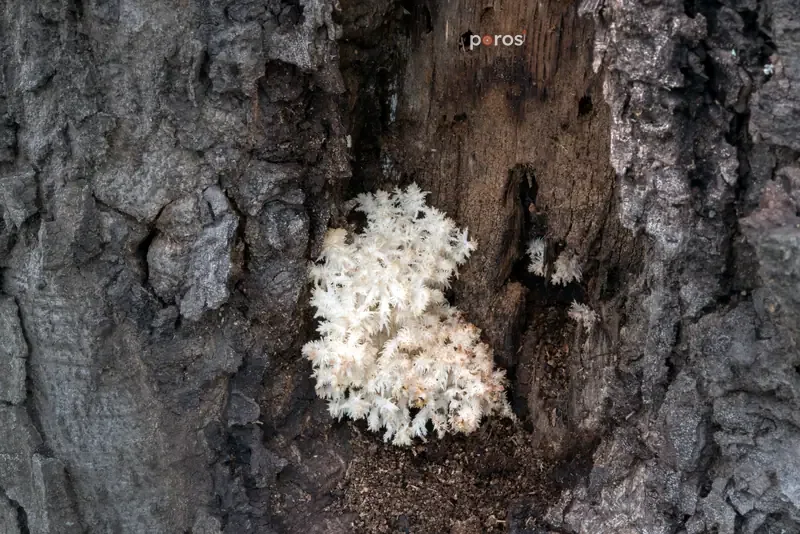
In habitat© Alan Rockefeller · CC BY 4.0
-

Spines© Nadezhda Kiseleva · CC BY 4.0


These are licensed records of this species; photos alone are not enough to identify a mushroom.
Is the coral tooth fungus poisonous?
The coral tooth fungus is not listed as poisonous in our sources. The coral tooth fungus is edible when young and well cooked, but because it is rarely recorded in Europe and is red-listed in several European countries we advise against picking it. Even so, never eat a wild one without certain identification.
Is the coral tooth fungus edible?
The coral tooth fungus is listed as edible in our sources and is cultivated; even so, never eat a wild one without certain identification. Do not eat it without an expert's approval. The coral tooth fungus is edible when young and well cooked, but because it is rarely recorded in Europe and is red-listed in several European countries we advise against picking it. It is cultivated. Do not eat a wild one an expert has not checked.
How to recognise it
Appearance of coral tooth fungus
No ring or volva Spore print: White Mild and pleasant.
Where does coral tooth fungus grow?
It grows on dead or fallen beech, oak, elm and birch trunks, usually in old, damp forests, causing a white rot in the wood.
Where is coral tooth fungus found in Turkey?
It is rarely recorded in Turkey: GBIF holds one record from Balıkesir and iNaturalist has 2 research-grade Turkish observations. Worldwide it ranges through the temperate forests of Europe, North America and Asia.
Which months
- Jan0
- Feb0
- Mar0
- Apr0
- May0
- Jun0
- Jul0
- Aug0
- Sep0
- Oct0
- Nov1
- Dec0
1 provinces, 1 observations (GBIF, iNaturalist); months from observation dates. Record density also reflects where observers work.
Latest coral tooth fungus observations
 Illustrative
On "illustrative" cards the image is a photo of the species; the observation photo cannot be shown here because of its licence, but can be seen at the source.
Look-alikes
What could it be confused with?
Coral tooth fungus can be mistaken for the species below. Each comparison shows Coral tooth fungus on the left, the look-alike on the right, and how to tell them apart.
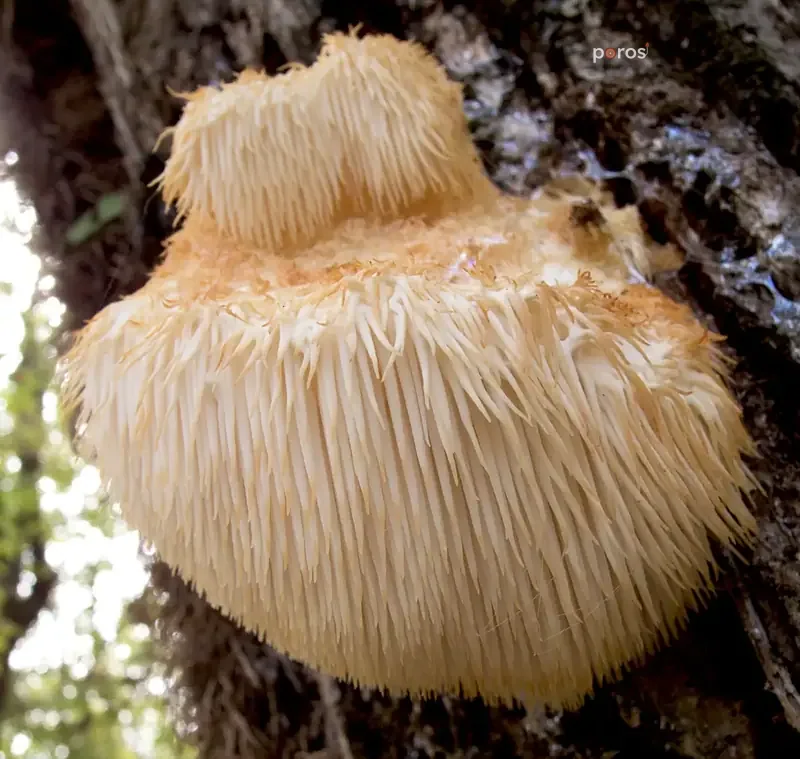
Lion's mane Hericium erinaceus
How to tell It does not branch; long, hair-like spines hang from a single rounded body.

Yellow coral fungus Ramaria flava
How to tell It grows from soil, its branches point upwards and it has no spines; it is yellow.
Other look-alikes (1)
not Coral tooth fungus
Bear's head tooth Hericium abietis
Very similar, but it grows on conifers (fir) and gets larger.
Coral tooth fungus and its look-alikes compared
| Species | Status | Underside | Spore print | Season |
|---|---|---|---|---|
| Coral tooth fungusHericium coralloides | Edible species | Rows of hanging white spines 0.5–1.5 cm long along the undersides of the branches | White | Aug–Nov |
| Lion’s maneHericium erinaceus | Edible species | Instead of gills or pores, crowded hanging spines 1–5 cm long | White | Aug–Nov |
| Yellow coral fungusRamaria flava | Inedible | There are no gills or pores | Orange-yellow to ochre | Jul–Nov |
The table is compiled from each species page. The status column is a guide only; do not eat a wild mushroom unless an expert has seen it in person. Compare look-alikes side by side
How to cook and eat coral tooth fungus
Safety first. The coral tooth fungus is edible when young and well cooked, but because it is rarely recorded in Europe and is red-listed in several European countries we advise against picking it. It is cultivated. Do not eat a wild one an expert has not checked. If poisoning is suspected, call 112 (Turkish poison centre UZEM: 114) and keep any leftover mushroom.
What goes with it?
- coral tooth fungus (cultivated)
- butter
- shallots
- thyme
- toast, an omelette or a cream soup
Recipe
How to store coral tooth fungus
Grow it, buy it
Coral tooth fungus price list
| Product | Poros Mantar | Market |
|---|---|---|
| Fresh coral tooth fungus | Made to order · ask | — |
| Dried coral tooth fungus | Made to order · ask | — |
We make our coral tooth fungus products in small batches, to order; send a request and we email you the price and delivery date. The market column shows prices seen on other sellers' pages on the date given; they are not our prices and may have changed.
Frequently asked questions
Is the coral tooth fungus poisonous?
The coral tooth fungus is not listed as poisonous in our sources. The coral tooth fungus is edible when young and well cooked, but because it is rarely recorded in Europe and is red-listed in several European countries we advise against picking it. Even so, never eat a wild one without certain identification.
Is the coral tooth fungus edible?
The coral tooth fungus is listed as edible in our sources and is cultivated; even so, never eat a wild one without certain identification. Do not eat it without an expert's approval. The coral tooth fungus is edible when young and well cooked, but because it is rarely recorded in Europe and is red-listed in several European countries we advise against picking it. It is cultivated. Do not eat a wild one an expert has not checked.
How is it different from lion's mane?
Lion's mane does not branch; long spines hang from a single lump. The coral tooth branches heavily and its short spines line the undersides of the branches.
Where has it been recorded in Turkey?
GBIF holds one record from Balıkesir and iNaturalist has 2 research-grade observations. It may be found in old, damp beech forests.
Why shouldn't it be picked?
It depends on old forests rich in dead wood and is red-listed in several European countries. Photographing it and sharing the observation helps protect it.
When does it fruit?
From late summer to late autumn on dead beech and other broadleaf trunks.
Can it be cultivated?
Yes. Like lion's mane, it can be grown in sawdust bags or on logs.
Does it have a poisonous look-alike?
No poisonous look-alike with hanging white spines on wood is known. Coral fungi (Ramaria) that grow from soil have no spines, and some cause stomach upsets.
When is coral tooth fungus season in Turkey?
In our calendar, coral tooth fungus season runs Aug–Nov. It fruits from late summer to late autumn on dead beech and other broadleaf trunks.
Where does coral tooth fungus grow?
It grows on dead or fallen beech, oak, elm and birch trunks, usually in old, damp forests, causing a white rot in the wood.
Where is coral tooth fungus found in Turkey?
It is rarely recorded in Turkey: GBIF holds one record from Balıkesir and iNaturalist has 2 research-grade Turkish observations. Worldwide it ranges through the temperate forests of Europe, North America and Asia.
What can coral tooth fungus be confused with?
Coral tooth fungus can be confused with Lion's mane (Hericium erinaceus, edible species), yellow coral fungus (Ramaria flava, inedible) and Bear's head tooth (Hericium abietis, edible species). Look-alikes are compared on this page.
What is coral tooth fungus called in Turkish?
In Turkish, coral tooth fungus (Hericium coralloides) is called Dedesakalı mantarı.
Related species
-
Lion’s maneHericium erinaceusEdible species
-
 Almond mushroomAgaricus subrufescensEdible species
-
 Anatolian matsutakeTricholoma anatolicumEdible species
-
 Aniseed funnelClitocybe odoraEdible species
-
 Bay boleteImleria badiaEdible species
-
 Beefsteak fungusFistulina hepaticaEdible species
-
 Black morelMorchella elataEdible species
-
 Black trumpetCraterellus cornucopioidesEdible species
Sources
- Boddy, Crockatt ve Ainsworth (2011), Fungal Ecology 4(2): Ecology of Hericium cirrhatum, H. coralloides and H. erinaceus in the UK (birkaç Avrupa ülkesinde kırmızı listede) doi.org
- Wikipedia (EN): Hericium coralloides en.wikipedia.org
- iNaturalist: Hericium coralloides (Türkçe ad ve Türkiye gözlemleri) inaturalist.org
All sources (4)
- GBIF: Türkiye kayıtları gbif.org
Photo credits (10)
- Hericium coralloides · iNaturalist #41200770 · pynklynx · CC0
- Hericium coralloides · iNaturalist #26689827 · Henry Mulligan · CC BY 4.0
- File:2009-09-25 Hericium coralloides (Scop.) Pers 58068 crop.jpg · Patrick Harvey (pg_harvey) at Mushroom Observer, a source for mycolog · CC BY-SA 3.0
- Hericium coralloides · iNaturalist #57201418 · Tatiana Strus · CC BY 4.0
- Hericium coralloides · iNaturalist #7102269 · Bill Sheehan · CC BY-SA 4.0
- File:Hericium coralloides Kammetjesstekelzwam.jpg · Garnhami · CC BY-SA 4.0
- Hericium coralloides · iNaturalist #137106772 · Mike English · CC BY-SA 4.0
- Hericium coralloides · iNaturalist #249350962 · Paul Roots · CC BY 4.0
- Hericium coralloides · iNaturalist #5000256 · Alan Rockefeller · CC BY 4.0
- Hericium coralloides · iNaturalist #141892303 · Nadezhda Kiseleva · CC BY 4.0

