
Green-spored parasol (false parasol, vomiter)
Chlorophyllum molybdites · Agaricaceae

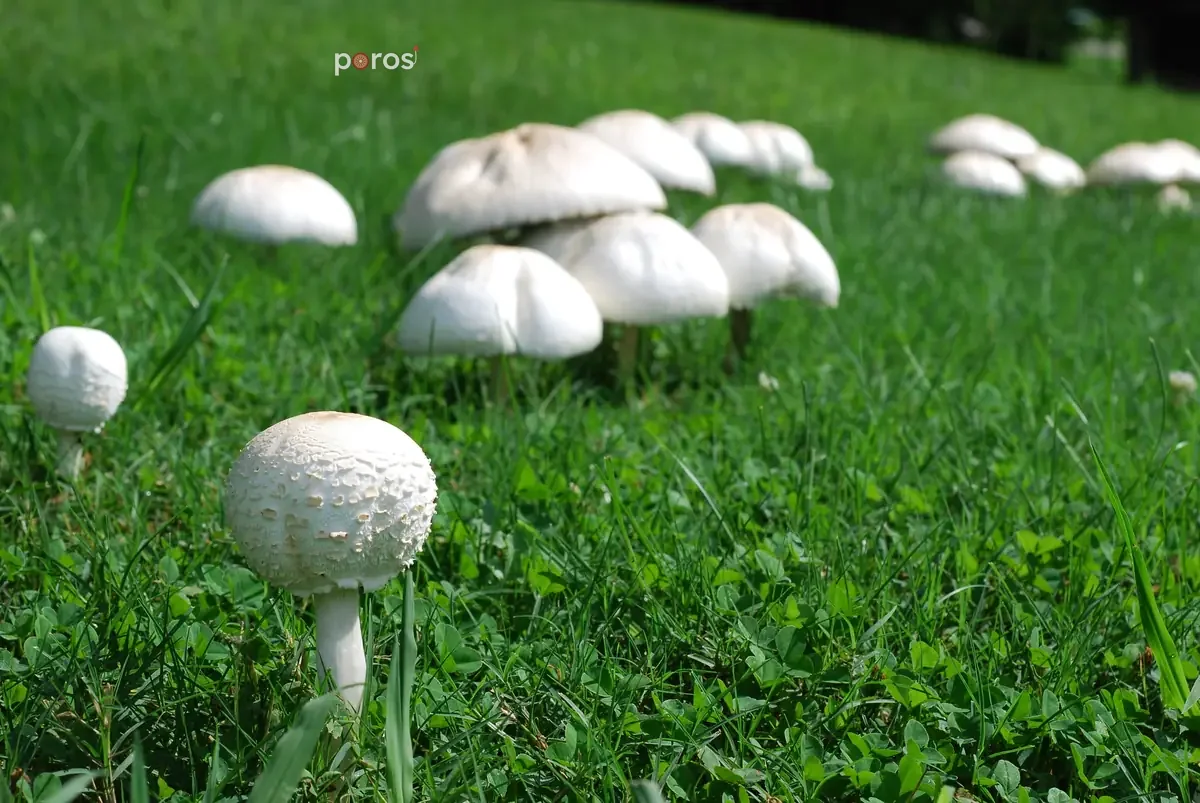
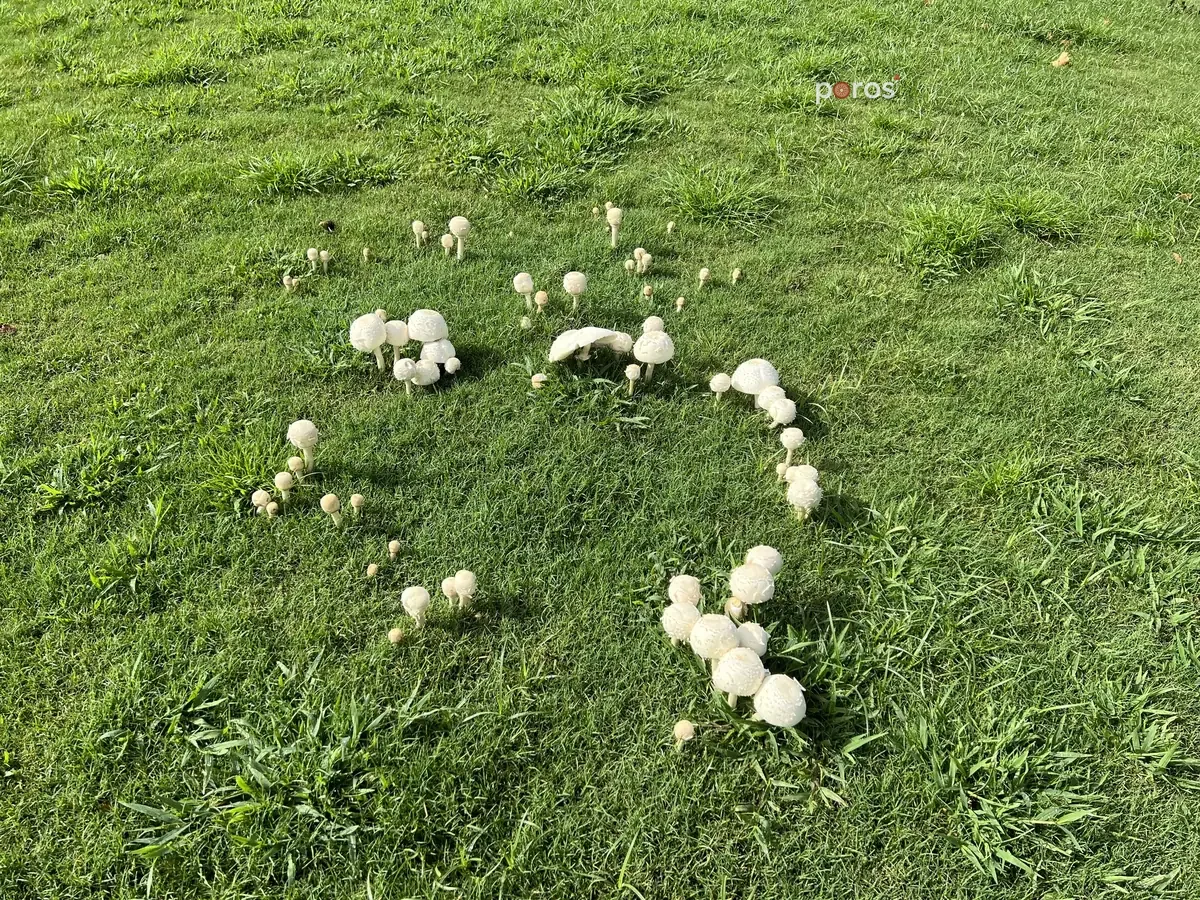
The green-spored parasol (Chlorophyllum molybdites) is a large parasol, 10–30 cm across, white with brown scales, that often grows in big rings on lawns. At maturity its gills turn greyish green and its spore print is green, the one reliable feature separating it from edible parasols. It is the most common cause of mushroom poisoning in North America and causes violent vomiting and diarrhoea. It has not been recorded in Turkey.
Also called: false parasol, vomiter Turkish: Yeşil şemsiye mantarı
Last updated: Prepared by the Poros Mantar editorial team4 sources checkedReport a correction
POISONOUS — do not eat.
The green-spored parasol is poisonous. According to sources violent, repeated vomiting, abdominal cramps and watery, sometimes bloody diarrhoea begin 30 minutes to 3 hours after the meal; fluid loss can be severe, especially in children. That is why a large parasol-like mushroom must never be eaten without a spore print. If poisoning is suspected, call 112 (Turkish poison centre UZEM: 114) and keep any leftover mushroom.
Green-spored parasol photos
-
© Nathan Wilson · CC BY-SA 3.0
-
In habitat© Douglas Goldman · CC BY-SA 4.0
-

Gills© ritirene · CC BY 4.0
-

Cap© João D'Andretta · CC BY 4.0
-

Gills© Jesse Rorabaugh · CC0
-

Stem© Fabrício Mil Homens Riella · CC BY 4.0
-

© Laitche · CC BY-SA 3.0
-
In habitat© Matt Neidert · CC0
-

Gills© Denis Zabin · CC BY 4.0
-

In habitat© 陳彥杰 · CC BY 4.0
-

Cap© RIT RAJARSHI · CC BY 4.0


These are licensed records of this species; photos alone are not enough to identify a mushroom.
Are green-spored parasols poisonous?
Yes, green-spored parasols are poisonous and must not be eaten. It causes violent vomiting and diarrhoea and is North America's most common cause of mushroom poisoning. If poisoning is suspected, call 112 at once (Turkish poison centre: 114) and keep any leftover mushroom.
Are green-spored parasols edible?
No, green-spored parasols must not be eaten; they are poisonous. They can be picked by mistake for parasol mushroom (Macrolepiota procera). If poisoning is suspected, call 112 at once (Turkish poison centre: 114) and keep any leftover mushroom.
How to recognise it
Appearance of green-spored parasols
No volva Spore print: Green or greyish green (white in edible parasols) Not distinctive.
Where do green-spored parasols grow?
A saprotroph of lawns, parks, gardens, pastures and fertilised ground in warm climates, often in fairy rings.
In Turkey
There are no Turkish records: our map data (GBIF and iNaturalist) holds no observations from Turkey. The species is widespread in the tropics and subtropics and is reported to be spreading north with warming; it could appear on irrigated lawns along Turkey's Mediterranean and Aegean coasts. Its Turkish name on iNaturalist is Yeşil Şemsiye Mantarı.
Our map has no observations of green-spored parasols from Turkey yet.
Look-alikes
What is it mistaken for?
Green-spored parasol can be mistaken for the species below. Each comparison shows Green-spored parasol on the left, the look-alike on the right, and how to tell them apart.
Poisoning risk: Green-spored parasol gets picked by people who think they have found one of the edible species below. If even one feature does not match, do not eat it.
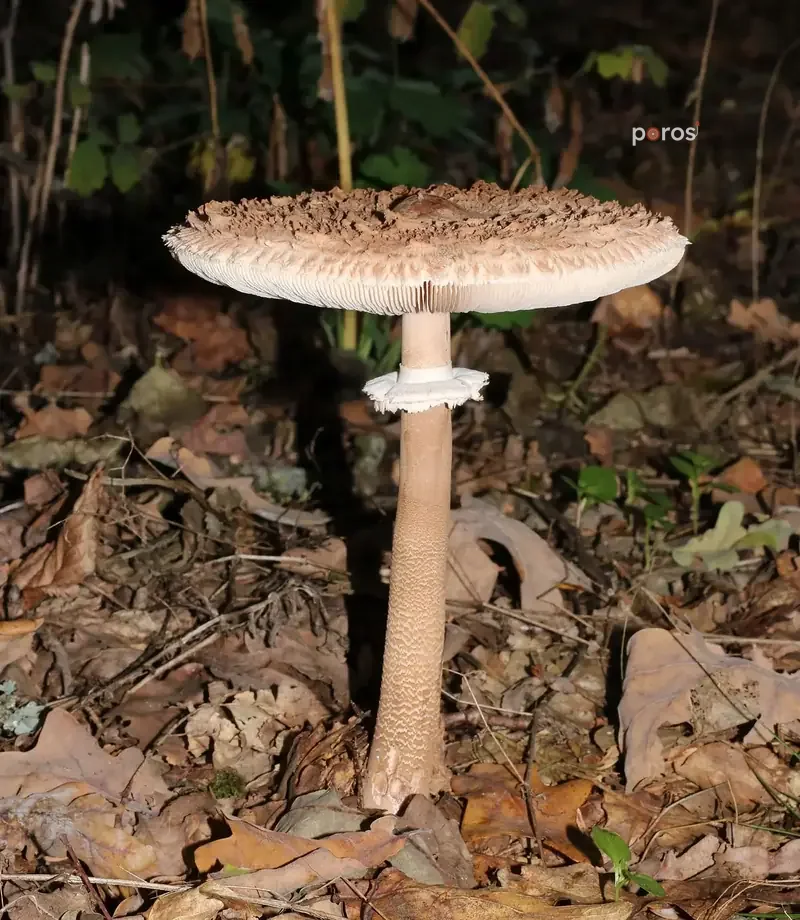
Parasol mushroom Macrolepiota procera
How to tell The parasol has a snakeskin-patterned stem, gills that stay white and a white spore print; it mostly grows in and beside woodland.
Green-spored parasol vs Parasol mushroom: compare side by side →
Other look-alikes (2)
 Inedible
not Green-spored parasol
Shaggy parasol Chlorophyllum rhacodes
The shaggy parasol's flesh turns orange-red when cut and its spore print is white.
 Inedible
not Green-spored parasol
Brown shaggy parasol Chlorophyllum brunneum
The brown shaggy parasol's flesh reddens, its stem has a sharply rimmed basal bulb and its spore print is white.
Green-spored parasol and its look-alikes compared
| Species | Status | Underside | Spore print | Season |
|---|---|---|---|---|
| Green-spored parasolChlorophyllum molybdites | Poisonous | Free, crowded | Green or greyish green (white in edible parasols) | Jun–Oct |
| Parasol mushroomMacrolepiota procera | Edible species | Crowded, free, white (pale pink with age) | White or very pale cream | Jul–Nov |
| Shaggy parasolChlorophyllum rhacodes | Inedible | Gills white, crowded and free | White. A greenish spore print points to the poisonous false parasol | Sep–Dec |
| Brown shaggy parasolChlorophyllum brunneum | Inedible | Free, crowded, white | White | Jul–Nov |
The table is compiled from each species page. The status column is a guide only; do not eat a wild mushroom unless an expert has seen it in person. Compare look-alikes side by side
Frequently asked questions
Are green-spored parasols poisonous?
Yes, green-spored parasols are poisonous and must not be eaten. It causes violent vomiting and diarrhoea and is North America's most common cause of mushroom poisoning. If poisoning is suspected, call 112 at once (Turkish poison centre: 114) and keep any leftover mushroom.
Are green-spored parasols edible?
No, green-spored parasols must not be eaten; they are poisonous. They can be picked by mistake for parasol mushroom (Macrolepiota procera). If poisoning is suspected, call 112 at once (Turkish poison centre: 114) and keep any leftover mushroom.
How is it told from the parasol?
Take a spore print: the green-spored parasol's is green, the parasol's white. Its mature gills also turn green and its stem lacks the snakeskin pattern.
Is it found in Turkey?
There are no Turkish records. It is a warm-climate species that could appear on irrigated lawns along the coasts.
When do symptoms start?
According to sources within 30 minutes to 3 hours. If in doubt, call 112.
How can you tell in a young mushroom?
Young specimens still have white gills and cannot be told from edible parasols, so a spore print is essential.
Why does it grow in rings?
Its mycelium spreads outwards through the soil feeding on organic matter, and fruit bodies appear along the advancing edge as a ring.
Is it dangerous to dogs?
Yes, it also causes severe vomiting and diarrhoea in dogs, so care is needed in gardens.
When is green-spored parasol season in Turkey?
In our calendar, green-spored parasol season runs Jun–Oct. Fruits in summer and autumn on lawns after warm, wet spells.
Where do green-spored parasols grow?
A saprotroph of lawns, parks, gardens, pastures and fertilised ground in warm climates, often in fairy rings.
Where are green-spored parasols found in Turkey?
There are no Turkish records: our map data (GBIF and iNaturalist) holds no observations from Turkey. The species is widespread in the tropics and subtropics and is reported to be spreading north with warming; it could appear on irrigated lawns along Turkey's Mediterranean and Aegean coasts. Its Turkish name on iNaturalist is Yeşil Şemsiye Mantarı.
What can the green-spored parasol be confused with?
The green-spored parasol can be confused with parasol mushroom (Macrolepiota procera, edible species), shaggy parasol (Chlorophyllum rhacodes, inedible) and brown shaggy parasol (Chlorophyllum brunneum, inedible). Look-alikes are compared on this page.
What is the green-spored parasol called in Turkish?
In Turkish, the green-spored parasol (Chlorophyllum molybdites) is called Yeşil şemsiye mantarı.
Related species
-
 Freckled dapperlingEchinoderma asperumPoisonous
-
 Stinking dapperlingLepiota cristataPoisonous
-
 Yellow stainerAgaricus xanthodermusPoisonous
-
 Almond mushroomAgaricus subrufescensEdible species
-
Brown shaggy parasolChlorophyllum brunneumInedible
-
 Button mushroomAgaricus bisporusEdible species
-
 Chestnut dapperlingLepiota castaneaDeadly poisonous
-
 Common bird’s nest fungusCrucibulum laeveInedible
Sources
- Wikipedia (EN): Chlorophyllum molybdites en.wikipedia.org
- iNaturalist: Chlorophyllum molybdites (Türkçe ad) inaturalist.org
- GBIF: Türkiye kayıtları gbif.org
All sources (4)
- MushroomExpert: Chlorophyllum molybdites mushroomexpert.com
Photo credits (11)
- File:Chlorophyllum molybdites.jpg · Nathan Wilson · CC BY-SA 3.0
- Chlorophyllum molybdites · iNaturalist #35083730 · Douglas Goldman · CC BY-SA 4.0
- Chlorophyllum molybdites · iNaturalist #234442071 · ritirene · CC BY 4.0
- Chlorophyllum molybdites · iNaturalist #204434940 · João D'Andretta · CC BY 4.0
- Chlorophyllum molybdites · iNaturalist #7108630 · Jesse Rorabaugh · CC0
- Chlorophyllum molybdites · iNaturalist #207605973 · Fabrício Mil Homens Riella · CC BY 4.0
- File:Chlorophyllum molybdites 2013-09-10.jpg · Laitche · CC BY-SA 3.0
- Chlorophyllum molybdites · iNaturalist #125986023 · Matt Neidert · CC0
- Chlorophyllum molybdites · iNaturalist #343522657 · Denis Zabin · CC BY 4.0
- Chlorophyllum molybdites · iNaturalist #175690082 · 陳彥杰 · CC BY 4.0
- File:Chlorophyllum molybdites DSCN3144.jpg · RIT RAJARSHI · CC BY 4.0


