
Matsutake (pine mushroom, songi)
Tricholoma matsutake · Tricholomataceae

Matsutake (Tricholoma matsutake) is the most prized mushroom of Japanese cuisine: it has a brown, scaly cap, white gills, a cottony ring on the stem and a strong smell of cinnamon mixed with pine resin. It lives with pine roots and cannot be cultivated. Turkey's cedar matsutake (Tricholoma anatolicum) belongs to the matsutake group and is exported to Japan.
Also called: matsutake, pine mushroom, songi Turkish: Matsutake mantarı, matsutake Synonyms: Tricholoma nauseosum
Last updated: Prepared by the Poros Mantar editorial team4 sources checkedReport a correction
Matsutake photos
-
© wkee4ager · CC BY 4.0
-

Cross-section© wkee4ager · CC BY 4.0
-

© Andreas Schneider · CC BY 4.0
-

© caspar s · CC BY 2.0
-
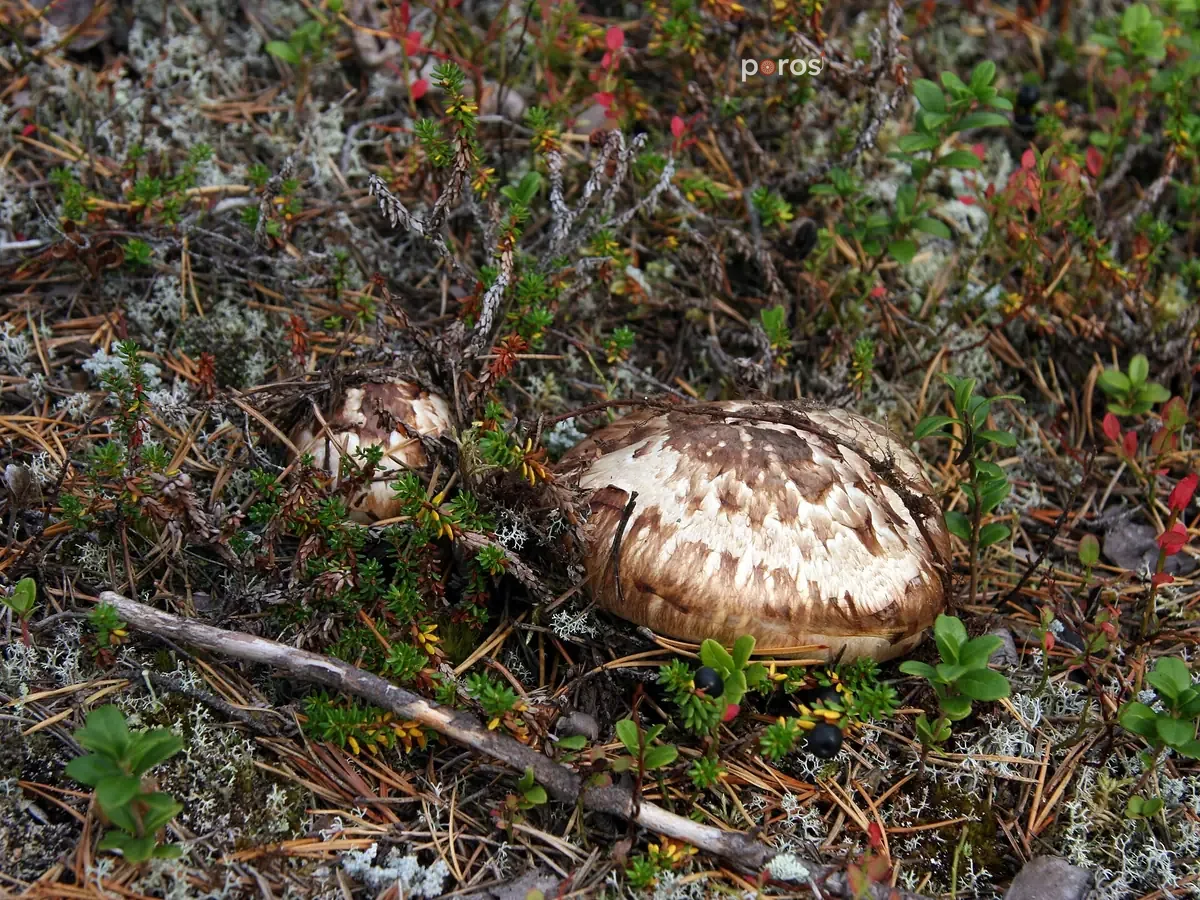
In habitat© caspar s · CC BY 2.0
-

© Ryane Snow (snowman) at Mushroom Observer, a source for mycological i · CC BY-SA 3.0
-

© Ryane Snow (snowman) at Mushroom Observer, a source for mycological i · CC BY-SA 3.0
-

Gills© Vihane (wihane) at Mushroom Observer, a source for mycological images · CC BY-SA 3.0
-

Gills© Japonica · CC BY-SA 4.0
-

Cross-section© Andreas Schneider · CC BY 4.0
-

© TonyT · CC BY 4.0


These are licensed records of this species; photos alone are not enough to identify a mushroom.
Is the matsutake poisonous?
Our sources do not list it as poisonous. Pickers of white matsutake relatives have confused them with the poisonous Amanita smithiana, causing serious poisonings. Never pick a white mushroom with a sac at the stem base. Never eat a wild one without certain identification. If poisoning is suspected, call 112 at once (Turkish poison centre: 114) and keep any leftover mushroom.
Is the matsutake edible?
The matsutake is listed as edible in our sources; even so, never eat a wild one without certain identification: it has poisonous look-alikes, such as destroying angel (Amanita virosa). Do not eat it without an expert's approval. Matsutake is edible when well cooked. In North America, serious poisonings have occurred when pickers of the white matsutake relative (T. murrillianum) mistook the poisonous Amanita smithiana for it, and deadly white Amanitas look similar too; always check the stem base for a sac. Do not eat a wild one an expert has not checked.
How to recognise it
Appearance of matsutake
No volva Spore print: White Very strong; a mix of cinnamon, pine resin and 'dirty socks'.
Where does matsutake grow?
It grows on sandy, nutrient-poor, well-drained soil, mostly with Japanese red pine and other pines, sometimes with oak and spruce, often in rows or rings.
In Turkey
No record from Turkey: GBIF and iNaturalist hold no Turkish Tricholoma matsutake records. Worldwide it ranges through Japan, Korea, China, the Russian Far East and Scandinavia. The species found in the cedar forests of the Taurus Mountains and exported as matsutake is the cedar matsutake (Tricholoma anatolicum).
Our map has no observations of matsutake from Turkey yet.
Look-alikes
What could it be confused with?
Matsutake can be mistaken for the species below. Each comparison shows Matsutake on the left, the look-alike on the right, and how to tell them apart.
Take care when foraging: Poisonous look-alikes of Matsutake come first. If in doubt, leave it.

Destroying angel Amanita virosa
How to tell It is pure white, with a membranous ring and a sac (volva) at the base, and lacks the matsutake smell; it is deadly.
Other look-alikes (2)
 Edible species
not Matsutake
Anatolian matsutake Tricholoma anatolicum
The member of the matsutake group found in Turkey and Morocco; it grows in the cedar forests of the Taurus Mountains and smells similar.
not Matsutake
Booted knight Tricholoma caligatum
It is brown-scaled and ringed, but its smell is weaker and its taste bitter.
Matsutake and its look-alikes compared
| Species | Status | Underside | Spore print | Season |
|---|---|---|---|---|
| MatsutakeTricholoma matsutake | Edible species | White, close and notched at the stem | White | Sep–Nov |
| Anatolian matsutakeTricholoma anatolicum | Edible species | Gilled (genus Tricholoma) | White, as in Tricholoma | Sep–Nov |
| Destroying angelAmanita virosa | Deadly poisonous | Crowded, white, free gills | White | Aug–Nov |
The table is compiled from each species page. The status column is a guide only; do not eat a wild mushroom unless an expert has seen it in person. Compare look-alikes side by side
How to cook and eat matsutake
Safety first. Matsutake is edible when well cooked. In North America, serious poisonings have occurred when pickers of the white matsutake relative (T. murrillianum) mistook the poisonous Amanita smithiana for it, and deadly white Amanitas look similar too; always check the stem base for a sac. Do not eat a wild one an expert has not checked. If poisoning is suspected, call 112 or the poison centre on 114 and keep any leftover mushroom.
What goes with it?
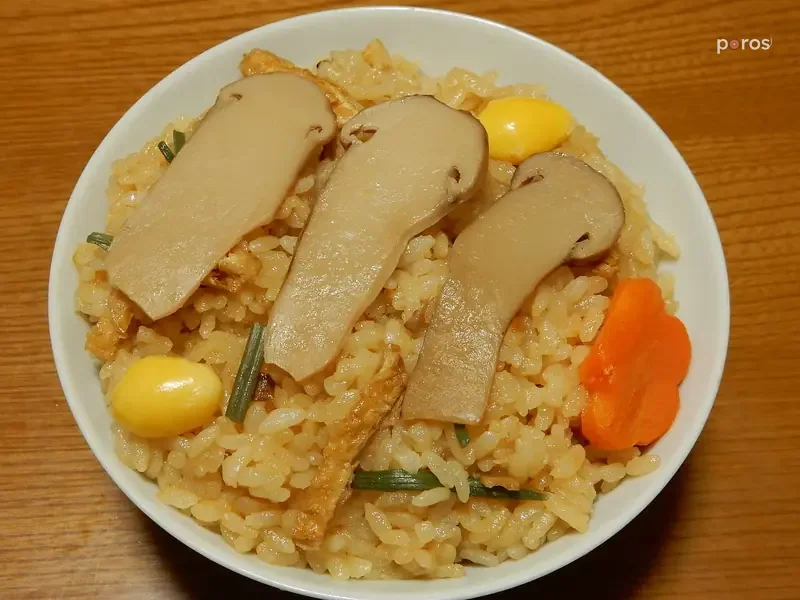
- Japanese short-grain rice
- matsutake
- dashi
- soy sauce
- mirin
- sake
- mitsuba or flat-leaf parsley
Recipe
How to store matsutake
Grow it, buy it
Matsutake price list
| Product | Poros Mantar | Market |
|---|---|---|
| Fresh matsutake | Made to order · ask | — |
| Dried matsutake | Made to order · ask | — |
We make our matsutake products in small batches, to order; send a request and we email you the price and delivery date. The market column shows prices seen on other sellers' pages on the date given; they are not our prices and may have changed.
Frequently asked questions
Is the matsutake poisonous?
Our sources do not list it as poisonous. Pickers of white matsutake relatives have confused them with the poisonous Amanita smithiana, causing serious poisonings. Never pick a white mushroom with a sac at the stem base. Never eat a wild one without certain identification. If poisoning is suspected, call 112 at once (Turkish poison centre: 114) and keep any leftover mushroom.
Is the matsutake edible?
The matsutake is listed as edible in our sources; even so, never eat a wild one without certain identification: it has poisonous look-alikes, such as destroying angel (Amanita virosa). Do not eat it without an expert's approval. Matsutake is edible when well cooked. In North America, serious poisonings have occurred when pickers of the white matsutake relative (T. murrillianum) mistook the poisonous Amanita smithiana for it, and deadly white Amanitas look similar too; always check the stem base for a sac. Do not eat a wild one an expert has not checked.
What is matsutake?
It is a mushroom of Japanese pine forests with a brown-scaled cap and a strong cinnamon-resin smell, highly prized in Japanese cuisine.
Does matsutake grow in Turkey?
Tricholoma matsutake has no Turkish record. The species from the cedar forests of the Taurus Mountains exported to Japan as matsutake is the cedar matsutake (Tricholoma anatolicum).
Is it the same as the cedar matsutake?
No, they are close relatives but separate species. Both belong to the matsutake group and smell alike; the cedar matsutake lives with cedar in Turkey and Morocco.
Why is it so expensive?
It cannot be cultivated, the Japanese harvest has fallen sharply with the decline of pine forests, and it is gathered in a short season.
How is it cooked?
It is cooked simply to keep its aroma: grilled, in rice (matsutake gohan) or in the clear soup called dobin mushi.
What does it smell like?
A strong mix of cinnamon, pine resin and a hint of 'dirty socks'; the compound responsible is methyl cinnamate.
Can matsutake be cultivated?
No. Matsutake lives in partnership with pine roots and cannot be cultivated, which is why it is picked from the wild and is so expensive.
When is matsutake season in Turkey?
In our calendar, matsutake season runs Sep–Nov. In Japan and Korea it fruits from September to November in red pine and other pine forests.
Where does matsutake grow?
It grows on sandy, nutrient-poor, well-drained soil, mostly with Japanese red pine and other pines, sometimes with oak and spruce, often in rows or rings.
Where is matsutake found in Turkey?
No record from Turkey: GBIF and iNaturalist hold no Turkish Tricholoma matsutake records. Worldwide it ranges through Japan, Korea, China, the Russian Far East and Scandinavia. The species found in the cedar forests of the Taurus Mountains and exported as matsutake is the cedar matsutake (Tricholoma anatolicum).
What can matsutake be confused with?
Matsutake can be confused with anatolian matsutake (Tricholoma anatolicum, edible species), destroying angel (Amanita virosa, deadly) and booted knight (Tricholoma caligatum, inedible). Look-alikes are compared on this page.
What is matsutake called in Turkish?
In Turkish, matsutake (Tricholoma matsutake) is called Matsutake mantarı; other local names include matsutake.
Related species
-
Anatolian matsutakeTricholoma anatolicumEdible species
-
 Aniseed funnelClitocybe odoraEdible species
-
 Field blewitLepista personataEdible species
-
 Trooping funnelInfundibulicybe geotropaEdible species
-
 Wood blewitLepista nudaEdible species
-
 Fool’s funnelClitocybe rivulosaDeadly poisonous
-
 Grey knightTricholoma terreumInedible
-
 Tawny funnelParalepista flaccidaInedible
Sources
- Wikipedia (EN): Tricholoma matsutake en.wikipedia.org
- iNaturalist: Tricholoma matsutake (Türkçe ad ve Türkiye gözlemleri) inaturalist.org
- GBIF: Türkiye kayıtları gbif.org
All sources (4)
Photo credits (11)
- Tricholoma matsutake · iNaturalist #181247847 · wkee4ager · CC BY 4.0
- Tricholoma matsutake · iNaturalist #181247847 · wkee4ager · CC BY 4.0
- Tricholoma matsutake · iNaturalist #178024649 · Andreas Schneider · CC BY 4.0
- File:Tricholoma matsutake (9627995451).jpg · caspar s · CC BY 2.0
- File:Tricholoma matsutake (9679607187).jpg · caspar s · CC BY 2.0
- File:2010-08-06 Tricholoma matsutake (S. Ito & S. Imai) Singer 97082.jpg · Ryane Snow (snowman) at Mushroom Observer, a source for mycological i · CC BY-SA 3.0
- File:2010-08-06 Tricholoma matsutake (S. Ito & S. Imai) Singer 97084.jpg · Ryane Snow (snowman) at Mushroom Observer, a source for mycological i · CC BY-SA 3.0
- File:2016-05-25 Tricholoma matsutake (S. Ito & S. Imai) Singer 691538.jpg · Vihane (wihane) at Mushroom Observer, a source for mycological images · CC BY-SA 3.0
- File:Tricholoma matsutake 1988 11 Saizaki Japan.jpg · Japonica · CC BY-SA 4.0
- Tricholoma matsutake · iNaturalist #93015673 · Andreas Schneider · CC BY 4.0
- Tricholoma matsutake · iNaturalist #314725113 · TonyT · CC BY 4.0


