
Fool’s funnel (sweating mushroom, fool's funnel)
Clitocybe rivulosa · Tricholomataceae

The fool's funnel (Clitocybe rivulosa) is a small, 2–5 cm, whitish-cream funnel mushroom with a frosted look that grows in lawns, parks and gardens, often in fairy rings. It carries large amounts of muscarine: soon after eating it causes heavy sweating, salivation, tears, pinpoint pupils and a slowed heartbeat. It is dangerous because it grows in the same lawns as the edible fairy ring champignon. It is often treated as the same species as Clitocybe dealbata.
Also called: sweating mushroom, fool's funnel Turkish: Zehirli cincile Synonyms: Collybia rivulosa
Last updated: Prepared by the Poros Mantar editorial team7 sources checkedReport a correction
DEADLY POISONOUS — keep it out of any basket of mushrooms to eat.
The fool's funnel is poisonous and carries large amounts of muscarine. According to sources symptoms begin within 15 minutes to 2 hours: heavy sweating, salivation and tears, pinpoint pupils, blurred vision, abdominal cramps, diarrhoea, breathlessness and a slowed heartbeat. In severe cases heart and breathing can be affected. If poisoning is suspected, call 112 (Turkish poison centre UZEM: 114) and keep any leftover mushroom.
Fool’s funnel photos
-
© Kristian Bosak · CC BY 4.0
-

© pinonbistro · CC BY-SA 4.0
-

Gills© Kristian Bosak · CC BY 4.0
-

Stem© Георгий Виноградов (Georgy Vinogradov) · CC BY 4.0
-
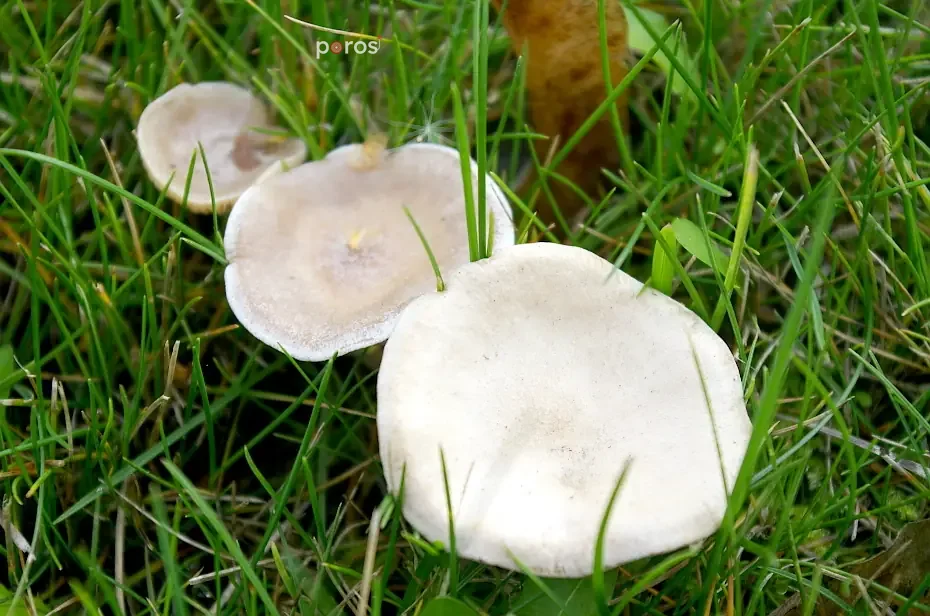
In habitat© Георгий Виноградов (Georgy Vinogradov) · CC BY 4.0
-

© Nadezhda Kiseleva · CC BY 4.0
-

Cap© Nadezhda Kiseleva · CC BY 4.0
-

© Sigrid Jakob · CC0
-

Gills© Jose Angel Urquia Goitia · CC BY-SA 4.0
-
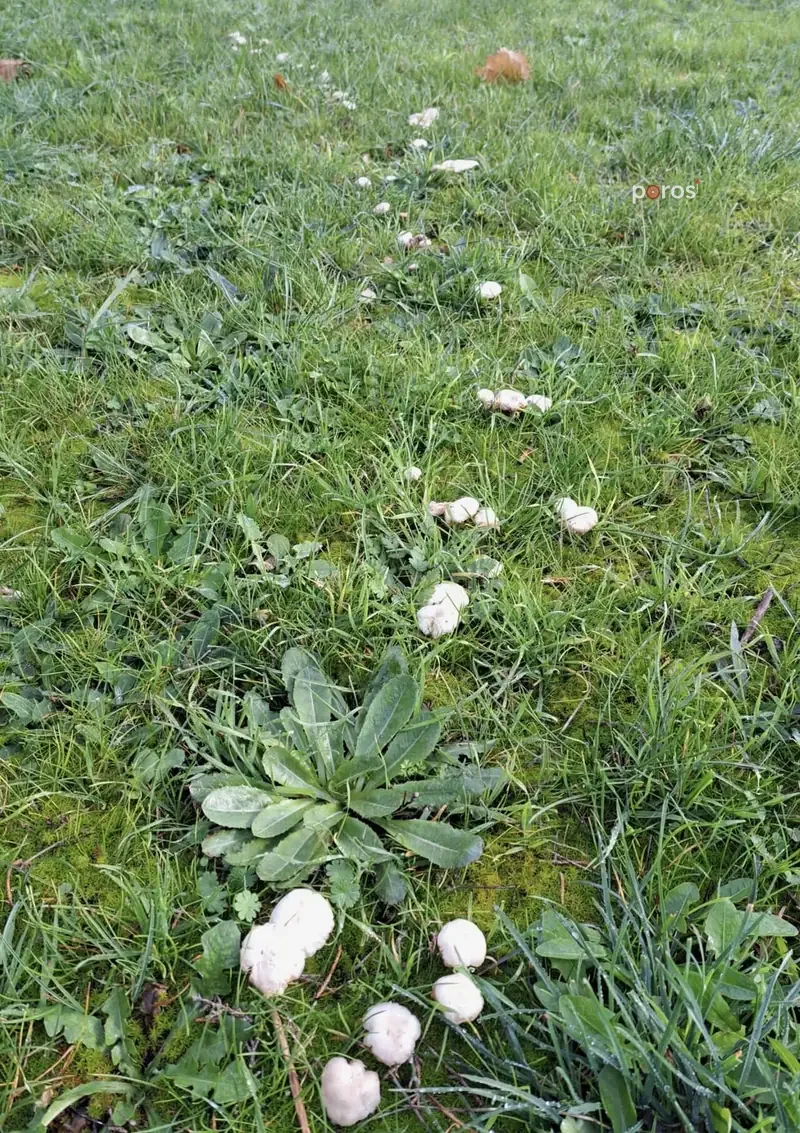
In habitat© Jose Angel Urquia Goitia · CC BY-SA 4.0
-

© Jose Angel Urquia Goitia · CC BY-SA 4.0


These are licensed records of this species; photos alone are not enough to identify a mushroom.
Is the fool's funnel poisonous?
Yes, the fool's funnel is deadly poisonous and must never be eaten. It carries large amounts of muscarine and causes sweating, salivation and a slowed heartbeat. It can be mistaken for fairy ring champignon (Marasmius oreades), the miller (Clitopilus prunulus), common funnel (Infundibulicybe gibba) and aniseed funnel (Clitocybe odora). If poisoning is suspected, call 112 at once (Turkish poison centre: 114) and keep any leftover mushroom.
Is the fool's funnel edible?
No, the fool's funnel must never be eaten; it is deadly poisonous. It can be picked by mistake for fairy ring champignon (Marasmius oreades), the miller (Clitopilus prunulus) and aniseed funnel (Clitocybe odora). If poisoning is suspected, call 112 at once (Turkish poison centre: 114) and keep any leftover mushroom.
How to recognise it
Appearance of fool's funnel
No ring or volva Spore print: White Faintly mealy or not distinctive.
Where does fool's funnel grow?
A saprotroph of meadows, lawns, parks, churchyards and roadsides, among short grass, often in rings or arcs.
Where is fool's funnel found in Turkey?
Our map data holds one research-grade iNaturalist observation from Turkey (filed as Collybia rivulosa); GBIF has no Turkish record. A macrofungi survey of the Aegean region recorded it under its synonym Clitocybe dealbata and listed it as poisonous (Adanacıoğlu et al. 2014). Its Turkish name on iNaturalist is Zehirli Cincile (poisonous funnel). As a lawn species it can also turn up in city parks.
Which months
- Jan1
- Feb0
- Mar0
- Apr0
- May0
- Jun0
- Jul0
- Aug0
- Sep0
- Oct0
- Nov0
- Dec0
1 provinces, 1 observations (GBIF, iNaturalist); months from observation dates. Record density also reflects where observers work.
Latest fool's funnel observations
Look-alikes
What is it mistaken for?
Fool’s funnel can be mistaken for the species below. Each comparison shows Fool’s funnel on the left, the look-alike on the right, and how to tell them apart.
Deadly mix-up: Fool’s funnel gets picked by people who think they have found one of the edible species below. If even one feature does not match, do not eat it.

Fairy ring champignon Marasmius oreades
How to tell The fairy ring champignon has distant gills that do not run down the stem, a tan cap with a central bump and a tough stem that bends without snapping.

The miller Clitopilus prunulus
How to tell The miller smells strongly of fresh meal, its gills turn pink with age and its spore print is pink; the fool's funnel's is white.

Aniseed funnel Clitocybe odora
How to tell The aniseed funnel's cap is pale blue when young, then blue-green to grey, and it smells strongly of aniseed; it grows in woods near tree roots. The fool's funnel is whitish cream, has no aniseed smell and grows in grass.

St George's mushroom Calocybe gambosa
How to tell St George's mushroom is larger (cap 5–15 cm) and thick-fleshed, its gills do not run down the stem and it smells strongly of fresh flour. The fool's funnel is smaller and thinner-fleshed, its gills run slightly down the stem and its cap is frosty white; it contains muscarine and is poisonous.
Other look-alikes (2)
 Edible species
not Fool’s funnel
Trooping funnel Infundibulicybe geotropa
The trooping funnel is far larger (cap up to 20 cm, stem 10–20 cm), cream to buff, with a prominent central boss when young; it can form rings in woodland clearings. The fool's funnel is 2–5 cm, whitish and frosted.
 Inedible
not Fool’s funnel
Common funnel Infundibulicybe gibba
Larger, flesh-tan and clearly funnel-shaped; it mostly grows in woodland litter.
Fool’s funnel and its look-alikes compared
| Species | Status | Underside | Spore print | Season |
|---|---|---|---|---|
| Fool’s funnelClitocybe rivulosa | Deadly poisonous | Crowded, whitish-cream gills running slightly down the stem | White | Aug–Nov |
| Fairy ring champignonMarasmius oreades | Edible species | Gills widely spaced, thick and whitish to cream, free or only just touching the stem, with short gills in between | White to pale cream | Apr–May, Sep–Dec |
| Aniseed funnelClitocybe odora | Edible species | Whitish to pale greenish, attached or slightly decurrent | Pale pinkish cream | Aug–Nov |
| St George’s mushroomCalocybe gambosa | Edible species | White to cream, very crowded and narrow, attached or notched | White | Apr–Jun |
| Trooping funnelInfundibulicybe geotropa | Edible species | Cream, crowded gills running well down the stem | White | Sep–Jan |
The table is compiled from each species page. The status column is a guide only; do not eat a wild mushroom unless an expert has seen it in person. Compare look-alikes side by side
Frequently asked questions
Is the fool's funnel poisonous?
Yes, the fool's funnel is deadly poisonous and must never be eaten. It carries large amounts of muscarine and causes sweating, salivation and a slowed heartbeat. It can be mistaken for fairy ring champignon (Marasmius oreades), the miller (Clitopilus prunulus), common funnel (Infundibulicybe gibba) and aniseed funnel (Clitocybe odora). If poisoning is suspected, call 112 at once (Turkish poison centre: 114) and keep any leftover mushroom.
Is the fool's funnel edible?
No, the fool's funnel must never be eaten; it is deadly poisonous. It can be picked by mistake for fairy ring champignon (Marasmius oreades), the miller (Clitopilus prunulus) and aniseed funnel (Clitocybe odora). If poisoning is suspected, call 112 at once (Turkish poison centre: 114) and keep any leftover mushroom.
When do symptoms start?
According to sources within 15 minutes to 2 hours. If in doubt, call 112.
How is it told from the fairy ring champignon?
The fool's funnel has crowded, decurrent gills and a frosted white cap. The fairy ring champignon has distant, free gills and a tough stem.
Can both grow in the same ring?
Yes, they can grow in the same lawn, even intermixed, so every fairy ring champignon must be checked one by one.
Is it found in Turkey?
Yes. There is one research-grade iNaturalist observation from Turkey, and it has been recorded from the Aegean region as Clitocybe dealbata; its range is poorly known. Its Turkish name on iNaturalist is Zehirli Cincile.
Is it the same as Clitocybe dealbata?
Many sources treat them as one species; both carry muscarine and pose the same danger.
What if a child or dog eats it?
Muscarine can hit harder in a small body. If poisoning is suspected, call 112 (Turkish poison centre UZEM: 114) and keep any leftover mushroom.
Could a mushroom gathered as "cincile" be this one?
It could. In Turkish, cincile is a folk name for several edible species: on our site St George's mushroom (Calocybe gambosa), the wood blewit (Lepista nuda, mavi cincile) and the fairy ring champignon (Marasmius oreades) all go by it. A small, frosted white lawn mushroom with gills running down the stem that was gathered as "cincile" may be the fool's funnel; the name alone never identifies the species.
When is fool's funnel season in Turkey?
In our calendar, fool's funnel season runs Aug–Nov. Fruits from late summer to late autumn in grassland after rain.
Where does fool's funnel grow?
A saprotroph of meadows, lawns, parks, churchyards and roadsides, among short grass, often in rings or arcs.
Where is fool's funnel found in Turkey?
Our map data holds one research-grade iNaturalist observation from Turkey (filed as Collybia rivulosa); GBIF has no Turkish record. A macrofungi survey of the Aegean region recorded it under its synonym Clitocybe dealbata and listed it as poisonous (Adanacıoğlu et al. 2014). Its Turkish name on iNaturalist is Zehirli Cincile (poisonous funnel). As a lawn species it can also turn up in city parks.
What can fool's funnel be confused with?
Fool's funnel can be confused with fairy ring champignon (Marasmius oreades, edible species), the miller (Clitopilus prunulus, edible species), common funnel (Infundibulicybe gibba, inedible), aniseed funnel (Clitocybe odora, edible species), st George's mushroom (Calocybe gambosa, edible species) and trooping funnel (Infundibulicybe geotropa, edible species). Look-alikes are compared on this page.
What is fool's funnel called in Turkish?
In Turkish, fool's funnel (Clitocybe rivulosa) is called Zehirli cincile.
Related species
-
 Anatolian matsutakeTricholoma anatolicumEdible species
-
Aniseed funnelClitocybe odoraEdible species
-
 Field blewitLepista personataEdible species
-
 Grey knightTricholoma terreumInedible
-
 MatsutakeTricholoma matsutakeEdible species
-
 Tawny funnelParalepista flaccidaInedible
-
 Tiger tricholomaTricholoma pardinumPoisonous
-
Trooping funnelInfundibulicybe geotropaEdible species
Sources
- Adanacıoğlu ve ark. (2014), ANADOLU (Ege Tarımsal Araştırma Enstitüsü): Türkiye makromantar genetik kaynakları I. Ege Bölgesi dergipark.org.tr
- Wikipedia (EN): Clitocybe rivulosa en.wikipedia.org
- First Nature: Clitocybe rivulosa, Fool's Funnel first-nature.com
All sources (7)
- iNaturalist: Collybia rivulosa (Türkçe ad) inaturalist.org
- GBIF: Türkiye kayıtları gbif.org
- Wikipedia (EN): Clitocybe odora en.wikipedia.org
- Wikipedia (EN): Infundibulicybe geotropa en.wikipedia.org
Photo credits (12)
- Collybia rivulosa · iNaturalist #143564018 · Kristian Bosak · CC BY 4.0
- Collybia rivulosa · iNaturalist #16340288 · pinonbistro · CC BY-SA 4.0
- Collybia rivulosa · iNaturalist #143564018 · Kristian Bosak · CC BY 4.0
- Collybia rivulosa · iNaturalist #138636354 · Георгий Виноградов (Georgy Vinogradov) · CC BY 4.0
- Collybia rivulosa · iNaturalist #138636354 · Георгий Виноградов (Georgy Vinogradov) · CC BY 4.0
- Collybia rivulosa · iNaturalist #137525164 · Nadezhda Kiseleva · CC BY 4.0
- Collybia rivulosa · iNaturalist #137525164 · Nadezhda Kiseleva · CC BY 4.0
- Collybia rivulosa · iNaturalist #57124250 · Sigrid Jakob · CC0
- File:Clitocybe rivulosa 2.jpg · Jose Angel Urquia Goitia · CC BY-SA 4.0
- File:Clitocybe rivulosa 6.jpg · Jose Angel Urquia Goitia · CC BY-SA 4.0
- File:Clitocybe rivulosa 4.jpg · Jose Angel Urquia Goitia · CC BY-SA 4.0
- iNaturalist: Manisa, 29 Jan 2024 · Umut Nuri Erdoğan · CC BY


