


Trooping funnel
Infundibulicybe geotropa · Tricholomataceae
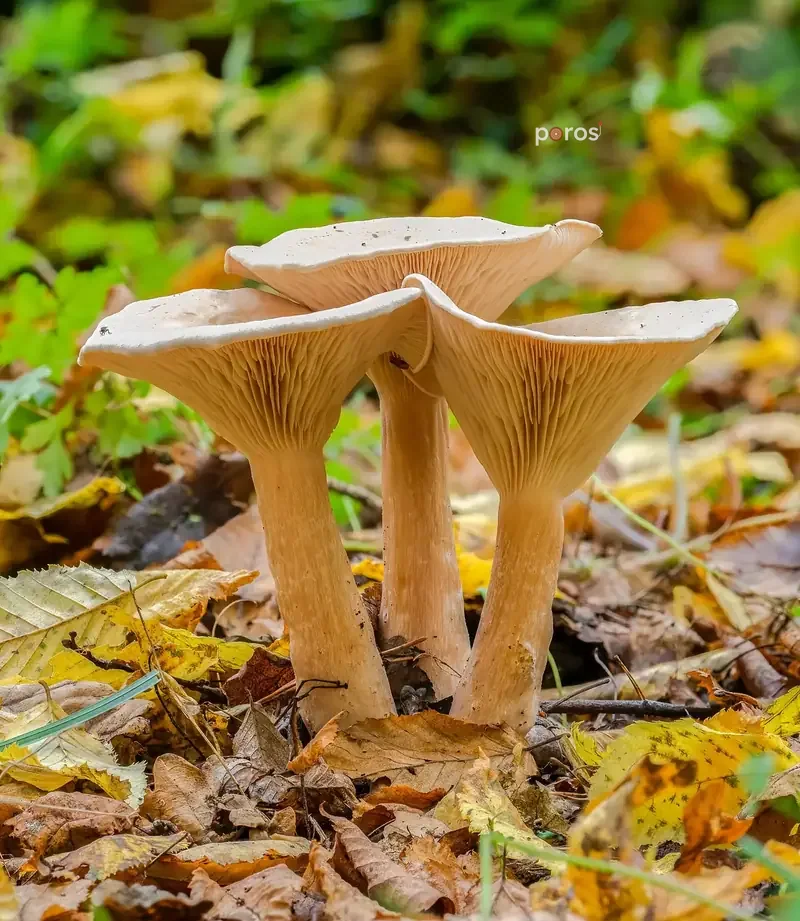
Formerly named Clitocybe geotropa, this is a large cream to buff mushroom with a funnel-shaped cap that keeps a small central bump, and a long, thick stem.
Last updated: Prepared by the Poros Mantar editorial team8 sources checkedReport a correction
Formerly named Clitocybe geotropa, this is a large cream to buff mushroom with a funnel-shaped cap that keeps a small central bump, and a long, thick stem. It often grows in wide rings or rows. It is known as an edible species, but because it resembles poisonous white funnel mushrooms it is never eaten without an expert's identification.
Also called: monk's head Turkish: Büyük huni şapka, malkadın, ebişke, balkadın Synonyms: malkadın, ebişke, balkadın
How to recognise it
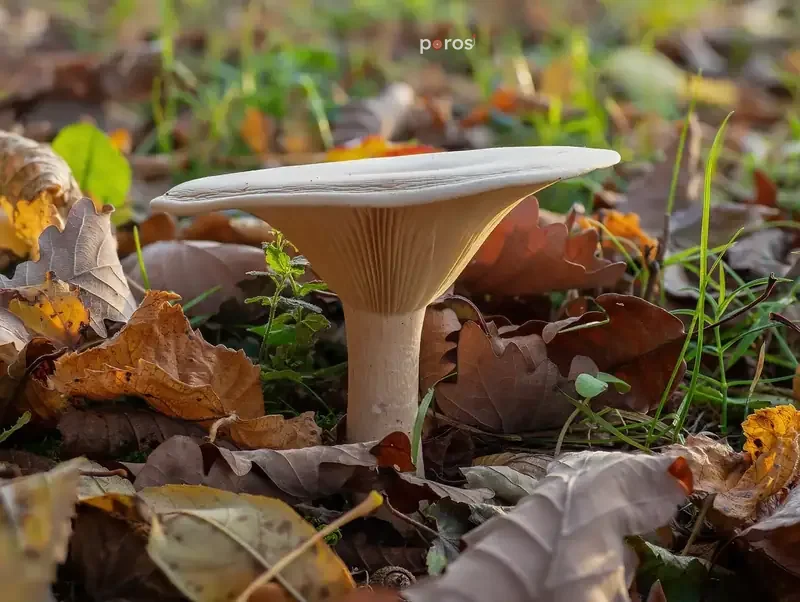
Trooping funnel, part by part
No ring or volva Spore print: White Pleasant, faintly sweet, reminiscent of almonds or hay; firm white flesh.


When and where
Sep–Jan
- Janin season
- Feb
- Mar
- Apr
- May
- Jun
- Jul
- Aug
- Sepin season
- Octin season
- Novin season
- Decin season
In Europe it fruits in autumn and early winter; Turkish GBIF records run from October to January.
Type Edible
In season SeptemberOctoberNovemberDecemberJanuary
Regions Black Sea RegionAegean RegionMarmara RegionManisaBoluIstanbul
Where does trooping funnel grow?
It grows in clearings of broadleaf and mixed woods, along woodland edges and in grassland, often on chalky soil, forming wide rings or rows and feeding on decaying matter.
Where is trooping funnel found in Turkey?
Turkish records come mostly from İstanbul, especially around Sarıyer, with others from Bolu.
Which months
- Jan4
- Feb0
- Mar0
- Apr0
- May0
- Jun0
- Jul0
- Aug0
- Sep0
- Oct2
- Nov1
- Dec2
3 provinces, 9 observations (GBIF, iNaturalist); months from observation dates. Record density also reflects where observers work.
Latest trooping funnel observations
-
 Illustrative
Manisa22 Dec 2023 · GBIF
-
 Illustrative
İstanbul7 Jan 2023 · iNaturalist
-
 Illustrative
Bolu6 Nov 2022 · iNaturalist
-
 Illustrative
Bolu18 Oct 2022 · iNaturalist
-
 Illustrative
İstanbul1 Jan 2021 · iNaturalist
-
 Illustrative
İstanbul12 Jan 2020 · iNaturalist
-
 Illustrative
İstanbul12 Jan 2020 · GBIF
-
 Illustrative
İstanbul15 Dec 2019 · GBIF
- See on the map
On "illustrative" cards the image is a photo of the species; the observation photo cannot be shown here because of its licence, but can be seen at the source.
Look-alikes
What could it be confused with?
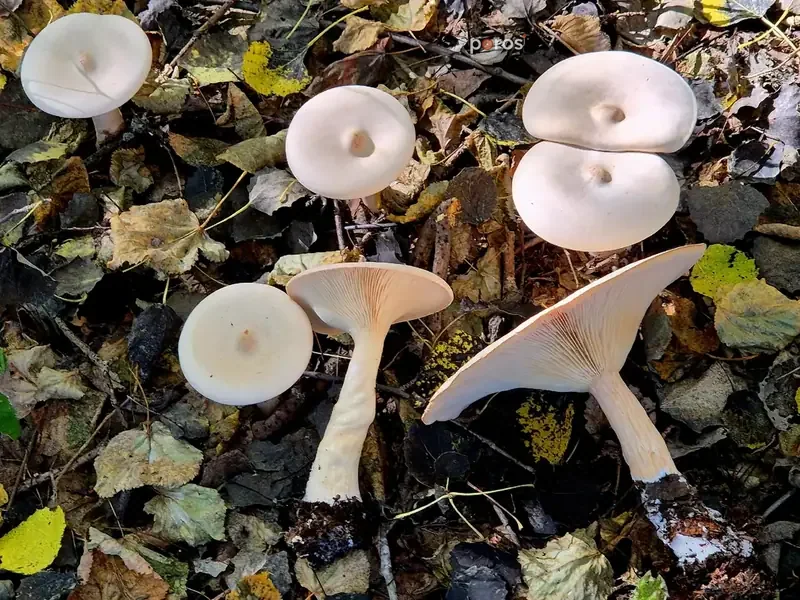
Trooping funnel can be mistaken for the species below. Each card shows the look-alike and how it differs from Trooping funnel.
 Edible species
not Trooping funnel
Common funnel Infundibulicybe gibba
Smaller, with a short slender stem and no clear central bump.
 Poisonous
not Trooping funnel
Fool's funnel Clitocybe rivulosa
Much smaller, whitish and frosted-looking, forming rings in grass; it contains muscarine and causes serious poisoning.
 Poisonous
not Trooping funnel
Livid pinkgill Entoloma sinuatum
Its gills do not run down the stem and turn pink with age, the spore print is pink and the cap is not funnel-shaped.
 Inedible
not Trooping funnel
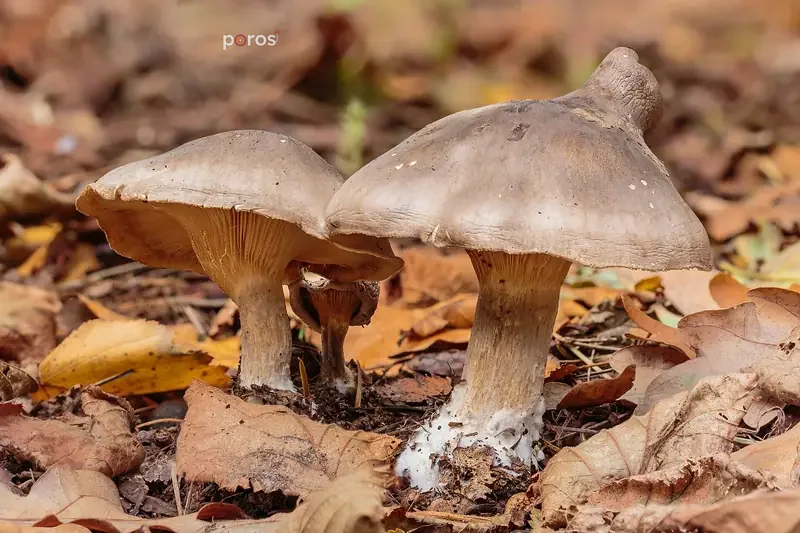
Clouded funnel Clitocybe nebularis
It also grows in rings, but its cap is smoky grey without a clear central bump and its stem is short and thick.
 Inedible
not Trooping funnel
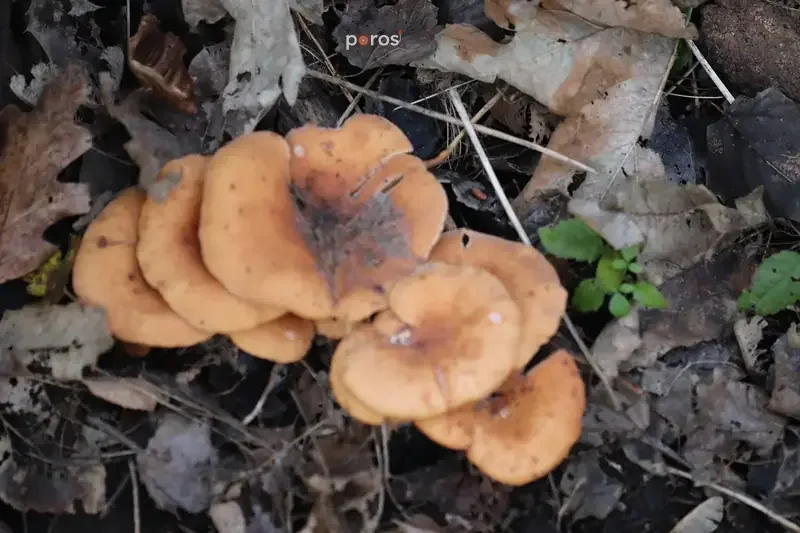
Tawny funnel Paralepista flaccida
The tawny funnel is smaller, orange-brown and short-stemmed, without a clear central bump, and grows in dense groups on litter. Its edibility is disputed and it resembles the poisonous Paralepistopsis amoenolens.
How to cook and eat trooping funnel
Safety first. Some small white to cream funnel mushrooms contain muscarine and are poisonous, so this species is only gathered once its large size, long thick stem, central bump and white spore print have all been confirmed. It is eaten only after an expert's identification and thorough cooking.
How to prepare it
Use only young mushrooms: older ones lose their taste and turn leathery. Remove the tough stems and wipe the caps with a damp cloth.
How to cook it
In northern Italy it is roasted, cooked in stews and frittatas, or preserved in oil.
What goes with it?
- young trooping funnels
- eggs
- extra virgin olive oil (about 1½ tbsp)
- garlic
- flat-leaf parsley
Source: Wikipedia · practical details from our recipes.
Recipe
How to store trooping funnel
Grow it, buy it
Trooping funnel price list
| Product | Us | Market (sourced, dated) |
|---|---|---|
| Fresh trooping funnel | Made to order · ask | — |
| Dried trooping funnel | Made to order · ask | — |
We make our trooping funnel products in small batches, to order; send a request and we email you the price and delivery date. The market column shows prices seen on other sellers' pages on the date given; they are not our prices and may have changed.
Frequently asked questions
Is the trooping funnel edible?
It is known as an edible species. Because it can be confused with poisonous funnel mushrooms, never eat it without an expert's identification.
Is it the same as Clitocybe geotropa?
Yes. The species was formerly known as Clitocybe geotropa; its current name is Infundibulicybe geotropa.
Does it have a Turkish name?
We found no established, sourced Turkish folk name; on this page we use the descriptive name büyük huni şapka.
How do you identify it?
Look for a large cream to buff funnel cap with a small central bump, crowded cream gills running down the stem, a long thick stem and a white spore print; it often grows in rings or rows.
Does it have poisonous look-alikes?
The small white fool's funnel (Clitocybe rivulosa), found in grass, and the livid pinkgill (Entoloma sinuatum) can be confused with it.
Where and when does it appear in Turkey?
In woodland clearings and edges. GBIF records come mostly from İstanbul, plus Bolu, from October to January.
Which species are malkadın and ebişke?
In the western Black Sea region the names malkadın, balkadın and ebişke are used for Infundibulicybe geotropa (formerly Clitocybe geotropa), which fruits in woodland from late summer to autumn (Karancı and Çetin, 2025). Ebişke is also used for other mushrooms elsewhere, so identify the species, not the name. Because it can be confused with toxic funnel caps, never eat it without an expert's identification.
Is trooping funnel edible?
Yes, trooping funnel is an edible species. Eat a wild one only after an expert has identified it with certainty: it can be confused with Fool's funnel (Clitocybe rivulosa) and livid pinkgill (Entoloma sinuatum). Some small white to cream funnel mushrooms contain muscarine and are poisonous, so this species is only gathered once its large size, long thick stem, central bump and white spore print have all been confirmed. It is eaten only after an expert's identification and thorough cooking.
When is trooping funnel season in Turkey?
In our calendar, trooping funnel season runs Sep–Jan. In Europe it fruits in autumn and early winter; Turkish GBIF records run from October to January.
Where does trooping funnel grow?
It grows in clearings of broadleaf and mixed woods, along woodland edges and in grassland, often on chalky soil, forming wide rings or rows and feeding on decaying matter.
Where is trooping funnel found in Turkey?
Turkish records come mostly from İstanbul, especially around Sarıyer, with others from Bolu.
What can trooping funnel be confused with?
Trooping funnel can be confused with common funnel (Infundibulicybe gibba, edible species), Fool's funnel (Clitocybe rivulosa, poisonous), livid pinkgill (Entoloma sinuatum, poisonous), clouded funnel (Clitocybe nebularis, inedible) and tawny funnel (Paralepista flaccida, inedible). Look-alikes are compared on this page.
What is trooping funnel called in Turkish?
In Turkish, trooping funnel (Infundibulicybe geotropa) is called Büyük huni şapka; other local names include malkadın, ebişke and balkadın.
Related species
-
 Anatolian matsutakeTricholoma anatolicumEdible species
-
 Wood blewitLepista nudaEdible species
-
 Grey knightTricholoma terreumInedible
-
Tawny funnelParalepista flaccidaInedible
-
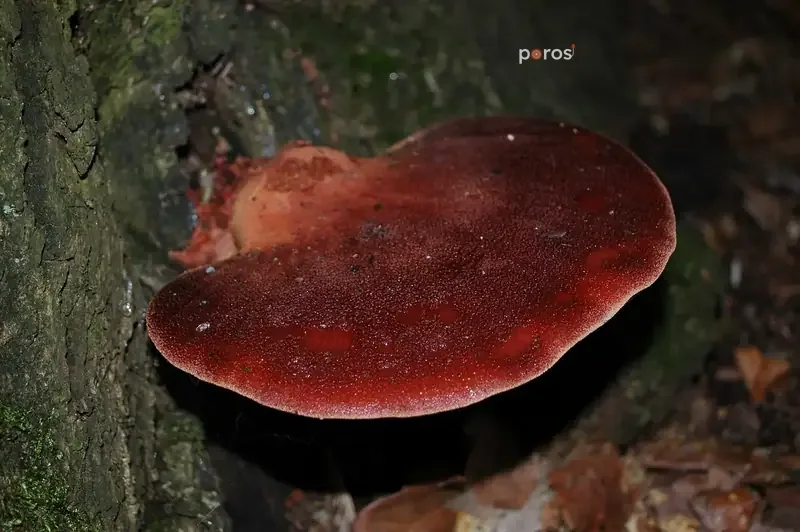 Beefsteak fungusFistulina hepaticaEdible species
-
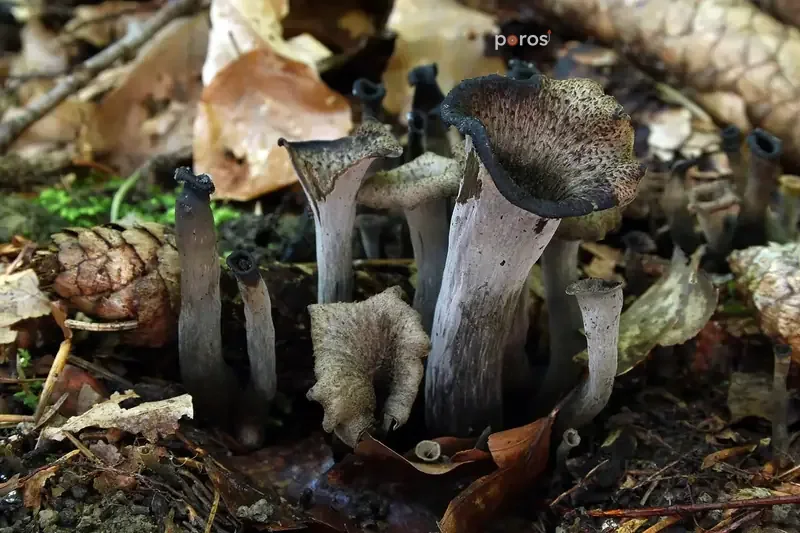 Black trumpetCraterellus cornucopioidesEdible species
-
 Bloody milk capLactarius sanguifluusEdible species
-
 Button mushroomAgaricus bisporusEdible species
Sources
- Sevindik ve ark. (2020), Oxidative Medicine and Cellular Longevity: Kuzeybatı Türkiye'den Infundibulicybe geotropa pubmed.ncbi.nlm.nih.gov
- Dizeci ve ark. (2021), Mycologia: Clitocybe nebularis ve Infundibulicybe geotropa karşılaştırması pubmed.ncbi.nlm.nih.gov
- Karancı, A. ve Çetin, K. (2025). Batı Karadeniz Bölgesi'ndeki Yenilebilir Yabani Mantarların Etnomikolojik ve Gastronomik Değerlerinin İncelenmesi. Journal of Tourism and Gastronomy Studies 13(1): 485–514 jotags.net
All sources (8)
- Adanacıoğlu ve ark. (2014), ANADOLU (Ege Tarımsal Araştırma Enstitüsü): Türkiye makromantar genetik kaynakları I. Ege Bölgesi dergipark.org.tr
- Wikipedia (EN): Infundibulicybe geotropa en.wikipedia.org
- First Nature: Infundibulicybe geotropa first-nature.com
- GBIF: Türkiye kayıtları gbif.org
- iNaturalist: Türkiye gözlemleri inaturalist.org
Photo credits (8)
- File:Mönchskopf (Infundibulicybe geotropa)-20191017-RM-155028.jpg · Ermell · CC BY-SA 4.0
- File:Infundibulicybe geotropa (Mönchskopf) -20201108-RM-155413.jpg · Ermell · CC BY-SA 4.0
- File:Infundibulicybe geotropa 111105w.JPG · Strobilomyces · CC BY-SA 3.0
- File:Infundibulicybe geotropa (Bull.) Harmaja = Clitocybe geotropa (Bull.) Quél. (15503967389).jpg · GLJIVARSKO DRUSTVO NIS from Serbia · CC BY 2.0
- Infundibulicybe geotropa · iNaturalist #138839681 · captainclover · CC BY 4.0
- Infundibulicybe geotropa · iNaturalist #401560449 · Анна Митрошенкова · CC BY 4.0
- Infundibulicybe geotropa · iNaturalist #64445604 · agujaceratops · CC BY 4.0
- Infundibulicybe geotropa · iNaturalist #99235156 · Josip Skejo · CC BY 4.0


