
Black witches’ butter (black witches' butter, black jelly roll)
Exidia glandulosa · Auriculariaceae

Black witches' butter (Exidia glandulosa) is a small, black, glossy, jelly-like fungus on dead oak, beech and hazel branches, shaped like little ears or buttons that merge into brain-like crusts. The underside is velvety and the upper surface dotted with tiny warts. It dries into a thin black film and swells again after rain. It is not edible.
Also called: black witches' butter, black jelly roll, warlock's butter Turkish: Exidia glandulosa Synonyms: Tremella glandulosa
Last updated: Prepared by the Poros Mantar editorial team5 sources checkedReport a correction
Black witches’ butter photos
-
© Chase Lansdale · CC0
-

© kitbeard · CC BY 4.0
-

© sugarsnap_t · CC BY 4.0
-

© John Hibbard · CC BY 4.0
-

© Mark Richman · CC BY 4.0
-

© empressmoth · CC0
-

© Ken-ichi Ueda · CC BY 4.0
-

© Dorte Stokholm · CC BY 4.0
These are licensed records of this species; photos alone are not enough to identify a mushroom.
Is the black witches' butter poisonous?
Black witches' butter is not known to be poisonous, but it is not edible; it is tasteless and jelly-textured.
Is the black witches' butter edible?
No, it is not edible. It is not known to be poisonous but is not used as food.
How to recognise it
Appearance of black witches' butter
No ring or volva Spore print: White Not distinctive.
When and where
When to find black witches' butter
Apr, Sep–Oct, Jan–Feb
It is seen in cool, damp weather from autumn to spring; our Turkish records fall between September and April.
Type Inedible
Months seen JanuaryFebruaryAprilSeptemberOctober
Colour Black
Regions Black Sea RegionAegean RegionMarmara RegionTrabzonManisaBoluKırklareliIstanbul
Where does black witches' butter grow?
It grows on dead, fallen or still-attached branches of oak, beech, hazel and other hardwoods.
Where is black witches' butter found in Turkey?
Our map data (GBIF and iNaturalist) holds 12 Turkish records: Istanbul (8), Manisa (1), Kırklareli (1), Bolu (1), Trabzon (1). The records are from January, February, April, September, October. GBIF lists 16 Turkish records in total, including literature surveys.
- İstanbul7
- Manisa1
- Bolu1
- Kırklareli1
- Trabzon1
Which months
- Jan4
- Feb3
- Mar0
- Apr2
- May0
- Jun0
- Jul0
- Aug0
- Sep1
- Oct1
- Nov0
- Dec0
5 provinces, 11 observations (GBIF, iNaturalist); months from observation dates. Record density also reflects where observers work.
Latest black witches' butter observations
-
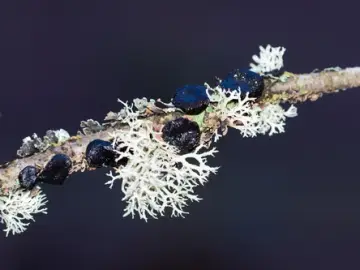 Kırklareli26 Jan 2025 · iNaturalist© Asrın Akıncıoğlu · CC BY
-
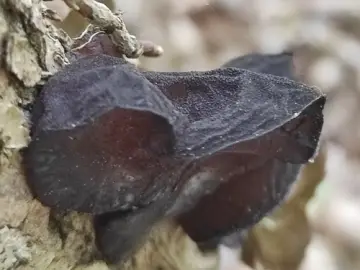 İstanbul21 Apr 2024 · iNaturalist© Umut Nuri Erdoğan · CC BY
-
 Illustrative
İstanbul11 Feb 2026 · iNaturalist
-
 Illustrative
İstanbul11 Feb 2026 · iNaturalist
-
 Illustrative
Manisa25 Jan 2026 · Mushroom Observer
-
 Illustrative
Bolu29 Oct 2025 · iNaturalist
-
 Illustrative
İstanbul1 Jan 2025 · Mushroom Observer
-
 Illustrative
Trabzon24 Sep 2024 · iNaturalist
- See on the map
On "illustrative" cards the image is a photo of the species; the observation photo cannot be shown here because of its licence, but can be seen at the source.
Look-alikes
What could it be confused with?
Black witches’ butter can be mistaken for the species below. Each comparison shows Black witches’ butter on the left, the look-alike on the right, and how to tell them apart.

Wood ear mushroom Auricularia auricula-judae
How to tell The wood ear is brown and ear-shaped, larger and thinner, without warts, and grows mostly on elder.
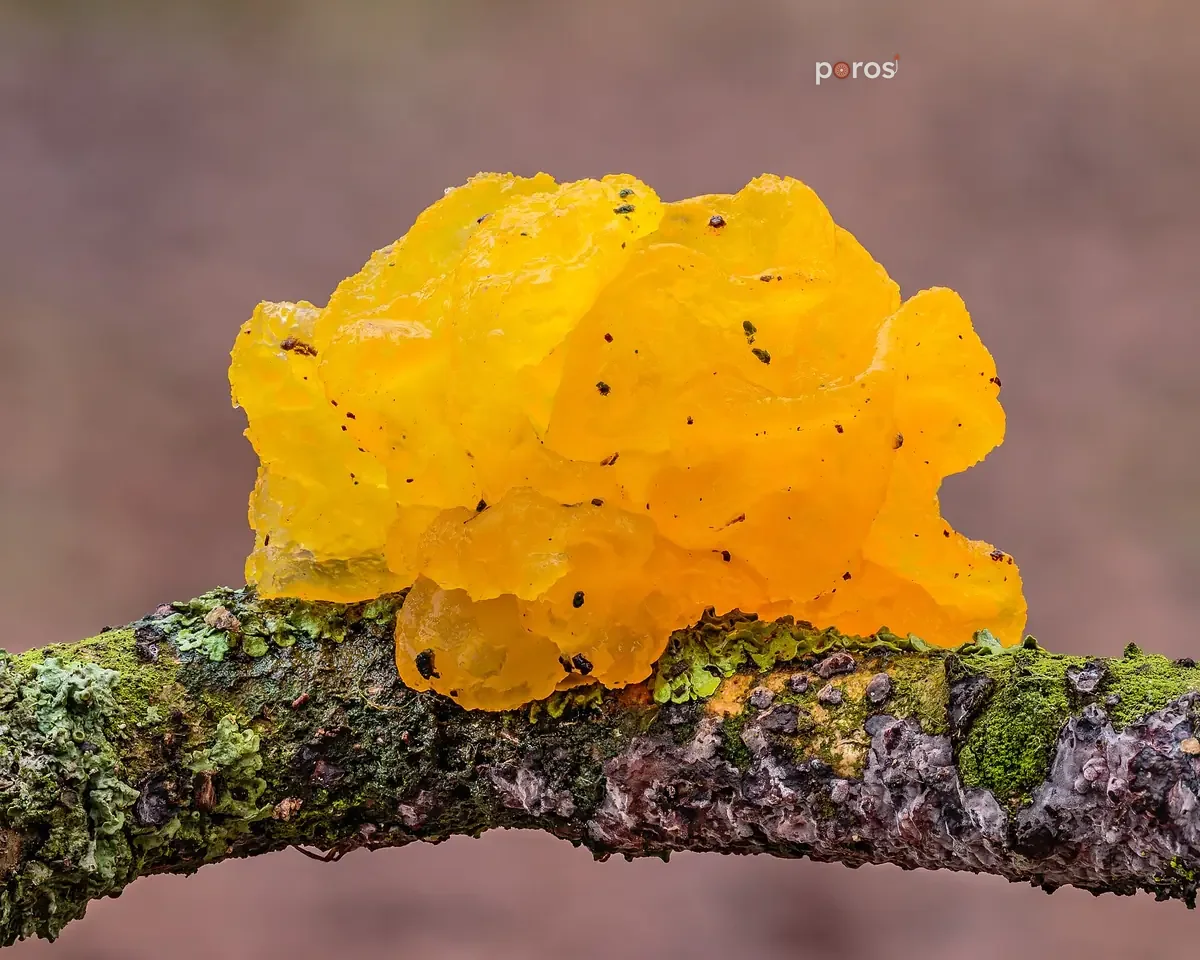
Yellow brain Tremella mesenterica
How to tell The yellow brain is also a brain-like jelly fungus, but bright yellow-orange.
Other look-alikes (1)
 Edible species
not Black witches’ butter
Cloud ear fungus Auricularia cornea
The cloud ear is ear- or cup-shaped, brown to purplish brown and covered on top with short, dense greyish hairs, without warts. It grows in the tropics and subtropics and is cultivated and eaten.
Black witches’ butter and its look-alikes compared
| Species | Status | Underside | Spore print | Season |
|---|---|---|---|---|
| Black witches’ butterExidia glandulosa | Inedible | Small black warts on the upper surface | White | Jan–Feb, Apr, Sep–Oct |
| Wood ear mushroomAuricularia auricula-judae | Edible species | No gills; the inner, spore-bearing surface is smooth or veined, shiny and darker | White | Oct–May |
| Yellow brainTremella mesenterica | Inedible | No gills or pores | White to pale yellow | Oct–May |
| Cloud ear fungusAuricularia cornea | Edible species | The underside is smooth or slightly veined, shiny and purplish brown | White | All year |
The table is compiled from each species page. The status column is a guide only; do not eat a wild mushroom unless an expert has seen it in person. Compare look-alikes side by side
Black witches' butter is not known to be poisonous, but it is not edible; it is tasteless and jelly-textured. If poisoning is suspected, call poison control.
Frequently asked questions
Is the black witches' butter poisonous?
Black witches' butter is not known to be poisonous, but it is not edible; it is tasteless and jelly-textured.
Is the black witches' butter edible?
No, it is not edible. It is not known to be poisonous but is not used as food.
How do you identify it?
Small, black, glossy jelly ears or buttons on dead oak or beech, finely warty on top, drying to a thin black film.
What can it be confused with?
The main look-alikes are: Wood ear mushroom, Yellow brain. The differences are listed in the look-alikes section; with poisonous look-alikes, always check the cross-section and habitat.
Where does it grow?
It grows on dead, fallen or still-attached branches of oak, beech, hazel and other hardwoods.
When does it appear?
It is seen in cool, damp weather from autumn to spring; our Turkish records fall between September and April.
Where does the name witches' butter come from?
In European folklore, jelly fungi found on gates and sticks were thought to be butter left by witches; the black species is therefore called black witches' butter.
Where is it found in Turkey?
Our map data holds 12 records: 8 from Istanbul and one each from Manisa, Kırklareli, Bolu and Trabzon; GBIF lists 16 Turkish records in total.
When is black witches' butter season in Turkey?
In our calendar, black witches' butter season runs Apr, Sep–Oct, Jan–Feb. It is seen in cool, damp weather from autumn to spring; our Turkish records fall between September and April.
Where does black witches' butter grow?
It grows on dead, fallen or still-attached branches of oak, beech, hazel and other hardwoods.
Where is black witches' butter found in Turkey?
Our map data (GBIF and iNaturalist) holds 12 Turkish records: Istanbul (8), Manisa (1), Kırklareli (1), Bolu (1), Trabzon (1). The records are from January, February, April, September, October. GBIF lists 16 Turkish records in total, including literature surveys.
What can black witches' butter be confused with?
Black witches' butter can be confused with wood ear mushroom (Auricularia auricula-judae, edible species), yellow brain (Tremella mesenterica, inedible) and cloud ear fungus (Auricularia cornea, edible species). Look-alikes are compared on this page.
What is black witches' butter called in Turkish?
In Turkish, black witches' butter (Exidia glandulosa) is called Exidia glandulosa.
Related species
-
Cloud ear fungusAuricularia corneaEdible species
-
Wood ear mushroomAuricularia auricula-judaeEdible species
-
 Amethyst deceiverLaccaria amethystinaInedible
-
 Anemone stinkhornAseroe rubraInedible
-
 Artist’s bracketGanoderma applanatumInedible
-
 Barometer earthstarAstraeus hygrometricusInedible
-
 Birch polyporeFomitopsis betulinaInedible
-
 Bitter boleteTylopilus felleusInedible
Sources
- Wikipedia (EN): Exidia glandulosa en.wikipedia.org
- iNaturalist: Exidia glandulosa (takson, adlar ve fotoğraflar) inaturalist.org
- GBIF: Exidia glandulosa gbif.org
All sources (5)
- GBIF: Türkiye kayıtları gbif.org
- iNaturalist: Türkiye gözlemleri (araştırma düzeyi) inaturalist.org
Photo credits (10)
- Exidia glandulosa · iNaturalist #69321535 · Chase Lansdale · CC0
- Exidia glandulosa · iNaturalist #67570648 · kitbeard · CC BY 4.0
- Exidia glandulosa · iNaturalist #152358191 · sugarsnap_t · CC BY 4.0
- Exidia glandulosa · iNaturalist #2481580 · John Hibbard · CC BY 4.0
- Exidia glandulosa · iNaturalist #69704986 · Mark Richman · CC BY 4.0
- Exidia glandulosa · iNaturalist #145505330 · empressmoth · CC0
- Exidia glandulosa · iNaturalist #2570884 · Ken-ichi Ueda · CC BY 4.0
- Exidia glandulosa · iNaturalist #39776621 · Dorte Stokholm · CC BY 4.0
- iNaturalist: Kırklareli, 26 Jan 2025 · Asrın Akıncıoğlu · CC BY
- iNaturalist: İstanbul, 21 Apr 2024 · Umut Nuri Erdoğan · CC BY