
Cloud ear fungus (hairy wood ear, mu er)
Auricularia cornea · Auriculariaceae

Auricularia cornea is an ear-shaped, jelly-textured wood fungus widely used in Chinese and Southeast Asian cooking. It resembles its relative the wood ear (A. auricula-judae), but its upper surface is clearly hairy and it is thicker and tougher. It has little flavour of its own and is added to soups and salads for its crunchy texture. Almost everything on sale is dried and cultivated.
Also called: cloud ear, hairy wood ear, mu er, kikurage Turkish: Auricularia cornea Synonyms: Auricularia polytricha
Last updated: Prepared by the Poros Mantar editorial team4 sources checkedReport a correction
Cloud ear fungus photos
-
© Sunčana Bradley · CC BY 4.0
-

Cap© Sunčana Bradley · CC BY 4.0
-

© Zac Peterson · CC BY 4.0
-
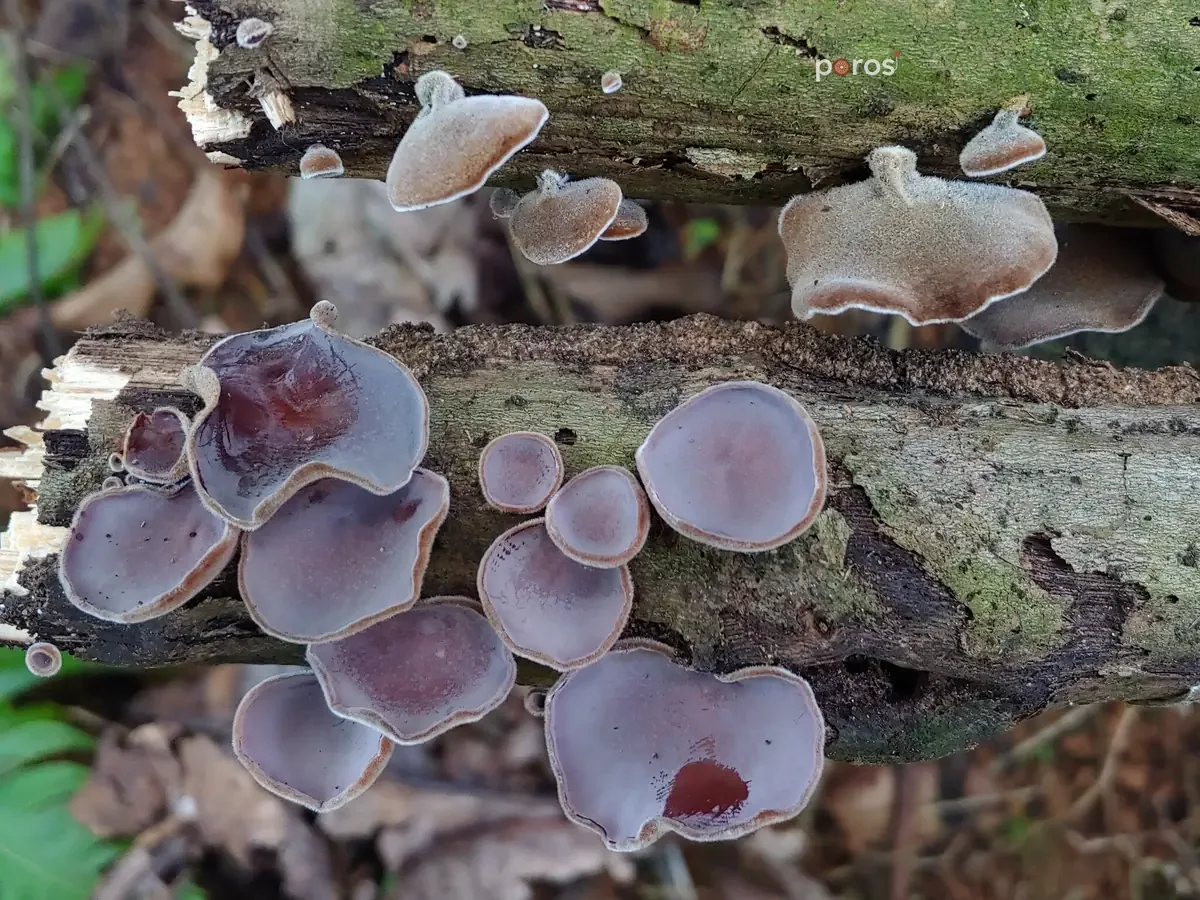
In habitat© Kurt Miller · CC BY-SA 4.0
-

Jelly surface© John Lyden · CC BY 4.0
-

Cap© Tom and T Herman · CC BY 4.0
-

© Luciana Vetel Cruz · CC BY 4.0
-

© Zac Peterson · CC BY 4.0
-

Jelly surface© Kurt Miller · CC BY-SA 4.0
-
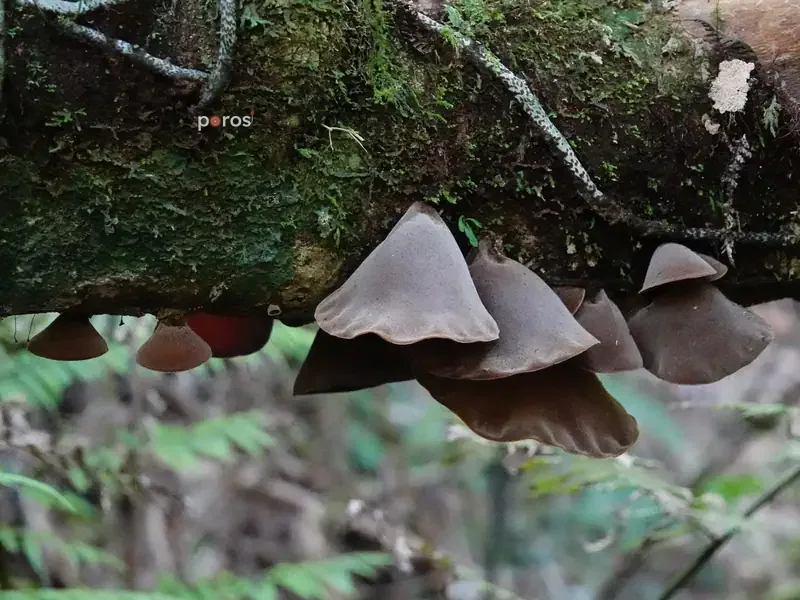
In habitat© Jacqui Geux · CC BY 4.0


These are licensed records of this species; photos alone are not enough to identify a mushroom.
Is the cloud ear fungus poisonous?
The cloud ear fungus is not listed as poisonous in our sources. The dried fungus is soaked for a few hours and cooked thoroughly. Even so, never eat a wild one without certain identification.
Is the cloud ear fungus edible?
The cloud ear fungus is listed as edible in our sources and is cultivated; even so, never eat a wild one without certain identification. Do not eat it without an expert's approval. The dried fungus is soaked for a few hours and cooked thoroughly. Do not leave soaked fungus at room temperature for long: fatal bacterial poisonings have been reported in Asia from wood ears soaked for too long. It may interact with blood-thinning medicines; ask your doctor if you take them.
How to recognise it
Appearance of cloud ear fungus
No ring or volva Spore print: White Not distinctive.
Where does cloud ear fungus grow?
It grows in clusters on dead broadleaf trunks and branches in tropical and subtropical regions. In cultivation it is grown in sawdust bags or on logs.
In Turkey
No record from Turkey: GBIF and iNaturalist hold no Turkish records. It ranges through the tropics and subtropics of Asia, Africa, the Americas and Oceania; in Turkey it is sold dried in Asian grocery shops. The ear-shaped fungus in Turkish forests is usually the wood ear.
Our map has no observations of cloud ear fungus from Turkey yet.
Look-alikes
What could it be confused with?
Cloud ear fungus can be mistaken for the species below. Each comparison shows Cloud ear fungus on the left, the look-alike on the right, and how to tell them apart.

Wood ear mushroom Auricularia auricula-judae
How to tell It is thinner and softer, its hairs are very short and feel velvety; in Turkey it grows especially on elder.

Black witches' butter Exidia glandulosa
How to tell It is black, brain-like and greasy-looking with small warts; it never forms an ear shape and is not eaten.
Cloud ear fungus and its look-alikes compared
| Species | Status | Underside | Spore print | Season |
|---|---|---|---|---|
| Cloud ear fungusAuricularia cornea | Edible species | The underside is smooth or slightly veined, shiny and purplish brown | White | All year |
| Wood ear mushroomAuricularia auricula-judae | Edible species | No gills; the inner, spore-bearing surface is smooth or veined, shiny and darker | White | Oct–May |
| Black witches’ butterExidia glandulosa | Inedible | Small black warts on the upper surface | White | Jan–Feb, Apr, Sep–Oct |
The table is compiled from each species page. The status column is a guide only; do not eat a wild mushroom unless an expert has seen it in person. Compare look-alikes side by side
How to cook and eat cloud ear fungus
Safety first. The dried fungus is soaked for a few hours and cooked thoroughly. Do not leave soaked fungus at room temperature for long: fatal bacterial poisonings have been reported in Asia from wood ears soaked for too long. It may interact with blood-thinning medicines; ask your doctor if you take them.
What goes with it?
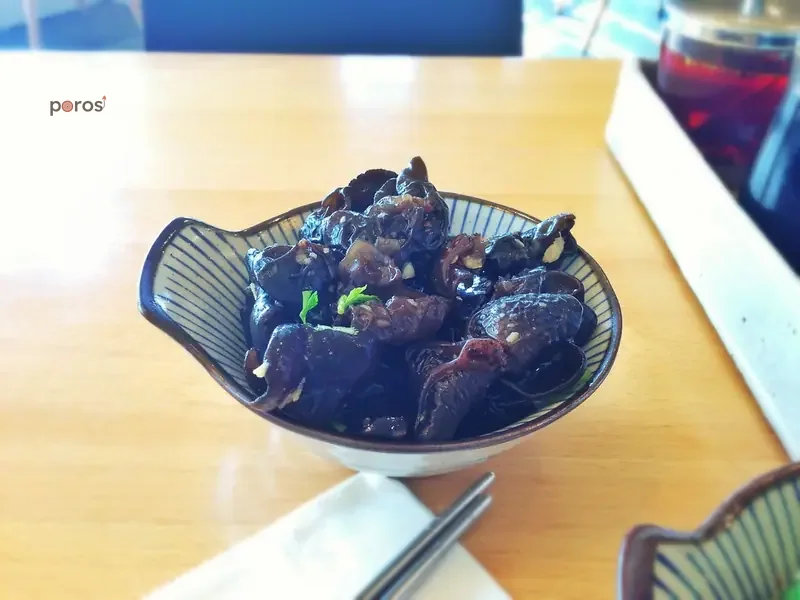
- garlic
- red chilli
- Chinese black vinegar
- light soy sauce
- sugar
- sesame oil
- spring onion or coriander
Recipe
How to store cloud ear fungus
Grow it, buy it
Cloud ear fungus price list
| Product | Poros Mantar | Market |
|---|---|---|
| Fresh cloud ear fungus | Made to order · ask | — |
| Dried cloud ear fungus | Made to order · ask | — |
We make our cloud ear fungus products in small batches, to order; send a request and we email you the price and delivery date. The market column shows prices seen on other sellers' pages on the date given; they are not our prices and may have changed.
Frequently asked questions
Is the cloud ear fungus poisonous?
The cloud ear fungus is not listed as poisonous in our sources. The dried fungus is soaked for a few hours and cooked thoroughly. Even so, never eat a wild one without certain identification.
Is the cloud ear fungus edible?
The cloud ear fungus is listed as edible in our sources and is cultivated; even so, never eat a wild one without certain identification. Do not eat it without an expert's approval. The dried fungus is soaked for a few hours and cooked thoroughly. Do not leave soaked fungus at room temperature for long: fatal bacterial poisonings have been reported in Asia from wood ears soaked for too long. It may interact with blood-thinning medicines; ask your doctor if you take them.
How is it different from the wood ear?
Auricularia cornea is thicker and tougher, with visibly greyish-hairy upper surface. The wood ear is thinner and softer, with very short, velvety hairs.
Is it the same as Auricularia polytricha?
Yes. Auricularia polytricha is now treated as a synonym of Auricularia cornea; both names are used in trade.
How do you prepare the dried fungus?
Soak it in cold water for a few hours, cut off the hard base, rinse well and cook it in soups, salads or stir-fries. Keep soaked fungus in the fridge and do not leave it for long.
Does it grow wild in Turkey?
There is no Turkish record. It is a tropical and subtropical species; the ear-shaped fungus in Turkish forests is usually the wood ear.
What does it taste like?
It has very little flavour of its own; it is used for its crunchy, cartilage-like texture and for soaking up sauces.
Who should be careful with it?
Wood ear fungi may affect blood clotting; people on blood-thinning medicines or awaiting surgery should ask their doctor.
When is cloud ear fungus season in Turkey?
In our calendar, cloud ear fungus is recorded all year. In tropical and warm climates it fruits through the year after rain. The dried product on sale is cultivated and available all year.
Where does cloud ear fungus grow?
It grows in clusters on dead broadleaf trunks and branches in tropical and subtropical regions. In cultivation it is grown in sawdust bags or on logs.
Where is cloud ear fungus found in Turkey?
No record from Turkey: GBIF and iNaturalist hold no Turkish records. It ranges through the tropics and subtropics of Asia, Africa, the Americas and Oceania; in Turkey it is sold dried in Asian grocery shops. The ear-shaped fungus in Turkish forests is usually the wood ear.
What can cloud ear fungus be confused with?
Cloud ear fungus can be confused with wood ear mushroom (Auricularia auricula-judae, edible species) and black witches' butter (Exidia glandulosa, inedible). Look-alikes are compared on this page.
What is cloud ear fungus called in Turkish?
In Turkish, cloud ear fungus (Auricularia cornea) is called Auricularia cornea.
Related species
-
Wood ear mushroomAuricularia auricula-judaeEdible species
-
Black witches’ butterExidia glandulosaInedible
-
 Almond mushroomAgaricus subrufescensEdible species
-
 Anatolian matsutakeTricholoma anatolicumEdible species
-
 Aniseed funnelClitocybe odoraEdible species
-
 Bay boleteImleria badiaEdible species
-
 Beefsteak fungusFistulina hepaticaEdible species
-
 Black morelMorchella elataEdible species
Sources
- Hong Kong Gıda Güvenliği Merkezi (CFS): Food Safety Focus 213 (Nisan 2024), bongkrek asidi ve uzun süre ıslatılmış kara mantar cfs.gov.hk
- Wikipedia (EN): Auricularia cornea en.wikipedia.org
- iNaturalist: Auricularia cornea (Türkçe ad ve Türkiye gözlemleri) inaturalist.org
All sources (4)
- GBIF: Türkiye kayıtları gbif.org
Photo credits (10)
- Auricularia cornea · iNaturalist #73660376 · Sunčana Bradley · CC BY 4.0
- Auricularia cornea · iNaturalist #73660376 · Sunčana Bradley · CC BY 4.0
- Auricularia cornea · iNaturalist #251254545 · Zac Peterson · CC BY 4.0
- Auricularia cornea · iNaturalist #150295439 · Kurt Miller · CC BY-SA 4.0
- Auricularia cornea · iNaturalist #266019151 · John Lyden · CC BY 4.0
- Auricularia cornea · iNaturalist #198224974 · Tom and T Herman · CC BY 4.0
- File:Auricularia cornea - Luciana Vetel Cruz - 387132771.jpeg · Luciana Vetel Cruz · CC BY 4.0
- Auricularia cornea · iNaturalist #251254545 · Zac Peterson · CC BY 4.0
- Auricularia cornea · iNaturalist #283499238 · Kurt Miller · CC BY-SA 4.0
- Auricularia cornea · iNaturalist #98681508 · Jacqui Geux · CC BY 4.0
