
Mushrooms month by month · 13 species
Mushrooms in February in Turkey
In February, 13 species in our guide are in season in Turkey: 3 edible or traditionally used and 1 poisonous or deadly. Edible highlights: Wood ear mushroom, Oyster mushroom and Yellow foot chanterelle.
Mushrooms in season in February
-
 Edible species
Oyster mushroom
Pleurotus ostreatus
Pleurotaceae
Cultivable
-
 Edible species
Wood ear mushroom
Auricularia auricula-judae
Auriculariaceae
-
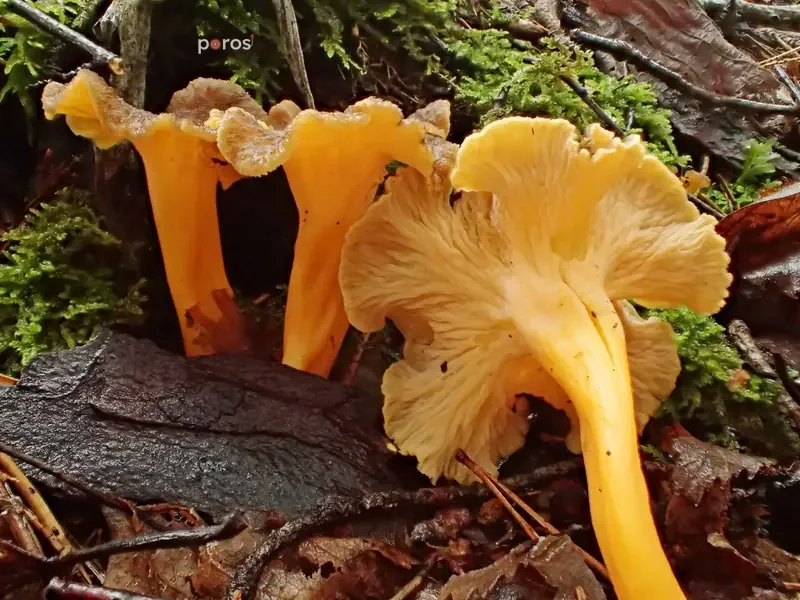 Edible species
Yellow foot chanterelle
Craterellus lutescens
Cantharellaceae
-
 Inedible
Common bird’s nest fungus
Crucibulum laeve
Agaricaceae
-
 Inedible
Grey knight
Tricholoma terreum
Tricholomataceae
-
 Inedible
Hairy curtain crust
Stereum hirsutum
Stereaceae
-
 Inedible
Pale brittlestem
Candolleomyces candolleanus
Psathyrellaceae
-
 Inedible
Split gill
Schizophyllum commune
Schizophyllaceae
-
 Inedible
Stubble rosegill
Volvopluteus gloiocephalus
Pluteaceae
-
 Inedible
Tinder fungus
Fomes fomentarius
Polyporaceae
-
 Inedible
Turkey tail
Trametes versicolor
Polyporaceae
-
 Inedible
Yellow brain
Tremella mesenterica
Tremellaceae
-
 Poisonous
Sulphur tuft
Hypholoma fasciculare
Strophariaceae
February falls in the winter months in Turkey. This page is built from the season data on our species pages; rain, temperature and altitude can shift seasons by a few weeks.
The most recorded mushrooms in February
| Mushroom | Status | February records |
|---|---|---|
| Split gillSchizophyllum commune | Unknown | 18 |
| Wood ear mushroomAuricularia auricula-judae | Edible | 12 |
| Turkey tailTrametes versicolor | Unknown | 8 |
| ReishiGanoderma lucidum | Traditional use | 6 |
| Common bird’s nest fungusCyathus olla | Unknown | 4 |
| Sulphur tuftHypholoma fasciculare | Poisonous | 4 |
| Hairy curtain crustStereum hirsutum | Unknown | 4 |
| Common bird’s nest fungusCrucibulum laeve | Unknown | 4 |
| Glistening inkcapCoprinellus micaceus | Unknown | 3 |
| Yellow foot chanterelleCraterellus lutescens | Edible | 3 |
| Oyster mushroomPleurotus ostreatus | Edible | 2 |
| Pale brittlestemCandolleomyces candolleanus | Unknown | 2 |
| Violet crown cupSarcosphaera coronaria | Poisonous | 1 |
| Magpie inkcapCoprinopsis picacea | Unknown | 1 |
| Tinder fungusFomes fomentarius | Unknown | 1 |
| Red cage fungusClathrus ruber | Unknown | 1 |
| Stubble rosegillVolvopluteus gloiocephalus | Unknown | 1 |
| Shaggy ink capCoprinus comatus | Edible | 1 |
Source: GBIF and iNaturalist, all years combined. Status is a guide and is not enough to decide to eat a mushroom; do not eat a wild mushroom unless an expert has seen it in person. Full data and method
Poisonous look-alikes in February
Alongside the edible species, Sulphur tuft are also in season this month. Never eat a mushroom you cannot identify with certainty.
- Sulphur tuft Hypholoma fasciculare Poisonous
Records by region in February
Verified GBIF and iNaturalist records made in February, with the five most recorded species per region (data as of 2026-11-02). Numbers are past records, not a promise for this year.
-
Marmara · 105 records
-
Aegean · 13 records
- Split gill 3
- Bluefoot bonnet 1
- Sulphur tuft 1
- Magpie inkcap 1
- Red cage fungus 1
-
Mediterranean · 8 records
- Pale brittlestem 2
- Collared earthstar 1
- Arrhenia rickenii 1
- Violet crown cup 1
- Split gill 1
-
Central Anatolia · 7 records
- Split gill 4
- Silky pinkgill 1
- Cushion bracket 1
- Cyanotrama rimosa 1
-
East and Southeast · 4 records
- Field bird's nest fungus 1
- Blewit 1
- Wood woolly-foot 1
- Shaggy ink cap 1
-
Black Sea · 3 records
- Entoloma rusticoides 1
- Turkey tail 1
- Yellow foot chanterelle 1
Mushroom recipes for February
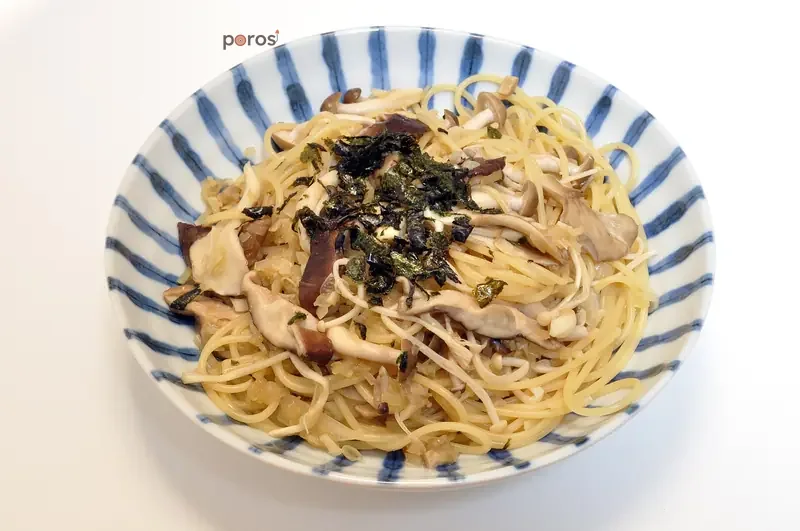 Pasta & risotto
Creamy mushroom pasta
Button and oyster mushrooms in a silky cream and parmesan sauce, brought together with starchy pasta water – on the table in 30 minutes.
30 min
Button mushroom
 Snacks & starters
Crispy fried oyster mushrooms
Oyster mushrooms soaked in garlicky yoghurt, dredged in spiced flour and deep-fried until crisp, served with a dill and garlic yoghurt dip.
37 min
Oyster mushroom
 Mains
Oyster mushroom 'döner' wraps
Oyster mushrooms marinated in spiced yoghurt, pressed in a hot cast-iron pan until crisp and wrapped in lavash with sumac onions and garlic yoghurt. Ready in 40 minutes, plus 30 minutes marinating.
40 min
Oyster mushroom
 Mains
Roasted oyster mushrooms
Oyster mushrooms tossed with lemon, garlic and thyme and roasted hot until the edges crisp; a 30-minute side or light main.
30 min
Oyster mushroom
 Mains
Sautéed oyster mushrooms
Oyster mushrooms sautéed in butter with onion, garlic and thyme; ready in half an hour to go with pilaf, bulgur or pasta.
30 min
Oyster mushroom
Pasta & risotto
Yellow foot chanterelle pasta
Yellow foot chanterelles cooked with garlic, olive oil and parsley make a 15-minute sauce for tagliatelle, Ligurian style.
25 min
Yellow foot chanterelle
Articles for February
Frequently asked questions
Which mushrooms grow in February in Turkey?
According to our guide, 13 species are in season in February, including the edible Wood ear mushroom, Oyster mushroom and Yellow foot chanterelle.
Are there poisonous mushrooms in February?
Yes: Sulphur tuft.
Which mushrooms start their season in February?
Sulphur tuft.
Which mushrooms end their season in February?
Stubble rosegill and Yellow foot chanterelle.
Where in Turkey are most mushrooms recorded in February?
Verified GBIF and iNaturalist records for this month come mostly from Marmara (105), Aegean (13) and Mediterranean (8).
Is it safe to forage in February?
Only pick species you can identify with certainty; 1 poisonous or deadly species in our guide are in season. In an emergency in Turkey call 112; the poison centre is 114.
Sources
- GBIF ve iNaturalist: Türkiye gözlem kayıtları (sitemizin haritası) gbif.org
- GBIF: Tüylü maymuncuk mantarı (Schizophyllum commune), Türkiye kayıtları gbif.org
- GBIF: Kulak mantarı (Auricularia auricula-judae), Türkiye kayıtları gbif.org
All sources (14)
- GBIF: Hindi kuyruğu (Trametes versicolor), Türkiye kayıtları gbif.org
- GBIF: Danaburnu mantarı (Volvopluteus gloiocephalus), Türkiye kayıtları gbif.org
- GBIF: Kıllı katmantarı (Stereum hirsutum), Türkiye kayıtları gbif.org
- GBIF: Kükürt sarısı demet mantarı (Hypholoma fasciculare), Türkiye kayıtları gbif.org
- GBIF: Kuş yuvası mantarı (Crucibulum laeve), Türkiye kayıtları gbif.org
- GBIF: İstiridye mantarı (Pleurotus ostreatus), Türkiye kayıtları gbif.org
- GBIF: Karakız mantarı (Tricholoma terreum), Türkiye kayıtları gbif.org
- GBIF: Çöp mantarı (Candolleomyces candolleanus), Türkiye kayıtları gbif.org
- GBIF: Sarıpelte mantarı (Tremella mesenterica), Türkiye kayıtları gbif.org
- GBIF: Fomes fomentarius, Kav mantarı (Fomes fomentarius), Türkiye kayıtları gbif.org
- GBIF: Sarı saplı craterellus (Craterellus lutescens), Türkiye kayıtları gbif.org
Other months
Data sources and licences
Observations from GBIF.org (human observations and herbarium specimens; records flagged with geospatial issues excluded) and iNaturalist research-grade records, retrieved 2 November 2026. Macrofungi only (Agaricomycetes, Pezizomycetes), named to species. Every point links to its own record, with the recorder and licence (CC0, CC BY, CC BY-NC).
Map: © OpenStreetMap contributors. Province centres: Wikidata. Region comes from the record's GADM province, or the nearest province centre when missing. For protected species (iNaturalist "threatened" or IUCN VU/EN/CR) locations are rounded to ~10 km; locations obscured by iNaturalist are marked "approximate".
An observation shows that a mushroom was seen there on that day, not that it is there now or that it may be picked. Counts reflect how many people record fungi in an area more than how common a species is.
Last updated: Prepared by the Poros Mantar editorial teamReport a correction