
Eastern jack-o’-lantern (jack-o'-lantern mushroom)
Omphalotus illudens · Omphalotaceae

Omphalotus illudens, the eastern jack-o'-lantern, is a bright orange, funnel-shaped mushroom that grows in dense clusters on oak stumps and buried roots in eastern North America. Its gills glow faintly green in the dark. It carries toxins called illudins and causes violent vomiting and diarrhoea when eaten. It is most often picked as a chanterelle. It has not been recorded in Turkey; its Mediterranean relative Omphalotus olearius does grow in Turkey.
Also called: jack-o'-lantern mushroom Turkish: Omphalotus illudens
Caution: the name “jack-o'-lantern mushroom” is also used for another species: Jack-o’-lantern mushroom (poisonous)
Last updated: Prepared by the Poros Mantar editorial team4 sources checkedReport a correction
POISONOUS — do not eat.
Omphalotus illudens is poisonous. According to sources it carries illudins S and M; 30 minutes to 2 hours after eating it causes violent, repeated vomiting, abdominal cramps and diarrhoea, and fluid loss can be serious. Symptoms usually settle within a day or two. If poisoning is suspected, call 112 (Turkish poison centre UZEM: 114) and keep any leftover mushroom.
Eastern jack-o’-lantern photos
-
© walt sturgeon (Mycowalt) at Mushroom Observer, a source for mycologic · CC BY-SA 3.0
-

© Alan Rockefeller · CC BY 4.0
-

Gills© Alan Rockefeller · CC BY 4.0
-

Gills© Alex Abair · CC BY 4.0
-

© Steve M · CC0
-

© Joey M · CC BY 4.0
-

© anguspritchard · CC BY 4.0
-
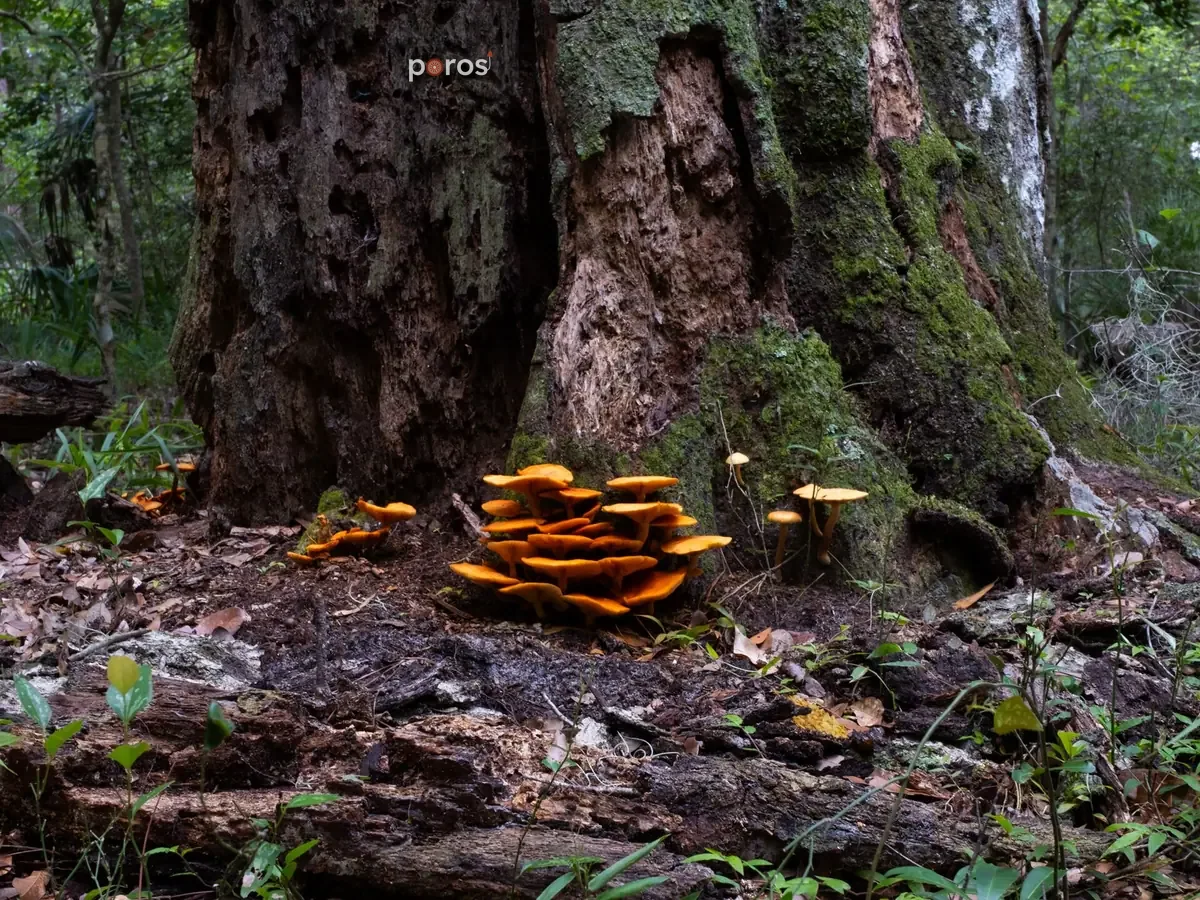
In habitat© Alex Abair · CC BY 4.0
-

Gills© Alex Abair · CC BY 4.0
-
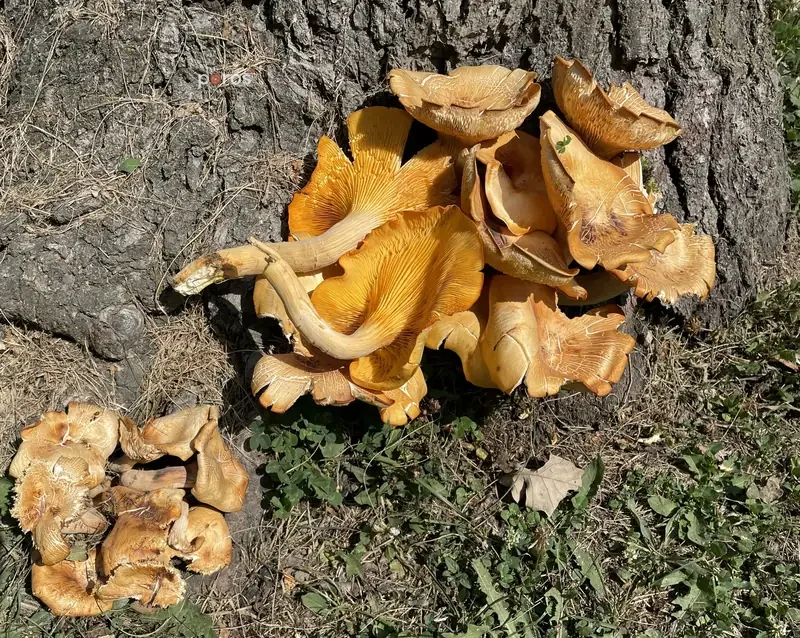
In habitat© Henry Van T. Cotter · CC BY 4.0
-

Stem© kedgehog · CC BY 4.0


These are licensed records of this species; photos alone are not enough to identify a mushroom.
Is the eastern jack-o'-lantern poisonous?
Yes, the eastern jack-o'-lantern is poisonous and must not be eaten. It carries illudins and causes violent vomiting and diarrhoea. If poisoning is suspected, call 112 at once (Turkish poison centre: 114) and keep any leftover mushroom.
Is the eastern jack-o'-lantern edible?
No, the eastern jack-o'-lantern must not be eaten; it is poisonous. It can be picked by mistake for chanterelle (Cantharellus cibarius) and chicken of the woods (Laetiporus sulphureus). If poisoning is suspected, call 112 at once (Turkish poison centre: 114) and keep any leftover mushroom.
How to recognise it
Appearance of eastern jack-o'-lantern
No ring or volva Spore print: Pale cream to yellowish Not distinctive.
Where does eastern jack-o'-lantern grow?
Grows in dense clusters on dead or buried wood of oak and other broadleaf trees, at the base of stumps and along roots.
In Turkey
There are no Turkish records: our map data (GBIF and iNaturalist) holds no observations from Turkey. The species belongs to eastern North America. In Turkey the same danger comes from the Mediterranean Omphalotus olearius.
Our map has no observations of eastern jack-o'-lantern from Turkey yet.
Look-alikes
What is it mistaken for?
Eastern jack-o’-lantern can be mistaken for the species below. Each comparison shows Eastern jack-o’-lantern on the left, the look-alike on the right, and how to tell them apart.
Poisoning risk: Eastern jack-o’-lantern gets picked by people who think they have found one of the edible species below. If even one feature does not match, do not eat it.
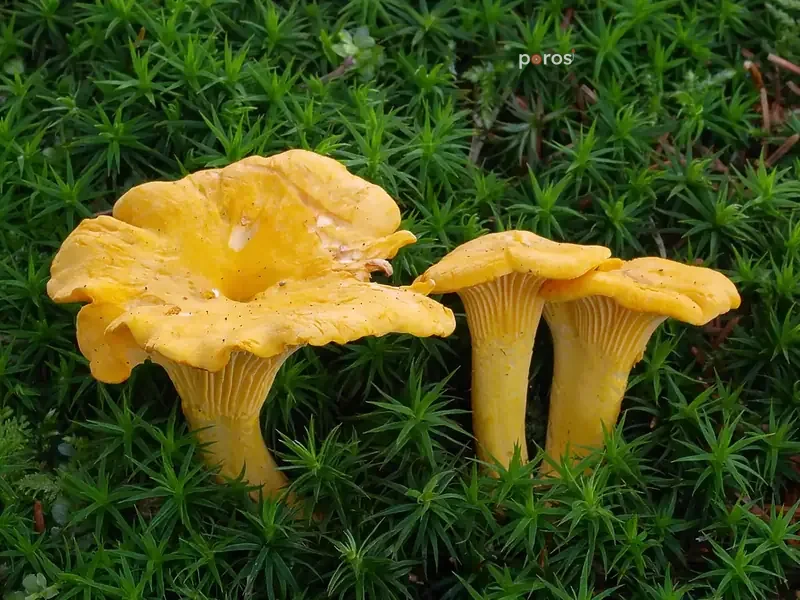
Chanterelle Cantharellus cibarius
How to tell The chanterelle grows singly from soil, not in clusters on wood; beneath the cap it has thick, blunt, forking ridges rather than knife-like gills.
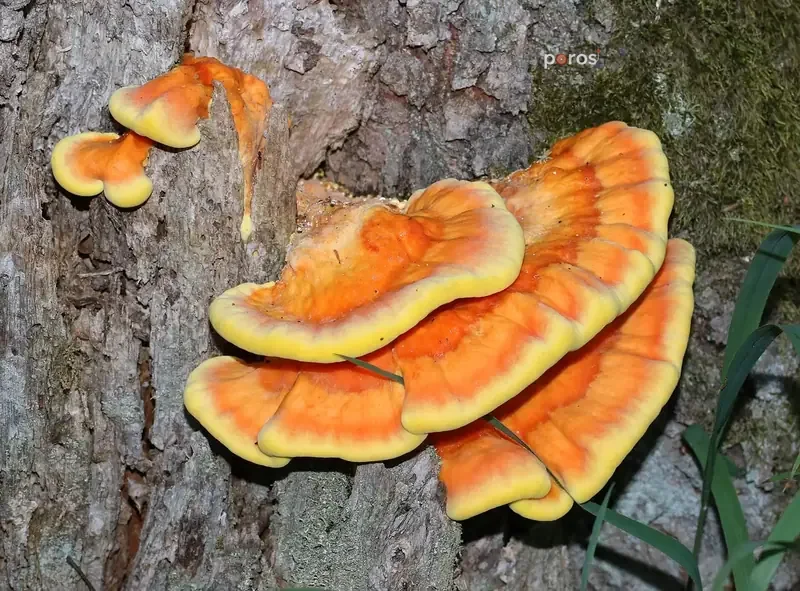
Chicken of the woods Laetiporus sulphureus
How to tell Chicken of the woods forms orange-yellow brackets with pores, not gills, underneath.
Other look-alikes (1)
 Poisonous
not Eastern jack-o’-lantern
Jack-o'-lantern mushroom Omphalotus olearius
Its Mediterranean and European relative, growing on olive and oak stumps; it also carries illudins.
Eastern jack-o’-lantern and its look-alikes compared
| Species | Status | Underside | Spore print | Season |
|---|---|---|---|---|
| Eastern jack-o’-lanternOmphalotus illudens | Poisonous | Long-decurrent, crowded, knife-thin, orange true gills that glow faintly green in the dark | Pale cream to yellowish | Jul–Nov |
| ChanterelleCantharellus cibarius | Edible species | No true gills: thick, blunt, forking ridges (false gills) running down the stem | Pale yellow to creamy white | Jun–Nov |
| Jack-o’-lantern mushroomOmphalotus olearius | Poisonous | Crowded, thin, true gills running down the stem (decurrent), the same orange as the cap | Creamy white | Oct–Jan |
| Chicken of the woodsLaetiporus sulphureus | Edible species | No gills; sulphur-yellow underside with small pores | White | May–Nov |
The table is compiled from each species page. The status column is a guide only; do not eat a wild mushroom unless an expert has seen it in person. Compare look-alikes side by side
Frequently asked questions
Is the eastern jack-o'-lantern poisonous?
Yes, the eastern jack-o'-lantern is poisonous and must not be eaten. It carries illudins and causes violent vomiting and diarrhoea. If poisoning is suspected, call 112 at once (Turkish poison centre: 114) and keep any leftover mushroom.
Is the eastern jack-o'-lantern edible?
No, the eastern jack-o'-lantern must not be eaten; it is poisonous. It can be picked by mistake for chanterelle (Cantharellus cibarius) and chicken of the woods (Laetiporus sulphureus). If poisoning is suspected, call 112 at once (Turkish poison centre: 114) and keep any leftover mushroom.
Which other mushroom is called “jack-o'-lantern mushroom”?
Warning: both mushrooms called “jack-o'-lantern mushroom” are poisonous; neither is edible. Besides the species on this page (Omphalotus illudens), the name “jack-o'-lantern mushroom” is also used for Jack-o’-lantern mushroom (Omphalotus olearius, poisonous). Common names overlap between species, so tell them apart by the Latin name and the identification features, not by the common name.
Does it really glow?
Yes. The fresh gills glow faintly green in the dark (bioluminescence); your eyes need to adjust to see it.
How do you tell it from a chanterelle?
It grows in clusters on wood and has thin, knife-like true gills. The chanterelle grows singly from soil and has blunt ridges under the cap.
Is it found in Turkey?
No, there are no Turkish records. Its relative in Turkey is Omphalotus olearius, which also carries illudins and is poisonous.
When do symptoms start?
According to sources within half an hour to two hours. If in doubt, call 112.
Does cooking destroy the toxin?
No, cooked mushrooms poison too.
Does it grow away from stumps?
Yes. Growing from buried roots it can look as if it comes from soil, which adds to the confusion with chanterelles.
When is eastern jack-o'-lantern season in Turkey?
In our calendar, eastern jack-o'-lantern season runs Jul–Nov. Fruits in eastern North America from July to November.
Where does eastern jack-o'-lantern grow?
Grows in dense clusters on dead or buried wood of oak and other broadleaf trees, at the base of stumps and along roots.
Where is eastern jack-o'-lantern found in Turkey?
There are no Turkish records: our map data (GBIF and iNaturalist) holds no observations from Turkey. The species belongs to eastern North America. In Turkey the same danger comes from the Mediterranean Omphalotus olearius.
What can eastern jack-o'-lantern be confused with?
Eastern jack-o'-lantern can be confused with chanterelle (Cantharellus cibarius, edible species), jack-o'-lantern mushroom (Omphalotus olearius, poisonous) and chicken of the woods (Laetiporus sulphureus, edible species). Look-alikes are compared on this page.
What is eastern jack-o'-lantern called in Turkish?
In Turkish, eastern jack-o'-lantern (Omphalotus illudens) is called Omphalotus illudens.
Related species
-
 Ghost fungusOmphalotus nidiformisPoisonous
-
Jack-o’-lantern mushroomOmphalotus oleariusPoisonous
-
 ShiitakeLentinula edodesEdible species
-
 Cinnamon bracketHapalopilus rutilansPoisonous
-
 Common earthballScleroderma citrinumPoisonous
-
 Common ink capCoprinopsis atramentariaPoisonous
-
 Devil’s boleteRubroboletus satanasPoisonous
-
 Fly agaricAmanita muscariaPoisonous
Sources
- Wikipedia (EN): Omphalotus illudens en.wikipedia.org
- iNaturalist: Omphalotus illudens inaturalist.org
- GBIF: Türkiye kayıtları gbif.org
All sources (4)
- MushroomExpert: Omphalotus illudens mushroomexpert.com
Photo credits (11)
- File:Omphalotus illudens 78007.jpg · walt sturgeon (Mycowalt) at Mushroom Observer, a source for mycologic · CC BY-SA 3.0
- Omphalotus illudens · iNaturalist #4054250 · Alan Rockefeller · CC BY 4.0
- Omphalotus illudens · iNaturalist #246436169 · Alan Rockefeller · CC BY 4.0
- Omphalotus illudens · iNaturalist #313473266 · Alex Abair · CC BY 4.0
- Omphalotus illudens · iNaturalist #175853648 · Steve M · CC0
- Omphalotus illudens · iNaturalist #390470409 · Joey M · CC BY 4.0
- Omphalotus illudens · iNaturalist #32952152 · anguspritchard · CC BY 4.0
- File:Omphalotus illudens 414764311.jpg · Alex Abair · CC BY 4.0
- File:Omphalotus illudens 566096260.jpg · Alex Abair · CC BY 4.0
- Omphalotus illudens · iNaturalist #232419745 · Henry Van T. Cotter · CC BY 4.0
- Omphalotus illudens · iNaturalist #130669896 · kedgehog · CC BY 4.0


