
Ghost fungus
Omphalotus nidiformis · Omphalotaceae

The ghost fungus (Omphalotus nidiformis) is Australian: its cream, funnel- or fan-shaped cap and gills glow a faint green in the dark. It resembles the oyster mushroom and is poisonous; it contains illudins and causes severe vomiting when eaten. It grows in clusters on dead or diseased trees in Australia and Tasmania.
Also called: ghost fungus Turkish: Omphalotus nidiformis Synonyms: Pleurotus nidiformis, Pleurotus lampas
Last updated: Prepared by the Poros Mantar editorial team5 sources checkedReport a correction
POISONOUS — do not eat.
The ghost fungus is poisonous: it contains illudins S and M and causes severe vomiting and diarrhoea within half an hour to two hours; no deaths have been reported. It has been mistaken for oyster mushrooms. If poisoning is suspected, call 112 in Turkey (poison centre UZEM: 114) or your local poison control, and keep any leftover mushroom.
Ghost fungus photos
-
© Konan Farrelly-Horsfall · CC BY 4.0
-

© Cowirrie · CC0
-

© Ramit Singal · CC BY 4.0
-

© Tristan Fulford · CC0
-

© grampianshiker · CC BY 4.0
-

© Kate Hocking · CC BY 4.0
-

© Luke Cooper · CC BY 4.0
-

© Petra Holland · CC BY 4.0
-

Gills© Matthew Collette · CC0
-
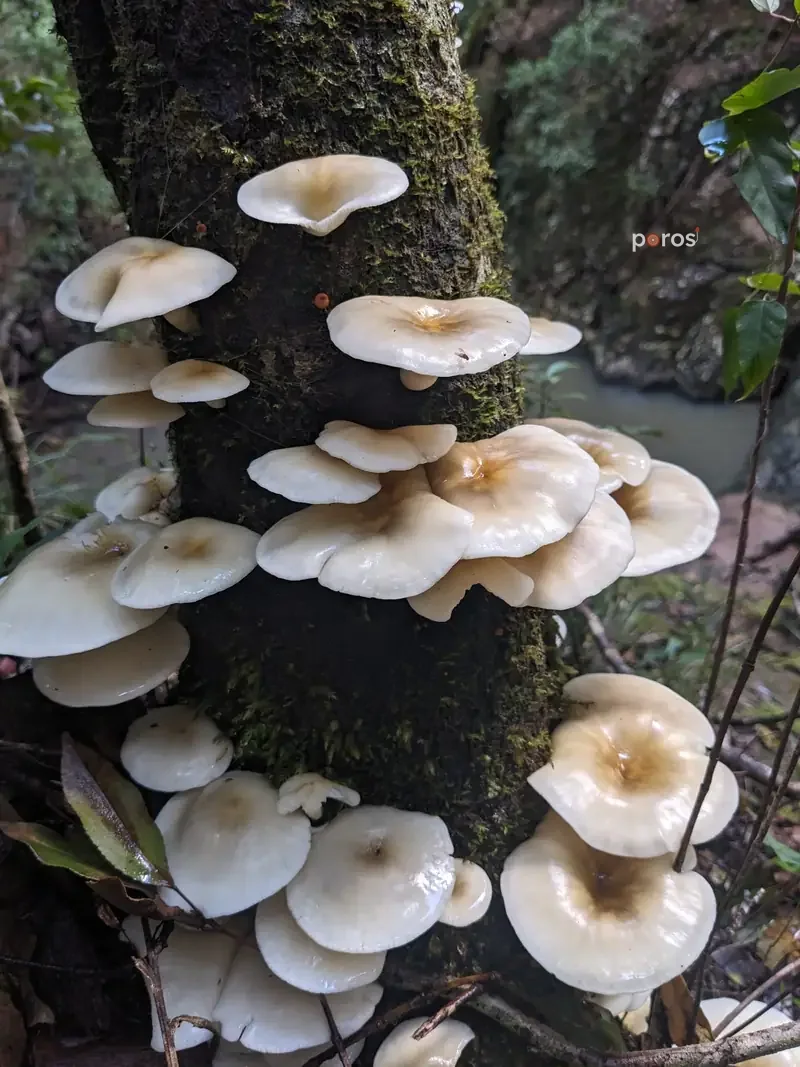
In habitat© ratbagplant · CC BY 4.0
-

Cap© Tim · CC BY 4.0


These are licensed records of this species; photos alone are not enough to identify a mushroom.
Is the ghost fungus poisonous?
Yes, the ghost fungus is poisonous and must not be eaten. The ghost fungus is poisonous: it contains illudins S and M and causes severe vomiting and diarrhoea within half an hour to two hours; no deaths have been reported. It has been mistaken for oyster mushrooms. If poisoning is suspected, call 112 at once (Turkish poison centre: 114) and keep any leftover mushroom.
Is the ghost fungus edible?
No, the ghost fungus must not be eaten; it is poisonous. it is poisonous. It contains illudins and causes severe vomiting; it has been mistaken for oyster mushrooms. It can be picked by mistake for oyster mushroom (Pleurotus ostreatus). If poisoning is suspected, call 112 at once (Turkish poison centre: 114) and keep any leftover mushroom.
How to recognise it
Appearance of ghost fungus
No ring or volva Spore print: White Pleasant, not distinctive.
Where does ghost fungus grow?
It grows in overlapping clusters at the base of dead or weakened trees and on stumps, especially eucalyptus and pine. It is common in southern Australia and Tasmania.
In Turkey
There are no Turkish records on GBIF or iNaturalist (checked 2026-11-11). Omphalotus nidiformis is not known from Turkey; its natural range lies on other continents.
Our map has no observations of ghost fungus from Turkey yet.
Look-alikes
What is it mistaken for?
Ghost fungus can be mistaken for the species below. Each comparison shows Ghost fungus on the left, the look-alike on the right, and how to tell them apart.
Poisoning risk: Ghost fungus gets picked by people who think they have found one of the edible species below. If even one feature does not match, do not eat it.
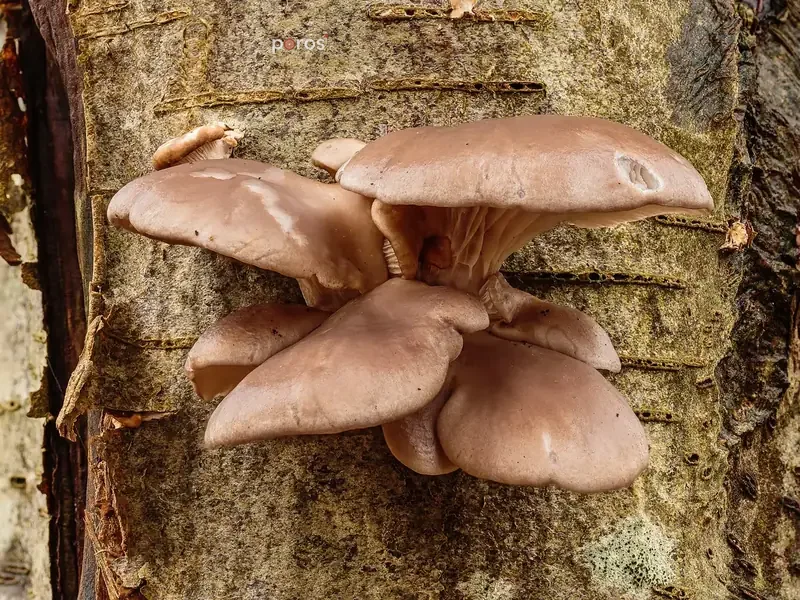
Oyster mushroom Pleurotus ostreatus
How to tell The oyster mushroom does not glow, has a white to lilac spore print and its cap is usually grey-brown. In Australia the two have been confused, causing poisonings.
Other look-alikes (2)
 Poisonous
not Ghost fungus
Jack-o'-lantern mushroom Omphalotus olearius
The jack-o'-lantern is a related glowing, poisonous species, but it is orange and grows at the base of olive and oak trees in the Mediterranean, including Turkey.
 Inedible
not Ghost fungus
Green pepe Mycena chlorophos
Mycena chlorophos also glows green, but it is a small mushroom a few centimetres across on a thin stem.
Ghost fungus and its look-alikes compared
| Species | Status | Underside | Spore print | Season |
|---|---|---|---|---|
| Ghost fungusOmphalotus nidiformis | Poisonous | Cream gills running down the stem | White | — |
| Oyster mushroomPleurotus ostreatus | Edible species | Gills whitish, sometimes yellowing | White to pale lilac-grey | Oct–Mar |
| Jack-o’-lantern mushroomOmphalotus olearius | Poisonous | Crowded, thin, true gills running down the stem (decurrent), the same orange as the cap | Creamy white | Oct–Jan |
| Green pepeMycena chlorophos | Inedible | Whitish, fairly distant gills that glow in the dark | White | — |
The table is compiled from each species page. The status column is a guide only; do not eat a wild mushroom unless an expert has seen it in person. Compare look-alikes side by side
Frequently asked questions
Is the ghost fungus poisonous?
Yes, the ghost fungus is poisonous and must not be eaten. The ghost fungus is poisonous: it contains illudins S and M and causes severe vomiting and diarrhoea within half an hour to two hours; no deaths have been reported. It has been mistaken for oyster mushrooms. If poisoning is suspected, call 112 at once (Turkish poison centre: 114) and keep any leftover mushroom.
Is the ghost fungus edible?
No, the ghost fungus must not be eaten; it is poisonous. it is poisonous. It contains illudins and causes severe vomiting; it has been mistaken for oyster mushrooms. It can be picked by mistake for oyster mushroom (Pleurotus ostreatus). If poisoning is suspected, call 112 at once (Turkish poison centre: 114) and keep any leftover mushroom.
How do you identify it?
In Australia, clusters on dead trees with cream, funnel- or fan-shaped caps, gills running down the stem and a green glow in the dark.
What can it be confused with?
The main look-alikes are: Oyster mushroom, Jack-o'-lantern mushroom, Green pepe. The differences are listed in the look-alikes section; with poisonous look-alikes, always check the cross-section and habitat.
Where does it grow?
It grows in overlapping clusters at the base of dead or weakened trees and on stumps, especially eucalyptus and pine. It is common in southern Australia and Tasmania.
When does it appear?
In Australia it fruits in autumn and winter (March to July). It has no Turkish record, so it is not on our month lists.
Why does the ghost fungus glow?
Its gills and cap give off green light through a luciferin–luciferase reaction; the glow is strongest in the gills and visible once your eyes adapt to the dark.
Is it found in Turkey?
There are no Turkish records on GBIF or iNaturalist. Its poisonous relative in Turkey is the jack-o'-lantern (Omphalotus olearius).
When is ghost fungus season in Turkey?
In Australia it fruits in autumn and winter (March to July). It has no Turkish record, so it is not on our month lists.
Where does ghost fungus grow?
It grows in overlapping clusters at the base of dead or weakened trees and on stumps, especially eucalyptus and pine. It is common in southern Australia and Tasmania.
Where is ghost fungus found in Turkey?
There are no Turkish records on GBIF or iNaturalist (checked 2026-11-11). Omphalotus nidiformis is not known from Turkey; its natural range lies on other continents.
What can ghost fungus be confused with?
Ghost fungus can be confused with oyster mushroom (Pleurotus ostreatus, edible species), jack-o'-lantern mushroom (Omphalotus olearius, poisonous) and green pepe (Mycena chlorophos, inedible). Look-alikes are compared on this page.
What is ghost fungus called in Turkish?
In Turkish, ghost fungus (Omphalotus nidiformis) is called Omphalotus nidiformis.
Related species
-
 Eastern jack-o’-lanternOmphalotus illudensPoisonous
-
Jack-o’-lantern mushroomOmphalotus oleariusPoisonous
-
 ShiitakeLentinula edodesEdible species
-
 Cinnamon bracketHapalopilus rutilansPoisonous
-
 Common earthballScleroderma citrinumPoisonous
-
 Common ink capCoprinopsis atramentariaPoisonous
-
 Devil’s boleteRubroboletus satanasPoisonous
-
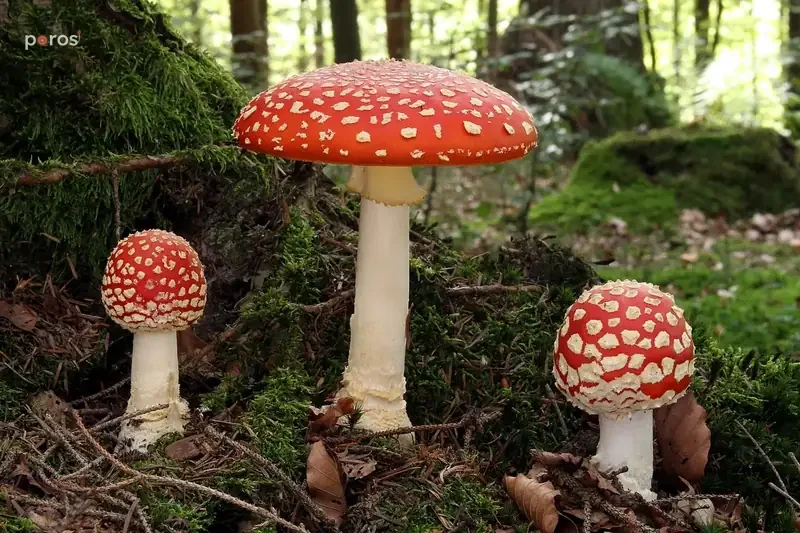 Fly agaricAmanita muscariaPoisonous
Sources
- Wikipedia (EN): Omphalotus nidiformis en.wikipedia.org
- iNaturalist: Omphalotus nidiformis (takson, adlar ve fotoğraflar) inaturalist.org
- GBIF: Omphalotus nidiformis gbif.org
All sources (5)
- GBIF: Türkiye kayıtları gbif.org
- iNaturalist: Türkiye gözlemleri (araştırma düzeyi) inaturalist.org
Photo credits (11)
- Omphalotus nidiformis · iNaturalist #66008970 · Konan Farrelly-Horsfall · CC BY 4.0
- Omphalotus nidiformis · iNaturalist #42360439 · Cowirrie · CC0
- Omphalotus nidiformis · iNaturalist #47391143 · Ramit Singal · CC BY 4.0
- Omphalotus nidiformis · iNaturalist #44440541 · Tristan Fulford · CC0
- Omphalotus nidiformis · iNaturalist #222870218 · grampianshiker · CC BY 4.0
- Omphalotus nidiformis · iNaturalist #110561758 · Kate Hocking · CC BY 4.0
- Omphalotus nidiformis · iNaturalist #78039820 · Luke Cooper · CC BY 4.0
- Omphalotus nidiformis · iNaturalist #252565915 · Petra Holland · CC BY 4.0
- Omphalotus nidiformis · iNaturalist #231943482 · Matthew Collette · CC0
- Omphalotus nidiformis · iNaturalist #270130482 · ratbagplant · CC BY 4.0
- Omphalotus nidiformis · iNaturalist #335474617 · Tim · CC BY 4.0