
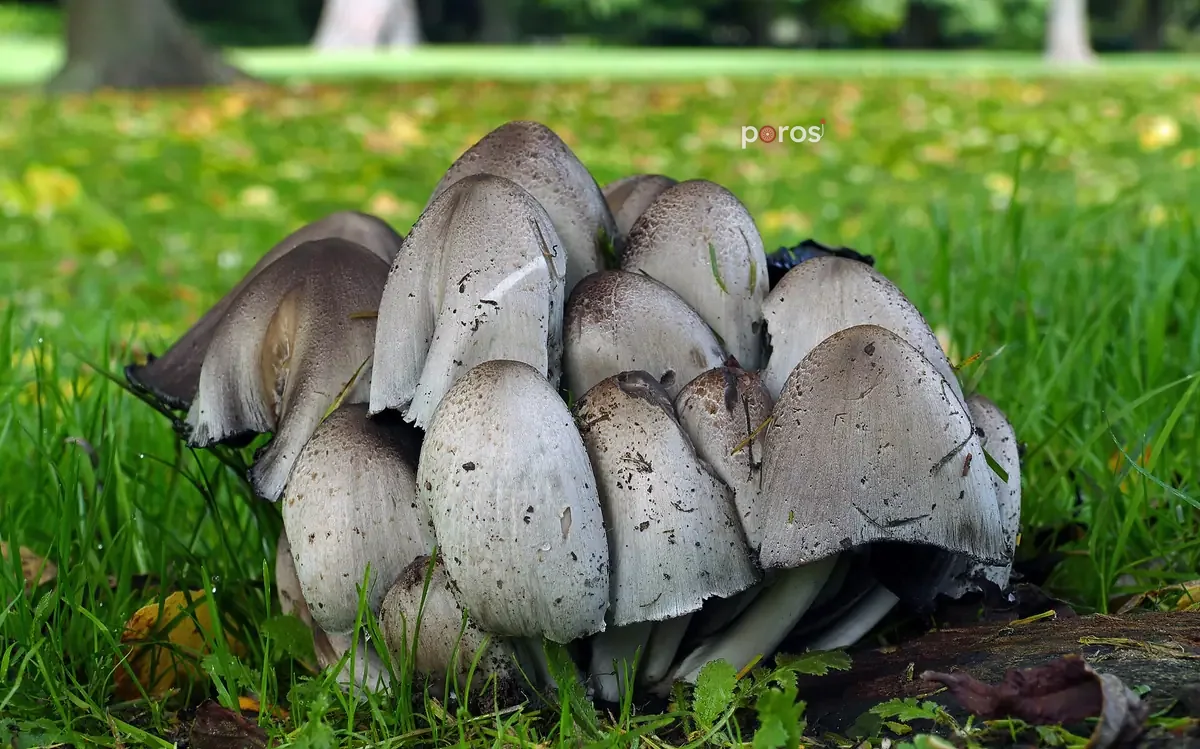


Common ink cap
Coprinopsis atramentaria · Psathyrellaceae
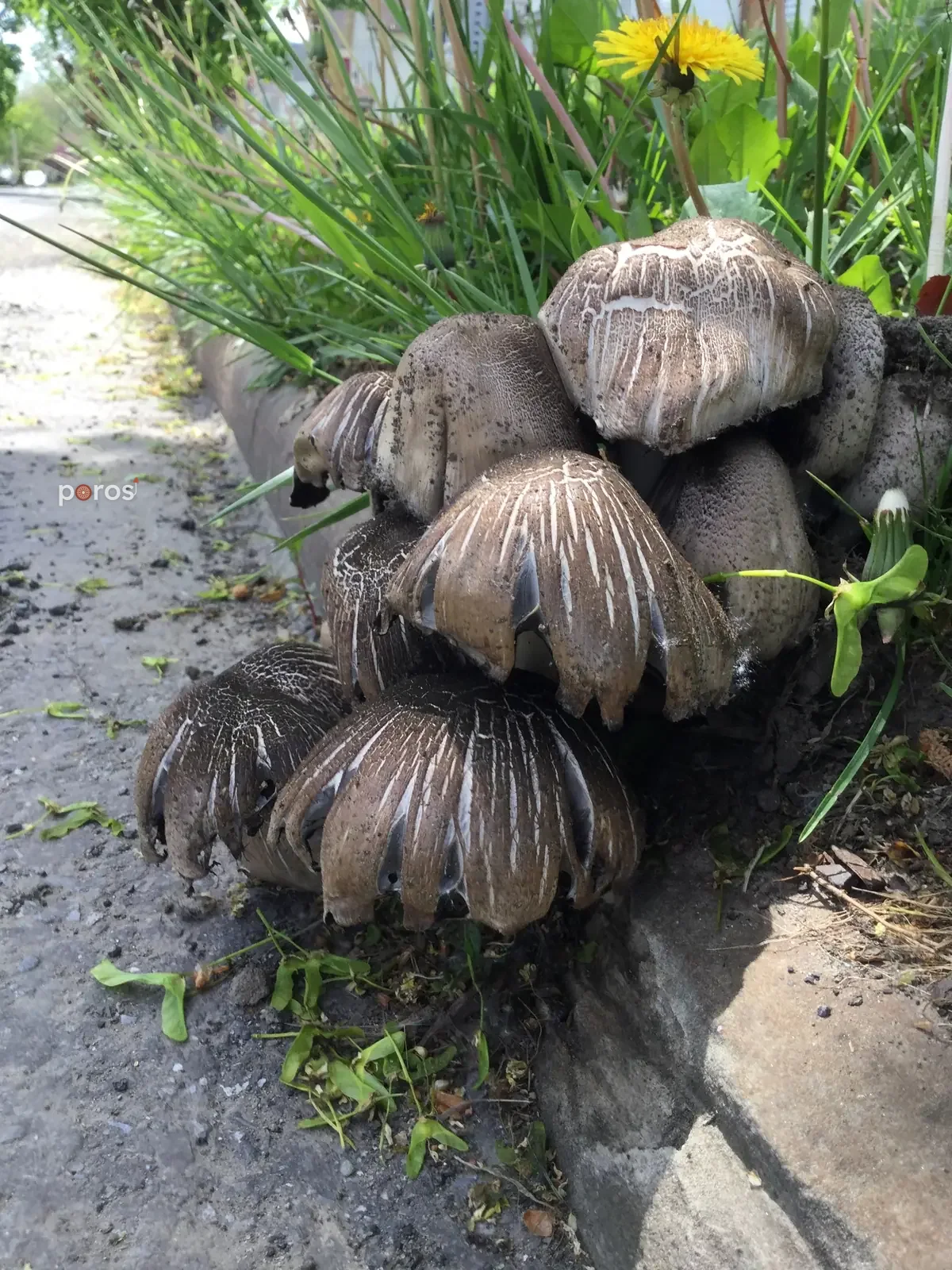
The common ink cap (Coprinopsis atramentaria) is a grey-brown, bell-capped mushroom that grows in clusters in lawns, gardens and verges, often on buried wood or roots.
Last updated: Prepared by the Poros Mantar editorial team6 sources checkedReport a correction
POISONOUS — do not eat.
The common ink cap contains a compound called coprine. If alcohol is drunk with the meal or in the following few days, it causes flushing of the face and neck, palpitations, nausea, vomiting and a drop in blood pressure. The reaction can recur each time alcohol is taken. Do not eat this species. If poisoning is suspected, call poison control and keep any leftover mushroom.
The common ink cap (Coprinopsis atramentaria) is a grey-brown, bell-capped mushroom that grows in clusters in lawns, gardens and verges, often on buried wood or roots. As it matures the gills and cap dissolve from the edge into a black, ink-like liquid. It contains coprine: eaten with alcohol, even alcohol drunk days later, it causes palpitations, flushing and nausea. For that reason we list it as poisonous.
Also called: common inkcap, tippler's bane, alcohol inky cap Turkish: Gri mürekkep mantarı, mürekkepli mantar Synonyms: Coprinus atramentarius
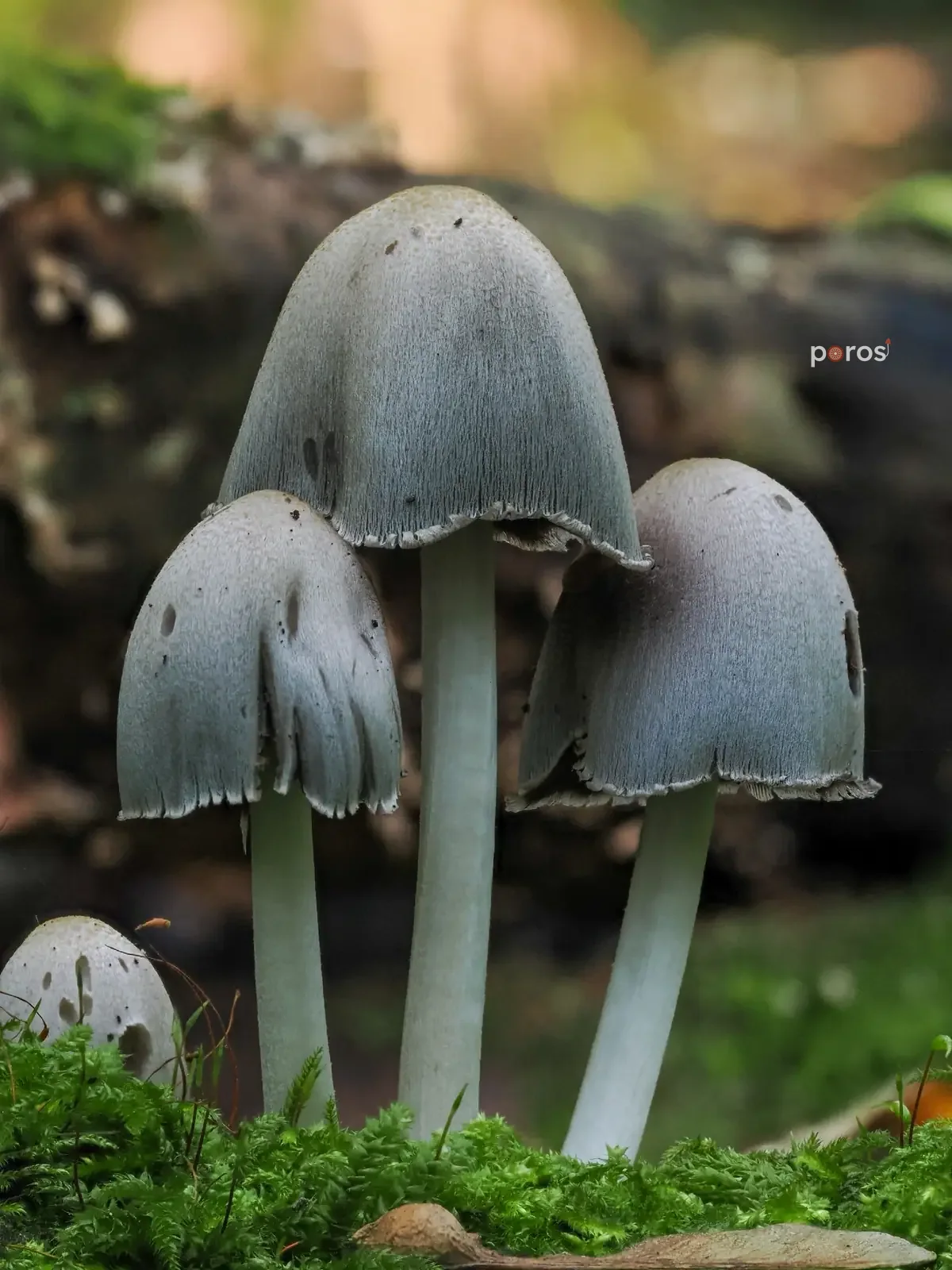
How to recognise it
Common ink cap, part by part
No volva Spore print: Black Indistinct.


When and where
Mar–May, Oct–Jan
- Janin season
- Feb
- Marin season
- Aprin season
- Mayin season
- Jun
- Jul
- Aug
- Sep
- Octin season
- Novin season
- Decin season
The common ink cap appears in spring and autumn after rain. Most of our Turkish records fall in October and November, with further records in January, March and May.
Type Poisonous
Months seen MarchAprilMayOctoberNovemberDecemberJanuary
Regions Black Sea RegionMediterranean RegionMarmara RegionAntalyaOsmaniyeSamsunIstanbulKırklareli
Where do common ink caps grow?
Lawns, parks, gardens, verges and woodland edges, on buried wood, old stumps and rich soil. It is a decomposer and usually grows in dense clusters.
Where is common ink caps found in Turkey?
Our map data (GBIF and iNaturalist) holds 10 Turkish records: 6 from Istanbul and one each from Samsun, Antalya, Osmaniye and Kırklareli. The species is also on the published list of Turkish Coprinopsis species (Kaya et al., 2010, Turkish Journal of Botany).
Which months
- Jan2
- Feb0
- Mar1
- Apr0
- May1
- Jun0
- Jul0
- Aug0
- Sep0
- Oct4
- Nov2
- Dec0
5 provinces, 10 observations (GBIF, iNaturalist); months from observation dates. Record density also reflects where observers work.
Latest common ink cap observations
-
 Illustrative
Kırklareli17 Oct 2026 · iNaturalist
-
 Illustrative
İstanbul10 Oct 2026 · iNaturalist
-
 Illustrative
Antalya26 Nov 2025 · iNaturalist
-
 Illustrative
Samsun28 Oct 2025 · iNaturalist
-
 Illustrative
İstanbul30 Oct 2024 · iNaturalist
-
 Illustrative
İstanbul28 Mar 2024 · GBIF
-
 Illustrative
İstanbul4 Jan 2024 · iNaturalist
-
 Illustrative
İstanbul3 Jan 2024 · GBIF
- See on the map
On "illustrative" cards the image is a photo of the species; the observation photo cannot be shown here because of its licence, but can be seen at the source.
Look-alikes
What is it mistaken for?
Common ink cap can be mistaken for the species below. Each card shows the look-alike and how it differs from Common ink cap.
 Edible species
not Common ink cap
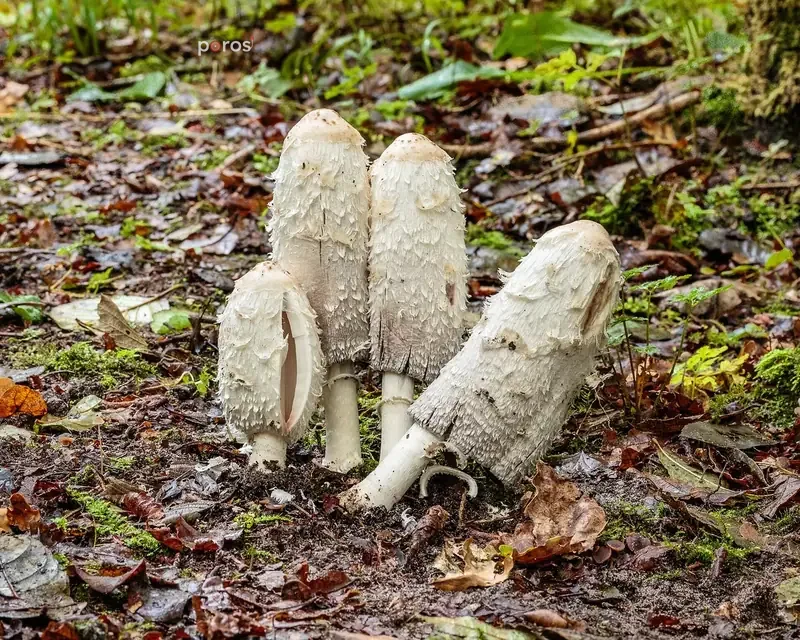
Shaggy ink cap Coprinus comatus
The shaggy ink cap is white, tall and cylindrical, covered in raised shaggy scales, with a loose ring on the stem. The common ink cap is grey-brown, shorter and smooth, with no ring. They can grow side by side, so do not eat either unless sure.
 Inedible
not Common ink cap
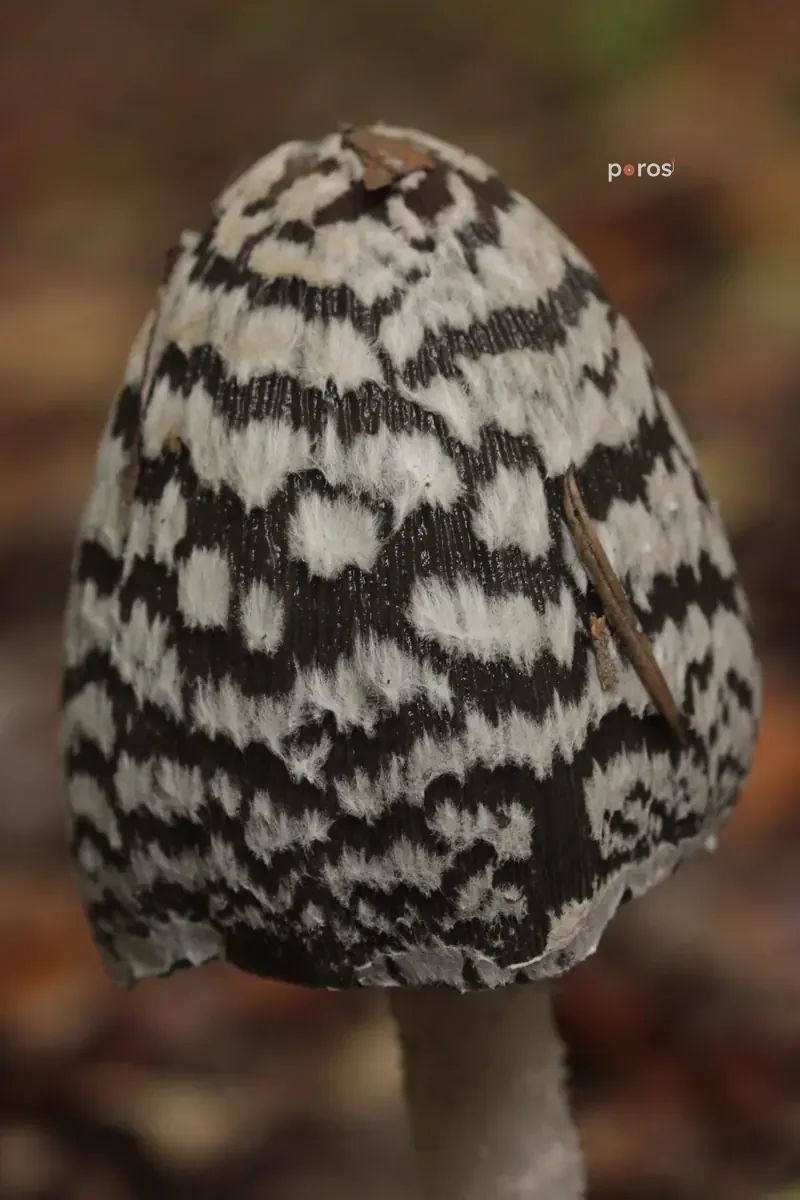
Magpie inkcap Coprinopsis picacea
The magpie inkcap's dark cap is patched with white like a magpie's plumage, and it grows singly, mostly in beech woods. The common ink cap is plain and grows in clusters in grass.
 Inedible
not Common ink cap
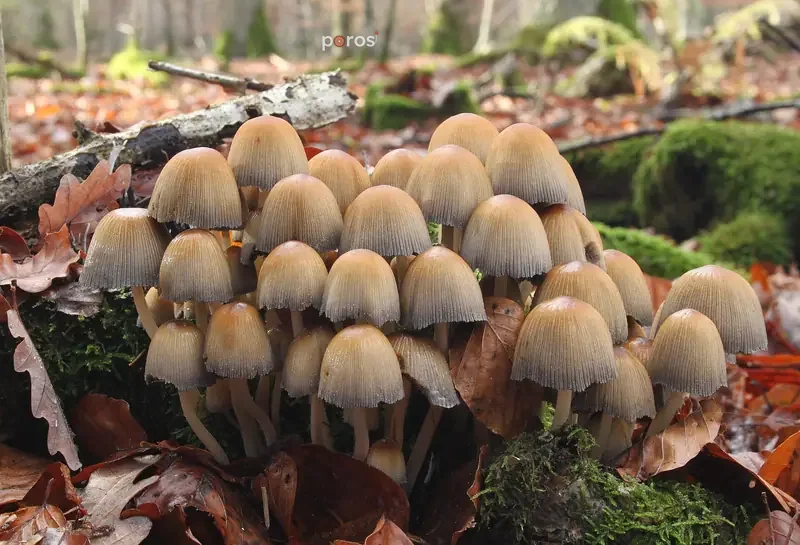
Glistening inkcap Coprinellus micaceus
The glistening inkcap is much smaller (cap 1–4 cm), honey-brown, and its young cap is dusted with glittering mica-like particles; it forms large clusters on rotting wood.
Toxins
Sources say it causes no symptoms in most people when eaten without alcohol, but its alcohol reaction and easy confusion leave it no place in the kitchen.
Frequently asked questions
Is the common ink cap edible?
Our advice is not to eat it. It contains coprine and reacts badly with alcohol taken before, with or days after the meal, and it is easily confused with other ink caps.
Why is the common ink cap poisonous with alcohol?
Its coprine blocks an enzyme the body uses to break down alcohol (aldehyde dehydrogenase). When alcohol is drunk, acetaldehyde builds up, causing flushing, palpitations, nausea and vomiting.
How long after eating it can alcohol cause a reaction?
Sources say the effect can last several days after the meal, with the first two or three days the riskiest. Symptoms start shortly after drinking.
How do you tell it from the shaggy ink cap?
The shaggy ink cap (Coprinus comatus) is white, tall and shaggy-scaled, with a ring on the stem. The common ink cap is grey-brown, shorter and smooth, grows in clusters and has no ring.
Where does it grow?
In lawns, parks, gardens and verges, usually in clusters over buried wood or roots.
When does it appear?
In spring and autumn after rain; most of our Turkish records are from October and November.
Where is it found in Turkey?
Our map data has 10 records from Istanbul, Samsun, Antalya, Osmaniye and Kırklareli.
Was its black liquid really used as ink?
Sources record that the black liquid from the dissolving cap was once used as ink, which gives the species its name.
What is a coprinoid mushroom?
Coprinoid describes mushrooms such as the ink caps, whose gills dissolve into a black liquid to release their spores. They once all sat in the genus Coprinus; today they are split into Coprinus, Coprinopsis, Coprinellus and Parasola. The common ink cap belongs to Coprinopsis.
Are common ink caps poisonous?
Yes, the common ink cap is poisonous and must not be eaten. The common ink cap contains a compound called coprine. If alcohol is drunk with the meal or in the following few days, it causes flushing of the face and neck, palpitations, nausea, vomiting and a drop in blood pressure. The reaction can recur each time alcohol is taken. Do not eat this species. If poisoning is suspected, call poison control and keep any leftover mushroom.
When is common ink cap season in Turkey?
In our calendar, common ink cap season runs Mar–May, Oct–Jan. The common ink cap appears in spring and autumn after rain. Most of our Turkish records fall in October and November, with further records in January, March and May.
Where do common ink caps grow?
Lawns, parks, gardens, verges and woodland edges, on buried wood, old stumps and rich soil. It is a decomposer and usually grows in dense clusters.
Where are common ink caps found in Turkey?
Our map data (GBIF and iNaturalist) holds 10 Turkish records: 6 from Istanbul and one each from Samsun, Antalya, Osmaniye and Kırklareli. The species is also on the published list of Turkish Coprinopsis species (Kaya et al., 2010, Turkish Journal of Botany).
What can the common ink cap be confused with?
The common ink cap can be confused with shaggy ink cap (Coprinus comatus, edible species), magpie inkcap (Coprinopsis picacea, inedible) and glistening inkcap (Coprinellus micaceus, inedible). Look-alikes are compared on this page.
What is the common ink cap called in Turkish?
In Turkish, the common ink cap (Coprinopsis atramentaria) is called Gri mürekkep mantarı; other local names include mürekkepli mantar.
Related species
-
Glistening inkcapCoprinellus micaceusInedible
-
Magpie inkcapCoprinopsis picaceaInedible
-
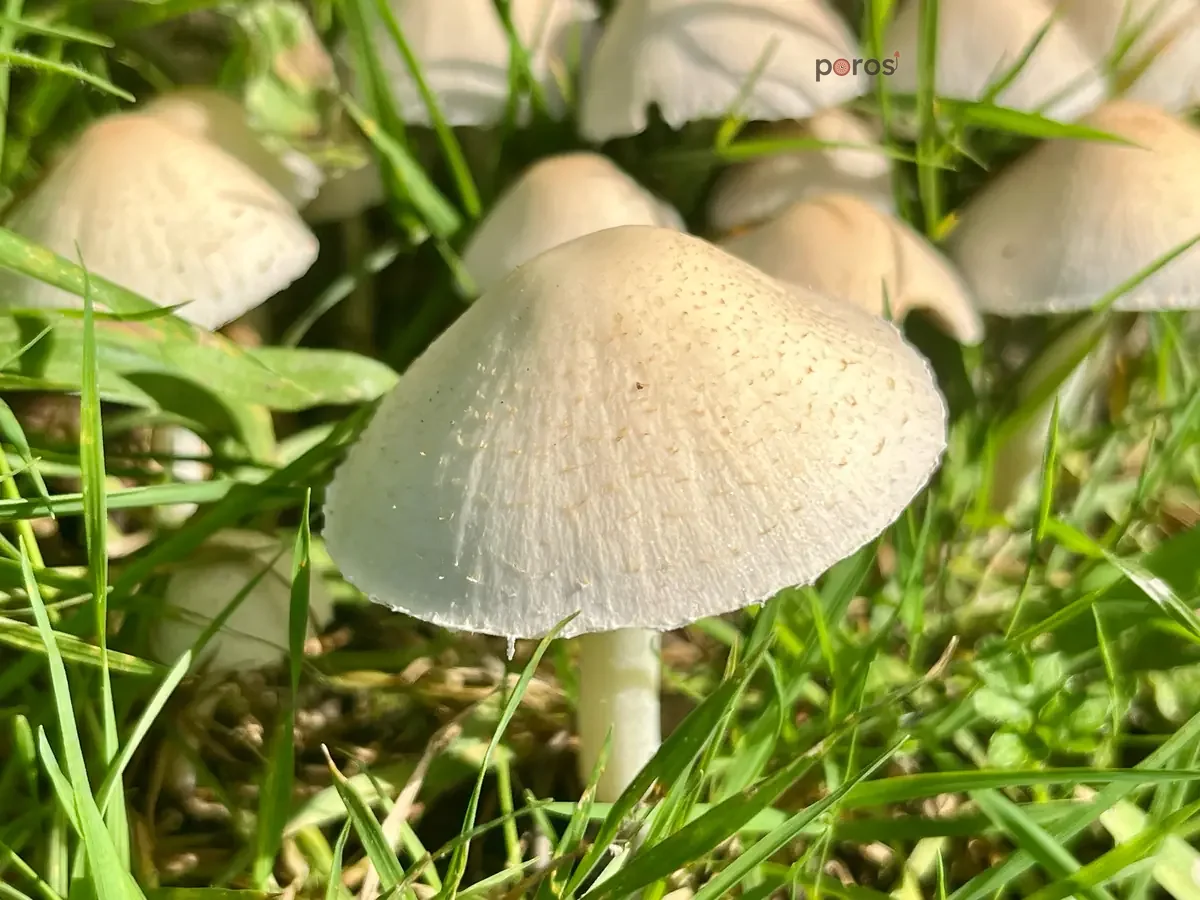 Pale brittlestemCandolleomyces candolleanusInedible
-
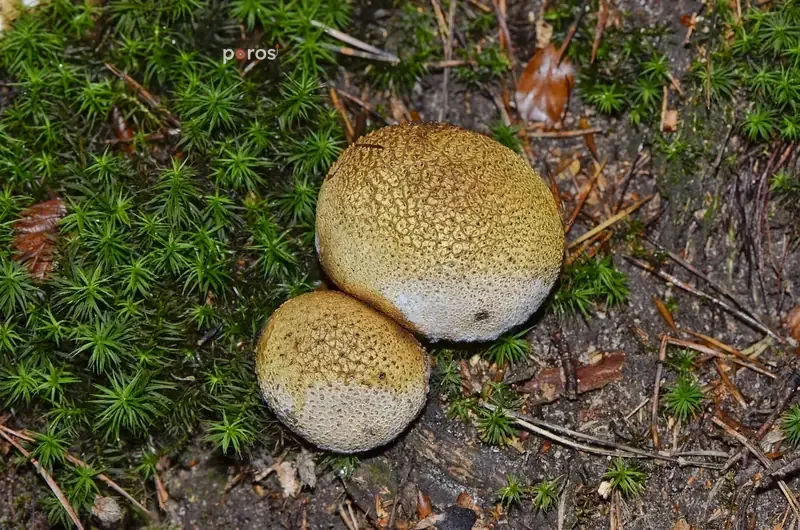 Common earthballScleroderma citrinumPoisonous
-
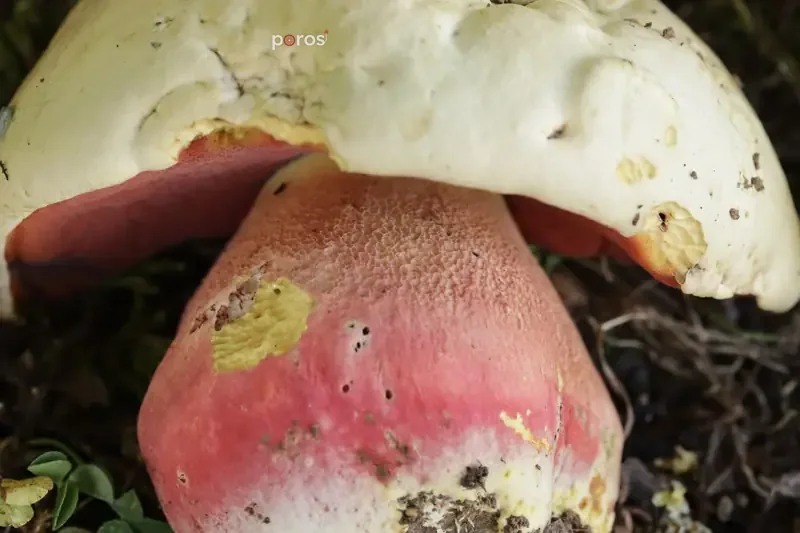 Devil’s boleteRubroboletus satanasPoisonous
-
 Fly agaricAmanita muscariaPoisonous
-
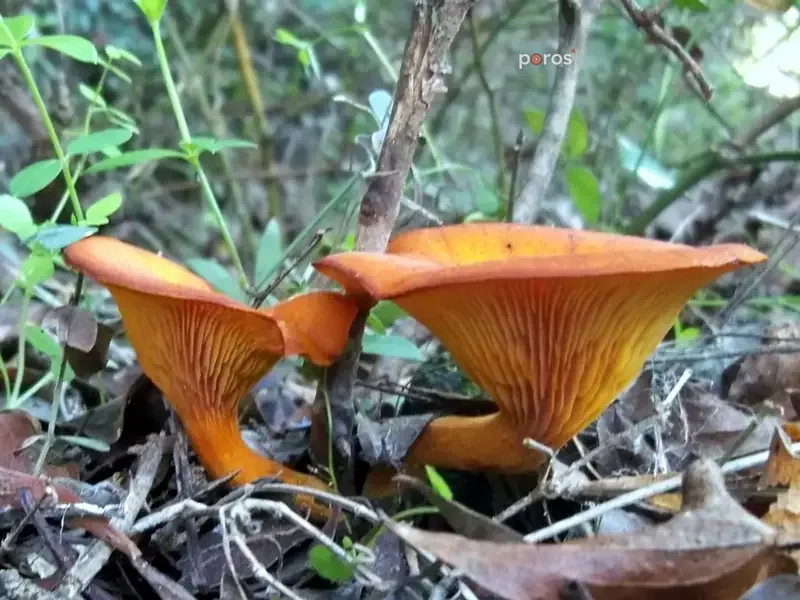 Jack-o’-lantern mushroomOmphalotus oleariusPoisonous
-
 Livid pinkgillEntoloma sinuatumPoisonous
Sources
- Kaya ve ark. (2010), Turkish Journal of Botany 34(4): A new Coprinopsis record for the mycobiota of Turkey (Türkiye Coprinopsis listesi) journals.tubitak.gov.tr
- Wikipedia (EN): Coprinopsis atramentaria en.wikipedia.org
- First Nature: Coprinopsis atramentaria, Common Inkcap first-nature.com
All sources (6)
- Wikipedia (EN): Coprine en.wikipedia.org
- iNaturalist: Coprinopsis atramentaria (Türkçe ad ve Türkiye gözlemleri) inaturalist.org
- GBIF: Türkiye kayıtları gbif.org
Photo credits (8)
- File:Common ink cap. (Coprinopsis atramentaria) (33701911040).jpg · Bernard Spragg. NZ from Christchurch, New Zealand · CC0
- Coprinopsis atramentaria · iNaturalist #408688207 · Vincent B. · CC BY 4.0
- Coprinopsis atramentaria · iNaturalist #408688207 · Vincent B. · CC BY 4.0
- Coprinopsis atramentaria · iNaturalist #408688207 · Vincent B. · CC BY 4.0
- Coprinopsis atramentaria · iNaturalist #383175166 · Anton Sibiryakov · CC0
- File:Coprinopsis atramentaria 104592213.jpg · jensu · CC0
- Coprinopsis atramentaria · iNaturalist #137636274 · Nadezhda Kiseleva · CC BY 4.0
- Coprinopsis atramentaria · iNaturalist #6253290 · Garrett Taylor · CC0

