
Pear-shaped puffball (stump puffball)
Apioperdon pyriforme · Lycoperdaceae

The pear-shaped puffball (Apioperdon pyriforme, formerly Lycoperdon pyriforme) is a pear-shaped puffball 2–4 cm tall that grows in dense clusters on rotting stumps and buried wood. It is white at first, then yellowish-brown, with white mycelial cords at the base. It is the only common puffball that grows on wood. Sources describe it as edible when young and pure white inside; once the inside yellows it is not.
Also called: pear-shaped puffball, stump puffball Turkish: Ağaç toz mantarı, ağaç toz mantarı Synonyms: Lycoperdon pyriforme
Last updated: Prepared by the Poros Mantar editorial team5 sources checkedReport a correction
Pear-shaped puffball photos
-
© relet · CC0
-

© Sigrid Jakob · CC0
-

© Ken Kneidel · CC0
-

© jasonsimpson · CC0
-

© cigazze · CC BY 4.0
-

© Tom Scavo · CC BY 4.0
-

© Blake Bringhurst · CC BY 4.0
-

© Katy Swiere · CC BY 4.0
-

Cap© Martin · CC BY 4.0
-

Stem© Sigitas Juzėnas · CC BY 4.0
-
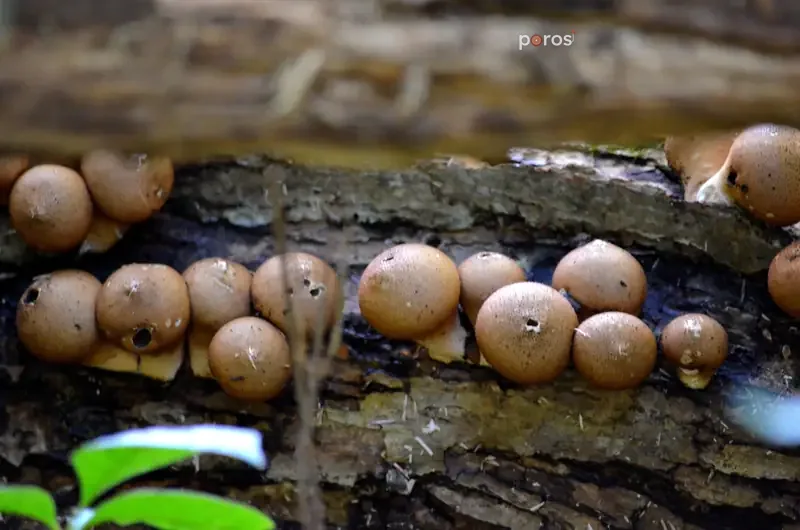
In habitat© Tim Hite · CC BY 4.0


These are licensed records of this species; photos alone are not enough to identify a mushroom.
Are pear-shaped puffballs poisonous?
Pear-shaped puffballs are not listed as poisonous in our sources. The real risk is confusing them with common earthball (Scleroderma citrinum) and death cap (Amanita phalloides), so never eat wild ones without certain identification. If poisoning is suspected, call 112 at once (Turkish poison centre: 114) and keep any leftover mushroom.
Are pear-shaped puffballs edible?
Pear-shaped puffballs are listed as edible in our sources; even so, never eat wild ones without certain identification: they have poisonous look-alikes, such as common earthball (Scleroderma citrinum) and death cap (Amanita phalloides). Do not eat them without an expert's approval. The pear-shaped puffball is not known to be poisonous and is described as edible when young. Cut every specimen in half: it must be pure, uniform white inside. An outline of cap and gills may mean a deadly Amanita egg; purple-black flesh means a poisonous earthball. Yellowed or browned specimens are not edible. Do not eat wild finds without expert confirmation.
How to recognise it
Appearance of pear-shaped puffballs
No ring or volva Spore print: Olive-brown, powdery Pleasant when young; slightly unpleasant with age.
When and where
When to find pear-shaped puffballs
Mar, Nov
It fruits from late summer to early winter; our Turkish records are from March and November.
Where do pear-shaped puffballs grow?
It grows on rotting hardwood and conifer stumps, buried roots and wood, usually dozens together.
Where is pear-shaped puffballs found in Turkey?
Our map data (GBIF and iNaturalist) holds 3 Turkish records: Kocaeli (1), Kırklareli (1), Istanbul (1). The records are from March, November.
Which months
- Jan0
- Feb0
- Mar1
- Apr0
- May0
- Jun0
- Jul0
- Aug0
- Sep0
- Oct0
- Nov1
- Dec0
3 provinces, 3 observations (GBIF, iNaturalist); months from observation dates. Record density also reflects where observers work.
Latest pear-shaped puffball observations
-
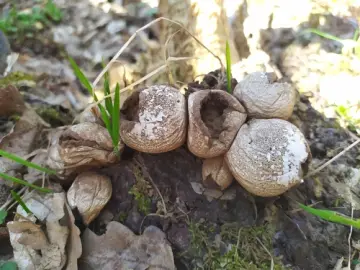 Kırklareli14 Mar 2020 · iNaturalist© Asrın Akıncıoğlu · CC BY
-
 Illustrative
Kocaeli13 Nov 2021 · iNaturalist
-
 Illustrative
İstanbul · INSDC Host Organism Sequences
- See on the map
On "illustrative" cards the image is a photo of the species; the observation photo cannot be shown here because of its licence, but can be seen at the source.
Look-alikes
What could it be confused with?
Pear-shaped puffball can be mistaken for the species below. Each comparison shows Pear-shaped puffball on the left, the look-alike on the right, and how to tell them apart.
Take care when foraging: Poisonous look-alikes of Pear-shaped puffball come first. If in doubt, leave it.

Death cap Amanita phalloides
How to tell A death cap in the egg stage is also a white lump; cut open, it shows the outline of cap, gills and stem.

Common earthball Scleroderma citrinum
How to tell The common earthball has a thick, hard, scaly-cracked skin, and when cut it is purple-black inside even when young.
Other look-alikes (1)
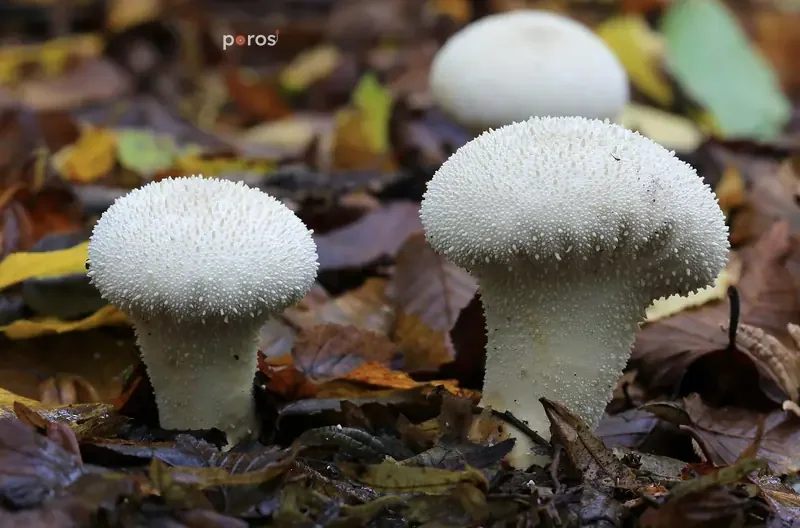 Edible species
not Pear-shaped puffball
Common puffball Lycoperdon perlatum
The common puffball grows on soil, not wood, and is covered in conical spines that rub off easily.
Pear-shaped puffball and its look-alikes compared
| Species | Status | Underside | Spore print | Season |
|---|---|---|---|---|
| Pear-shaped puffballApioperdon pyriforme | Edible species | The inside (gleba) is white and uniform when young, olive-brown powder at maturity | Olive-brown, powdery | Mar, Nov |
| Common puffballLycoperdon perlatum | Edible species | No gills or pores | Olive-brown powder | Aug–Jan |
| Common earthballScleroderma citrinum | Poisonous | No gills or pores | Olive-brown to blackish brown (as a powder) | Mar, Aug–Nov |
| Death capAmanita phalloides | Deadly poisonous | Gills white and free from the stem | White | Jul–Nov |
The table is compiled from each species page. The status column is a guide only; do not eat a wild mushroom unless an expert has seen it in person. Compare look-alikes side by side
How to cook and eat pear-shaped puffballs
Safety first. The pear-shaped puffball is not known to be poisonous and is described as edible when young. Cut every specimen in half: it must be pure, uniform white inside. An outline of cap and gills may mean a deadly Amanita egg; purple-black flesh means a poisonous earthball. Yellowed or browned specimens are not edible. Do not eat wild finds without expert confirmation. If poisoning is suspected, call 112 (Turkish poison centre UZEM: 114).
How to store pear-shaped puffballs
Grow it, buy it
Pear-shaped puffball price list
| Product | Poros Mantar | Market |
|---|---|---|
| Fresh pear-shaped puffballs | Made to order · ask | — |
| Dried pear-shaped puffballs | Made to order · ask | — |
We make our pear-shaped puffballs products in small batches, to order; send a request and we email you the price and delivery date. The market column shows prices seen on other sellers' pages on the date given; they are not our prices and may have changed.
Frequently asked questions
Are pear-shaped puffballs poisonous?
Pear-shaped puffballs are not listed as poisonous in our sources. The real risk is confusing them with common earthball (Scleroderma citrinum) and death cap (Amanita phalloides), so never eat wild ones without certain identification. If poisoning is suspected, call 112 at once (Turkish poison centre: 114) and keep any leftover mushroom.
Are pear-shaped puffballs edible?
Pear-shaped puffballs are listed as edible in our sources; even so, never eat wild ones without certain identification: they have poisonous look-alikes, such as common earthball (Scleroderma citrinum) and death cap (Amanita phalloides). Do not eat them without an expert's approval. The pear-shaped puffball is not known to be poisonous and is described as edible when young. Cut every specimen in half: it must be pure, uniform white inside. An outline of cap and gills may mean a deadly Amanita egg; purple-black flesh means a poisonous earthball. Yellowed or browned specimens are not edible. Do not eat wild finds without expert confirmation.
How do you identify it?
Dozens of pear-shaped puffballs 2–4 cm tall on a rotting stump, white when young then yellowish-brown, with white mycelial cords at the base.
What can it be confused with?
The main look-alikes are: Common puffball, Common earthball, Death cap. The differences are listed in the look-alikes section; with poisonous look-alikes, always check the cross-section and habitat.
Where does it grow?
It grows on rotting hardwood and conifer stumps, buried roots and wood, usually dozens together.
When does it appear?
It fruits from late summer to early winter; our Turkish records are from March and November.
How is it different from the common puffball?
The pear-shaped puffball grows in clusters on wood and lacks obvious spines; the common puffball grows on soil and is covered in spines that rub off.
Where is it found in Turkey?
Our map data holds 3 records, one each from Kocaeli, Kırklareli and Istanbul.
When is pear-shaped puffball season in Turkey?
In our calendar, pear-shaped puffball season runs Mar, Nov. It fruits from late summer to early winter; our Turkish records are from March and November.
Where do pear-shaped puffballs grow?
It grows on rotting hardwood and conifer stumps, buried roots and wood, usually dozens together.
Where are pear-shaped puffballs found in Turkey?
Our map data (GBIF and iNaturalist) holds 3 Turkish records: Kocaeli (1), Kırklareli (1), Istanbul (1). The records are from March, November.
What can the pear-shaped puffball be confused with?
The pear-shaped puffball can be confused with common puffball (Lycoperdon perlatum, edible species), common earthball (Scleroderma citrinum, poisonous) and death cap (Amanita phalloides, deadly). Look-alikes are compared on this page.
What is the pear-shaped puffball called in Turkish?
In Turkish, the pear-shaped puffball (Apioperdon pyriforme) is called Ağaç toz mantarı.
Related species
-
Common puffballLycoperdon perlatumEdible species
-
 Almond mushroomAgaricus subrufescensEdible species
-
 Anatolian matsutakeTricholoma anatolicumEdible species
-
 Aniseed funnelClitocybe odoraEdible species
-
 Bay boleteImleria badiaEdible species
-
 Beefsteak fungusFistulina hepaticaEdible species
-
 Black morelMorchella elataEdible species
-
 Black trumpetCraterellus cornucopioidesEdible species
Sources
- Wikipedia (EN): Apioperdon en.wikipedia.org
- iNaturalist: Apioperdon pyriforme (takson, adlar ve fotoğraflar) inaturalist.org
- GBIF: Apioperdon pyriforme gbif.org
All sources (5)
- GBIF: Türkiye kayıtları gbif.org
- iNaturalist: Türkiye gözlemleri (araştırma düzeyi) inaturalist.org
Photo credits (12)
- Apioperdon pyriforme · iNaturalist #31053355 · relet · CC0
- Apioperdon pyriforme · iNaturalist #97332373 · Sigrid Jakob · CC0
- Apioperdon pyriforme · iNaturalist #18904715 · Ken Kneidel · CC0
- Apioperdon pyriforme · iNaturalist #34648514 · jasonsimpson · CC0
- Apioperdon pyriforme · iNaturalist #194134599 · cigazze · CC BY 4.0
- Apioperdon pyriforme · iNaturalist #407123777 · Tom Scavo · CC BY 4.0
- Apioperdon pyriforme · iNaturalist #108334414 · Blake Bringhurst · CC BY 4.0
- Apioperdon pyriforme · iNaturalist #139875171 · Katy Swiere · CC BY 4.0
- File:Apioperdon pyriforme 103323384.jpg · Martin · CC BY 4.0
- Apioperdon pyriforme · iNaturalist #131630732 · Sigitas Juzėnas · CC BY 4.0
- Apioperdon pyriforme · iNaturalist #129385 · Tim Hite · CC BY 4.0
- iNaturalist: Kırklareli, 14 Mar 2020 · Asrın Akıncıoğlu · CC BY
