


Common puffball
Lycoperdon perlatum · Lycoperdaceae
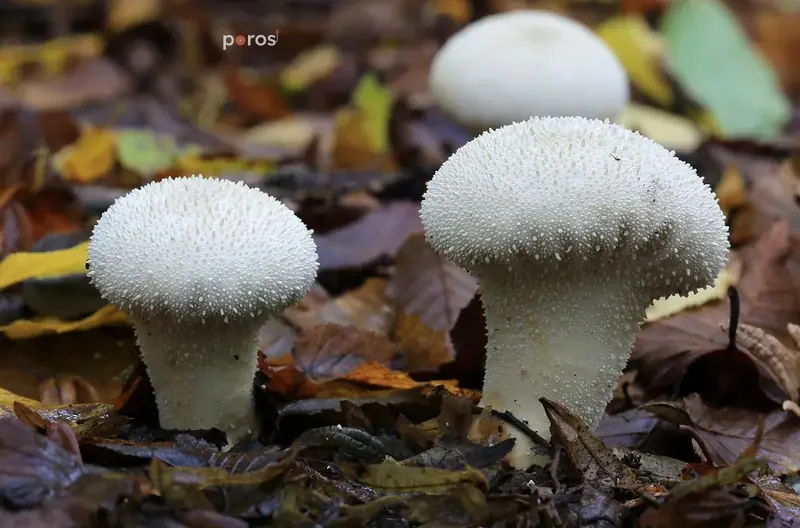
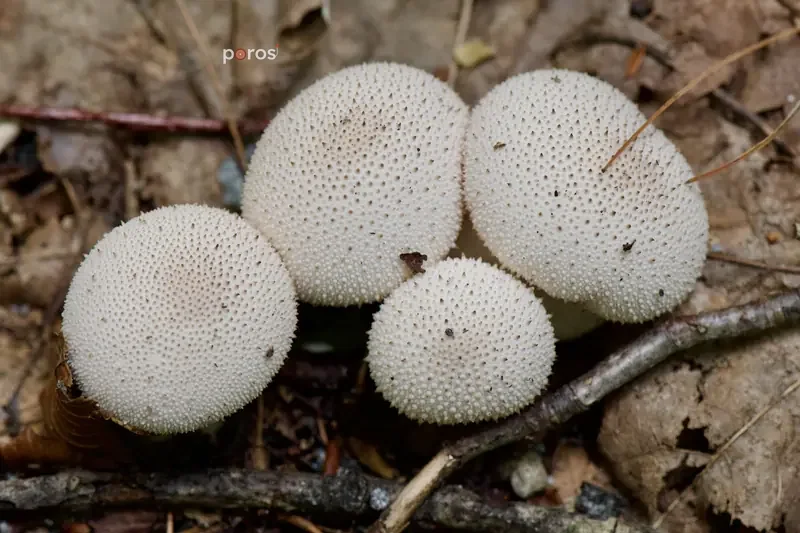
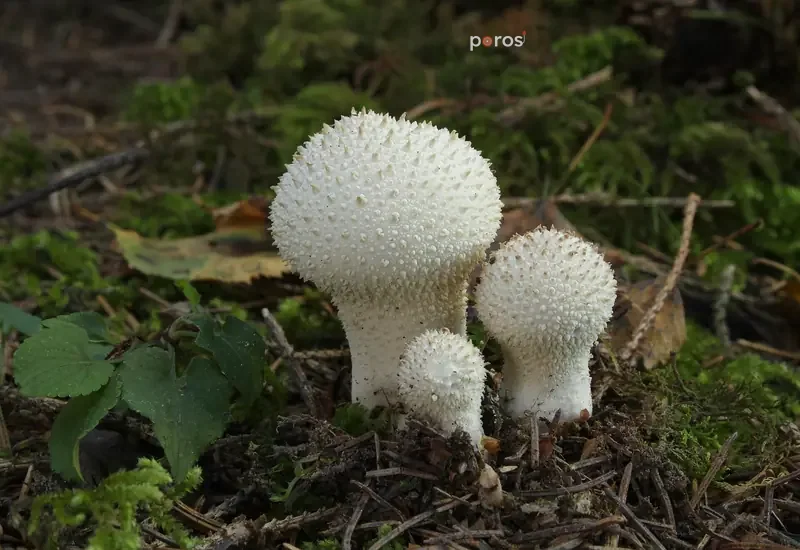
A white puffball with no cap or gills, shaped like an upside-down pear and covered in small conical spines.
Last updated: Prepared by the Poros Mantar editorial team6 sources checkedReport a correction
A white puffball with no cap or gills, shaped like an upside-down pear and covered in small conical spines. When young it is pure white and spongy inside; as it ripens it turns brown and puffs spores like smoke from a hole at the top. It is known as edible only while the inside is completely white.
Also called: gem-studded puffball, devil's snuff-box Turkish: Puf mantarı, top mantar, inci puf mantarı, toz mantarı
How to recognise it
Common puffball, part by part
No ring or volva Spore print: Olive-brown powder Pleasant mushroomy smell when young.


When and where
Aug–Jan
- Janin season
- Feb
- Mar
- Apr
- May
- Jun
- Jul
- Augin season
- Sepin season
- Octin season
- Novin season
- Decin season
The common puffball fruits from late summer into winter; Turkish GBIF records cluster in October and December–January. Dry fruit bodies persist for months.
Type Edible
In season AugustSeptemberOctoberNovemberDecemberJanuary
Colour White
Regions Black Sea RegionCentral Anatolia RegionMediterranean RegionAegean RegionMarmara RegionManisaTrabzonIspartaİzmirMuğlaBoluIstanbulKırklareli
Where do common puffballs grow?
The common puffball grows in groups in broadleaf and conifer woods, woodland edges and along paths, among leaf litter or grass.
Where is common puffballs found in Turkey?
In Turkey, common puffball records cluster in İstanbul, Muğla, İzmir and Manisa, with others from Artvin, Kırklareli, Sakarya, Trabzon and Yozgat.
- İstanbul12
- Bolu11
- Muğla5
- Manisa4
- İzmir3
- Kırklareli2
- Trabzon1
- Isparta1
- Artvin1
- Yozgat1
- Aydın1
- Sakarya1
Which months
- Jan7
- Feb0
- Mar0
- Apr1
- May0
- Jun1
- Jul0
- Aug1
- Sep2
- Oct18
- Nov3
- Dec9
common puffball map of Turkey: all provinces and months →
12 provinces, 43 observations (GBIF, iNaturalist); months from observation dates. Record density also reflects where observers work.
Latest common puffball observations
-
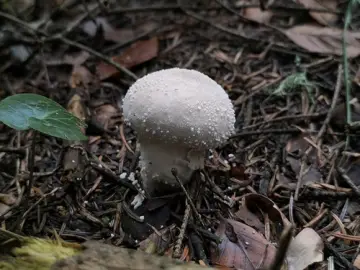 Bolu29 Oct 2026 · iNaturalist© Umut Nuri Erdoğan · CC BY
-
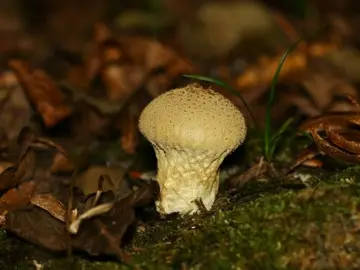 Kırklareli5 Oct 2024 · iNaturalist© Asrın Akıncıoğlu · CC BY
-
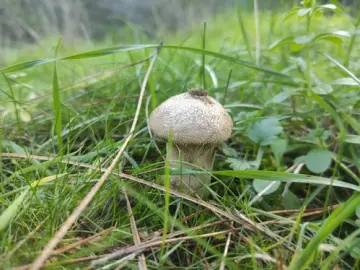 Manisa29 Jan 2024 · iNaturalist© Umut Nuri Erdoğan · CC BY
-
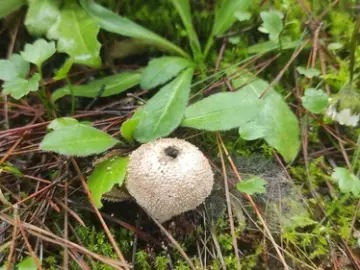 Manisa22 Dec 2023 · iNaturalist© Umut Nuri Erdoğan · CC BY
-
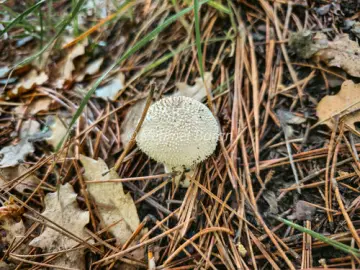 Yozgat10 Jun 2023 · iNaturalist© no rights reserved · CC0
-
 Illustrative
Bolu29 Oct 2026 · iNaturalist
-
 Illustrative
Bolu29 Oct 2026 · iNaturalist
-
 Illustrative
Bolu29 Oct 2026 · iNaturalist
- See on the map
On "illustrative" cards the image is a photo of the species; the observation photo cannot be shown here because of its licence, but can be seen at the source.
Look-alikes
What could it be confused with?
Common puffball can be mistaken for the species below. Each card shows the look-alike and how it differs from Common puffball.
 Deadly
not Common puffball
Death cap Amanita phalloides
A death cap in the egg stage looks like a small white ball. Cut vertically, it shows the outline of a cap, gills and stem inside, whereas a puffball is uniform throughout.
 Poisonous
not Common puffball
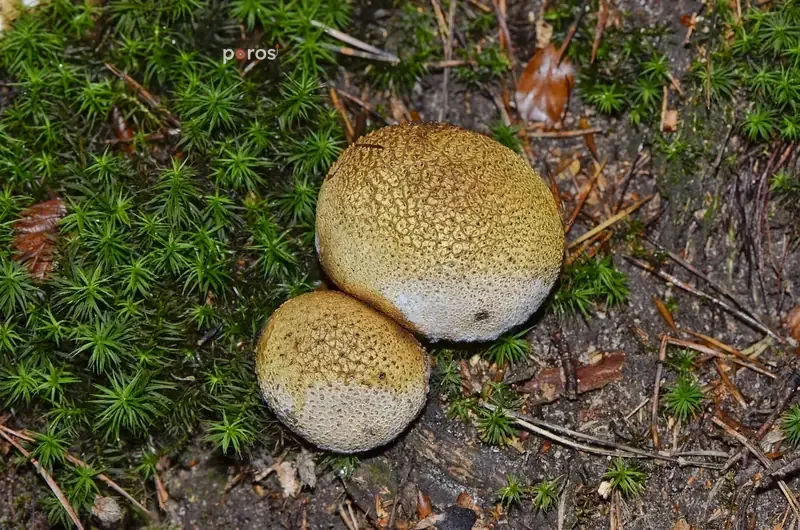
Common earthball Scleroderma citrinum
Thick, yellowish, scaly-cracked skin; the inside is purple-black even when young. It is poisonous.
 Edible species
not Common puffball
Giant puffball Calvatia gigantea
Much larger (10–50 cm) with a smooth, spineless skin; the same white-inside rule applies.
 Inedible
not Common puffball
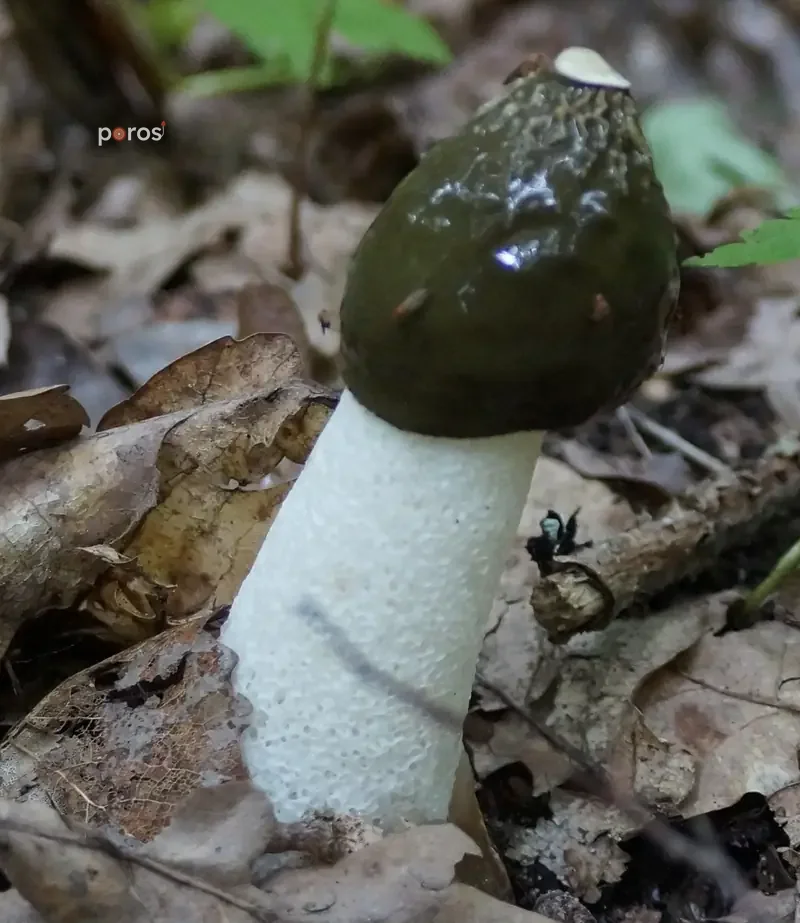
Common stinkhorn Phallus impudicus
A stinkhorn egg looks like a white ball, but cut lengthwise it shows a jelly layer and a white stem. A puffball is white and uniform all through.
 Inedible
not Common puffball
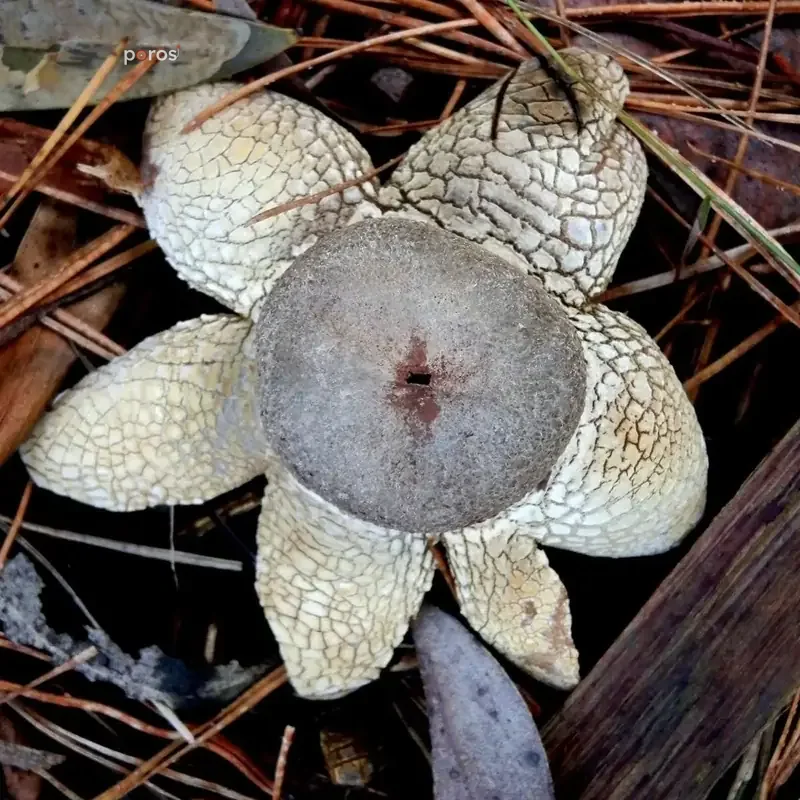
Barometer earthstar Astraeus hygrometricus
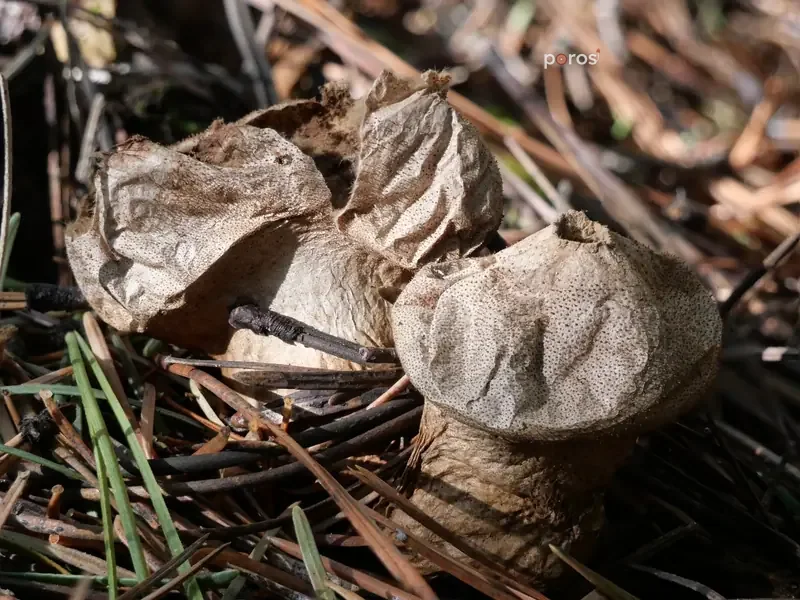
The young barometer earthstar is hard and its thick outer skin splits into star-like rays. The common puffball never opens into a star and is white and soft inside when young.
How to cook and eat common puffballs
Safety first. Cut every puffball vertically in half: if the inside is not pure white and uniform all the way through, or shows the outline of a cap and stem, or any yellow, purple, black or brown, do not eat it. Avoid breathing in ripe spores.
How to prepare it
Halve each one lengthwise: discard it unless the inside is pure white and uniform. Peel the tough skin and slice to the thickness of bread.
How to cook it
Fry the slices in egg and breadcrumbs, or use them in soups instead of dumplings.
What goes with it?
- peeled puffballs
- plain flour
- paprika
- garlic powder
- eggs
- fine dry breadcrumbs
- high-heat frying oil
- sage leaves
Source: Wikipedia · practical details from our recipes.
Recipe
How to store common puffballs
Grow it, buy it
Common puffball price list
| Product | Us | Market (sourced, dated) |
|---|---|---|
| Fresh common puffballs | Made to order · ask | — |
| Dried common puffballs | Made to order · ask | — |
We make our common puffballs products in small batches, to order; send a request and we email you the price and delivery date. The market column shows prices seen on other sellers' pages on the date given; they are not our prices and may have changed.
Frequently asked questions
Is the common puffball edible?
It is known as edible while the inside is pure white and uniform. If the inside has yellowed or browned, or shows the outline of a cap and stem, it is not eaten. Never eat it without an expert's identification.
Why do you cut a puffball in half?
Because a death cap in the egg stage and the poisonous earthball can look like puffballs from outside. Cut vertically, a death cap egg shows a cap and stem outline and an earthball shows a purple-black interior.
Why does a puffball give off smoke?
Inside a ripe puffball is a powder of millions of spores, which puff out like smoke through the top hole when hit by raindrops or touched. Avoid breathing them in.
Where does the common puffball grow in Turkey?
In and along woodland, among leaf litter and grass. GBIF records cluster in İstanbul, Muğla, İzmir and Manisa.
Are 'top mantar' and puf mantarı the same?
'Top mantar' (ball mushroom) is a general Turkish name for puffballs (Lycoperdon, Calvatia). This page covers the most common species, Lycoperdon perlatum.
When does the common puffball appear?
From August to January; dry brown fruit bodies persist for months but are not eaten.
Is a puff ball the same as a puffball?
Yes. Puff ball, puffball and puff mushroom are all names for round fungi that release a cloud of spores when they are ripe. The common puffball (Lycoperdon perlatum) is one of them; the much larger giant puffball is Calvatia gigantea. Only young puffballs that are pure white inside are eaten.
Which puffballs are edible?
The common puffball, the giant puffball and some other true puffballs are eaten when young, but only if the inside is pure white and firm from top to bottom. Once the flesh turns yellow, green or brown we discard it.
How do we tell a puffball from an Amanita egg?
We cut every puffball in half from top to bottom. A true puffball is evenly white inside. If we see the outline of a cap, gills and stem, it is a young Amanita in its egg, which may be the deadly death cap.
Are there poisonous puffballs?
Earthballs (Scleroderma) look like puffballs but are poisonous. They have a thick, hard skin and are purple-black inside even when young. We never eat a puffball that is not white inside.
What are purple and brown puffballs?
The purple-spored puffball (Calvatia cyathiformis) turns purple-brown inside as its spores mature, and many puffballs turn brown and powdery with age. At that stage they are no longer food; only young, pure white puffballs are eaten.
What is a black puffball?
A puffball turns brown or black inside as it ages and fills with spore dust; it is then no longer eaten. A firm "puffball" that is black or purplish-black inside from the start is probably a poisonous earthball. We eat only puffballs that are pure white all the way through.
Is Calvatia gigantea the same as the common puffball?
No. Calvatia gigantea is the giant puffball, which can grow as large as a football. The common puffball (Lycoperdon perlatum) is small, covered in tiny spines and grows in groups. Our giant puffball guide covers the larger species.
Which mushrooms look like white balls?
Young puffballs and the giant puffball look like white balls on the ground, and earthballs look like yellowish-brown ones. An Amanita in its egg stage can also look like a small white ball, which is why we cut every one in half: a puffball is pure white inside, while an egg shows the outline of a cap and stem.
Are common puffballs edible?
Yes, the common puffball is an edible species. Eat a wild one only after an expert has identified it with certainty: it can be confused with death cap (egg stage) (Amanita phalloides) and common earthball (Scleroderma citrinum). Cut every puffball vertically in half: if the inside is not pure white and uniform all the way through, or shows the outline of a cap and stem, or any yellow, purple, black or brown, do not eat it. Avoid breathing in ripe spores.
When is common puffball season in Turkey?
In our calendar, common puffball season runs Aug–Jan. The common puffball fruits from late summer into winter; Turkish GBIF records cluster in October and December–January. Dry fruit bodies persist for months.
Where do common puffballs grow?
The common puffball grows in groups in broadleaf and conifer woods, woodland edges and along paths, among leaf litter or grass.
Where are common puffballs found in Turkey?
In Turkey, common puffball records cluster in İstanbul, Muğla, İzmir and Manisa, with others from Artvin, Kırklareli, Sakarya, Trabzon and Yozgat.
What can the common puffball be confused with?
The common puffball can be confused with death cap (egg stage) (Amanita phalloides, deadly), common earthball (Scleroderma citrinum, poisonous), giant puffball (Calvatia gigantea, edible species), common stinkhorn (Phallus impudicus, inedible) and barometer earthstar (Astraeus hygrometricus, inedible). Look-alikes are compared on this page.
What is the common puffball called in Turkish?
In Turkish, the common puffball (Lycoperdon perlatum) is called Puf mantarı; other local names include top mantar, inci puf mantarı and toz mantarı.
Related species
-
 Anatolian matsutakeTricholoma anatolicumEdible species
-
 Beefsteak fungusFistulina hepaticaEdible species
-
 Black trumpetCraterellus cornucopioidesEdible species
-
 Bloody milk capLactarius sanguifluusEdible species
-
 Button mushroomAgaricus bisporusEdible species
-
 Caesar’s mushroomAmanita caesareaEdible species
-
 Cauliflower mushroomSparassis crispaEdible species
-
 ChanterelleCantharellus cibariusEdible species
Sources
- Falandysz ve ark. (2012), Bulletin of Environmental Contamination and Toxicology: Lycoperdon perlatum'da cıva birikimi pubmed.ncbi.nlm.nih.gov
- Adanacıoğlu ve ark. (2014), ANADOLU (Ege Tarımsal Araştırma Enstitüsü): Türkiye makromantar genetik kaynakları I. Ege Bölgesi dergipark.org.tr
- Wikipedia (EN): Lycoperdon perlatum en.wikipedia.org
All sources (6)
- First Nature: Lycoperdon perlatum first-nature.com
- GBIF: Türkiye kayıtları gbif.org
- iNaturalist: Türkiye gözlemleri inaturalist.org
Photo credits (13)
- File:Lycoperdon perlatum, Common Puffball, UK , 2.jpg · Stu's Images · CC BY-SA 4.0
- Lycoperdon perlatum · iNaturalist #255872820 · Michael Nerrie · CC BY 4.0
- Lycoperdon perlatum · iNaturalist #345339032 · Paula Nimigean · CC BY 4.0
- Lycoperdon perlatum · iNaturalist #100752842 · Mandy Hackney · CC BY 4.0
- File:Single lycoperdon perlatum.jpg · Daniel Ullrich, Threedots · CC BY-SA 3.0
- Lycoperdon perlatum · iNaturalist #191424174 · Kate Manning · CC0
- Lycoperdon perlatum · iNaturalist #166280764 · caseyhh · CC0
- Lycoperdon perlatum · iNaturalist #166280764 · caseyhh · CC0
- iNaturalist: Bolu, 29 Oct 2026 · Umut Nuri Erdoğan · CC BY
- iNaturalist: Kırklareli, 5 Oct 2024 · Asrın Akıncıoğlu · CC BY
- iNaturalist: Manisa, 29 Jan 2024 · Umut Nuri Erdoğan · CC BY
- iNaturalist: Manisa, 22 Dec 2023 · Umut Nuri Erdoğan · CC BY
- iNaturalist: Yozgat, 10 Jun 2023 · no rights reserved · CC0

