
Poison fire coral (kaentake)
Trichoderma cornu-damae · Hypocreaceae

Trichoderma cornu-damae (formerly Podostroma cornu-damae), the poison fire coral, is a small bright red-orange fungus shaped like fingers or antlers that grows at the base of rotting beech and oak stumps in Japan, Korea and China. It carries potent trichothecene toxins; even a small piece can be deadly, and touching it is reported to irritate the skin. In Japan and Korea it has caused deaths when taken for medicinal cordyceps or reishi. It has not been recorded in Turkey.
Also called: kaentake Turkish: Trichoderma cornu-damae Synonyms: Podostroma cornu-damae, Hypocrea cornu-damae
Last updated: Prepared by the Poros Mantar editorial team4 sources checkedReport a correction
DEADLY POISONOUS — keep it out of any basket of mushrooms to eat.
Trichoderma cornu-damae is deadly. According to sources it carries macrocyclic trichothecenes such as satratoxins and roridins; 30 minutes to a few hours after eating, vomiting, diarrhoea and abdominal pain have been followed by falling blood counts, hair loss, peeling skin, brain shrinkage and multiple organ failure. Even touching it can irritate the skin, so it should not be handled bare-handed. If poisoning is suspected, call 112 (Turkish poison centre UZEM: 114) and keep any leftover mushroom.
Poison fire coral photos
-
© Scott Loarie · CC0
-

© Timur Kalininsky · CC BY 4.0
-

© Kai Squires · CC BY 4.0
-

© Dan Osipov · CC BY 4.0
-
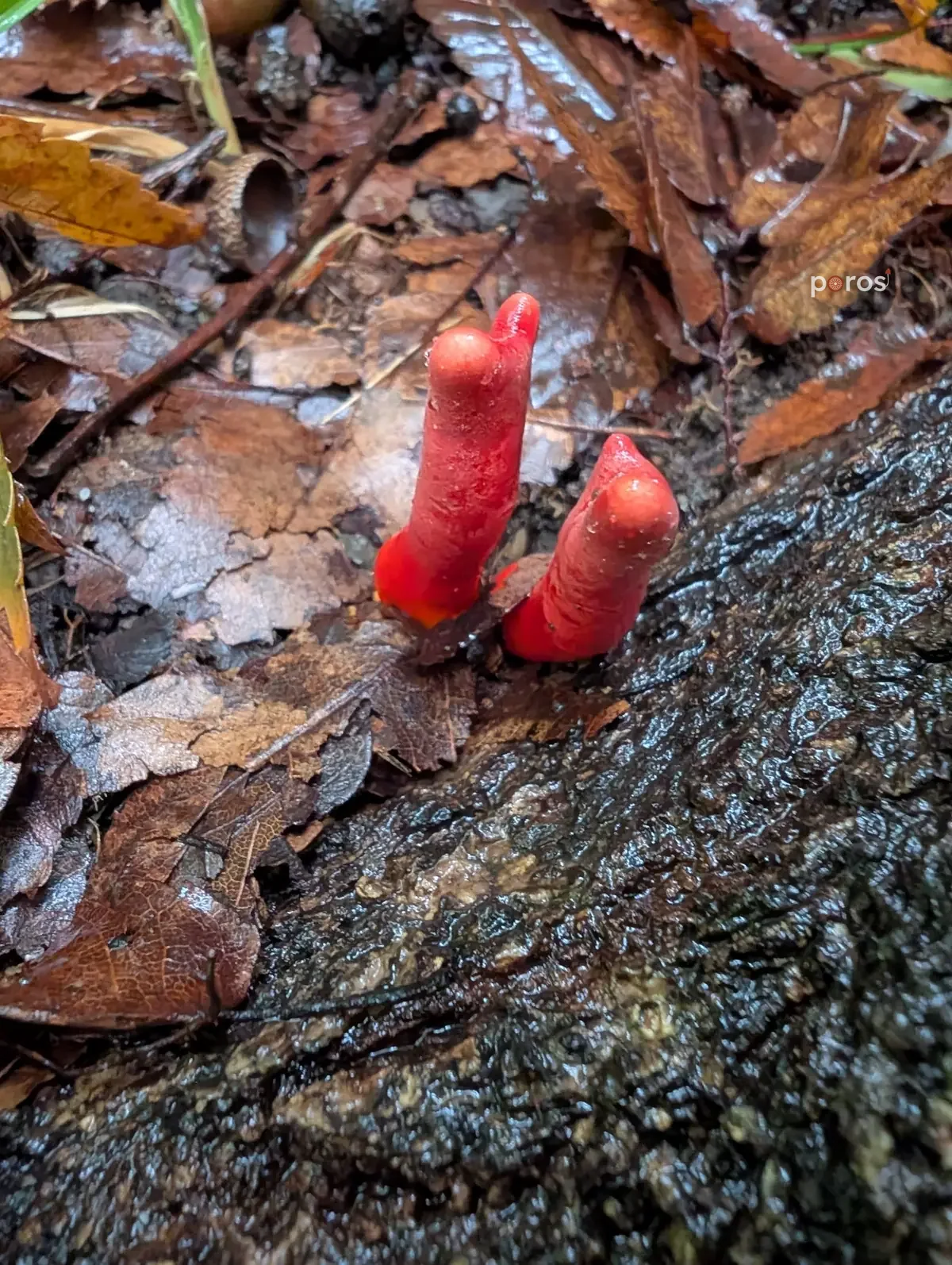
In habitat© Atsushi Nakajima · CC BY 4.0
-

© lunarjade · CC BY 4.0
-

© Atsushi Nakajima · CC BY 4.0
-

© Atsushi Nakajima · CC BY 4.0
These are licensed records of this species; photos alone are not enough to identify a mushroom.
Is the poison fire coral poisonous?
Yes, the poison fire coral is deadly poisonous and must never be eaten. It carries macrocyclic trichothecenes, and even a small piece can be fatal. It can be mistaken for Cordyceps (Cordyceps militaris), reishi (Ganoderma lucidum) and meadow coral (Clavulinopsis corniculata). If poisoning is suspected, call 112 at once (Turkish poison centre: 114) and keep any leftover mushroom.
Is the poison fire coral edible?
No, the poison fire coral must never be eaten; it is deadly poisonous. If poisoning is suspected, call 112 at once (Turkish poison centre: 114) and keep any leftover mushroom.
How to recognise it
Appearance of poison fire coral
No ring or volva Spore print: Gives no obvious spore print Not distinctive.
Where does poison fire coral grow?
Grows from soil or wood at the base of rotting stumps and roots of beech, oak and other broadleaf trees.
In Turkey
There are no Turkish records: our map data (GBIF and iNaturalist) holds no observations from Turkey. The species is known from Japan, Korea and China and in recent years has also been reported from Australia and Papua New Guinea.
Our map has no observations of poison fire coral from Turkey yet.
Look-alikes
What is it mistaken for?
Poison fire coral can be mistaken for the species below. Each comparison shows Poison fire coral on the left, the look-alike on the right, and how to tell them apart.

Cordyceps Cordyceps militaris
How to tell Cordyceps militaris is a slender orange club with a swollen tip arising from buried insect pupae; it does not branch and is not associated with wood.
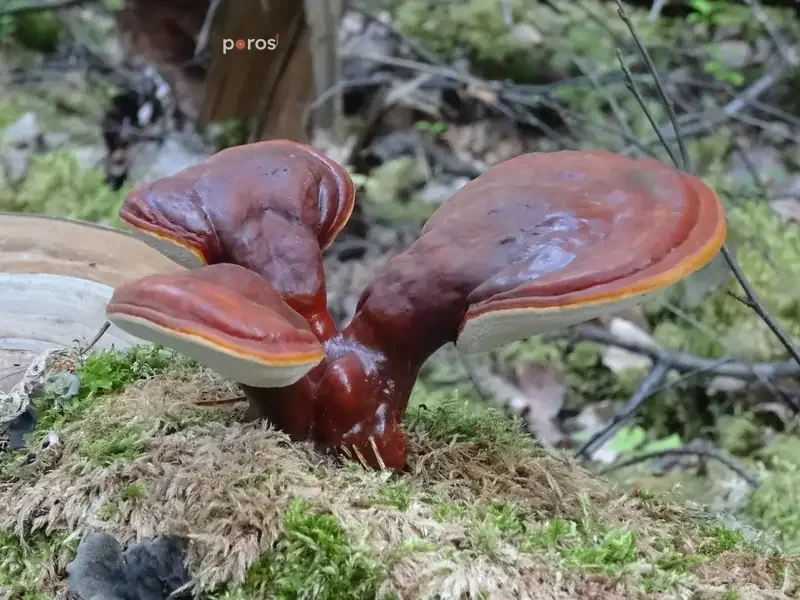
Reishi Ganoderma lucidum
How to tell Reishi is a lacquer-shiny, reddish-brown, kidney-shaped woody bracket with white pores underneath.
Other look-alikes (1)
not Poison fire coral
Meadow coral Clavulinopsis corniculata
A small yellow-orange coral of grassland, regarded as harmless, but telling them apart needs an expert.
Poison fire coral and its look-alikes compared
| Species | Status | Underside | Spore print | Season |
|---|---|---|---|---|
| Poison fire coralTrichoderma cornu-damae | Deadly poisonous | No gills or pores | Gives no obvious spore print | Jun–Oct |
| CordycepsCordyceps militaris | Traditional use | No gills; spores form in tiny flasks (perithecia) embedded in the club surface | White | Aug–Nov |
| ReishiGanoderma lucidum | Traditional use | No gills; cream to brown underside with 4–5 fine pores per millimetre | Reddish brown | Jun–Nov |
The table is compiled from each species page. The status column is a guide only; do not eat a wild mushroom unless an expert has seen it in person. Compare look-alikes side by side
Frequently asked questions
Is the poison fire coral poisonous?
Yes, the poison fire coral is deadly poisonous and must never be eaten. It carries macrocyclic trichothecenes, and even a small piece can be fatal. It can be mistaken for Cordyceps (Cordyceps militaris), reishi (Ganoderma lucidum) and meadow coral (Clavulinopsis corniculata). If poisoning is suspected, call 112 at once (Turkish poison centre: 114) and keep any leftover mushroom.
Is the poison fire coral edible?
No, the poison fire coral must never be eaten; it is deadly poisonous. If poisoning is suspected, call 112 at once (Turkish poison centre: 114) and keep any leftover mushroom.
Is touching it dangerous?
Sources report that touching it can irritate the skin; it should not be handled bare-handed.
Why is it mistaken for cordyceps or reishi?
Its red-orange colour and finger shape resemble young reishi or cordyceps; in Japan and Korea deaths followed when it was brewed into tea or liquor as a remedy.
Is it found in Turkey?
No, there are no Turkish records; it is known from East Asia and, recently, from Australia.
What are the symptoms?
According to sources, first vomiting and diarrhoea, then falling blood counts, hair loss, peeling skin and multiple organ failure. If in doubt, call 112.
What does it mean for medicinal mushroom products?
A wild-picked red, finger-shaped fungus must never be used as cordyceps or reishi; such products should come from a reliable cultivated source.
Where does it grow?
At the base of rotting beech and oak stumps, from soil or wood.
When is poison fire coral season in Turkey?
In our calendar, poison fire coral season runs Jun–Oct. Fruits in East Asia in summer and autumn, from June to October.
Where does poison fire coral grow?
Grows from soil or wood at the base of rotting stumps and roots of beech, oak and other broadleaf trees.
Where is poison fire coral found in Turkey?
There are no Turkish records: our map data (GBIF and iNaturalist) holds no observations from Turkey. The species is known from Japan, Korea and China and in recent years has also been reported from Australia and Papua New Guinea.
What can poison fire coral be confused with?
Poison fire coral can be confused with cordyceps (Cordyceps militaris, inedible), reishi (Ganoderma lucidum, inedible) and meadow coral (Clavulinopsis corniculata, inedible). Look-alikes are compared on this page.
What is poison fire coral called in Turkish?
In Turkish, poison fire coral (Trichoderma cornu-damae) is called Trichoderma cornu-damae.
Related species
-
 Amanita proximaAmanita proximaDeadly poisonous
-
 Brown roll-rimPaxillus involutusDeadly poisonous
-
 Chestnut dapperlingLepiota castaneaDeadly poisonous
-
 Common conecapPholiotina rugosaDeadly poisonous
-
 Deadly dapperlingLepiota brunneoincarnataDeadly poisonous
-
 Deadly fibrecapInosperma erubescensDeadly poisonous
-
 Deadly galerinaGalerina marginataDeadly poisonous
-
 Deadly webcapCortinarius rubellusDeadly poisonous
Sources
- Lee ve ark. (2023), Org Biomol Chem: ölümcül Podostroma cornu-damae'den sitotoksik makrosiklik trikotesenler pubmed.ncbi.nlm.nih.gov
- Wikipedia (EN): Trichoderma cornu-damae en.wikipedia.org
- iNaturalist: Trichoderma cornu-damae inaturalist.org
All sources (4)
- GBIF: Türkiye kayıtları gbif.org
Photo credits (8)
- File:Trichoderma cornu-damae 4542200.jpg · Scott Loarie · CC0
- Trichoderma cornu-damae · iNaturalist #63376290 · Timur Kalininsky · CC BY 4.0
- Trichoderma cornu-damae · iNaturalist #270402402 · Kai Squires · CC BY 4.0
- Trichoderma cornu-damae · iNaturalist #368596570 · Dan Osipov · CC BY 4.0
- Trichoderma cornu-damae · iNaturalist #403139229 · Atsushi Nakajima · CC BY 4.0
- Trichoderma cornu-damae · iNaturalist #171324222 · lunarjade · CC BY 4.0
- Trichoderma cornu-damae · iNaturalist #246911748 · Atsushi Nakajima · CC BY 4.0
- File:Trichoderma cornu-damae 228166649.jpg · Atsushi Nakajima · CC BY 4.0

