
Sheathed woodtuft (two-toned pholiota, brown stew fungus)
Kuehneromyces mutabilis · Strophariaceae

The sheathed woodtuft (Kuehneromyces mutabilis) is a small wood mushroom with a honey-orange cap that grows in dense clusters on broadleaf stumps. As its cap dries it pales from the centre outwards, looking two-toned, which gives it its Turkish name. Below the ring the stem is covered in scales. It is edible, but it looks very like the deadly Galerina, which can grow on the same stump.
Also called: sheathed woodtuft, two-toned pholiota, brown stew fungus Turkish: İki renkli öbek mantarı Synonyms: Pholiota mutabilis
Last updated: Prepared by the Poros Mantar editorial team3 sources checkedReport a correction
Sheathed woodtuft photos
-
© Strobilomyces · CC BY-SA 3.0
-

© Strobilomyces · CC BY-SA 3.0
-
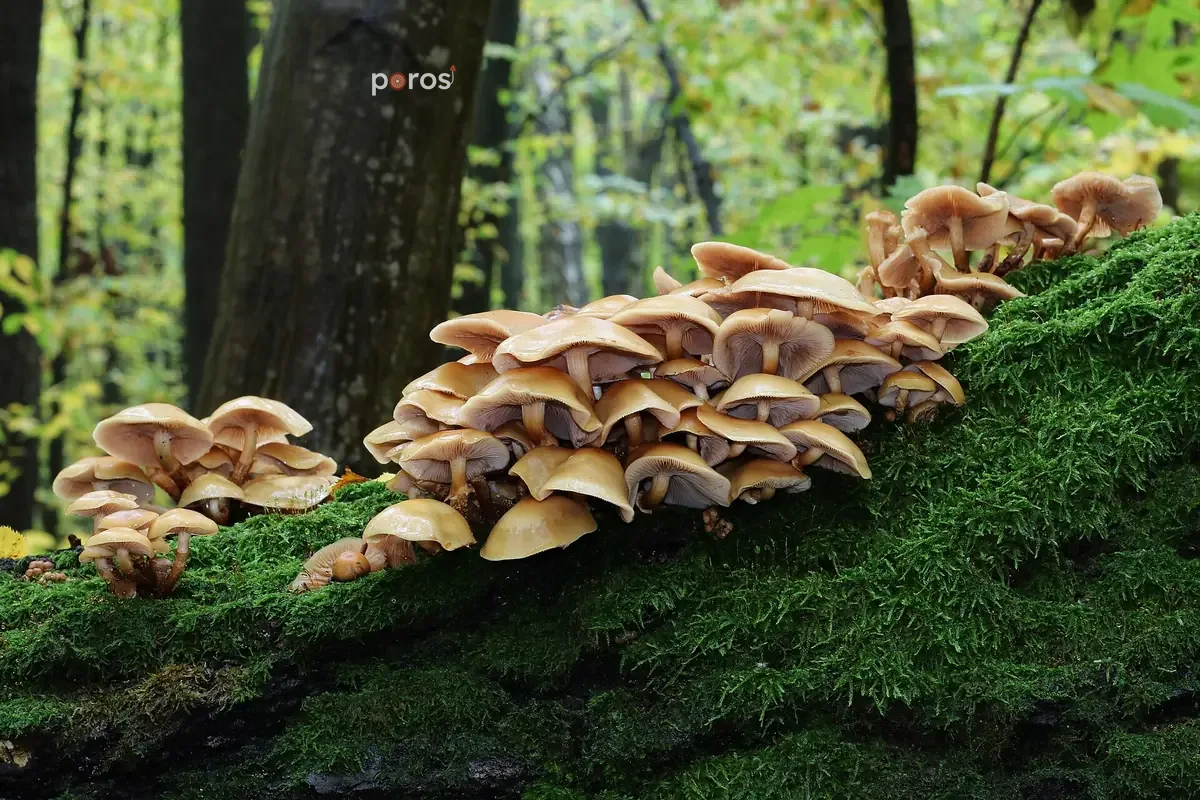
In habitat© George Chernilevsky · CC BY 4.0
-

Gills© User:Strobilomyces · CC BY-SA 3.0
-

Gills© Viktoria Bilous · CC BY 4.0
-

Stem© Strobilomyces · CC BY-SA 3.0
-

© George Chernilevsky · CC BY 4.0
-

Cap© vuikaan · CC BY 4.0
-

Cap© Капрал Натурал · CC0
-

Stem© Светлана Царахова · CC0
-
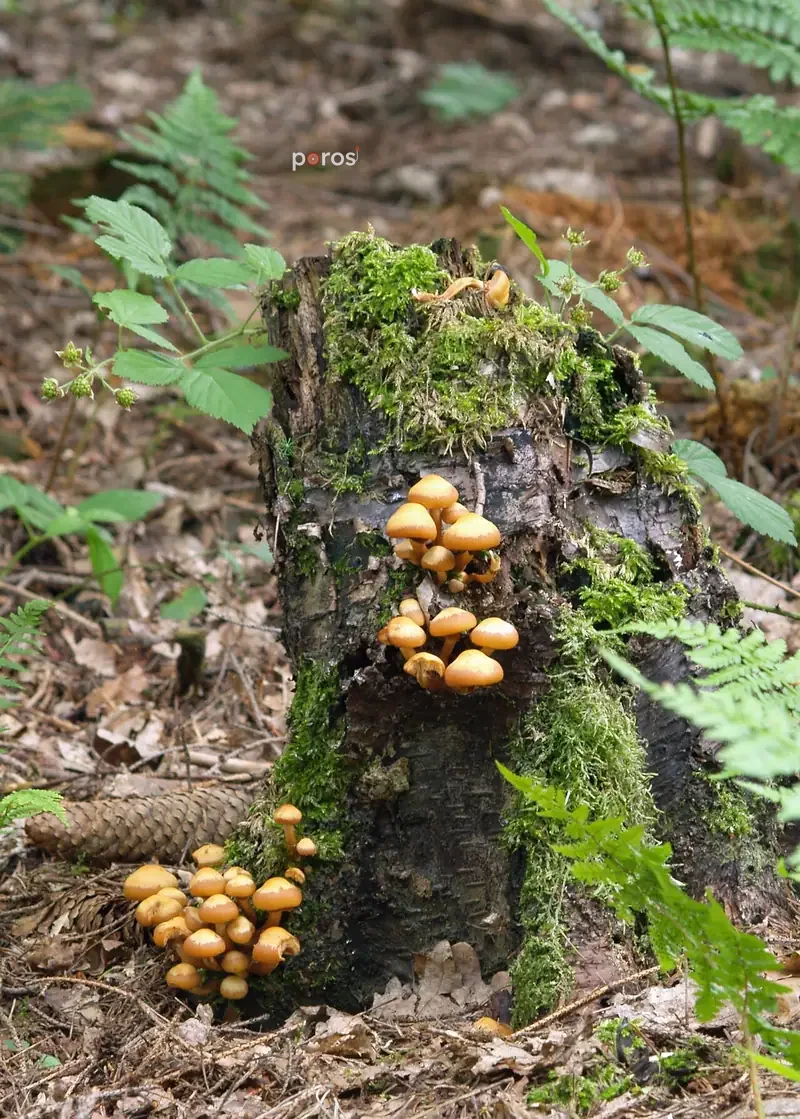
In habitat© Jörg Hempel · CC BY-SA 3.0 de


These are licensed records of this species; photos alone are not enough to identify a mushroom.
Is the sheathed woodtuft poisonous?
The sheathed woodtuft is not listed as poisonous in our sources. The real risk is confusing it with deadly galerina (Galerina marginata) and sulphur tuft (Hypholoma fasciculare), so never eat a wild one without certain identification. If poisoning is suspected, call 112 at once (Turkish poison centre: 114) and keep any leftover mushroom.
Is the sheathed woodtuft edible?
The sheathed woodtuft is listed as edible in our sources and is cultivated; even so, never eat a wild one without certain identification: it has poisonous look-alikes, such as deadly galerina (Galerina marginata) and sulphur tuft (Hypholoma fasciculare). Do not eat it without an expert's approval. The sheathed woodtuft is edible, but it can grow on the same stump as the deadly Galerina and looks very like it; a single Galerina can kill. Check the stem of every mushroom. We advise beginners not to gather this species. Do not eat a wild one an expert has not checked.
How to recognise it
Appearance of sheathed woodtuft
No volva Spore print: Dark rusty brown Pleasant and mushroomy.
Where does sheathed woodtuft grow?
It grows in dense clusters on broadleaf stumps and dead wood, especially beech, birch and poplar, rarely on conifers.
Where is sheathed woodtuft found in Turkey?
It is rarely recorded in Turkey: GBIF holds one record from Trabzon and iNaturalist has one research-grade observation. Its Turkish name comes from iNaturalist Turkey. Worldwide it ranges through the temperate forests of Europe, northern Asia and North America.
Which months
- Jan0
- Feb0
- Mar0
- Apr0
- May0
- Jun1
- Jul0
- Aug0
- Sep0
- Oct0
- Nov0
- Dec0
1 provinces, 1 observations (GBIF, iNaturalist); months from observation dates. Record density also reflects where observers work.
Latest sheathed woodtuft observations
 Illustrative
On "illustrative" cards the image is a photo of the species; the observation photo cannot be shown here because of its licence, but can be seen at the source.
Look-alikes
What could it be confused with?
Sheathed woodtuft can be mistaken for the species below. Each comparison shows Sheathed woodtuft on the left, the look-alike on the right, and how to tell them apart.
Take care when foraging: Poisonous look-alikes of Sheathed woodtuft come first. If in doubt, leave it.

Deadly galerina Galerina marginata
How to tell Its cap is a similar honey-brown and it too clusters on stumps, but below the ring its stem has fine silvery fibres instead of scales. It contains amatoxins and is deadly.

Sulphur tuft Hypholoma fasciculare
How to tell Its cap is sulphur yellow, its gills yellow-green, its spore print purple-brown and it tastes very bitter. It is poisonous.
Other look-alikes (1)
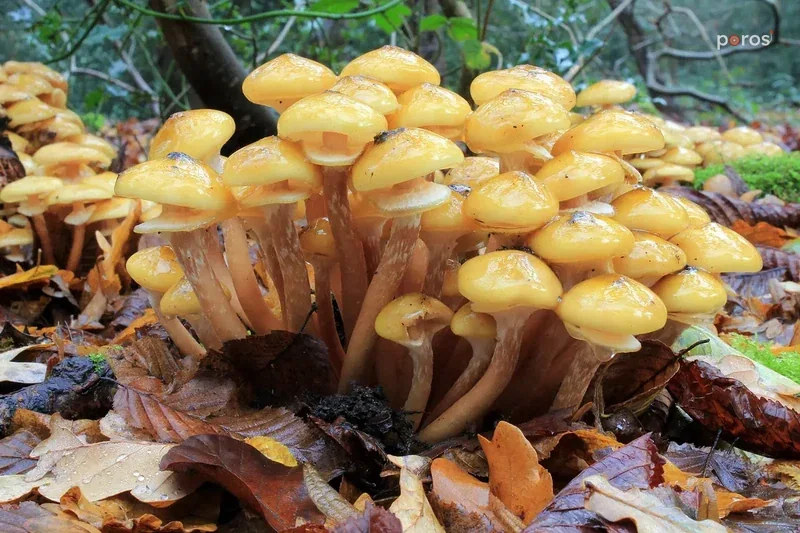 Edible species
not Sheathed woodtuft
Honey fungus Armillaria mellea
It is larger, with a cap covered in fine dark scales, a thick white ring and a white spore print.
Sheathed woodtuft and its look-alikes compared
| Species | Status | Underside | Spore print | Season |
|---|---|---|---|---|
| Sheathed woodtuftKuehneromyces mutabilis | Edible species | Pale cream, then cinnamon brown, attached or slightly decurrent | Dark rusty brown | Apr–Nov |
| Deadly galerinaGalerina marginata | Deadly poisonous | Crowded, pale brown when young, tawny when mature | Rusty (snuff) brown | Aug–Nov |
| Sulphur tuftHypholoma fasciculare | Poisonous | Crowded, adnate gills | Purple-brown | Feb–Apr, Jun, Aug, Oct–Dec |
| Honey fungusArmillaria mellea | Edible species | Whitish to cream gills, slightly decurrent | White | Sep–Jan |
The table is compiled from each species page. The status column is a guide only; do not eat a wild mushroom unless an expert has seen it in person. Compare look-alikes side by side
How to cook and eat sheathed woodtuft
Safety first. The sheathed woodtuft is edible, but it can grow on the same stump as the deadly Galerina and looks very like it; a single Galerina can kill. Check the stem of every mushroom; if in doubt, do not pick. We advise beginners not to gather this species. If poisoning is suspected, call 112 (Turkish poison centre UZEM: 114) and keep any leftover mushroom. Do not eat a wild one an expert has not checked.
How to store sheathed woodtuft
Grow it, buy it
Sheathed woodtuft price list
| Product | Poros Mantar | Market |
|---|---|---|
| Fresh sheathed woodtuft | Made to order · ask | — |
| Dried sheathed woodtuft | Made to order · ask | — |
We make our sheathed woodtuft products in small batches, to order; send a request and we email you the price and delivery date. The market column shows prices seen on other sellers' pages on the date given; they are not our prices and may have changed.
Frequently asked questions
Is the sheathed woodtuft poisonous?
The sheathed woodtuft is not listed as poisonous in our sources. The real risk is confusing it with deadly galerina (Galerina marginata) and sulphur tuft (Hypholoma fasciculare), so never eat a wild one without certain identification. If poisoning is suspected, call 112 at once (Turkish poison centre: 114) and keep any leftover mushroom.
Is the sheathed woodtuft edible?
The sheathed woodtuft is listed as edible in our sources and is cultivated; even so, never eat a wild one without certain identification: it has poisonous look-alikes, such as deadly galerina (Galerina marginata) and sulphur tuft (Hypholoma fasciculare). Do not eat it without an expert's approval. The sheathed woodtuft is edible, but it can grow on the same stump as the deadly Galerina and looks very like it; a single Galerina can kill. Check the stem of every mushroom. We advise beginners not to gather this species. Do not eat a wild one an expert has not checked.
How do you tell it from the deadly Galerina?
The sheathed woodtuft's stem is covered in dark brown, upturned scales below the ring. Galerina's stem has fine silvery fibres instead. Since both can grow on the same stump, every mushroom must be checked individually.
Why is it called two-toned?
A wet cap starts drying from the centre; meanwhile the centre turns pale buff while the edge stays dark honey-orange, so the cap looks two-toned.
Where has it been recorded in Turkey?
GBIF holds one record from Trabzon and iNaturalist has one research-grade observation.
When does it fruit?
From spring to late autumn, and almost all year in mild winters.
Can it be cultivated?
Yes, it can be grown on inoculated broadleaf logs; the method has long been known in central Europe.
How is it different from sulphur tuft?
Sulphur tuft has a sulphur-yellow cap, yellow-green gills and a purple-brown spore print, and tastes very bitter.
When is sheathed woodtuft season in Turkey?
In our calendar, sheathed woodtuft season runs Apr–Nov. It fruits from spring to late autumn in mild weather; where winters are mild it can be seen almost all year.
Where does sheathed woodtuft grow?
It grows in dense clusters on broadleaf stumps and dead wood, especially beech, birch and poplar, rarely on conifers.
Where is sheathed woodtuft found in Turkey?
It is rarely recorded in Turkey: GBIF holds one record from Trabzon and iNaturalist has one research-grade observation. Its Turkish name comes from iNaturalist Turkey. Worldwide it ranges through the temperate forests of Europe, northern Asia and North America.
What can sheathed woodtuft be confused with?
Sheathed woodtuft can be confused with deadly galerina (Galerina marginata, deadly), sulphur tuft (Hypholoma fasciculare, poisonous) and honey fungus (Armillaria mellea, edible species). Look-alikes are compared on this page.
What is sheathed woodtuft called in Turkish?
In Turkish, sheathed woodtuft (Kuehneromyces mutabilis) is called İki renkli öbek mantarı.
Related species
-
 NamekoPholiota microsporaEdible species
-
 Wine capStropharia rugosoannulataEdible species
-
 Brick capHypholoma lateritiumInedible
-
Sulphur tuftHypholoma fascicularePoisonous
-
 Almond mushroomAgaricus subrufescensEdible species
-
 Anatolian matsutakeTricholoma anatolicumEdible species
-
 Aniseed funnelClitocybe odoraEdible species
-
 Bay boleteImleria badiaEdible species
Sources
- Wikipedia (EN): Kuehneromyces mutabilis en.wikipedia.org
- iNaturalist: Kuehneromyces mutabilis (Türkçe ad ve Türkiye gözlemleri) inaturalist.org
- GBIF: Türkiye kayıtları gbif.org
Photo credits (11)
- File:Kuehneromyces mutabilis 031111A.jpg · Strobilomyces · CC BY-SA 3.0
- File:Kuehneromyces mutabilis 031111B.jpg · Strobilomyces · CC BY-SA 3.0
- File:Kuehneromyces mutabilis 2026 G4.jpg · George Chernilevsky · CC BY 4.0
- File:Kuehneromyces mutabilis 031111Bw.jpg · User:Strobilomyces · CC BY-SA 3.0
- File:Kuehneromyces mutabilis 98279740.jpg · Viktoria Bilous · CC BY 4.0
- File:Kuehneromyces mutabilis 031111C.jpg · Strobilomyces · CC BY-SA 3.0
- File:Kuehneromyces mutabilis 2026 G2.jpg · George Chernilevsky · CC BY 4.0
- Kuehneromyces mutabilis · iNaturalist #256808887 · vuikaan · CC BY 4.0
- File:Kuehneromyces mutabilis 442613200.jpg · Капрал Натурал · CC0
- Kuehneromyces mutabilis · iNaturalist #236351483 · Светлана Царахова · CC0
- File:Kuehneromyces mutabilis LC0075.jpg · Jörg Hempel · CC BY-SA 3.0 de


