
Brick cap (brick tuft)
Hypholoma lateritium · Strophariaceae

Hypholoma lateritium, the brick cap, grows in dense tufts on dead oak and beech stumps and has a brick-red cap with a pale yellowish margin. Its gills are yellowish grey when young, later purple-brown. It is reportedly eaten after thorough cooking in some regions, but it can be bitter and is very easily confused with the poisonous sulphur tuft (H. fasciculare), so our advice is not to eat it. In Turkey there are GBIF records from Istanbul, Trabzon and Kırklareli.
Also called: brick tuft Turkish: Hypholoma lateritium Synonyms: Hypholoma sublateritium
Last updated: Prepared by the Poros Mantar editorial team4 sources checkedReport a correction
Brick cap photos
-
© Nova Patch · CC BY-SA 4.0
-

© Dilrukshan Priyantha Wijesinghe · CC BY 4.0
-

Gills© Matej Frančeškin · CC BY 4.0
-

© mycowalt · CC BY-SA 4.0
-

© Holger Krisp · CC BY 3.0
-

Cap© Matej Frančeškin · CC BY 4.0
-

Stem© kedgehog · CC BY 4.0
-
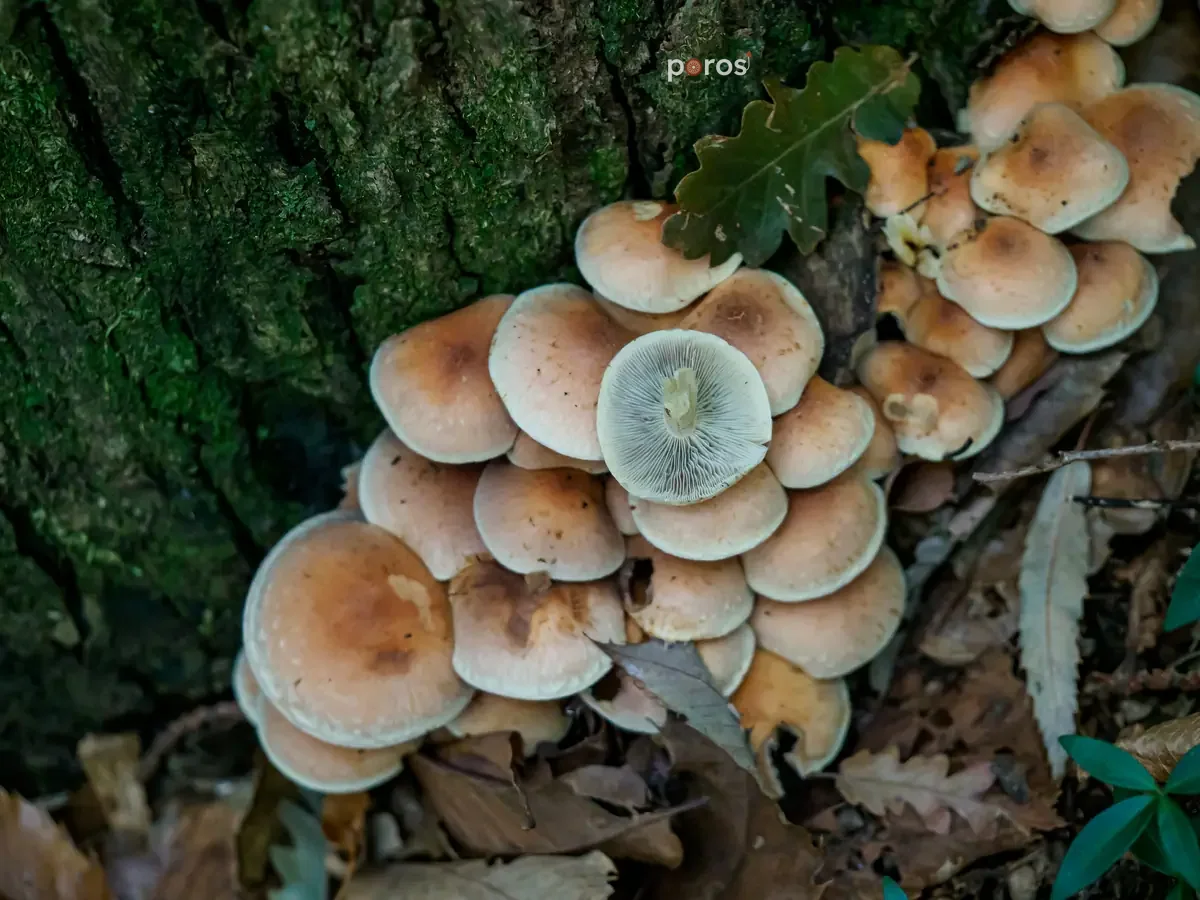
In habitat© rainerburkard · CC BY 4.0
These are licensed records of this species; photos alone are not enough to identify a mushroom.
Are brick caps poisonous?
Most authorities treat it as inedible and say it may upset the stomach if eaten, though it is eaten in Japan and parts of North America. Because it is so easily confused with the poisonous sulphur tuft, we advise against eating it. If poisoning is suspected, call 112 at once (Turkish poison centre: 114) and keep any leftover mushroom.
Are brick caps edible?
We advise against eating Hypholoma lateritium. It is eaten in Japan and parts of North America, but British sources and most authorities treat it as inedible and say it may upset the stomach if eaten. The real danger is confusion with the poisonous sulphur tuft and the deadly funeral bell, which grow on the same stumps.
How to recognise it
Appearance of brick caps
No volva Spore print: Purple-brown Not distinctive; taste mild to bitterish.
When and where
When to find brick caps
Sep–Dec
Fruits in late autumn and early winter, from September to December; into January in mild winters.
Type Inedible
Months seen SeptemberOctoberNovemberDecember
Regions Black Sea RegionMarmara RegionTrabzonKırklareliIstanbul
Where do brick caps grow?
A saprotroph of dead wood, growing in dense tufts on the stumps and roots of oak, beech and other broadleaf trees.
Where is brick caps found in Turkey?
Our map data holds 14 GBIF records from Turkey (Istanbul, Trabzon, Kırklareli) and seven research-grade iNaturalist observations. It can share stumps with the sulphur tuft.
Which months
- Jan1
- Feb0
- Mar1
- Apr0
- May0
- Jun0
- Jul0
- Aug0
- Sep1
- Oct0
- Nov2
- Dec2
3 provinces, 7 observations (GBIF, iNaturalist); months from observation dates. Record density also reflects where observers work.
Latest brick cap observations
-
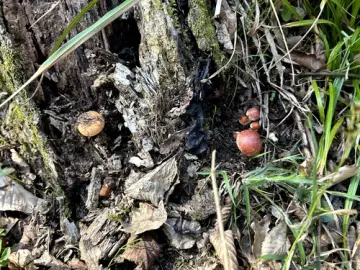 İstanbul17 Mar 2024 · iNaturalist© Umut Nuri Erdoğan · CC BY
-
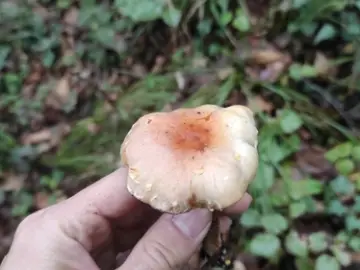 İstanbul11 Jan 2024 · iNaturalist© Umut Nuri Erdoğan · CC BY
-
 Illustrative
Kırklareli2 Nov 2025 · iNaturalist
-
 Illustrative
İstanbul14 Dec 2024 · iNaturalist
-
 Illustrative
İstanbul25 Dec 2020 · iNaturalist
-
 Illustrative
İstanbul8 Nov 2020 · iNaturalist
-
 Illustrative
Trabzon26 Sep 1996 · University of Tennessee Fungal Herbarium
- See on the map
On "illustrative" cards the image is a photo of the species; the observation photo cannot be shown here because of its licence, but can be seen at the source.
Look-alikes
What could it be confused with?
Brick cap can be mistaken for the species below. Each comparison shows Brick cap on the left, the look-alike on the right, and how to tell them apart.
Take care when foraging: Poisonous look-alikes of Brick cap come first. If in doubt, leave it.

Deadly galerina Galerina marginata
How to tell The funeral bell is smaller with a honey-brown cap, a ring on the stem and a rusty brown spore print; it carries amatoxins.

Sulphur tuft Hypholoma fasciculare
How to tell The sulphur tuft has a sulphur-yellow cap, distinctly greenish-yellow young gills and a very bitter taste; it is poisonous.
Other look-alikes (1)
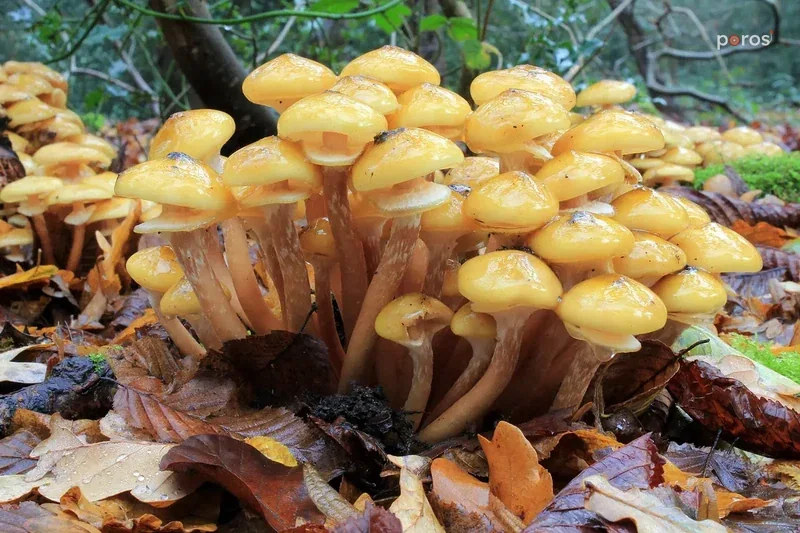 Edible species
not Brick cap
Honey fungus Armillaria mellea
Honey fungus has a distinct ring on the stem, a white spore print and dark scales on the cap.
Brick cap and its look-alikes compared
| Species | Status | Underside | Spore print | Season |
|---|---|---|---|---|
| Brick capHypholoma lateritium | Inedible | Crowded; pale yellow-grey when young, later purple-brown, never green | Purple-brown | Sep–Dec |
| Sulphur tuftHypholoma fasciculare | Poisonous | Crowded, adnate gills | Purple-brown | Feb–Apr, Jun, Aug, Oct–Dec |
| Honey fungusArmillaria mellea | Edible species | Whitish to cream gills, slightly decurrent | White | Sep–Jan |
| Deadly galerinaGalerina marginata | Deadly poisonous | Crowded, pale brown when young, tawny when mature | Rusty (snuff) brown | Aug–Nov |
The table is compiled from each species page. The status column is a guide only; do not eat a wild mushroom unless an expert has seen it in person. Compare look-alikes side by side
We advise against eating Hypholoma lateritium. It is eaten in Japan and parts of North America, but British sources and most authorities treat it as inedible and say it may upset the stomach if eaten. The real danger is confusion with the poisonous sulphur tuft and the deadly funeral bell, which grow on the same stumps. If poisoning is suspected, call 112 (Turkish poison centre UZEM: 114) and keep any leftover mushroom.
Frequently asked questions
Are brick caps poisonous?
Most authorities treat it as inedible and say it may upset the stomach if eaten, though it is eaten in Japan and parts of North America. Because it is so easily confused with the poisonous sulphur tuft, we advise against eating it. If poisoning is suspected, call 112 at once (Turkish poison centre: 114) and keep any leftover mushroom.
Are brick caps edible?
We advise against eating Hypholoma lateritium. It is eaten in Japan and parts of North America, but British sources and most authorities treat it as inedible and say it may upset the stomach if eaten. The real danger is confusion with the poisonous sulphur tuft and the deadly funeral bell, which grow on the same stumps.
How do you tell it from the sulphur tuft?
Its cap is brick-red and its young gills yellow-grey. The sulphur tuft has a sulphur-yellow cap, greenish young gills and a very bitter taste.
Is it found in Turkey?
Yes. GBIF holds 14 records from Istanbul, Trabzon and Kırklareli.
When does it appear?
In late autumn and early winter, from September to December; into January in mild winters.
Can it be mistaken for honey fungus?
Yes, both grow in tufts on stumps. Honey fungus has a ring and a white spore print; this species has no ring and a purple-brown spore print.
How do you take a spore print?
Place the cap gills-down on paper that is half white and half black, cover it and wait a few hours.
Can it be confused with Galerina?
Yes. The funeral bell also grows tufted on stumps; it has a ring and a rusty brown spore print. Small brownish mushrooms tufted on stumps should not be picked.
When is brick cap season in Turkey?
In our calendar, brick cap season runs Sep–Dec. Fruits in late autumn and early winter, from September to December; into January in mild winters.
Where do brick caps grow?
A saprotroph of dead wood, growing in dense tufts on the stumps and roots of oak, beech and other broadleaf trees.
Where are brick caps found in Turkey?
Our map data holds 14 GBIF records from Turkey (Istanbul, Trabzon, Kırklareli) and seven research-grade iNaturalist observations. It can share stumps with the sulphur tuft.
What can the brick cap be confused with?
The brick cap can be confused with sulphur tuft (Hypholoma fasciculare, poisonous), honey fungus (Armillaria mellea, edible species) and deadly galerina (Galerina marginata, deadly). Look-alikes are compared on this page.
What is the brick cap called in Turkish?
In Turkish, the brick cap (Hypholoma lateritium) is called Hypholoma lateritium.
Related species
-
 NamekoPholiota microsporaEdible species
-
 Sheathed woodtuftKuehneromyces mutabilisEdible species
-
Sulphur tuftHypholoma fascicularePoisonous
-
 Wine capStropharia rugosoannulataEdible species
-
 Amethyst deceiverLaccaria amethystinaInedible
-
 Anemone stinkhornAseroe rubraInedible
-
 Artist’s bracketGanoderma applanatumInedible
-
 Barometer earthstarAstraeus hygrometricusInedible
Sources
- Wikipedia (EN): Hypholoma lateritium en.wikipedia.org
- First Nature: Hypholoma lateritium, Brick Tuft first-nature.com
- iNaturalist: Hypholoma lateritium inaturalist.org
All sources (4)
- GBIF: Türkiye kayıtları gbif.org
Photo credits (10)
- File:Hypholoma lateritium 107883445.jpg · Nova Patch · CC BY-SA 4.0
- Hypholoma lateritium · iNaturalist #4857139 · Dilrukshan Priyantha Wijesinghe · CC BY 4.0
- File:Hypholoma lateritium 454204692.jpg · Matej Frančeškin · CC BY 4.0
- Hypholoma lateritium · iNaturalist #9577466 · mycowalt · CC BY-SA 4.0
- File:Ziegelrote Schwefelkopf Hypholoma lateritium.jpg · Holger Krisp · CC BY 3.0
- File:Hypholoma lateritium 454204703.jpg · Matej Frančeškin · CC BY 4.0
- Hypholoma lateritium · iNaturalist #249425992 · kedgehog · CC BY 4.0
- Hypholoma lateritium · iNaturalist #64603213 · rainerburkard · CC BY 4.0
- iNaturalist: İstanbul, 17 Mar 2024 · Umut Nuri Erdoğan · CC BY
- iNaturalist: İstanbul, 11 Jan 2024 · Umut Nuri Erdoğan · CC BY


