
Slippery jack (sticky bun)
Suillus luteus · Suillaceae

The slippery jack (Suillus luteus) is a bolete that lives only with pine, with a chocolate to reddish-brown cap that is slimy when wet and a purplish-brown, membranous ring on its stem. The ring sets it apart from the other Suillus species on our site. It is edible, but the slimy cap skin should be peeled; it causes allergic reactions in some people.
Also called: slippery jack, sticky bun Turkish: Kaypak mantar Synonyms: Boletus luteus
Last updated: Prepared by the Poros Mantar editorial team3 sources checkedReport a correction
Slippery jack photos
-
© Tim Sage · CC BY-SA 4.0
-

Stem© Tim Sage · CC BY-SA 4.0
-

Pores© southerndon · CC0
-

© Sam Allon · CC0
-

© Richard Daniel (RichardDaniel) at Mushroom Observer, a source for myc · CC BY-SA 3.0
-

© Davide Puddu · CC BY 4.0
-

© bjoerns · CC BY-SA 4.0
-

© Björn S... · CC BY-SA 2.0
-

Pores© bjoerns · CC BY-SA 4.0
-

Ring© mswiseman · CC BY 4.0
-
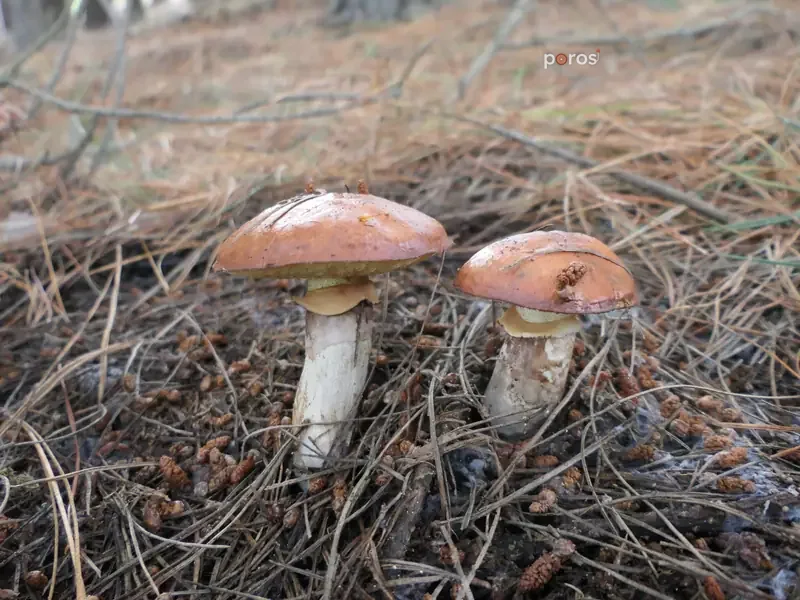
In habitat© derek_onley · CC BY 4.0


These are licensed records of this species; photos alone are not enough to identify a mushroom.
Is the slippery jack poisonous?
The slippery jack is not listed as poisonous in our sources. The slippery jack is edible, but the sticky cap skin should be peeled and the mushroom well cooked; the skin causes stomach upsets and allergic skin reactions in some people. Even so, never eat a wild one without certain identification.
Is the slippery jack edible?
The slippery jack is listed as edible in our sources; even so, never eat a wild one without certain identification. Do not eat it without an expert's approval. The slippery jack is edible, but the sticky cap skin should be peeled and the mushroom well cooked; the skin causes stomach upsets and allergic skin reactions in some people. Leave very old, waterlogged specimens. Do not eat a wild one an expert has not checked.
How to recognise it
Appearance of slippery jack
No volva Spore print: Brown Mild and pleasant.
Where does slippery jack grow?
It grows in pine forests, especially under Scots and black pine, and in pine plantations, on sandy, acidic soil; it has spread with pine plantations into the Southern Hemisphere.
In Turkey
Our map data includes 4 research-grade Turkish observations on iNaturalist; GBIF shows no Turkish record. Worldwide it is native to the pine forests of Europe and Asia and has been carried with pine plantations to South America, Africa and Oceania.
Our map has no observations of slippery jack from Turkey yet.
Look-alikes
What could it be confused with?
Slippery jack can be mistaken for the species below. Each comparison shows Slippery jack on the left, the look-alike on the right, and how to tell them apart.

Weeping bolete Suillus granulatus
How to tell Its stem has no ring; milky droplets ooze from its pores and from the granules at the top of its stem.
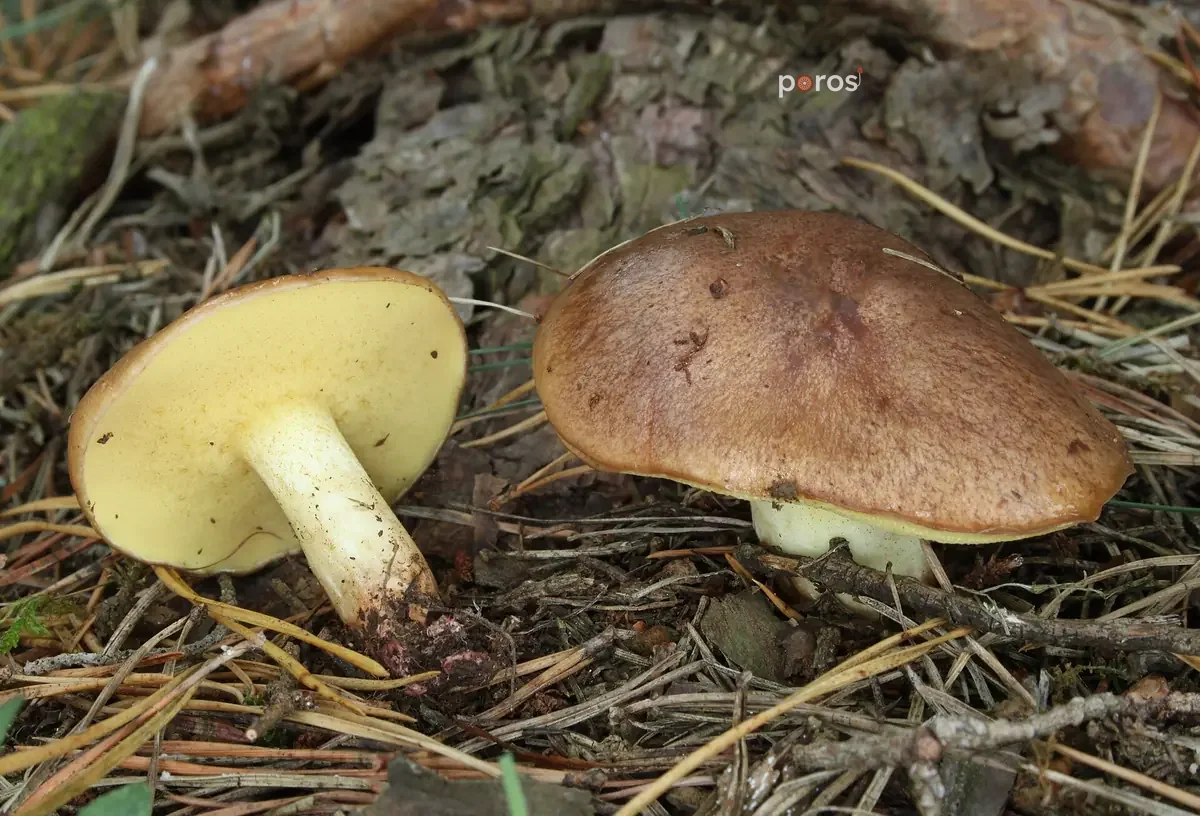
Suillus collinitus Suillus collinitus
How to tell It has no ring and has pink mycelium at the stem base.
Other look-alikes (1)
not Slippery jack
Jersey cow mushroom Suillus bovinus
It has no ring, its pores are large and angular, and it grows in dense groups.
Slippery jack and its look-alikes compared
| Species | Status | Underside | Spore print | Season |
|---|---|---|---|---|
| Slippery jackSuillus luteus | Edible species | Pores small, lemon to olive yellow | Brown | Aug–Nov |
| Weeping boleteSuillus granulatus | Edible species | Small pale yellow pores instead of gills, weeping milky droplets when young | Brownish to mustard-brown | May–Jun, Sep–Dec |
| Suillus collinitus | Inedible | Small, angular, golden-yellow pores instead of gills, turning olive-yellow with age and not changing colour much when pressed | Ochre-brown | Aug–Jan, May |
The table is compiled from each species page. The status column is a guide only; do not eat a wild mushroom unless an expert has seen it in person. Compare look-alikes side by side
How to cook and eat slippery jack
Safety first. The slippery jack is edible, but the sticky cap skin should be peeled and the mushroom well cooked; the skin causes stomach upsets and allergic skin reactions in some people. Leave very old, waterlogged specimens. Do not eat a wild one an expert has not checked. If poisoning is suspected, call 112 (Turkish poison centre UZEM: 114) and keep any leftover mushroom.
How to store slippery jack
Grow it, buy it
Slippery jack price list
| Product | Poros Mantar | Market |
|---|---|---|
| Fresh slippery jack | Made to order · ask | — |
| Dried slippery jack | Made to order · ask | — |
We make our slippery jack products in small batches, to order; send a request and we email you the price and delivery date. The market column shows prices seen on other sellers' pages on the date given; they are not our prices and may have changed.
Frequently asked questions
Is the slippery jack poisonous?
The slippery jack is not listed as poisonous in our sources. The slippery jack is edible, but the sticky cap skin should be peeled and the mushroom well cooked; the skin causes stomach upsets and allergic skin reactions in some people. Even so, never eat a wild one without certain identification.
Is the slippery jack edible?
The slippery jack is listed as edible in our sources; even so, never eat a wild one without certain identification. Do not eat it without an expert's approval. The slippery jack is edible, but the sticky cap skin should be peeled and the mushroom well cooked; the skin causes stomach upsets and allergic skin reactions in some people. Leave very old, waterlogged specimens. Do not eat a wild one an expert has not checked.
Why is it called slippery?
Its cap is slimy and slick when wet and slips through the fingers.
How do you tell it from other Suillus?
By the distinct, purplish-brown, membranous ring on its stem. The weeping bolete and Suillus collinitus have no ring.
How do you peel the cap skin?
Catch the skin at the cap edge with a knife and pull it off; it peels more easily when dry. On old specimens the spongy pore layer can be removed too.
Does it grow in Turkey?
iNaturalist has 4 research-grade Turkish observations; it may be found in pine forests.
When does it fruit?
From late summer to late autumn, after rain.
Why has it spread around the world?
Because it travelled with the roots of pine seedlings, it has become common in pine plantations in South America, Africa and Oceania.
When is slippery jack season in Turkey?
In our calendar, slippery jack season runs Aug–Nov. It fruits from late summer to late autumn after rain under pine.
Where does slippery jack grow?
It grows in pine forests, especially under Scots and black pine, and in pine plantations, on sandy, acidic soil; it has spread with pine plantations into the Southern Hemisphere.
Where is slippery jack found in Turkey?
Our map data includes 4 research-grade Turkish observations on iNaturalist; GBIF shows no Turkish record. Worldwide it is native to the pine forests of Europe and Asia and has been carried with pine plantations to South America, Africa and Oceania.
What can slippery jack be confused with?
Slippery jack can be confused with weeping bolete (Suillus granulatus, edible species), suillus collinitus (Suillus collinitus, inedible) and jersey cow mushroom (Suillus bovinus, edible species). Look-alikes are compared on this page.
What is slippery jack called in Turkish?
In Turkish, slippery jack (Suillus luteus) is called Kaypak mantar.
Related species
-
Weeping boleteSuillus granulatusEdible species
-
Suillus collinitusSuillus collinitusInedible
-
 Almond mushroomAgaricus subrufescensEdible species
-
 Anatolian matsutakeTricholoma anatolicumEdible species
-
 Aniseed funnelClitocybe odoraEdible species
-
 Bay boleteImleria badiaEdible species
-
 Beefsteak fungusFistulina hepaticaEdible species
-
 Black morelMorchella elataEdible species
Sources
- Wikipedia (EN): Suillus luteus en.wikipedia.org
- iNaturalist: Suillus luteus (Türkçe ad ve Türkiye gözlemleri) inaturalist.org
- GBIF: Türkiye kayıtları gbif.org
Photo credits (11)
- Suillus luteus · iNaturalist #9187824 · Tim Sage · CC BY-SA 4.0
- Suillus luteus · iNaturalist #9187824 · Tim Sage · CC BY-SA 4.0
- Suillus luteus · iNaturalist #108416993 · southerndon · CC0
- Suillus luteus · iNaturalist #138031037 · Sam Allon · CC0
- File:Suillus luteus 1255228.jpg · Richard Daniel (RichardDaniel) at Mushroom Observer, a source for myc · CC BY-SA 3.0
- File:Suillus luteus 8.jpg · Davide Puddu · CC BY 4.0
- File:Suillus luteus 9.jpg · bjoerns · CC BY-SA 4.0
- File:Suillus luteus (37793987452).jpg · Björn S... · CC BY-SA 2.0
- File:Suillus luteus 10.jpg · bjoerns · CC BY-SA 4.0
- File:Suillus luteus 7.jpg · mswiseman · CC BY 4.0
- Suillus luteus · iNaturalist #156854415 · derek_onley · CC BY 4.0


