
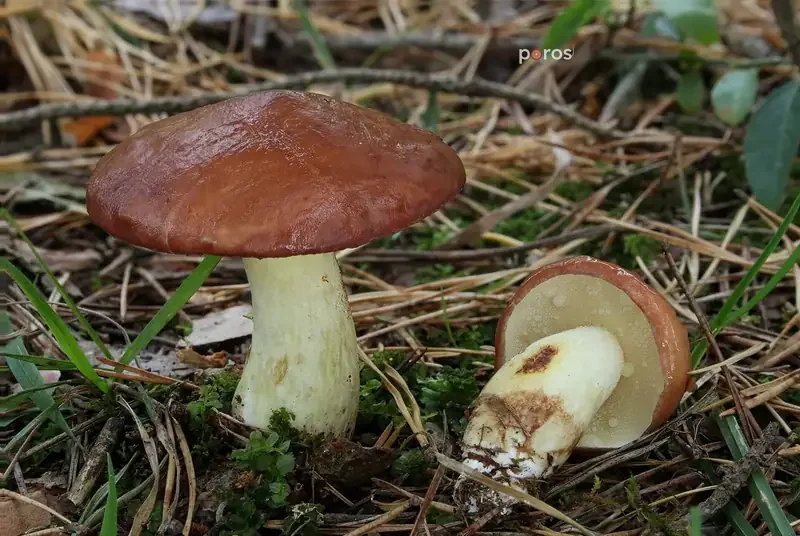


Weeping bolete
Suillus granulatus · Suillaceae
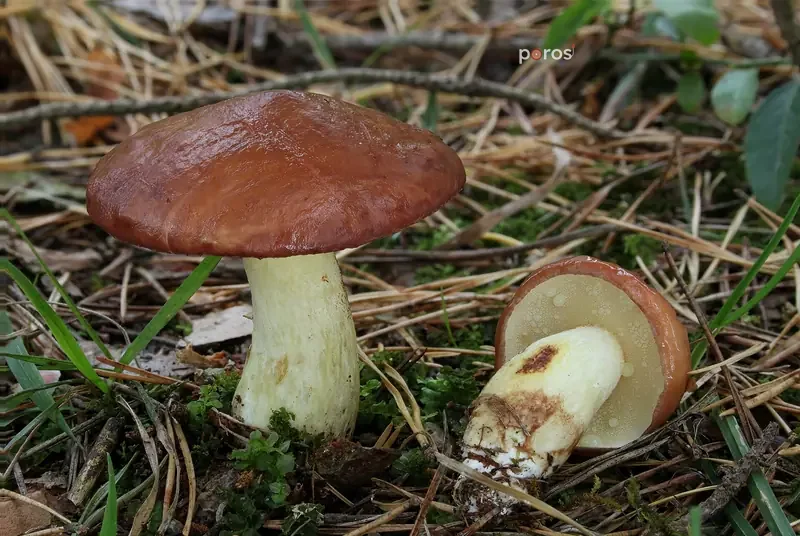
A pinewood mushroom with a sticky orange-brown cap, yellow pores instead of gills and no ring.
Last updated: Prepared by the Poros Mantar editorial team5 sources checkedReport a correction
A pinewood mushroom with a sticky orange-brown cap, yellow pores instead of gills and no ring. When young its pores weep milky droplets and the upper stem is covered in granular dots. It is known as an edible species, but it is still never eaten without an expert's identification.
Also called: granulated bolete, dotted-stalked suillus Turkish: Taneli suillus
How to recognise it
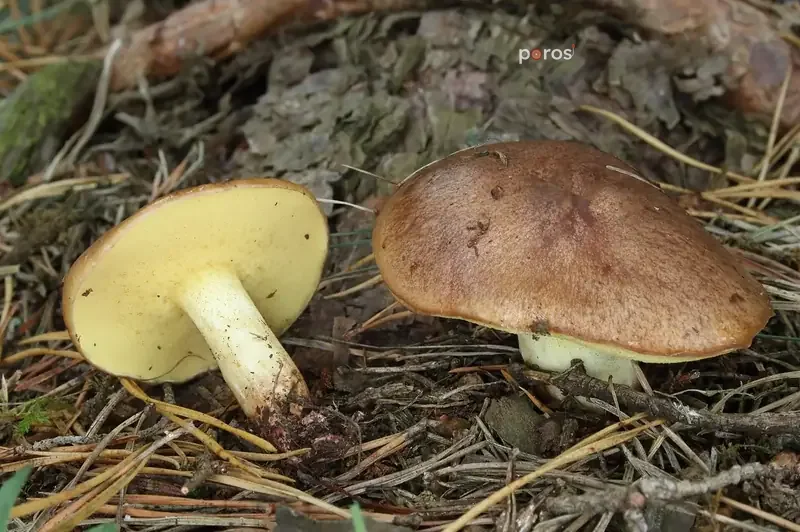
Weeping bolete, part by part
No ring or volva Spore print: Brownish to mustard-brown Faintly fruity; pale yellow flesh that does not change colour when cut.


When and where
May–Jun, Sep–Dec
- Jan
- Feb
- Mar
- Apr
- Mayin season
- Junin season
- Jul
- Aug
- Sepin season
- Octin season
- Novin season
- Decin season
In Europe it fruits from early summer to late autumn; Turkish GBIF records fall in April–May and September–December, mostly in October.
Type Edible
In season MayJuneSeptemberOctoberNovemberDecember
Regions Central Anatolia RegionMediterranean RegionAegean RegionMarmara RegionOsmaniyeMuğlaAnkaraBursaIstanbulKırklareli
Where do weeping boletes grow?
It grows in groups under pines, often on chalky soil and also in parks and plantations, forming a mycorrhizal partnership with pine.
Where is weeping boletes found in Turkey?
Turkish records are scattered from the Marmara region to the Mediterranean: Ankara, Kırklareli, İstanbul, Bursa, Muğla and Osmaniye.
Which months
- Jan0
- Feb0
- Mar0
- Apr1
- May1
- Jun0
- Jul0
- Aug0
- Sep1
- Oct4
- Nov1
- Dec2
6 provinces, 10 observations (GBIF, iNaturalist); months from observation dates. Record density also reflects where observers work.
Latest weeping bolete observations
-
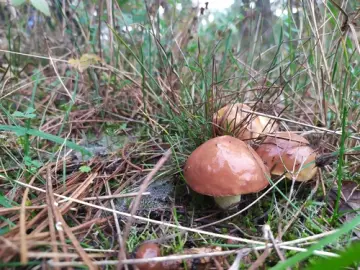 Kırklareli15 Nov 2020 · iNaturalist© Asrın Akıncıoğlu · CC BY
-
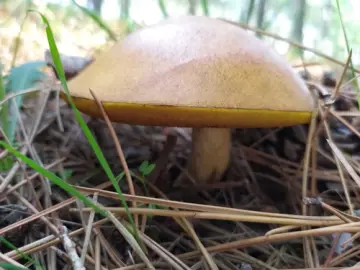 Kırklareli26 Oct 2019 · iNaturalist© Asrın Akıncıoğlu · CC BY
-
 Illustrative
Bursa29 May 2026 · iNaturalist
-
 Illustrative
Ankara7 Dec 2025 · iNaturalist
-
 Illustrative
Ankara15 Oct 2025 · iNaturalist
-
 Illustrative
İstanbul29 Sep 2025 · GBIF
-
 Illustrative
İstanbul17 Apr 2025 · iNaturalist
-
 Illustrative
Osmaniye7 Oct 2024 · iNaturalist
- See on the map
On "illustrative" cards the image is a photo of the species; the observation photo cannot be shown here because of its licence, but can be seen at the source.
Look-alikes
What could it be confused with?
Weeping bolete can be mistaken for the species below. Each card shows the look-alike and how it differs from Weeping bolete.
 Edible species
not Weeping bolete
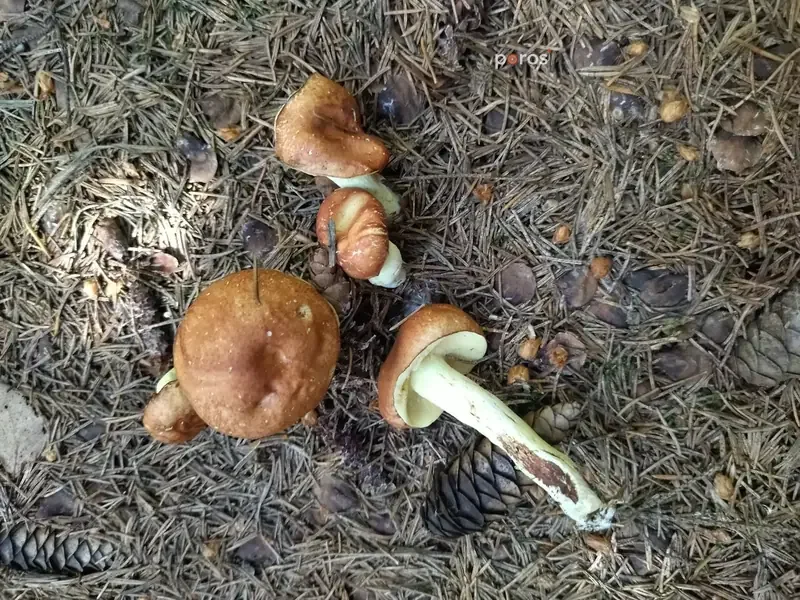
Slippery jack Suillus luteus
Has a distinct ring on the stem and a darker, chocolate-brown cap.
 Inedible
not Weeping bolete
Peppery bolete Chalciporus piperatus
Smaller, with rusty-red pores and a very peppery taste.
 Poisonous
not Weeping bolete
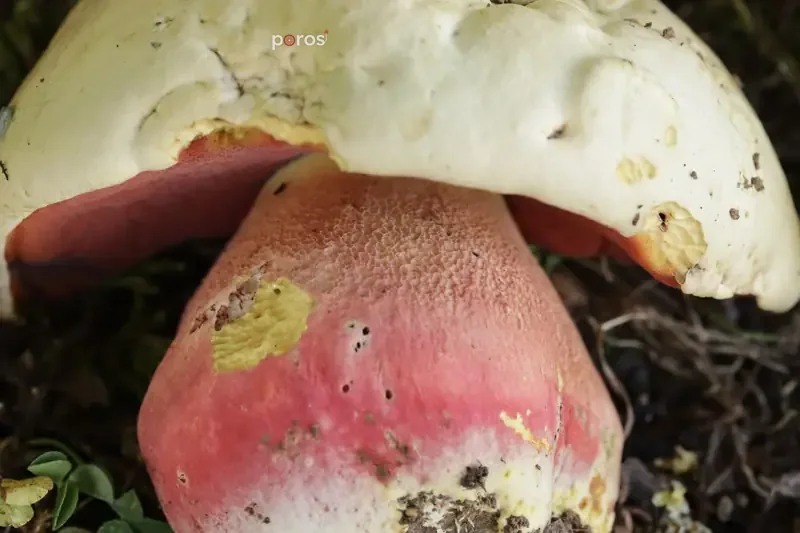
Devil’s bolete Rubroboletus satanas
Much larger, with an off-white to grey cap, red pores, a swollen stem with a red net, flesh that blues when cut, and grows under broadleaf trees.
 Inedible
not Weeping bolete
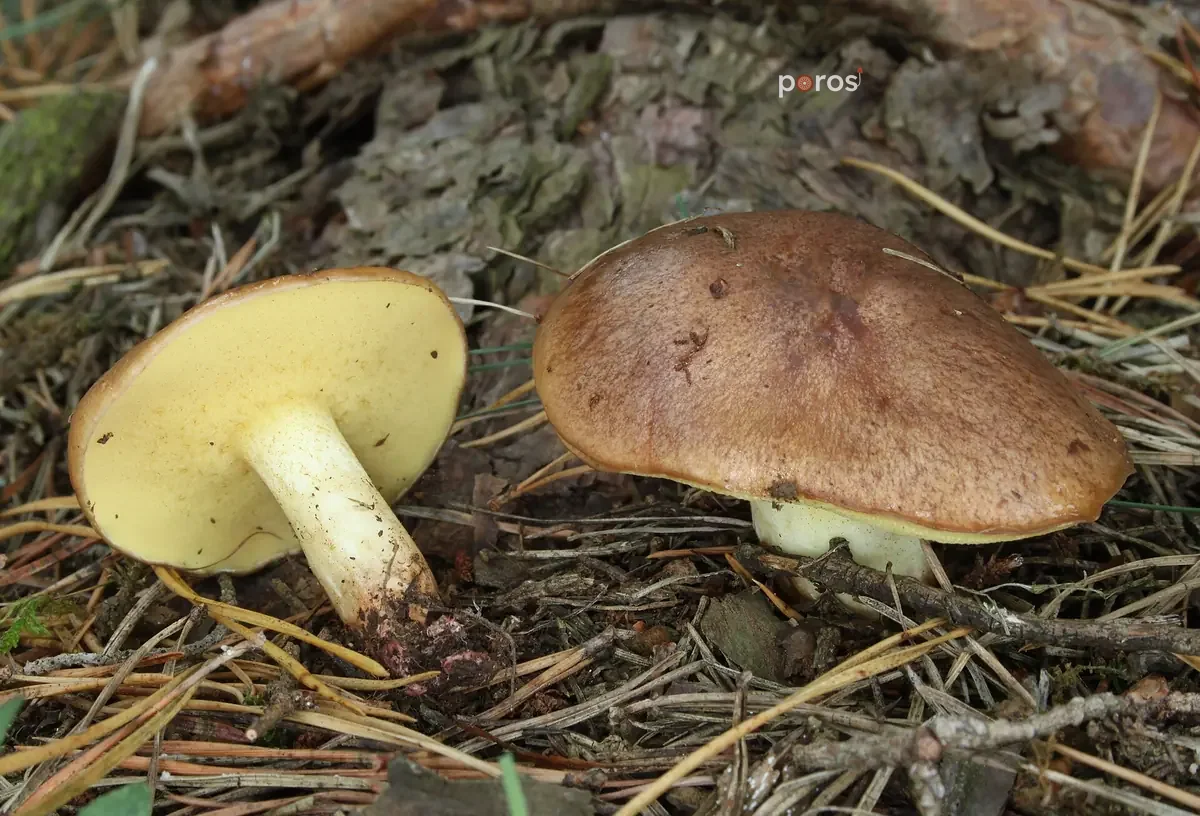
Suillus collinitus Suillus collinitus
Suillus collinitus has a darker chestnut to reddish-brown cap, pink mycelium at the stem base and pores that do not weep milky droplets.
How to cook and eat weeping boletes
Safety first. The slimy cap skin can upset some people's stomachs, so peeling it before cooking is recommended. Boletes with red pores or flesh that turns blue are not this species; it is eaten only after an expert's identification and thorough cooking.
How to prepare it
Peel the slimy cap skin before cooking (gloves help) and scrape away the spongy tubes on large, older caps.
How to cook it
Sauté over a medium heat for about 20 minutes, until its liquid has come out and cooked away.
What goes with it?
- weeping boletes
- new potatoes (about 5)
- carrots
- onions
- sunflower oil
Source: Wikipedia · practical details from our recipes.
Recipe
How to store weeping boletes
Grow it, buy it
Weeping bolete price list
| Product | Us | Market (sourced, dated) |
|---|---|---|
| Fresh weeping boletes | Made to order · ask | — |
| Dried weeping boletes | Made to order · ask | — |
We make our weeping boletes products in small batches, to order; send a request and we email you the price and delivery date. The market column shows prices seen on other sellers' pages on the date given; they are not our prices and may have changed.
Frequently asked questions
Is Suillus granulatus edible?
It is known as an edible species; the slimy cap skin is peeled before cooking. Never eat it without an expert's identification.
Does it have a Turkish name?
We found no established, sourced Turkish folk name; on this page we use the descriptive name taneli suillus.
How do you identify it?
Look for a sticky orange-brown cap, yellow pores that weep droplets when young and a ringless stem dotted with granules at the top, all under pines.
How does it differ from the slippery jack?
The slippery jack (Suillus luteus) has a distinct ring on its stem; the weeping bolete has none.
Does it have poisonous look-alikes?
Boletes with red pores and flesh that turns blue, such as Satan's bolete (Rubroboletus satanas), must not be confused with it; they grow under broadleaf trees.
Where and when does it appear in Turkey?
In pine forests and plantations. GBIF records come from Ankara, Kırklareli, İstanbul, Bursa, Muğla and Osmaniye, in April–May and September–December, mostly in October.
Are weeping boletes edible?
Yes, the weeping bolete is an edible species. Eat a wild one only after an expert has identified it with certainty: it can be confused with Satan's bolete (Rubroboletus satanas). The slimy cap skin can upset some people's stomachs, so peeling it before cooking is recommended. Boletes with red pores or flesh that turns blue are not this species; it is eaten only after an expert's identification and thorough cooking.
When is weeping bolete season in Turkey?
In our calendar, weeping bolete season runs May–Jun, Sep–Dec. In Europe it fruits from early summer to late autumn; Turkish GBIF records fall in April–May and September–December, mostly in October.
Where do weeping boletes grow?
It grows in groups under pines, often on chalky soil and also in parks and plantations, forming a mycorrhizal partnership with pine.
Where are weeping boletes found in Turkey?
Turkish records are scattered from the Marmara region to the Mediterranean: Ankara, Kırklareli, İstanbul, Bursa, Muğla and Osmaniye.
What can the weeping bolete be confused with?
The weeping bolete can be confused with slippery jack (Suillus luteus, edible species), peppery bolete (Chalciporus piperatus, inedible), Satan's bolete (Rubroboletus satanas, poisonous) and suillus collinitus (Suillus collinitus, inedible). Look-alikes are compared on this page.
What is the weeping bolete called in Turkish?
In Turkish, the weeping bolete (Suillus granulatus) is called Taneli suillus.
Related species
-
Suillus collinitusSuillus collinitusInedible
-
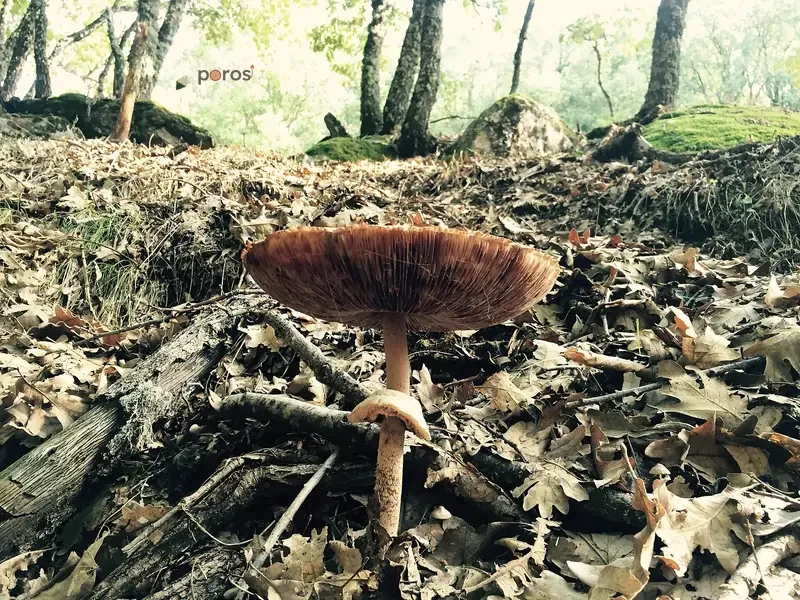 Anatolian matsutakeTricholoma anatolicumEdible species
-
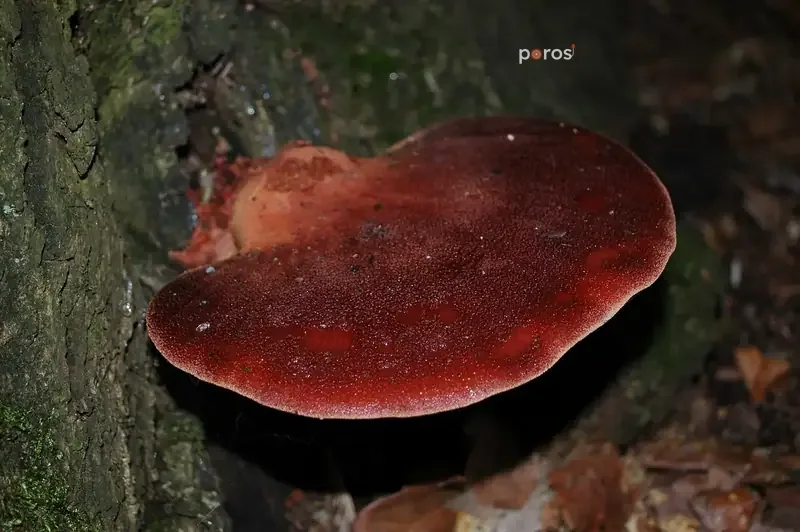 Beefsteak fungusFistulina hepaticaEdible species
-
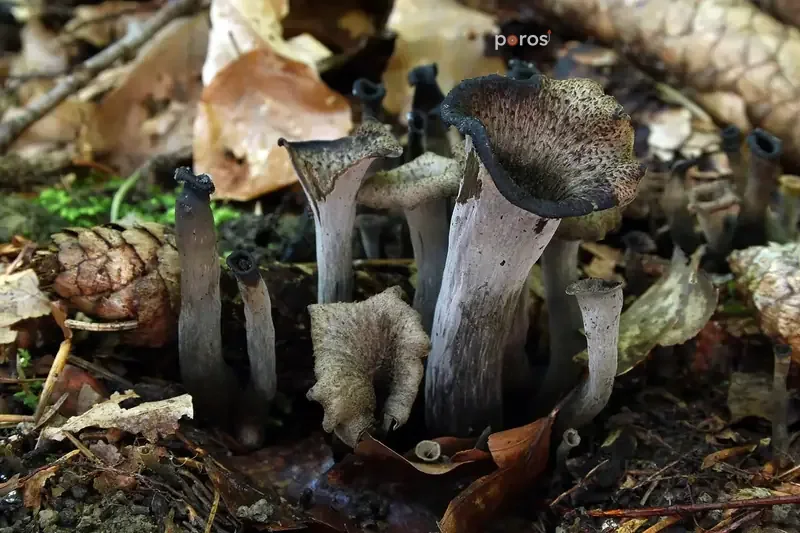 Black trumpetCraterellus cornucopioidesEdible species
-
 Bloody milk capLactarius sanguifluusEdible species
-
 Button mushroomAgaricus bisporusEdible species
-
 Caesar’s mushroomAmanita caesareaEdible species
-
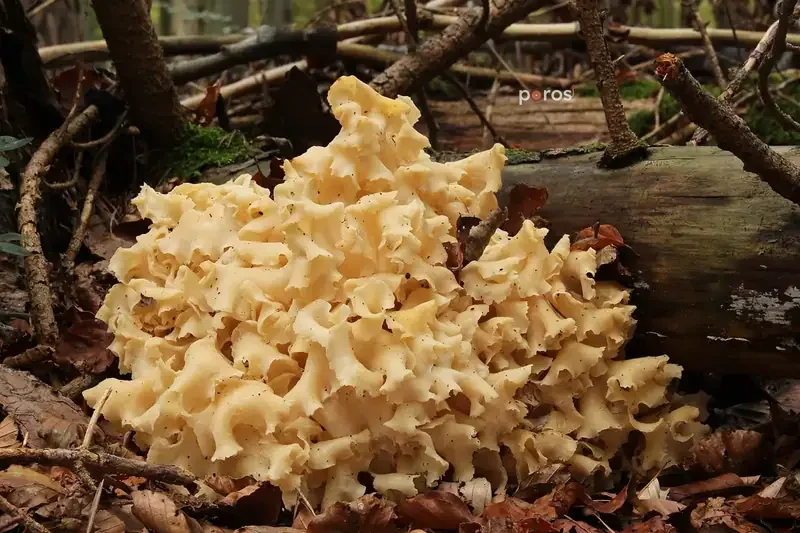 Cauliflower mushroomSparassis crispaEdible species
Sources
- Saba ve ark. (2016), Journal of Environmental Science and Health, Part B: Suillus granulatus ve S. variegatus'ta cıva birikimi pubmed.ncbi.nlm.nih.gov
- Wikipedia (EN): Suillus granulatus en.wikipedia.org
- First Nature: Suillus granulatus first-nature.com
All sources (5)
- GBIF: Türkiye kayıtları gbif.org
- iNaturalist: Türkiye gözlemleri inaturalist.org
Photo credits (10)
- File:Körnchen-Röhrling Suillus granulatus 1.jpg · Holger Krisp · CC BY 3.0
- File:Suillus granulatus 2.jpg · H. Krisp · CC BY 3.0
- File:Suillus granulatus 170918w.JPG · Strobilomyces · CC BY-SA 4.0
- File:Suillus granulatus 16767676.jpg · David Whyte · CC BY-SA 4.0
- Suillus granulatus · iNaturalist #161907092 · Bryan Menger · CC0
- Suillus granulatus · iNaturalist #177980422 · jollero · CC BY-SA 4.0
- Suillus granulatus · iNaturalist #312419212 · Сергей · CC0
- Suillus granulatus · iNaturalist #223749103 · relew · CC BY 4.0
- iNaturalist: Kırklareli, 15 Nov 2020 · Asrın Akıncıoğlu · CC BY
- iNaturalist: Kırklareli, 26 Oct 2019 · Asrın Akıncıoğlu · CC BY


