
Snow false morel (giant false morel, snow morel)
Gyromitra gigas · Discinaceae

Gyromitra gigas, the snow false morel, is a false morel of spring mountain forests where the snow is melting, with a large, yellowish-brown, brain-like cap and a thick white stem. Its gyromitrin content is reported to be lower than the false morel's, but levels vary and it is not safe to eat. Because it fruits in the same season as morels, it matters in Turkey too: our map data holds one GBIF record and three iNaturalist observations from Turkey.
Also called: giant false morel, snow morel Turkish: Gyromitra gigas Synonyms: Discina gigas, Maublancomyces gigas
Last updated: Prepared by the Poros Mantar editorial team4 sources checkedReport a correction
POISONOUS — do not eat.
Do not eat Gyromitra gigas. Sources report a lower gyromitrin content than the false morel's, but it varies; no false morel is safe. Gyromitrin turns into monomethylhydrazine (a rocket fuel component) in the body; according to sources symptoms begin 6–12 hours later with vomiting, diarrhoea, headache and weakness, and severe cases can bring liver damage, seizures and breakdown of red blood cells. Boiling drives part of the toxin into the steam, so the cook can be poisoned too; no preparation method is safe. If poisoning is suspected, call 112 (Turkish poison centre UZEM: 114) and keep any leftover mushroom.
Snow false morel photos
-
© Павел Кунгуров · CC BY 4.0
-

© Fyodor Pudovikov · CC BY 4.0
-

© Andrejus Gaidamavičius · CC BY 4.0
-

© Andrejus Gaidamavičius · CC BY 4.0
-
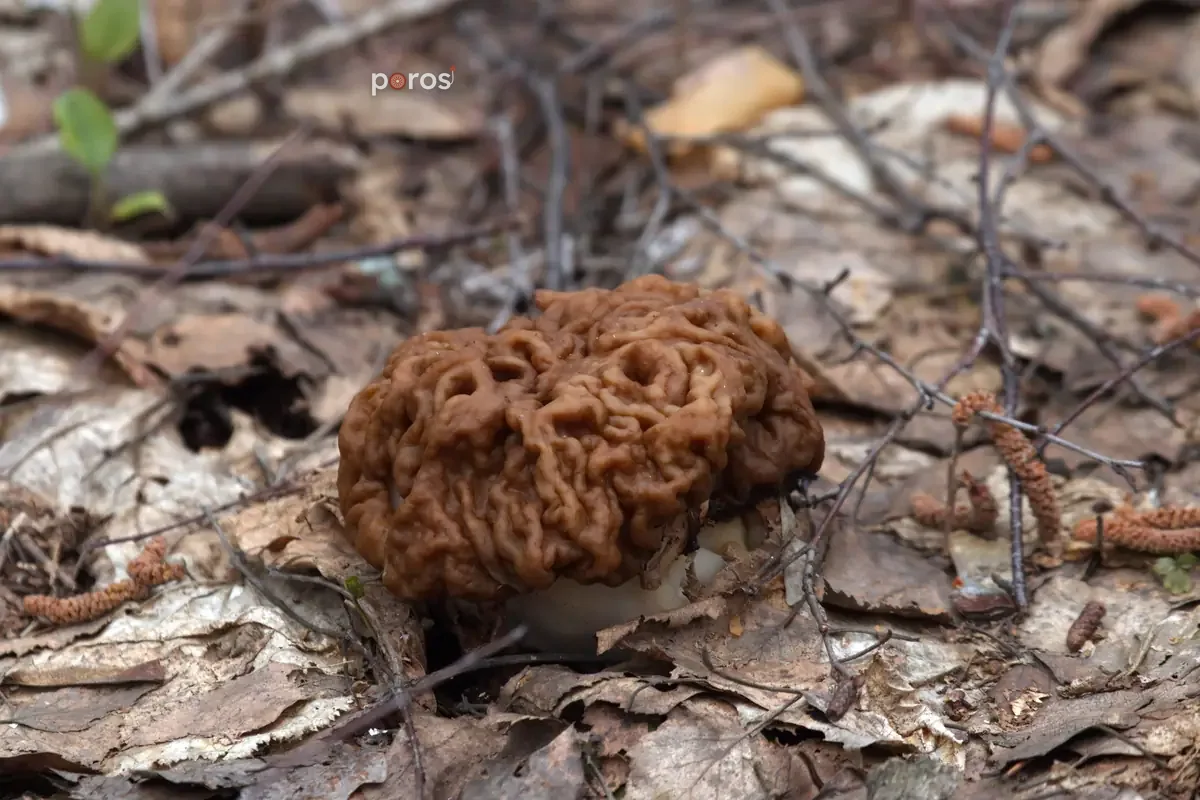
In habitat© Вячеслав Юсупов · CC BY 4.0
-

© Павел Кунгуров · CC BY 4.0
-

© Sergey Khm · CC BY 4.0
-

© Haagen01 · CC0
-

Stem© Nina Filippova · CC BY 4.0
-

Spore print© Nina Filippova · CC BY 4.0
-

© Eugene Popov · CC BY 4.0


These are licensed records of this species; photos alone are not enough to identify a mushroom.
Are snow false morels poisonous?
Yes, snow false morels are poisonous and must not be eaten. it should not be eaten. It carries gyromitrin in variable amounts, and there is no safe way to prepare it. If poisoning is suspected, call 112 at once (Turkish poison centre: 114) and keep any leftover mushroom.
Are snow false morels edible?
No, snow false morels must not be eaten; they are poisonous. Boiling drives part of the toxin into the steam, so the cook can be poisoned too; no preparation method is safe. They can be picked by mistake for morel (Morchella esculenta). If poisoning is suspected, call 112 at once (Turkish poison centre: 114) and keep any leftover mushroom.
How to recognise it
Appearance of snow false morels
No ring or volva Spore print: Pale cream Not distinctive.
Where do snow false morels grow?
Grows from soil near rotting wood in conifer and mixed mountain forest, at snow edges and in freshly melted ground in spring.
In Turkey
Our map data holds one Turkish GBIF record without a province and three research-grade iNaturalist observations (filed as Maublancomyces gigas). The Turkish name iNaturalist gives the species is Ekşimemed. It can turn up in the mountain forests where morels are picked.
GBIF lists 1 records from Turkey; none yet has verified coordinates for our map.
Look-alikes
What is it mistaken for?
Snow false morel can be mistaken for the species below. Each comparison shows Snow false morel on the left, the look-alike on the right, and how to tell them apart.
Poisoning risk: Snow false morel gets picked by people who think they have found one of the edible species below. If even one feature does not match, do not eat it.
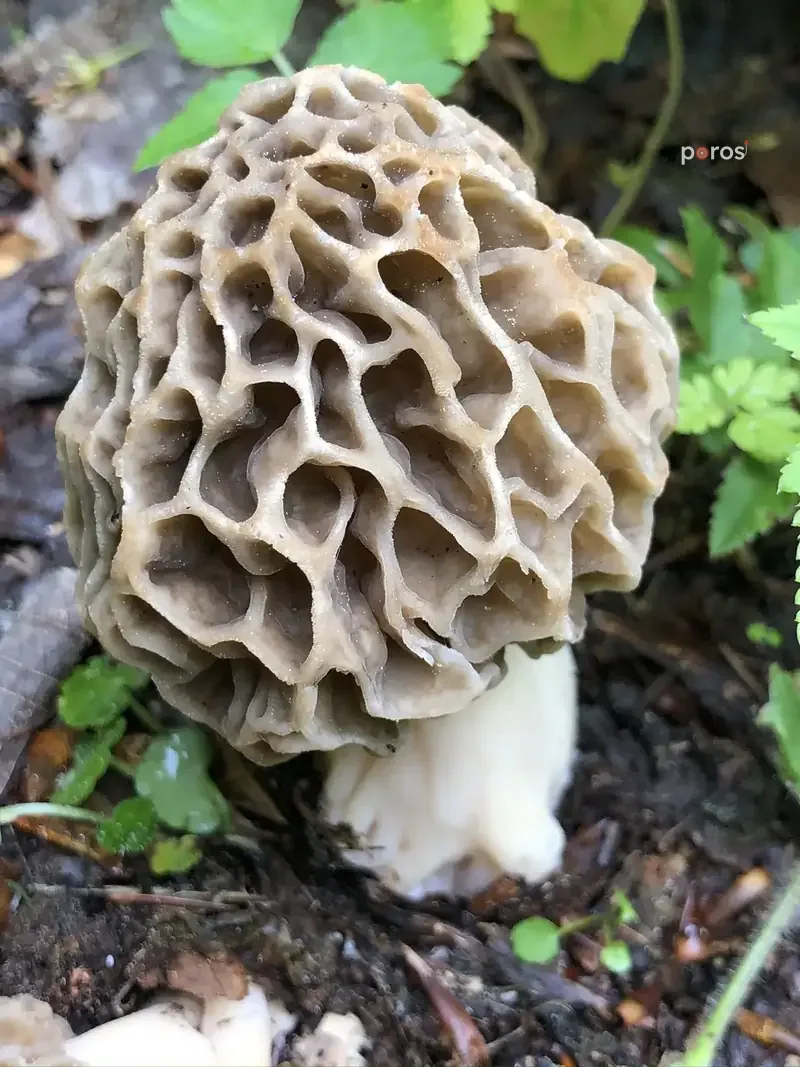
Morel Morchella esculenta
How to tell The morel has a regular honeycomb cap and, cut lengthwise, cap and stem form a single hollow. Gyromitra gigas has a brain-like folded cap and a thick, chambered stem.
Other look-alikes (1)
 Deadly
not Snow false morel
False morel Gyromitra esculenta
The false morel has a darker reddish-brown cap and a slimmer stem; it carries more gyromitrin.
Snow false morel and its look-alikes compared
| Species | Status | Underside | Spore print | Season |
|---|---|---|---|---|
| Snow false morelGyromitra gigas | Poisonous | Inner surface whitish and chambered | Pale cream | Mar–Jun |
| MorelMorchella esculenta | Edible species | No gills or pores | Creamy white to pale ochre (hard to obtain) | Mar–May |
| False morelGyromitra esculenta | Deadly poisonous | No gills or pits | Whitish to yellowish buff | Mar–May |
The table is compiled from each species page. The status column is a guide only; do not eat a wild mushroom unless an expert has seen it in person. Compare look-alikes side by side
Frequently asked questions
Are snow false morels poisonous?
Yes, snow false morels are poisonous and must not be eaten. it should not be eaten. It carries gyromitrin in variable amounts, and there is no safe way to prepare it. If poisoning is suspected, call 112 at once (Turkish poison centre: 114) and keep any leftover mushroom.
Are snow false morels edible?
No, snow false morels must not be eaten; they are poisonous. Boiling drives part of the toxin into the steam, so the cook can be poisoned too; no preparation method is safe. They can be picked by mistake for morel (Morchella esculenta). If poisoning is suspected, call 112 at once (Turkish poison centre: 114) and keep any leftover mushroom.
Is it found in Turkey?
Yes. GBIF holds one Turkish record and iNaturalist three observations.
How is it told from a morel?
Cut it lengthwise: a morel is one hollow from top to bottom with a honeycomb cap. Gyromitra gigas has a brain-like cap and a thick, chambered stem.
When does it appear?
In spring as the snow melts, from March and up to June at altitude, the same time as morels.
What is Ekşimemed?
It is the Turkish name iNaturalist gives this species; we found no published source on the name's origin.
Does boiling make it safe?
No. Boiling does not remove the toxin fully, and the steam can poison the cook.
When do symptoms start?
In gyromitrin poisoning, according to sources, after 6–12 hours. If in doubt, call 112.
When is snow false morel season in Turkey?
In our calendar, snow false morel season runs Mar–Jun. Fruits in spring as the snow melts or soon after, from March and up to June at altitude; its season overlaps with morels.
Where do snow false morels grow?
Grows from soil near rotting wood in conifer and mixed mountain forest, at snow edges and in freshly melted ground in spring.
Where are snow false morels found in Turkey?
Our map data holds one Turkish GBIF record without a province and three research-grade iNaturalist observations (filed as Maublancomyces gigas). The Turkish name iNaturalist gives the species is Ekşimemed. It can turn up in the mountain forests where morels are picked.
What can the snow false morel be confused with?
The snow false morel can be confused with morel (Morchella esculenta, edible species) and false morel (Gyromitra esculenta, deadly). Look-alikes are compared on this page.
What is the snow false morel called in Turkish?
In Turkish, the snow false morel (Gyromitra gigas) is called Gyromitra gigas.
Related species
-
 Hooded false morelGyromitra infulaPoisonous
-
False morelGyromitra esculentaDeadly poisonous
-
 Cinnamon bracketHapalopilus rutilansPoisonous
-
 Common earthballScleroderma citrinumPoisonous
-
 Common ink capCoprinopsis atramentariaPoisonous
-
 Devil’s boleteRubroboletus satanasPoisonous
-
 Eastern jack-o’-lanternOmphalotus illudensPoisonous
-
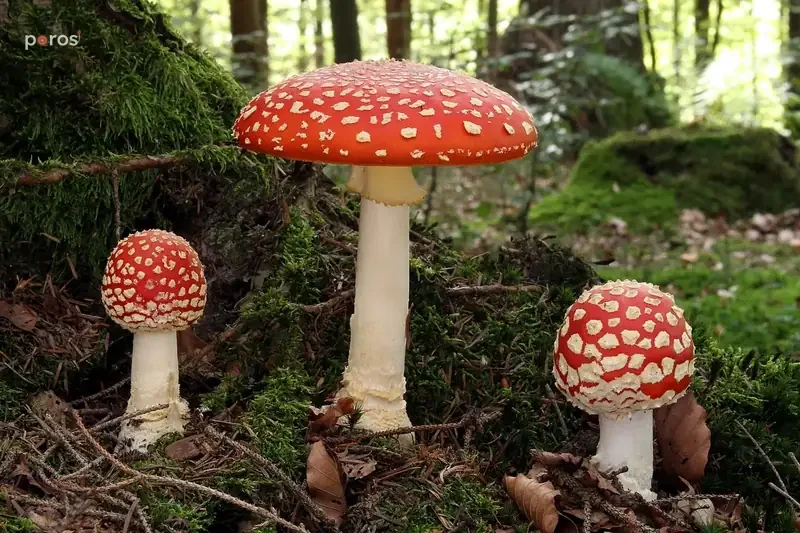 Fly agaricAmanita muscariaPoisonous
Sources
- Lagrange ve Vernoux (2020), Toxins: hidrazin toksinleri taşıyan yalancı ve gerçek kuzugöbeği uyarısı pubmed.ncbi.nlm.nih.gov
- Wikipedia (EN): Discina gigas en.wikipedia.org
- iNaturalist: Maublancomyces gigas inaturalist.org
All sources (4)
- GBIF: Türkiye kayıtları gbif.org
Photo credits (11)
- Maublancomyces gigas · iNaturalist #155518005 · Павел Кунгуров · CC BY 4.0
- Maublancomyces gigas · iNaturalist #115171505 · Fyodor Pudovikov · CC BY 4.0
- Maublancomyces gigas · iNaturalist #367827733 · Andrejus Gaidamavičius · CC BY 4.0
- Maublancomyces gigas · iNaturalist #367827733 · Andrejus Gaidamavičius · CC BY 4.0
- Maublancomyces gigas · iNaturalist #44504283 · Вячеслав Юсупов · CC BY 4.0
- Maublancomyces gigas · iNaturalist #334638609 · Павел Кунгуров · CC BY 4.0
- Maublancomyces gigas · iNaturalist #213493106 · Sergey Khm · CC BY 4.0
- File:Maublancomyces gigas 2025.jpg · Haagen01 · CC0
- File:Gyromitra gigas 19314850.jpg · Nina Filippova · CC BY 4.0
- File:Gyromitra gigas 20368404.jpg · Nina Filippova · CC BY 4.0
- Maublancomyces gigas · iNaturalist #115366091 · Eugene Popov · CC BY 4.0


