

Look-alikes · comparison
Puffball vs earthball: how to tell them apart
The common puffball (Lycoperdon perlatum; Turkish: puf mantarı) and the common earthball (Scleroderma citrinum; Turkish: sarı sert top mantarı) are separated by cutting them in half. The puffball has a thin, spiny skin and is pure white inside when young. The earthball has a thick, hard, scaly skin and is purple-black inside even when young, and it is poisonous.

Common puffball vs common earthball: the three signs that matter
-
Cut in half: pure white or purple-black?
The cut surface is the most reliable sign, so we slice every ball-shaped mushroom in half from top to bottom. A young puffball is pure white, uniform and soft throughout, turning to olive-brown powder as it matures. The earthball is purple-black with white veins even when young, and it also ends up as olive-brown powder. A ball showing the outline of a cap and stem inside may be a death cap egg.
-
Skin: thin and spiny or thick?
The puffball has a thin skin, white and later cream-brown, covered with small conical spines that rub off and leave a net-like pattern behind. The earthball has a hard skin 2–4 mm thick, dirty yellow to yellow-brown, with a cracked, scaly surface. In a cut specimen this thick rind stands out clearly around the dark interior.
-
Shape, base and smell
The puffball is round or shaped like an upside-down pear, narrowing below into a stem-like base, and when ripe it puffs spores like smoke through a hole at the top. The earthball is 3–10 cm across, stemless and potato-shaped, anchored by root-like strands. A young puffball has a pleasant mushroom smell, while a mature earthball smells sharp, metallic or rubbery.
We advise leaving any ball that is not pure white and uniform throughout: yellow, purple, black or brown inside, or the outline of a cap and stem, means it is not eaten. When unsure, we ask an expert.
Side-by-side differences
This table is built from the sourced descriptions on the two species pages.
| Feature | Common puffball | Common earthball |
|---|---|---|
| Cap | 2–6 cm wide and 3–8 cm tall, ball- or pear-shaped; white, then cream-brown, covered in rub-off conical spines that leave a net-like pattern. | 3–10 cm, irregular, potato-shaped ball; skin 2–4 mm thick, tough, dirty yellow to yellow-brown with cracked scales. |
| Club surface | No gills or pores; the inside is pure white and uniform when young and turns into olive-brown powder when ripe. | No gills or pores; the interior (gleba) is purple-black with white veins when young, becoming olive-brown powder at maturity. |
| Stem | No separate stem; the lower part narrows into a stem-like base. | No true stem; it is attached to the soil by root-like strands of mycelium. |
| Ring | None. | Absent. |
| Volva (cup at the base) | None. | Absent. |
| Smell and taste | Pleasant mushroomy smell when young. | A sharp metallic or rubbery smell when mature. |
| Spore print | Olive-brown powder. | Olive-brown to blackish brown (as a powder). |
| Habitat | The common puffball grows in groups in broadleaf and conifer woods, woodland edges and along paths, among leaf litter or grass. | It grows on acidic, sandy or mossy soil under trees such as oak, beech and birch, forming a mycorrhizal partnership with them. |
| Season | Aug–Jan | Mar, Aug–Nov |
| Edibility | Edible species | Poisonous |
The same view of both species


This page is not a definitive identification. The signs we describe help separate these two species, but they do not prove what your mushroom is; other poisonous species can grow in the same place.
Frequently asked questions
Are puffballs and earthballs the same?
No. Both are ball-shaped mushrooms without a cap or gills, but they are separate species. The common puffball (Lycoperdon perlatum) has a thin, spiny skin and is pure white inside when young. The common earthball (Scleroderma citrinum) has a thick, hard, yellow-brown scaly skin, is purple-black inside and is poisonous.
Puffball or earthball: which one is poisonous?
The earthball is the poisonous one, and cooking does not make it safe. The common puffball is not listed as poisonous and is known as an edible species only while it is pure white throughout. A ball that has turned yellow, brown or dark inside is not eaten, and we advise against eating any find an expert has not identified.
How do we tell a puffball from an earthball?
We cut the mushroom in half and look inside. A young puffball is pure white and soft throughout, with a thin, spiny skin. The earthball has a hard, scaly skin 2–4 mm thick, and when cut it is purple-black with white veins even when young.
What happens if someone eats an earthball?
After eating a common earthball, symptoms usually start within half an hour to a few hours: nausea, vomiting, stomach pain and sweating. Dizziness and fainting have been reported in some cases. Cooking does not make the mushroom safe. If poisoning is suspected, keeping a piece of the mushroom helps with identification.
Do puffballs and earthballs grow in the same places?
They can; both occur in woodland and under trees. The common puffball grows in groups in broadleaf and conifer woods, along woodland edges and paths, among leaf litter or grass. The earthball grows on acidic, sandy or mossy soil under oak, beech and birch. In Turkey both have records from Istanbul and Artvin.
When do puffballs and earthballs appear?
The common puffball appears from late summer into winter, from August to January. The earthball is found from late summer to late autumn, so in autumn the two can be out at the same time. The dry, old bodies of both can stay in place for months; these are not collected.
What is the most dangerous puffball lookalike?
The most dangerous lookalike is the death cap (Amanita phalloides) at its egg stage, which resembles a small white ball and is deadly. Cut in half lengthways, it shows the outline of a cap, gills and stem inside, whereas a puffball is completely uniform. This is why every ball-shaped mushroom is cut and checked.
Can a puffball and an earthball be told apart from a photo?
A photo helps, but it is not a firm identification. A picture taken from outside does not show the most important sign, the colour inside. A photo of the cut surface tells us more, yet the hardness of the skin and the smell still cannot be seen. We recommend showing a cut specimen to an expert.
Sources
The facts in this comparison come from the sourced data on our common puffball and common earthball pages:
More comparisons
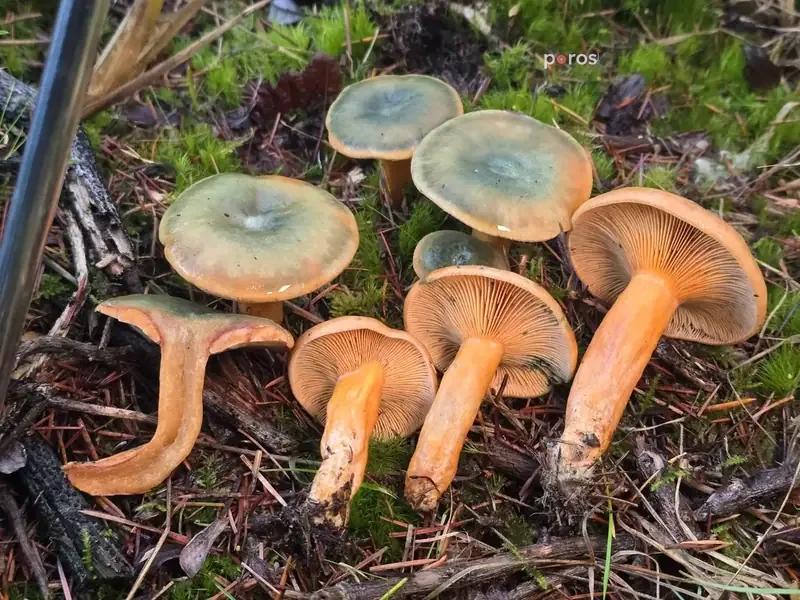
 ≠Saffron milk cap vs woolly milkcapLactarius deliciosus · Lactarius torminosusPoisonous
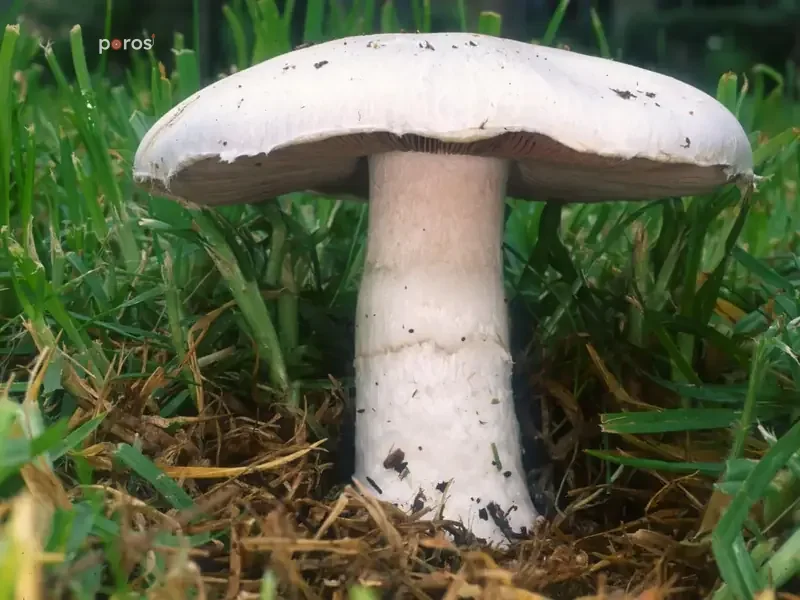
 ≠Field mushroom vs death capAgaricus campestris · Amanita phalloidesDeadly poisonous
 ≠Field mushroom vs yellow stainerAgaricus campestris · Agaricus xanthodermusPoisonous
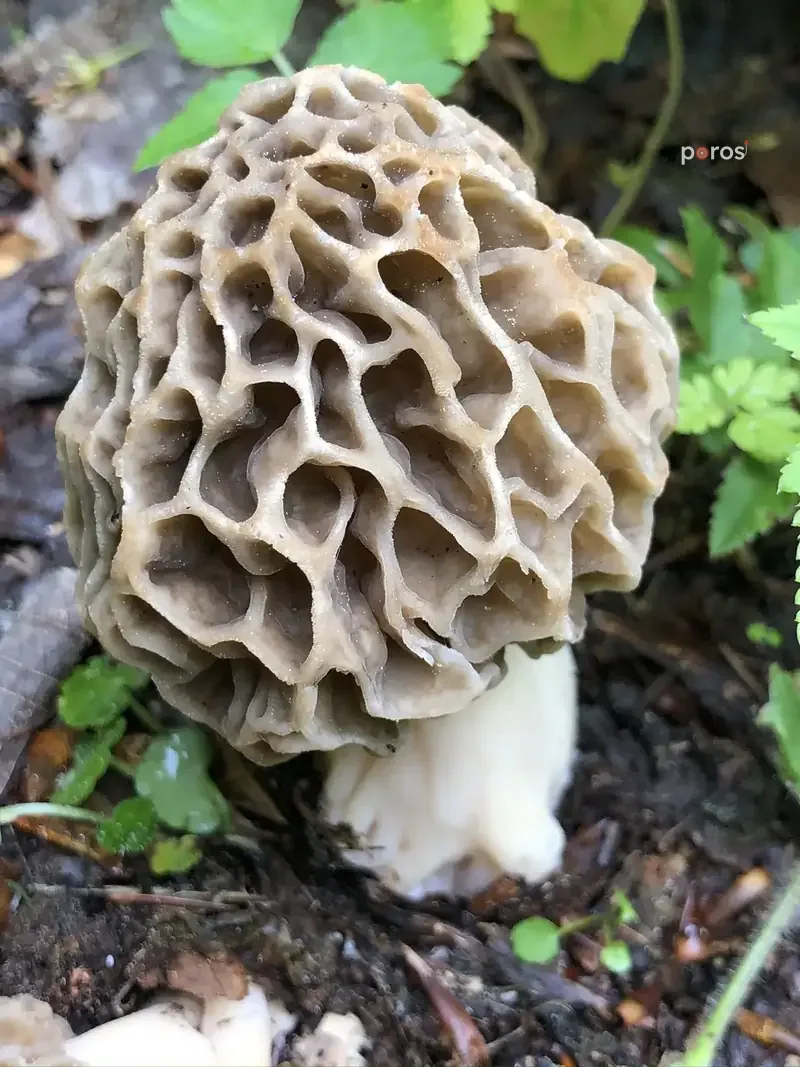
 ≠Morel vs false morelMorchella esculenta · Gyromitra esculentaDeadly poisonous
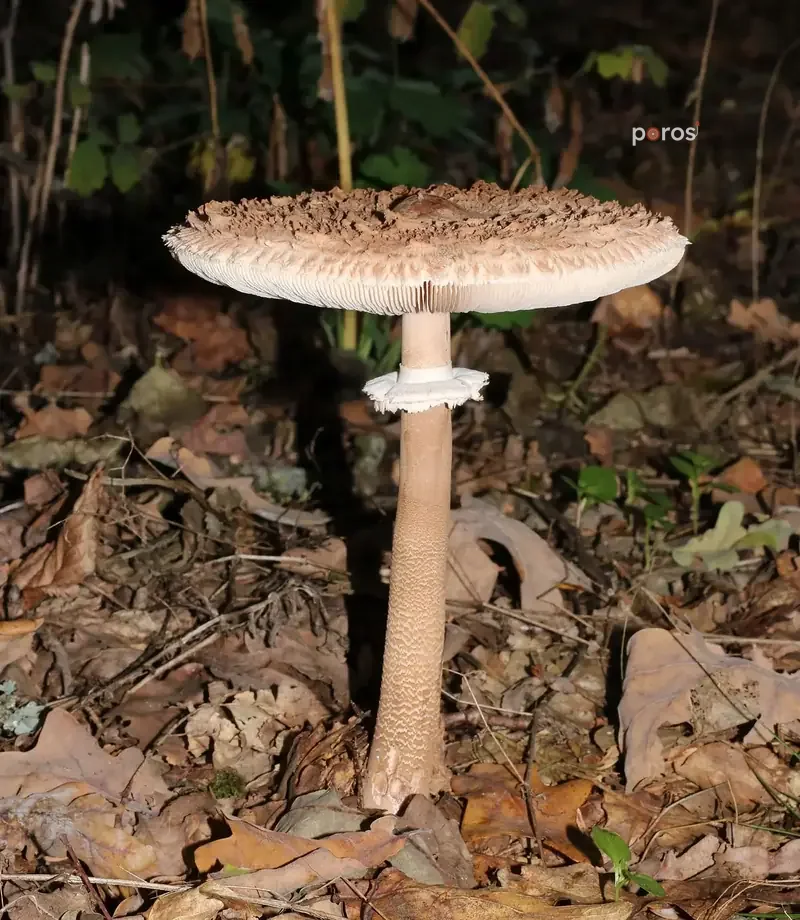
 ≠Parasol mushroom vs green-spored parasolMacrolepiota procera · Chlorophyllum molybditesPoisonous
 ≠Parasol mushroom vs deadly dapperlingMacrolepiota procera · Lepiota brunneoincarnataDeadly poisonous
Last updated: Prepared by the Poros Mantar editorial teamReport a correction