

Look-alikes · comparison
Turkey tail vs hairy curtain crust: how to tell them apart
Turkey tail (Turkish: hindi kuyruğu) and the hairy curtain crust (Turkish: kıllı katmantarı) are two thin, look-alike brackets that grow in tiers on dead broadleaf wood. The difference is underneath: turkey tail is white with tiny pores, while the hairy curtain crust is smooth, pore-free and yellow-orange. Both are tough, and neither is eaten.

Turkey tail vs hairy curtain crust: the three signs that matter
-
Underside: pores or smooth?
The underside of turkey tail (Trametes versicolor) is white to cream with three to five tiny pores per millimetre, and it yellows with age. The underside of the hairy curtain crust (Stereum hirsutum) is smooth, with neither pores nor gills; it is bright yellow-orange, fading to pale cream-brown as it ages. So we turn the bracket over: pores mean turkey tail, a smooth yellow-orange surface means hairy curtain crust.
-
Upper side: colour zones and hairs
Turkey tail is velvety on top, with brown, grey, bluish and cream zones and a pale, wavy edge. The hairy curtain crust is densely hairy on top, banded in yellow, orange and grey-brown, and it fades as it dries. Turkey tail is the more colourful of the two, but once the colours fade the two come close, so the upper side is not enough on its own.
-
Size and shape: fan or crust?
Turkey tail forms fans or rosettes 2–8 cm wide and 1–3 mm thick, with a tough, flexible, leathery texture. The hairy curtain crust forms thin, wavy-edged shelves 1–4 cm wide or spreads over the wood like a crust; its flesh is thin, hard and leathery. Neither has a stem, both are attached directly to the wood, and both leave a white spore print.
Neither species is eaten. We advise against collecting brackets from wood for tea or supplements; we never rely on a single sign, use nothing an expert has not confirmed, and leave doubtful finds where they are.
Side-by-side differences
This table is built from the sourced descriptions on the two species pages.
| Feature | Turkey tail | Hairy curtain crust |
|---|---|---|
| Cap | 2–8 cm across and 1–3 mm thick, fan- or rosette-shaped; velvety, banded in brown, grey, bluish and cream, with a pale, wavy margin. | Brackets or crusts 1–4 cm across, thin with a wavy edge; the top is densely hairy, banded yellow, orange and grey-brown, fading as it dries. |
| Underside | White to cream, with 3–5 tiny pores per millimetre; yellows with age. | The underside is smooth, with no pores or gills; bright yellow-orange, fading to dull buff with age. |
| Stem | No stem; attached directly to the wood. | No stem; it is attached directly to the wood. |
| Ring | None. | Absent. |
| Volva (cup at the base) | None. | Absent. |
| Smell and taste | Not distinctive; the flesh is leathery, tough and flexible. | No distinctive smell; the flesh is thin, tough and leathery. |
| Spore print | White. | White. |
| Habitat | Turkey tail grows on dead hardwood, above all oak, beech and hornbeam, and only rarely on conifers; it decomposes wood and causes a white rot. | On dead or felled hardwood: oak, beech, hornbeam, hazel and poplar branches, stumps and log piles. It causes white rot in the wood. |
| Season | All year | Jul–Oct, Dec–May |
| Edibility | Inedible | Inedible |
The same view of both species


This page is not a definitive identification. The signs we describe help separate these two species, but they do not prove what your mushroom is; both have other look-alikes.
Frequently asked questions
Are turkey tail and hairy curtain crust the same?
No. Turkey tail (Trametes versicolor) is a pored fungus in the family Polyporaceae; the hairy curtain crust (Stereum hirsutum) belongs to the Stereaceae and is smooth underneath. They are confused because both form tiers of thin brackets on dead broadleaf wood, but they are separate species.
How do we tell turkey tail from hairy curtain crust?
We turn the bracket over. Turkey tail has fine white pores underneath; the hairy curtain crust is smooth, pore-free and yellow-orange. The upper side gives a hint too: turkey tail is more colourful and velvety, while the hairy curtain crust is banded in yellow, orange and grey-brown.
Are turkey tail and hairy curtain crust poisonous or eaten?
Neither is eaten. The hairy curtain crust is not known to be poisonous, but it is hard and leathery. For turkey tail our sources give no clear verdict on toxicity, which does not mean it is safe. Its leathery texture means it is not eaten as food, and anyone considering it for health reasons should consult a doctor.
Which mushroom is the false turkey tail?
In our data the name false turkey tail is given to Stereum ostrea. It is larger and more clearly banded than the hairy curtain crust, with shorter hairs on top, and it is also smooth underneath. Separating those two often takes a microscope. Both differ from turkey tail by the same sign: they have no pores underneath.
Does turkey tail have a dangerous look-alike?
None of the look-alikes in our data is marked as poisonous or deadly; all are wood fungi that are not eaten. Trametes hirsuta is grey-cream and coarsely hairy, Trichaptum biforme has a purple-tinged underside, and Bjerkandera adusta has smoky grey pores. That does not make them safe, and we advise against collecting any of them for tea or supplements.
Do turkey tail and hairy curtain crust grow in the same places?
Yes, both grow on dead broadleaf wood, and oak, beech and hornbeam are hosts they share. Turkey tail records in Turkey come mostly from the northern forests of Istanbul, Thrace and the western Black Sea. Most hairy curtain crust records are also from Istanbul, with others from Manisa, Muğla, Bolu, Balıkesir and Bursa.
When can turkey tail and hairy curtain crust be seen?
Both stay on the wood all year. Turkey tail is woody and long-lived; GBIF records from Turkey cluster between October and March, and fresh, colourful brackets are most often seen after autumn and winter rain. Records of the hairy curtain crust are spread over almost every month, peaking in May and in late winter.
Can we tell turkey tail from hairy curtain crust in a photo?
A photo helps, but it is not a firm identification. A picture taken only from above is not enough, because the key sign is underneath: pores or a smooth surface. A close-up of the underside makes it easier, though separating similar species sometimes takes a microscope. Anyone thinking of using a bracket should have the species confirmed by an expert.
Sources
The facts in this comparison come from the sourced data on our turkey tail and hairy curtain crust pages:
More comparisons
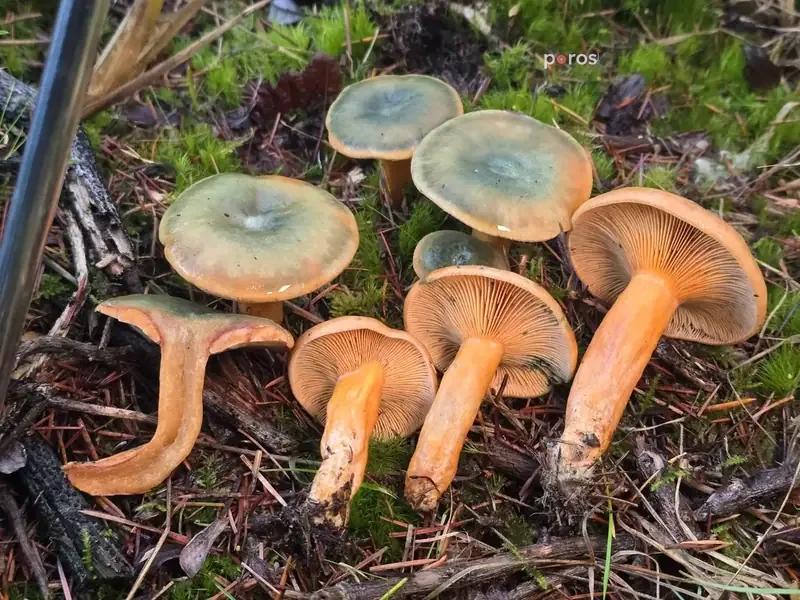
 ≠Saffron milk cap vs woolly milkcapLactarius deliciosus · Lactarius torminosusPoisonous
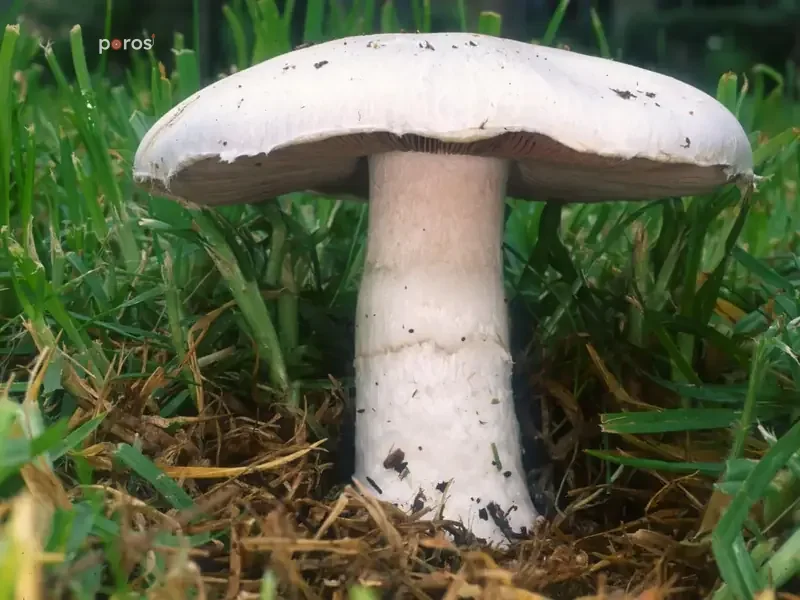
 ≠Field mushroom vs death capAgaricus campestris · Amanita phalloidesDeadly poisonous
 ≠Field mushroom vs yellow stainerAgaricus campestris · Agaricus xanthodermusPoisonous
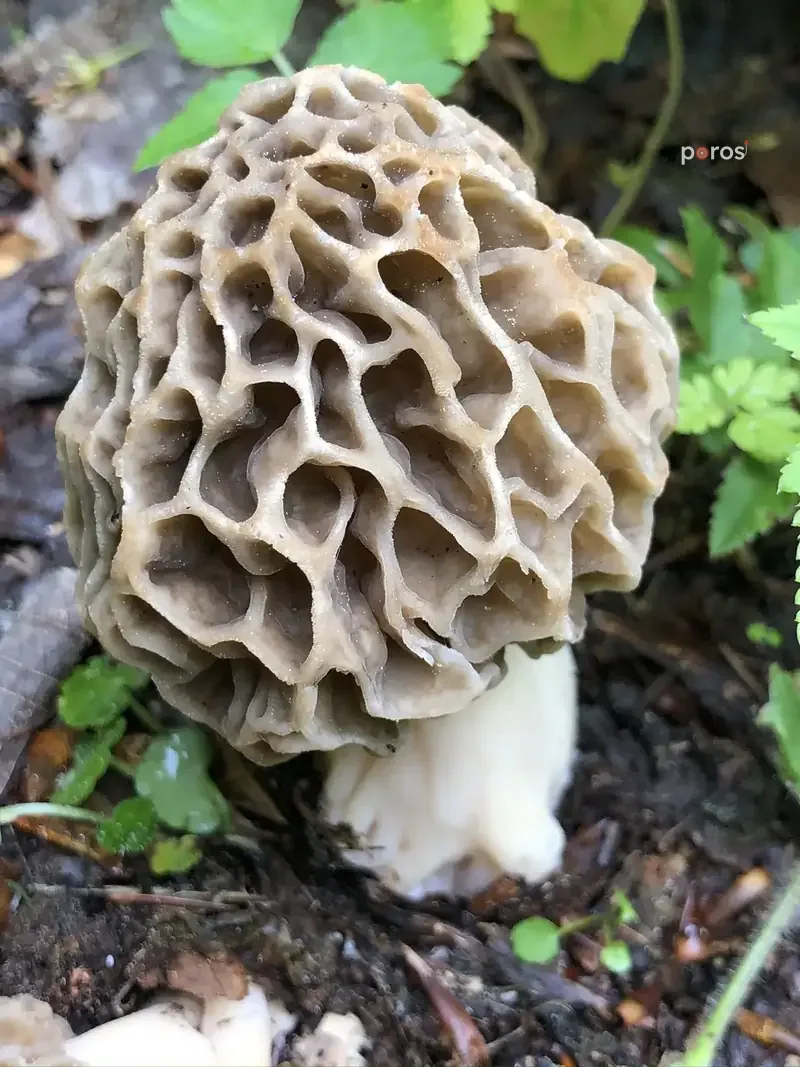
 ≠Morel vs false morelMorchella esculenta · Gyromitra esculentaDeadly poisonous
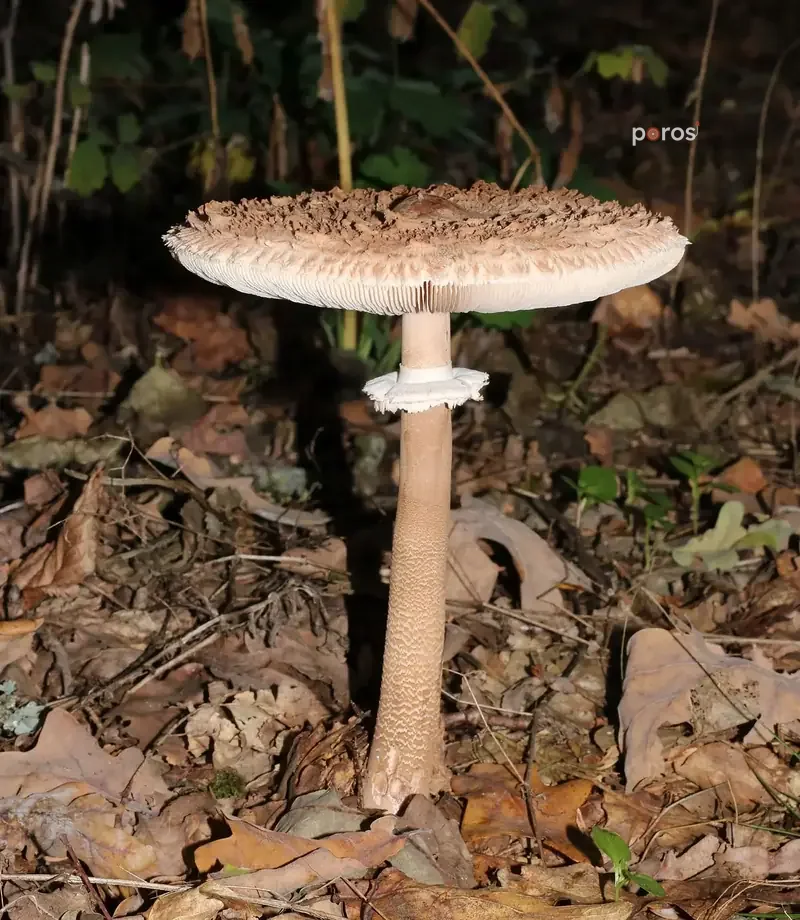
 ≠Parasol mushroom vs green-spored parasolMacrolepiota procera · Chlorophyllum molybditesPoisonous
 ≠Parasol mushroom vs deadly dapperlingMacrolepiota procera · Lepiota brunneoincarnataDeadly poisonous
Last updated: Prepared by the Poros Mantar editorial teamReport a correction