
Blushing bracket (thin-walled maze polypore)
Daedaleopsis confragosa · Polyporaceae

The blushing bracket (Daedaleopsis confragosa) is a thin bracket on dead willow, birch and other hardwoods, with brown bands on top and elongated, maze-like pores underneath. The fresh cream underside turns pinkish-red when touched, hence the name. It is leathery and tough, and not edible.
Also called: blushing bracket, thin-walled maze polypore Turkish: Daedaleopsis confragosa Synonyms: Boletus confragosus, Daedalea confragosa
Last updated: Prepared by the Poros Mantar editorial team5 sources checkedReport a correction
Blushing bracket photos
-
© Björn Sothmann · CC BY-SA 4.0
-

© pinonbistro · CC BY-SA 4.0
-

© Francesco Cecere · CC0
-

© RD · CC BY 4.0
-

© Pavel Kacl · CC BY 4.0
-

© Elena_Sherehora · CC BY 4.0
-

© BrightEmber · CC BY 4.0
-

© threelark · CC BY 4.0
These are licensed records of this species; photos alone are not enough to identify a mushroom.
Are blushing brackets poisonous?
The blushing bracket is not known to be poisonous, but it is leathery and tough and not edible.
Are blushing brackets edible?
No. It is leathery and tough and not edible; it is not known to be poisonous.
How to recognise it
Appearance of blushing brackets
No ring or volva Spore print: White Not distinctive.
When and where
When to find blushing brackets
Aug
It is annual, growing in summer and autumn, and dry fruit bodies stay on the wood in winter. The single Turkish record is from August.
Where do blushing brackets grow?
It grows on dead or weakened willow, birch, alder and beech branches and trunks, more often along damp stream banks, causing white rot.
In Turkey
iNaturalist has 1 research-grade observation from Turkey: Istanbul (1). The records are from August.
- İstanbul
GBIF lists 1 records from Turkey; none yet has verified coordinates for our map.
Look-alikes
What could it be confused with?
Blushing bracket can be mistaken for the species below. Each comparison shows Blushing bracket on the left, the look-alike on the right, and how to tell them apart.

Lumpy bracket Trametes gibbosa
How to tell The lumpy bracket is white to cream on top with a hump near the attachment, and its elongated pores do not blush when touched.
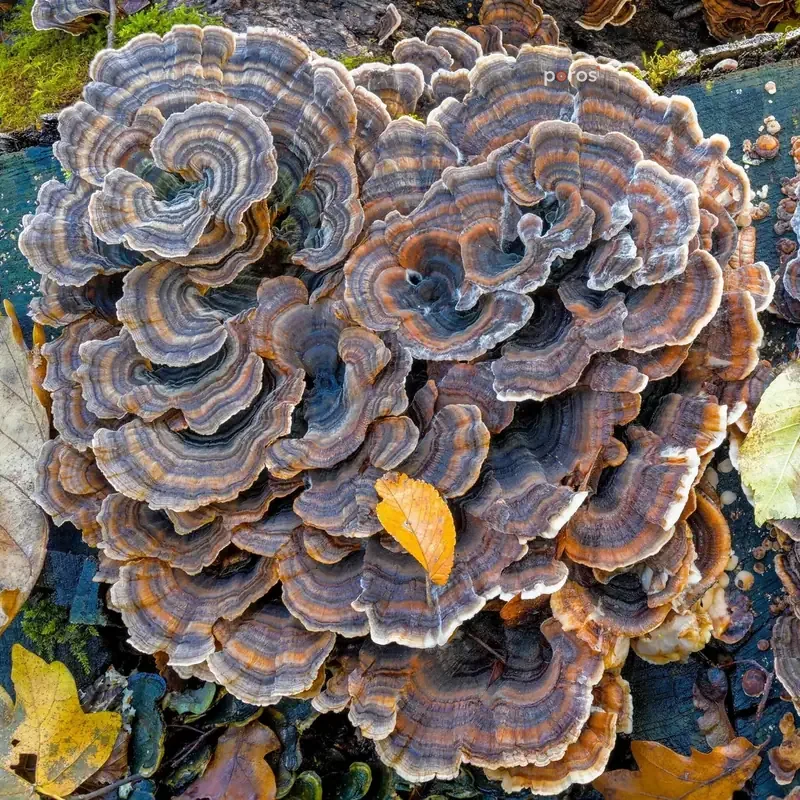
Turkey tail Trametes versicolor
How to tell Turkey tail is thinner, velvety and multi-coloured on top, with small round pores underneath.
Blushing bracket and its look-alikes compared
| Species | Status | Underside | Spore print | Season |
|---|---|---|---|---|
| Blushing bracketDaedaleopsis confragosa | Inedible | Cream to pale grey, elongated to maze-like pores that blush pinkish-red when touched | White | Aug |
| Lumpy bracketTrametes gibbosa | Inedible | White to cream pores elongated into radial slits | White | Mar–Apr, Jun, Oct, Dec |
| Turkey tailTrametes versicolor | Inedible | White to cream, with 3–5 tiny pores per millimetre | White | All year |
The table is compiled from each species page. The status column is a guide only; do not eat a wild mushroom unless an expert has seen it in person. Compare look-alikes side by side
The blushing bracket is not known to be poisonous, but it is leathery and tough and not edible. If poisoning is suspected, call poison control.
Frequently asked questions
Are blushing brackets poisonous?
The blushing bracket is not known to be poisonous, but it is leathery and tough and not edible.
Are blushing brackets edible?
No. It is leathery and tough and not edible; it is not known to be poisonous.
How do you identify it?
A thin, brown-banded bracket on willow or birch with elongated or maze-like pores that blush pinkish-red when touched.
What can it be confused with?
The main look-alikes are: Lumpy bracket, Turkey tail. The differences are listed in the look-alikes section; with poisonous look-alikes, always check the cross-section and habitat.
Where does it grow?
It grows on dead or weakened willow, birch, alder and beech branches and trunks, more often along damp stream banks, causing white rot.
When does it appear?
It is annual, growing in summer and autumn, and dry fruit bodies stay on the wood in winter. The single Turkish record is from August.
Why does it blush?
Its fresh pore surface turns pinkish-red when handled or bruised, which is the easiest way to separate it from look-alikes.
Is it found in Turkey?
Records are very few: iNaturalist has one research-grade observation from Sarıyer, Istanbul, in August; GBIF shows no Turkish record.
When is blushing bracket season in Turkey?
In our calendar, blushing bracket season runs Aug. It is annual, growing in summer and autumn, and dry fruit bodies stay on the wood in winter. The single Turkish record is from August.
Where do blushing brackets grow?
It grows on dead or weakened willow, birch, alder and beech branches and trunks, more often along damp stream banks, causing white rot.
Where are blushing brackets found in Turkey?
iNaturalist has 1 research-grade observation from Turkey: Istanbul (1). The records are from August.
What can the blushing bracket be confused with?
The blushing bracket can be confused with lumpy bracket (Trametes gibbosa, inedible) and turkey tail (Trametes versicolor, inedible). Look-alikes are compared on this page.
What is the blushing bracket called in Turkish?
In Turkish, the blushing bracket (Daedaleopsis confragosa) is called Daedaleopsis confragosa.
Related species
-
 Artist’s bracketGanoderma applanatumInedible
-
 Hairy bracketTrametes hirsutaInedible
-
 Hemlock varnish shelfGanoderma tsugaeInedible
-
 Lacquered bracketGanoderma resinaceumInedible
-
Lumpy bracketTrametes gibbosaInedible
-
 Tinder fungusFomes fomentariusInedible
-
Turkey tailTrametes versicolorInedible
-
 Dryad’s saddleCerioporus squamosusEdible species
Sources
- Wikipedia (EN): Daedaleopsis confragosa en.wikipedia.org
- iNaturalist: Daedaleopsis confragosa (takson, adlar ve fotoğraflar) inaturalist.org
- GBIF: Daedaleopsis confragosa gbif.org
All sources (5)
- GBIF: Türkiye kayıtları gbif.org
- iNaturalist: Türkiye gözlemleri (araştırma düzeyi) inaturalist.org
Photo credits (8)
- Daedaleopsis confragosa tricolor · iNaturalist #67268263 · Björn Sothmann · CC BY-SA 4.0
- Daedaleopsis confragosa · iNaturalist #16340226 · pinonbistro · CC BY-SA 4.0
- Daedaleopsis confragosa tricolor · iNaturalist #4541508 · Francesco Cecere · CC0
- Daedaleopsis confragosa · iNaturalist #76678936 · RD · CC BY 4.0
- Daedaleopsis confragosa tricolor · iNaturalist #71690441 · Pavel Kacl · CC BY 4.0
- Daedaleopsis confragosa tricolor · iNaturalist #93717534 · Elena_Sherehora · CC BY 4.0
- Daedaleopsis confragosa · iNaturalist #194461692 · BrightEmber · CC BY 4.0
- Daedaleopsis confragosa · iNaturalist #39370023 · threelark · CC BY 4.0