
Hairy bracket (hairy turkey tail)
Trametes hirsuta · Polyporaceae

The hairy bracket (Trametes hirsuta) grows in tiers on dead hardwood: a thin bracket covered in stiff hairs, banded grey-white to cream, often with a brownish-yellow margin. It is a relative of turkey tail but thicker, hairier and paler. It is leathery and not edible.
Also called: hairy bracket, hairy turkey tail Turkish: Trametes hirsuta Synonyms: Boletus hirsutus, Coriolus hirsutus
Last updated: Prepared by the Poros Mantar editorial team5 sources checkedReport a correction
Hairy bracket photos
-
© Deana Tempest Thomas · CC BY 4.0
-

© Alexis Tinker-Tsavalas · CC BY 4.0
-

© Garrett Taylor · CC0
-

© Katrin Simon · CC BY 4.0
-

© psweet · CC BY-SA 4.0
-

© Vincent B. · CC BY 4.0
-

© Lutra lutra · CC0
-

© Derrick Wales · CC BY 4.0
These are licensed records of this species; photos alone are not enough to identify a mushroom.
Are hairy brackets poisonous?
The hairy bracket is not known to be poisonous, but it is leathery and not edible. If poisoning is suspected, call 112 at once (Turkish poison centre: 114) and keep any leftover mushroom.
Are hairy brackets edible?
No. It is leathery and not edible; it is not known to be poisonous.
How to recognise it
Appearance of hairy brackets
No ring or volva Spore print: White Sometimes aniseed-like, usually not distinctive.
When and where
When to find hairy brackets
Aug–Sep, Jan–May
It can be seen all year; our Turkish records fall in late winter, spring and late summer.
Where do hairy brackets grow?
It grows on dead branches and stumps of beech, oak, poplar, hazel and other hardwoods, more often in sunny, open spots, causing white rot.
Where is hairy brackets found in Turkey?
Our map data (GBIF and iNaturalist) holds 8 Turkish records: Düzce (3), Bursa (1), Istanbul (1), Ordu (1), Muğla (1), Sakarya (1). The records are from January, February, March, April, May, August, September.
Which months
- Jan1
- Feb1
- Mar1
- Apr2
- May1
- Jun0
- Jul0
- Aug1
- Sep1
- Oct0
- Nov0
- Dec0
6 provinces, 8 observations (GBIF, iNaturalist); months from observation dates. Record density also reflects where observers work.
Latest hairy bracket observations
-
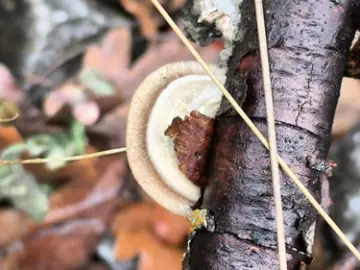 Bursa16 Feb 2026 · iNaturalist© Umut Nuri Erdoğan · CC BY
-
 Illustrative
Ordu9 Aug 2026 · iNaturalist
-
 Illustrative
İstanbul27 Mar 2026 · iNaturalist
-
 Illustrative
Sakarya24 Sep 2021 · iNaturalist
-
 Illustrative
Muğla3 Jan 2021 · iNaturalist
-
 Illustrative
Düzce24 May 1990 · Aphyllophorales externi
-
 Illustrative
Düzce12 Apr 1972 · Aphyllophorales externi
- See on the map
On "illustrative" cards the image is a photo of the species; the observation photo cannot be shown here because of its licence, but can be seen at the source.
Look-alikes
What could it be confused with?
Hairy bracket can be mistaken for the species below. Each comparison shows Hairy bracket on the left, the look-alike on the right, and how to tell them apart.
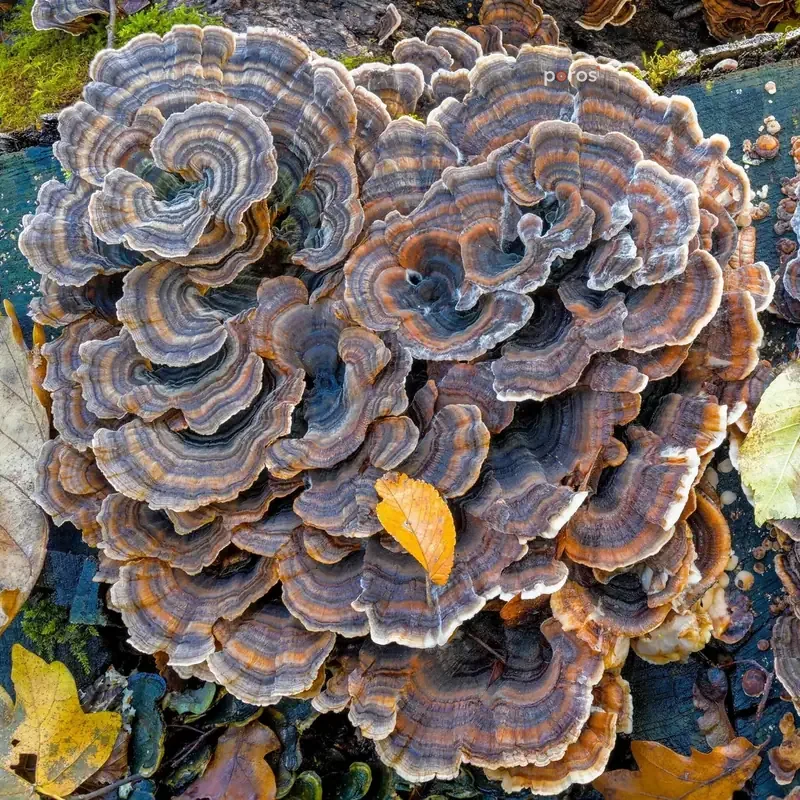
Turkey tail Trametes versicolor
How to tell Turkey tail is thinner, velvety and multi-coloured (blue, green, brown), without stiff hairs.

Hairy curtain crust Stereum hirsutum
How to tell The hairy curtain crust has no pores; its underside is smooth and yellow-orange.
Other look-alikes (2)
 Inedible
not Hairy bracket
Lumpy bracket Trametes gibbosa
The lumpy bracket is larger and thicker, with a hump and elongated pores.
 Inedible
not Hairy bracket
Smoky bracket Bjerkandera adusta
The smoky bracket has a smoky grey to black pore surface with a dark line between the layers.
Hairy bracket and its look-alikes compared
| Species | Status | Underside | Spore print | Season |
|---|---|---|---|---|
| Hairy bracketTrametes hirsuta | Inedible | White to cream, small round pores that grey with age | White | Jan–May, Aug–Sep |
| Turkey tailTrametes versicolor | Inedible | White to cream, with 3–5 tiny pores per millimetre | White | All year |
| Hairy curtain crustStereum hirsutum | Inedible | The underside is smooth, with no pores or gills | White | Dec–May, Jul–Oct |
| Lumpy bracketTrametes gibbosa | Inedible | White to cream pores elongated into radial slits | White | Mar–Apr, Jun, Oct, Dec |
| Smoky bracketBjerkandera adusta | Inedible | Smoky grey to blackish, very small pores, separated from the upper layer by a thin dark line | White | Oct–Feb, May, Jul |
The table is compiled from each species page. The status column is a guide only; do not eat a wild mushroom unless an expert has seen it in person. Compare look-alikes side by side
The hairy bracket is not known to be poisonous, but it is leathery and not edible. If poisoning is suspected, call 112 or the Turkish poison centre (114).
Frequently asked questions
Are hairy brackets poisonous?
The hairy bracket is not known to be poisonous, but it is leathery and not edible. If poisoning is suspected, call 112 at once (Turkish poison centre: 114) and keep any leftover mushroom.
Are hairy brackets edible?
No. It is leathery and not edible; it is not known to be poisonous.
How do you identify it?
Tiers of thin brackets on dead hardwood, stiffly hairy and banded grey-white and cream on top, with small white pores underneath.
What can it be confused with?
The main look-alikes are: Turkey tail, Hairy curtain crust, Lumpy bracket. The differences are listed in the look-alikes section; with poisonous look-alikes, always check the cross-section and habitat.
Where does it grow?
It grows on dead branches and stumps of beech, oak, poplar, hazel and other hardwoods, more often in sunny, open spots, causing white rot.
When does it appear?
It can be seen all year; our Turkish records fall in late winter, spring and late summer.
How do you tell it from turkey tail?
The hairy bracket is thicker, feels stiffly hairy and is pale. Turkey tail is thin, velvety and multi-coloured.
What kind of rot does it cause?
It causes white rot, breaking down the lignin and leaving the wood pale and fibrous; for this reason it is often used in laccase enzyme research.
Is it found in Turkey?
Our map data (GBIF and iNaturalist) holds 8 Turkish records: Düzce (3), Bursa (1), Istanbul (1), Ordu (1), Muğla (1), Sakarya (1). The records are from January, February, March, April, May, August, September.
When is hairy bracket season in Turkey?
In our calendar, hairy bracket season runs Aug–Sep, Jan–May. It can be seen all year; our Turkish records fall in late winter, spring and late summer.
Where do hairy brackets grow?
It grows on dead branches and stumps of beech, oak, poplar, hazel and other hardwoods, more often in sunny, open spots, causing white rot.
Where are hairy brackets found in Turkey?
Our map data (GBIF and iNaturalist) holds 8 Turkish records: Düzce (3), Bursa (1), Istanbul (1), Ordu (1), Muğla (1), Sakarya (1). The records are from January, February, March, April, May, August, September.
What can the hairy bracket be confused with?
The hairy bracket can be confused with turkey tail (Trametes versicolor, inedible), hairy curtain crust (Stereum hirsutum, inedible), lumpy bracket (Trametes gibbosa, inedible) and smoky bracket (Bjerkandera adusta, inedible). Look-alikes are compared on this page.
What is the hairy bracket called in Turkish?
In Turkish, the hairy bracket (Trametes hirsuta) is called Trametes hirsuta.
Related species
-
 Artist’s bracketGanoderma applanatumInedible
-
 Blushing bracketDaedaleopsis confragosaInedible
-
 Hemlock varnish shelfGanoderma tsugaeInedible
-
 Lacquered bracketGanoderma resinaceumInedible
-
Lumpy bracketTrametes gibbosaInedible
-
 Tinder fungusFomes fomentariusInedible
-
Turkey tailTrametes versicolorInedible
-
 Dryad’s saddleCerioporus squamosusEdible species
Sources
- Wikipedia (EN): Trametes hirsuta en.wikipedia.org
- iNaturalist: Trametes hirsuta (takson, adlar ve fotoğraflar) inaturalist.org
- GBIF: Trametes hirsuta gbif.org
All sources (5)
- GBIF: Türkiye kayıtları gbif.org
- iNaturalist: Türkiye gözlemleri (araştırma düzeyi) inaturalist.org
Photo credits (9)
- Trametes hirsuta · iNaturalist #38214992 · Deana Tempest Thomas · CC BY 4.0
- Trametes hirsuta · iNaturalist #39041668 · Alexis Tinker-Tsavalas · CC BY 4.0
- Trametes hirsuta · iNaturalist #36531429 · Garrett Taylor · CC0
- Trametes hirsuta · iNaturalist #258389660 · Katrin Simon · CC BY 4.0
- Trametes hirsuta · iNaturalist #107326192 · psweet · CC BY-SA 4.0
- Trametes hirsuta · iNaturalist #254009352 · Vincent B. · CC BY 4.0
- Trametes hirsuta · iNaturalist #255162029 · Lutra lutra · CC0
- Trametes hirsuta · iNaturalist #152257381 · Derrick Wales · CC BY 4.0
- iNaturalist: Bursa, 16 Feb 2026 · Umut Nuri Erdoğan · CC BY