
Lacquered bracket
Ganoderma resinaceum · Polyporaceae

The lacquered bracket (Ganoderma resinaceum) is a large, annual bracket at the base of living oaks and other hardwoods, with a varnished red-brown crust and a cream-white margin. It is a relative of reishi but larger, flatter and usually stalkless; its crust melts like resin under a hot match. It is tough and not edible.
Also called: lacquered bracket Turkish: Ganoderma resinaceum Synonyms: Ganoderma pfeifferi var. resinaceum
The name “lacquered bracket” is also used for: Reishi
Last updated: Prepared by the Poros Mantar editorial team5 sources checkedReport a correction
Lacquered bracket photos
-
© szegedigombasz · CC0
-

© Chris Procter · CC BY 4.0
-

© Björn Sothmann · CC BY-SA 4.0
-

© Yoannis Domínguez · CC BY 4.0
-

© W Rao · CC BY 4.0
-

© Roland Godon · CC BY 4.0
-

© Piermario Maculan · CC0
-

© Virn Stothers · CC BY 4.0
-

Cap© Björn Sothmann · CC BY-SA 4.0
-
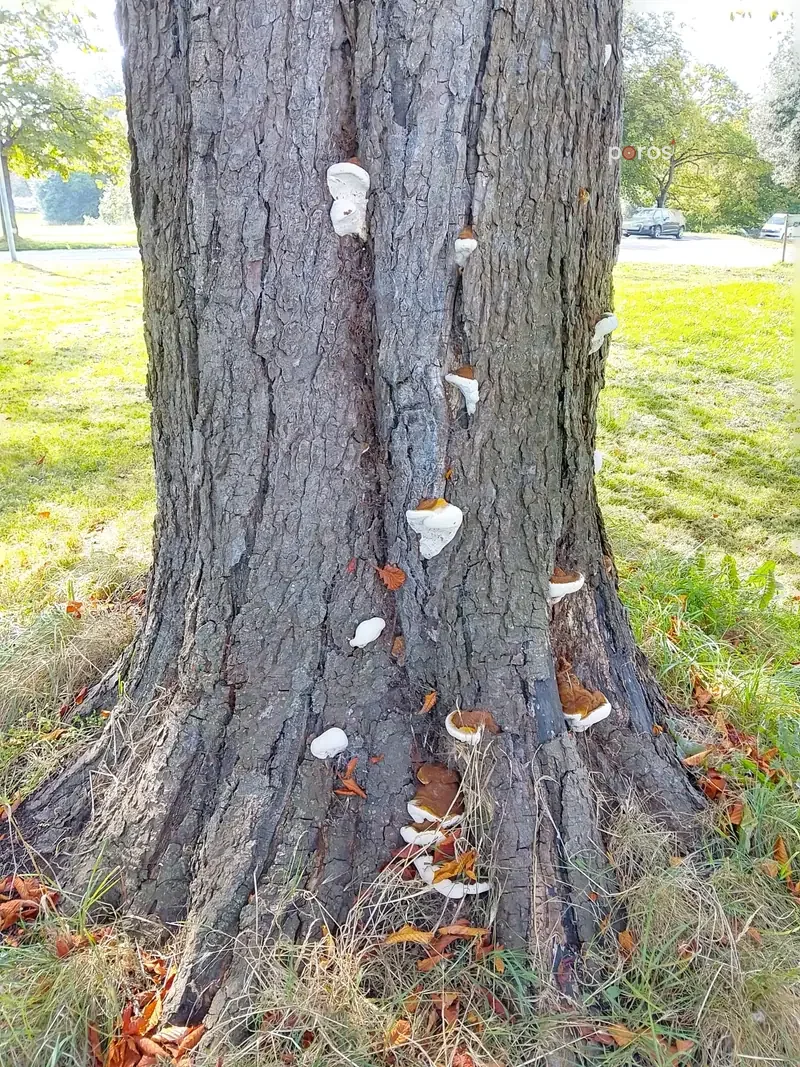
In habitat© phosphorescences · CC BY 4.0


These are licensed records of this species; photos alone are not enough to identify a mushroom.
Are lacquered brackets poisonous?
The lacquered bracket is not known to be poisonous, but it is tough and not edible.
Are lacquered brackets edible?
No. It is tough and not edible; it is not known to be poisonous.
How to recognise it
Appearance of lacquered brackets
No ring or volva Spore print: Brown Not distinctive.
When and where
When to find lacquered brackets
Jun–Jan
It is annual, growing in summer; dead brackets remain through winter. Our Turkish records spread from June to January.
Where do lacquered brackets grow?
It grows at the trunk base of living or dead oak, willow, poplar, ash and other hardwoods, causing white rot in the roots and trunk base; it also turns up on park and street trees.
Where is lacquered brackets found in Turkey?
Our map data (GBIF and iNaturalist) holds 17 Turkish records: Istanbul (14), Tekirdağ (1), Antalya (1), Kırklareli (1). The records are from January, June, July, August, September, October, November, December. GBIF lists 31 Turkish records in total, including literature surveys.
Which months
- Jan1
- Feb0
- Mar0
- Apr0
- May0
- Jun1
- Jul4
- Aug2
- Sep2
- Oct3
- Nov1
- Dec1
4 provinces, 15 observations (GBIF, iNaturalist); months from observation dates. Record density also reflects where observers work.
Latest lacquered bracket observations
-
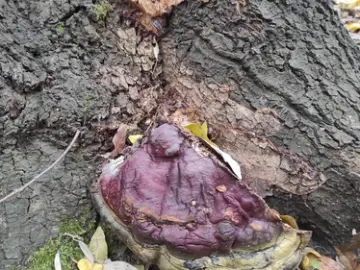 İstanbul3 Jan 2024 · iNaturalist© Umut Nuri Erdoğan · CC BY
-
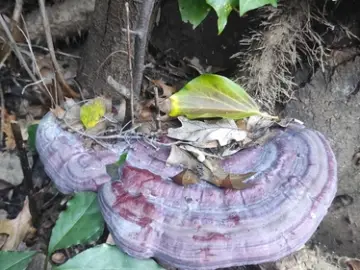 İstanbul28 Dec 2023 · iNaturalist© Umut Nuri Erdoğan · CC BY
-
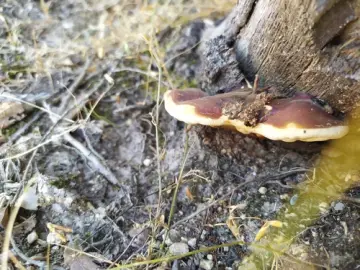 Kırklareli23 Jul 2020 · iNaturalist© Asrın Akıncıoğlu · CC BY
-
 Illustrative
İstanbul17 Sep 2026 · iNaturalist
-
 Illustrative
İstanbul14 Jul 2026 · iNaturalist
-
 Illustrative
İstanbul5 Jul 2026 · iNaturalist
-
 Illustrative
Antalya3 Nov 2025 · iNaturalist
-
 Illustrative
İstanbul23 Oct 2025 · iNaturalist
- See on the map
On "illustrative" cards the image is a photo of the species; the observation photo cannot be shown here because of its licence, but can be seen at the source.
Look-alikes
What could it be confused with?
Lacquered bracket can be mistaken for the species below. Each comparison shows Lacquered bracket on the left, the look-alike on the right, and how to tell them apart.
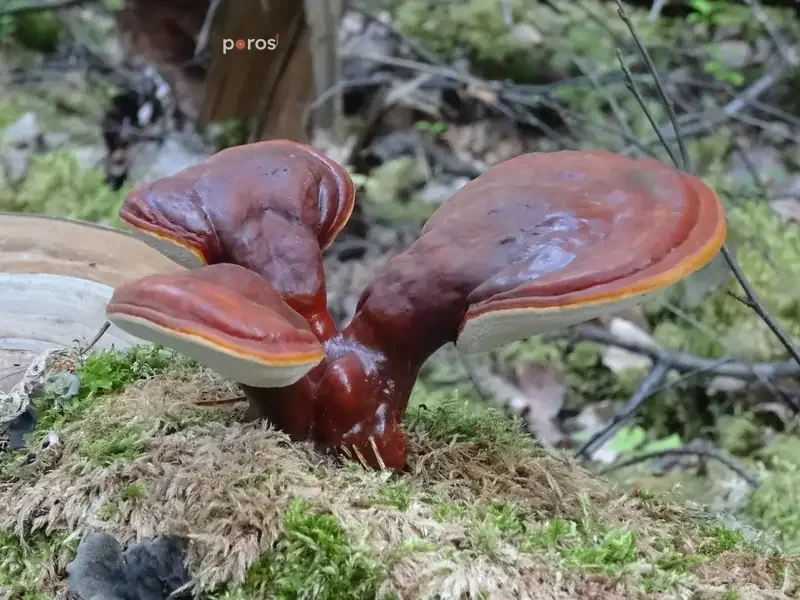
Reishi Ganoderma lucidum
How to tell Reishi is smaller and kidney-shaped, usually with a distinct, varnished side stem.

Artist's bracket Ganoderma applanatum
How to tell The artist's bracket is matt rather than varnished, dusted with cocoa-brown spores, and perennial.
Other look-alikes (2)
 Inedible
not Lacquered bracket
Red-belted conk Fomitopsis pinicola
The red-belted conk's red is only a belt near the margin; the top is dark brown to black and it is perennial.
 Inedible
not Lacquered bracket
Hemlock varnish shelf Ganoderma tsugae
Ganoderma tsugae grows on conifers, especially hemlock (Tsuga) in eastern North America, and usually has a short, thick side stem. The lacquered bracket is a large, mostly stemless shelf at the base of broadleaf trees, above all oak.
Lacquered bracket and its look-alikes compared
| Species | Status | Underside | Spore print | Season |
|---|---|---|---|---|
| Lacquered bracketGanoderma resinaceum | Inedible | White to cream, small pores that brown when handled | Brown | Jun–Jan |
| ReishiGanoderma lucidum | Traditional use | No gills; cream to brown underside with 4–5 fine pores per millimetre | Reddish brown | Jun–Nov |
| Artist’s bracketGanoderma applanatum | Inedible | The underside is white to cream with very fine pores (4–6 per mm) | Cocoa brown; it dusts the top of the bracket and nearby surfaces | Mar, May, Jul–Oct |
| Red-belted conkFomitopsis pinicola | Inedible | Cream to pale yellow, very small pores | White to pale yellow | Jan, Apr–Nov |
| Hemlock varnish shelfGanoderma tsugae | Inedible | White to cream, small pores that brown when scratched | Brown | May–Sep |
The table is compiled from each species page. The status column is a guide only; do not eat a wild mushroom unless an expert has seen it in person. Compare look-alikes side by side
The lacquered bracket is not known to be poisonous, but it is tough and not edible. Do not collect it as reishi for tea or supplements; telling the species apart takes expertise and no medical benefit has been proven. If poisoning is suspected, call poison control.
Frequently asked questions
Are lacquered brackets poisonous?
The lacquered bracket is not known to be poisonous, but it is tough and not edible.
Are lacquered brackets edible?
No. It is tough and not edible; it is not known to be poisonous.
How do you identify it?
A large, flat bracket at the base of an oak; varnished red-brown on top with a broad cream-white margin and white-cream pores below. Its crust melts like resin under a hot match.
What can it be confused with?
The main look-alikes are: Reishi, Artist's bracket, Red-belted conk. The differences are listed in the look-alikes section; with poisonous look-alikes, always check the cross-section and habitat.
Where does it grow?
It grows at the trunk base of living or dead oak, willow, poplar, ash and other hardwoods, causing white rot in the roots and trunk base; it also turns up on park and street trees.
When does it appear?
It is annual, growing in summer; dead brackets remain through winter. Our Turkish records spread from June to January.
Is it the same as reishi?
No, it is a separate species in the same genus. Reishi (Ganoderma lucidum) is smaller and usually stalked; the lacquered bracket is large, flat and stalkless.
Where is it found in Turkey?
Our map data holds 17 records: 14 from Istanbul and one each from Tekirdağ, Antalya and Kırklareli; GBIF lists 31 Turkish records in total.
Which other mushroom is called “lacquered bracket”?
Besides the species on this page (Ganoderma resinaceum), the name “lacquered bracket” is also used for Reishi (Ganoderma lucidum). Common names overlap between species, so tell them apart by the Latin name and the identification features, not by the common name.
When is lacquered bracket season in Turkey?
In our calendar, lacquered bracket season runs Jun–Jan. It is annual, growing in summer; dead brackets remain through winter. Our Turkish records spread from June to January.
Where do lacquered brackets grow?
It grows at the trunk base of living or dead oak, willow, poplar, ash and other hardwoods, causing white rot in the roots and trunk base; it also turns up on park and street trees.
Where are lacquered brackets found in Turkey?
Our map data (GBIF and iNaturalist) holds 17 Turkish records: Istanbul (14), Tekirdağ (1), Antalya (1), Kırklareli (1). The records are from January, June, July, August, September, October, November, December. GBIF lists 31 Turkish records in total, including literature surveys.
What can the lacquered bracket be confused with?
The lacquered bracket can be confused with reishi (Ganoderma lucidum, inedible), Artist's bracket (Ganoderma applanatum, inedible), red-belted conk (Fomitopsis pinicola, inedible) and hemlock varnish shelf (Ganoderma tsugae, inedible). Look-alikes are compared on this page.
What is the lacquered bracket called in Turkish?
In Turkish, the lacquered bracket (Ganoderma resinaceum) is called Ganoderma resinaceum.
Related species
-
Artist’s bracketGanoderma applanatumInedible
-
 Blushing bracketDaedaleopsis confragosaInedible
-
 Hairy bracketTrametes hirsutaInedible
-
Hemlock varnish shelfGanoderma tsugaeInedible
-
 Lumpy bracketTrametes gibbosaInedible
-
 Tinder fungusFomes fomentariusInedible
-
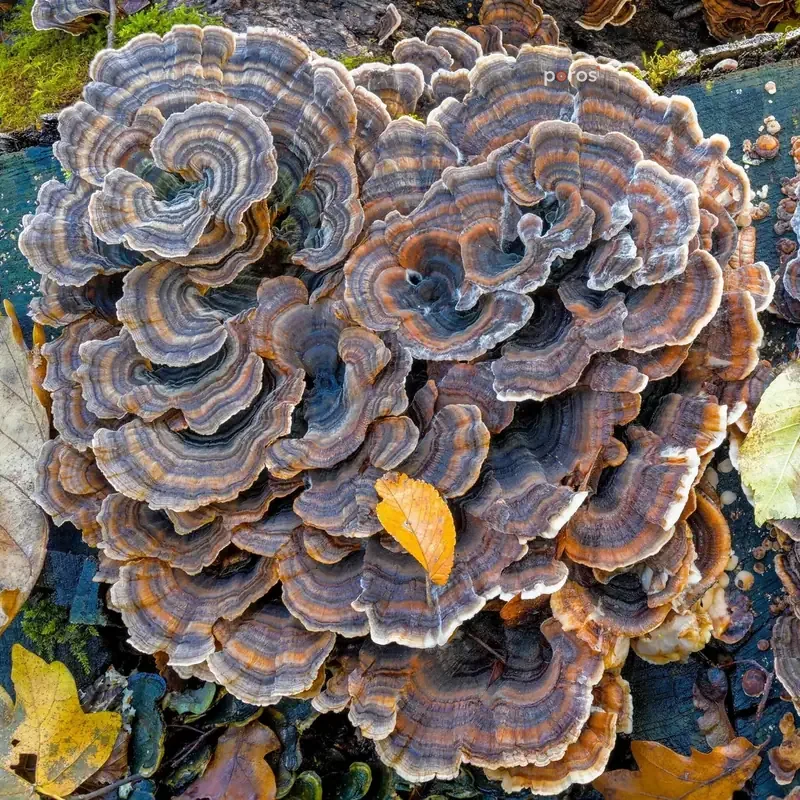 Turkey tailTrametes versicolorInedible
-
 Dryad’s saddleCerioporus squamosusEdible species
Sources
- Wikipedia (DE): Harziger Lackporling de.wikipedia.org
- iNaturalist: Ganoderma resinaceum (takson, adlar ve fotoğraflar) inaturalist.org
- GBIF: Ganoderma resinaceum gbif.org
All sources (5)
- GBIF: Türkiye kayıtları gbif.org
- iNaturalist: Türkiye gözlemleri (araştırma düzeyi) inaturalist.org
Photo credits (13)
- Ganoderma resinaceum · iNaturalist #184547419 · szegedigombasz · CC0
- Ganoderma resinaceum · iNaturalist #392608595 · Chris Procter · CC BY 4.0
- Ganoderma resinaceum · iNaturalist #389931506 · Björn Sothmann · CC BY-SA 4.0
- Ganoderma resinaceum · iNaturalist #150084934 · Yoannis Domínguez · CC BY 4.0
- Ganoderma resinaceum · iNaturalist #324152639 · W Rao · CC BY 4.0
- Ganoderma resinaceum · iNaturalist #377769104 · Roland Godon · CC BY 4.0
- Ganoderma resinaceum · iNaturalist #90592844 · Piermario Maculan · CC0
- Ganoderma resinaceum · iNaturalist #250711585 · Virn Stothers · CC BY 4.0
- Ganoderma resinaceum · iNaturalist #301802066 · Björn Sothmann · CC BY-SA 4.0
- Ganoderma resinaceum · iNaturalist #188935074 · phosphorescences · CC BY 4.0
- iNaturalist: İstanbul, 3 Jan 2024 · Umut Nuri Erdoğan · CC BY
- iNaturalist: İstanbul, 28 Dec 2023 · Umut Nuri Erdoğan · CC BY
- iNaturalist: Kırklareli, 23 Jul 2020 · Asrın Akıncıoğlu · CC BY