


Dryad’s saddle
Cerioporus squamosus · Polyporaceae
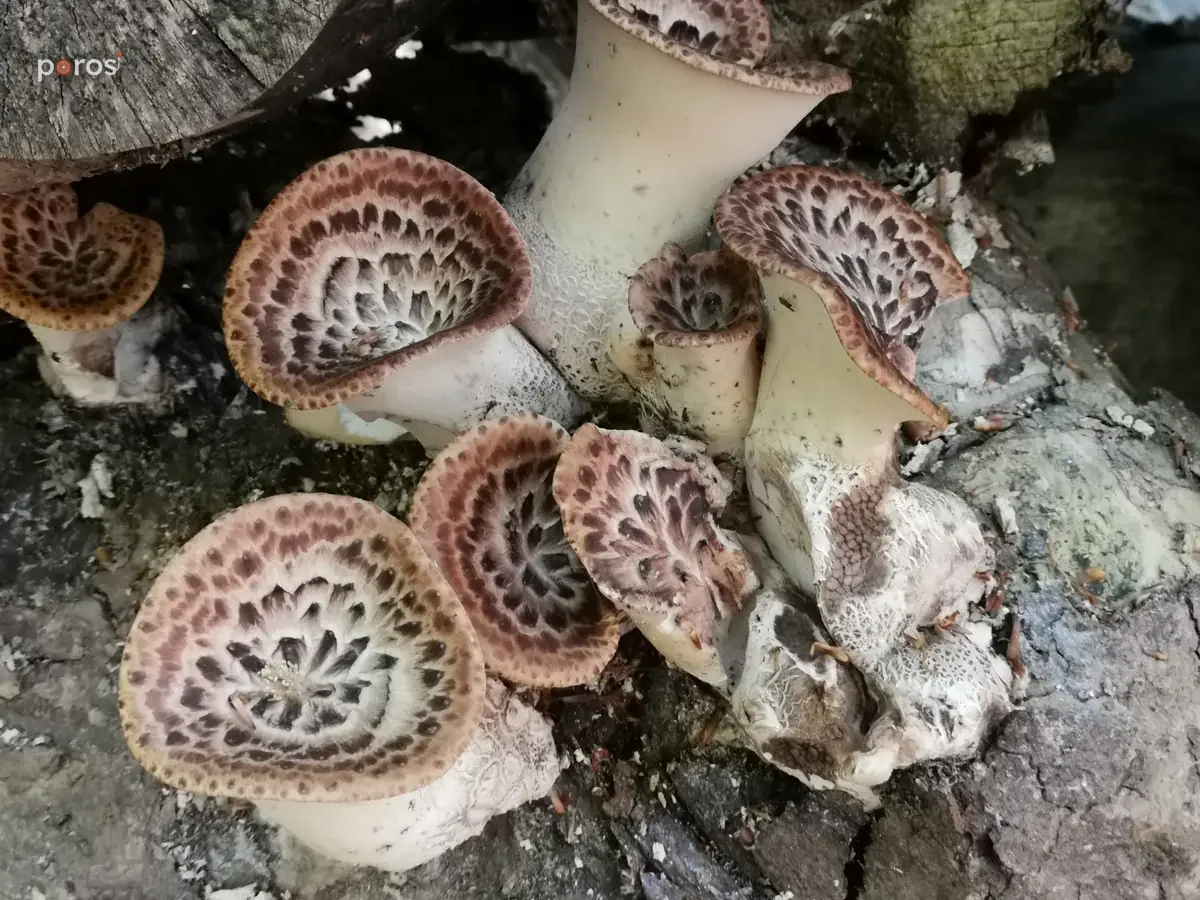
Dryad's saddle (Cerioporus squamosus) is a large, fan- or saddle-shaped bracket fungus that grows on the trunks and stumps of living or dead broadleaved trees.
Last updated: Prepared by the Poros Mantar editorial team7 sources checkedReport a correction
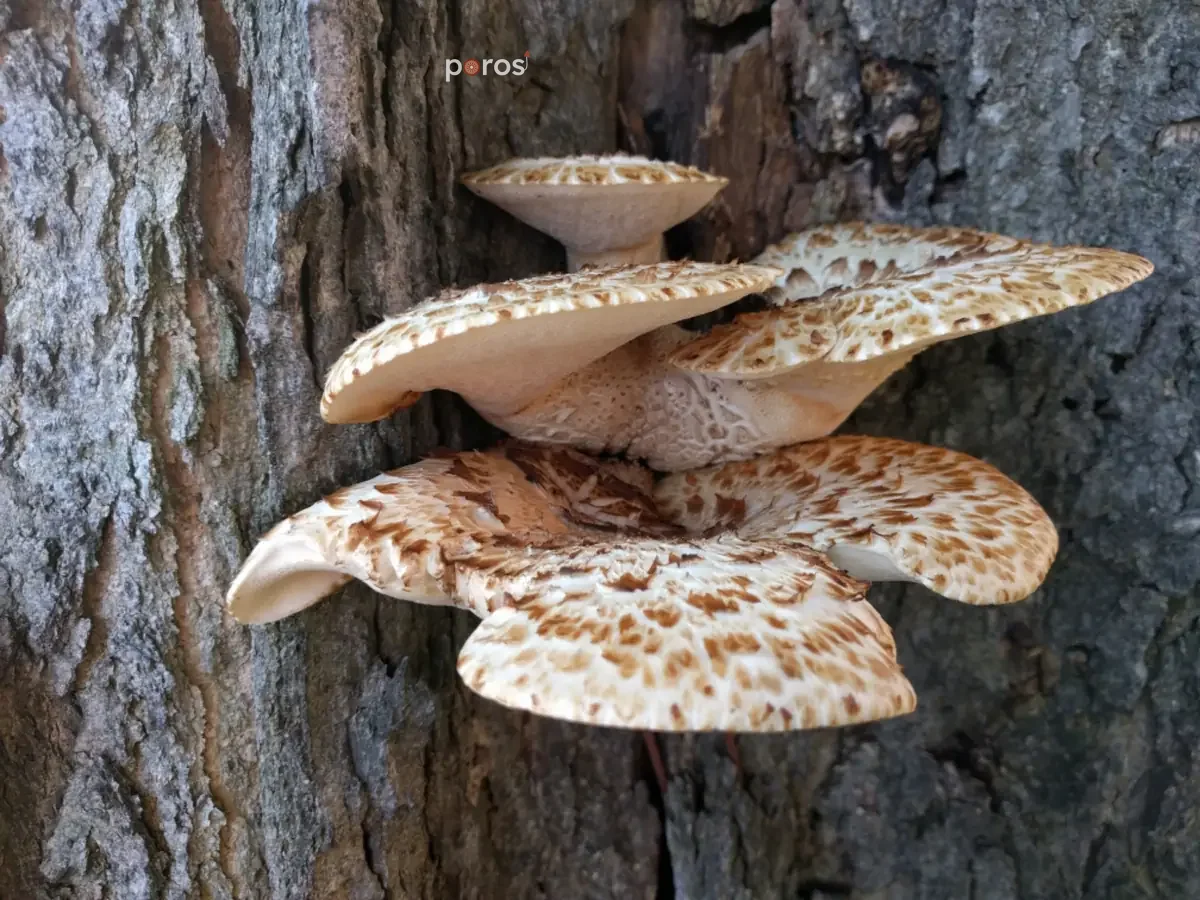
Dryad's saddle (Cerioporus squamosus) is a large, fan- or saddle-shaped bracket fungus that grows on the trunks and stumps of living or dead broadleaved trees. Its cream cap is covered in dark brown scales, the underside has pores rather than gills, and it has a short, off-centre stem. It can be eaten cooked while young and soft; older brackets turn tough and are often full of maggots. Freshly cut, it smells of watermelon rind.
Also called: pheasant's back mushroom, scaly polypore Turkish: Pullu mantar Synonyms: Polyporus squamosus
How to recognise it
Dryad’s saddle, part by part
No ring or volva Spore print: White Pleasant and mealy when freshly cut, often compared to watermelon rind or cucumber.


When and where
Apr–Jun, Sep–Oct
- Jan
- Feb
- Mar
- Aprin season
- Mayin season
- Junin season
- Jul
- Aug
- Sepin season
- Octin season
- Nov
- Dec
Dryad's saddle fruits mostly in spring and sometimes in autumn. Our Turkish records fall in April, May, June, September and October, most in October and April.
Type Edible
In season AprilMayJuneSeptemberOctober
Colour Brown
Regions Eastern Anatolia RegionBlack Sea RegionCentral Anatolia RegionAegean RegionMarmara RegionSinopAnkaraKastamonuIstanbul
Where does dryad's saddle grow?
Broadleaved trees, especially elm, maple, poplar, willow, beech and mulberry; it decays dead wood and sometimes acts as a weak parasite on living trees. It grows singly or in overlapping tiers on trunks, stumps and fallen logs, and is common on park and street trees.
Where is dryad's saddle found in Turkey?
Our map data (GBIF and iNaturalist) holds 20 Turkish records: 8 from Istanbul, 5 from Ankara, 2 from Gümüşhane and one each from Eskişehir, Kastamonu, Kütahya, Muş and Sinop. It has also been published from Akdamar in Van (Kılıç and Keleş, 2025, Anatolian Journal of Botany), Çamlı village in Trabzon (Keleş and Kaya, 2023) and Yenice in Karabük (Kaşık et al., 2022).
Which months
- Jan0
- Feb0
- Mar0
- Apr6
- May3
- Jun2
- Jul0
- Aug0
- Sep2
- Oct7
- Nov0
- Dec0
dryad's saddle map of Turkey: all provinces and months →
8 provinces, 20 observations (GBIF, iNaturalist); months from observation dates. Record density also reflects where observers work.
Latest dryad's saddle observations
-
 Illustrative
İstanbul10 Oct 2026 · iNaturalist
-
 Illustrative
İstanbul27 Sep 2026 · iNaturalist
-
 Illustrative
İstanbul1 Apr 2026 · iNaturalist
-
 Illustrative
İstanbul1 Apr 2026 · iNaturalist
-
 Illustrative
Ankara10 Oct 2025 · iNaturalist
-
 Illustrative
Eskişehir23 Sep 2025 · iNaturalist
-
 Illustrative
Gümüşhane3 May 2025 · iNaturalist
-
 Illustrative
İstanbul22 Apr 2025 · iNaturalist
- See on the map
On "illustrative" cards the image is a photo of the species; the observation photo cannot be shown here because of its licence, but can be seen at the source.
Look-alikes
What could it be confused with?
Dryad’s saddle can be mistaken for the species below. Each card shows the look-alike and how it differs from Dryad’s saddle.
 Inedible
not Dryad’s saddle
Tuberous polypore Polyporus tuberaster
It is smaller, with a rounder cap, a more central stem and scales that are dark only at the tips; it often rises from an underground tuber (sclerotium).
 Edible species
not Dryad’s saddle
Chicken of the woods Laetiporus sulphureus
Chicken of the woods also grows in tiers on trees, but it is bright sulphur-yellow to orange, has no scales and no stem.
 Inedible
not Dryad’s saddle
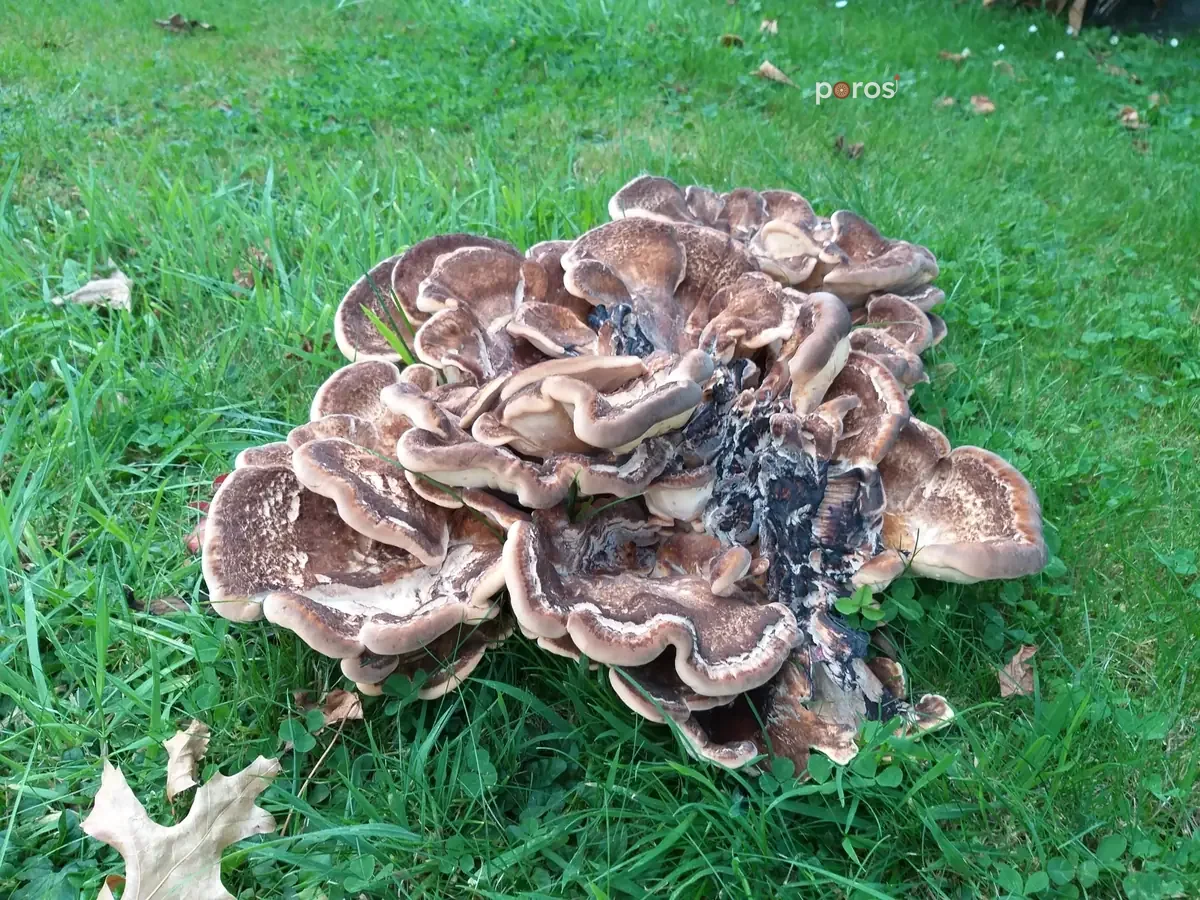
Giant polypore Meripilus giganteus
The giant polypore forms huge rosettes at the base of trees, on the roots; it has no scales and its pores blacken when handled.
 Inedible
not Dryad’s saddle
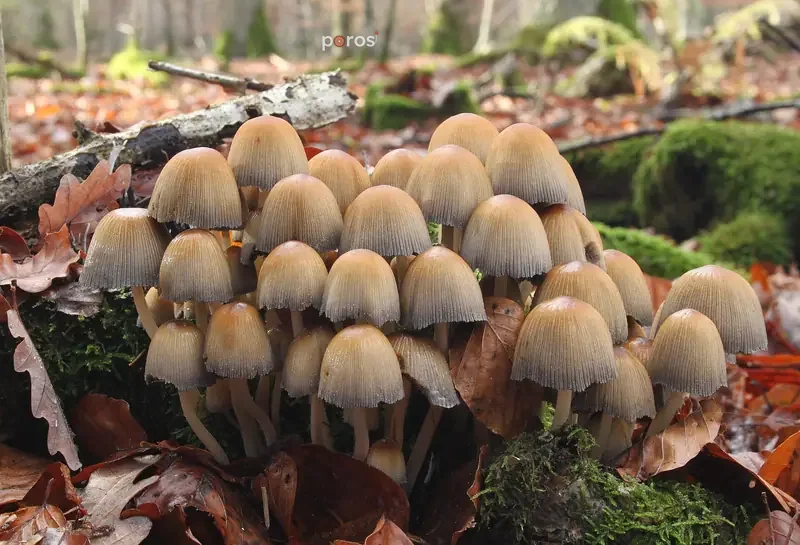
Glistening inkcap Coprinellus micaceus
The names are similar in Turkish but the fungi are not: the glistening ink cap is a small, brown, gilled mushroom that grows in clusters at stump bases, with glittery granules on the cap. Dryad's saddle is a large bracket with pores.
How to cook and eat dryad's saddle
Safety first. Dryad's saddle is eaten only when young, soft and free of maggots, and always well cooked, never raw. Old, tough or maggoty brackets are not collected. Try a small amount the first time; as with any wild mushroom, individual reactions are possible. Do not eat it unless you are sure of the identification. If poisoning is suspected, call poison control and keep any leftover mushroom.
How to prepare it
Use only young, soft, maggot-free ones and slice them into small pieces.
How to cook it
Never eat it raw; cook it thoroughly over a low heat.
Source: Wikipedia.
How to store dryad's saddle
What it contains
The soft edge of young brackets is sliced thinly and cooked slowly over low heat; older brackets turn tough and lose flavour.
General information, not a health claim.
Grow it, buy it
Dryad's saddle price list
| Product | Us | Market (sourced, dated) |
|---|---|---|
| Fresh dryad's saddle | Made to order · ask | — |
| Dried dryad's saddle | Made to order · ask | — |
We make our dryad's saddle products in small batches, to order; send a request and we email you the price and delivery date. The market column shows prices seen on other sellers' pages on the date given; they are not our prices and may have changed.
Frequently asked questions
Is dryad's saddle edible?
Yes, when young and soft and thoroughly cooked. Old, tough or maggoty brackets are not eaten, and it is never eaten raw.
Is dryad's saddle poisonous?
It is not known to be poisonous, and none of its bracket look-alikes are deadly, but do not eat it unless you are sure of the identification.
How do you cook dryad's saddle?
Slice the soft edge of a young bracket thinly and discard the tough stem; sauté it slowly in fat over low heat, or cook it in soups and stews.
Is it the same as the glistening ink cap?
No. Dryad's saddle (Turkish: pullu mantar) is a large pored bracket on trees. The glistening ink cap (Turkish: pullu mürekkep mantarı, Coprinellus micaceus) is a small brown gilled mushroom growing in clusters at stump bases.
Why does it smell of watermelon?
Most sources compare the smell of the freshly cut flesh to watermelon rind or cucumber, which helps with identification.
Does it harm the tree?
It causes white rot in the wood. It mostly lives on dead or weakened trees and sometimes acts as a weak parasite on living ones.
Where and when does it grow?
On the trunks and stumps of broadleaved trees such as elm, maple, poplar, willow and beech, mostly in spring and sometimes in autumn.
Where is it found in Turkey?
Our map data holds 20 records from Istanbul, Ankara, Gümüşhane, Eskişehir, Kastamonu, Kütahya, Muş and Sinop, with published records from Van, Trabzon and Karabük too.
When is dryad's saddle season in Turkey?
In our calendar, dryad's saddle season runs Apr–Jun, Sep–Oct. Dryad's saddle fruits mostly in spring and sometimes in autumn. Our Turkish records fall in April, May, June, September and October, most in October and April.
Where does dryad's saddle grow?
Broadleaved trees, especially elm, maple, poplar, willow, beech and mulberry; it decays dead wood and sometimes acts as a weak parasite on living trees. It grows singly or in overlapping tiers on trunks, stumps and fallen logs, and is common on park and street trees.
Where is dryad's saddle found in Turkey?
Our map data (GBIF and iNaturalist) holds 20 Turkish records: 8 from Istanbul, 5 from Ankara, 2 from Gümüşhane and one each from Eskişehir, Kastamonu, Kütahya, Muş and Sinop. It has also been published from Akdamar in Van (Kılıç and Keleş, 2025, Anatolian Journal of Botany), Çamlı village in Trabzon (Keleş and Kaya, 2023) and Yenice in Karabük (Kaşık et al., 2022).
What can dryad's saddle be confused with?
Dryad's saddle can be confused with tuberous polypore (Polyporus tuberaster, inedible), chicken of the woods (Laetiporus sulphureus, edible species), giant polypore (Meripilus giganteus, inedible) and glistening ink cap (Coprinellus micaceus, inedible). Look-alikes are compared on this page.
What is dryad's saddle called in Turkish?
In Turkish, dryad's saddle (Cerioporus squamosus) is called Pullu mantar.
Related species
-
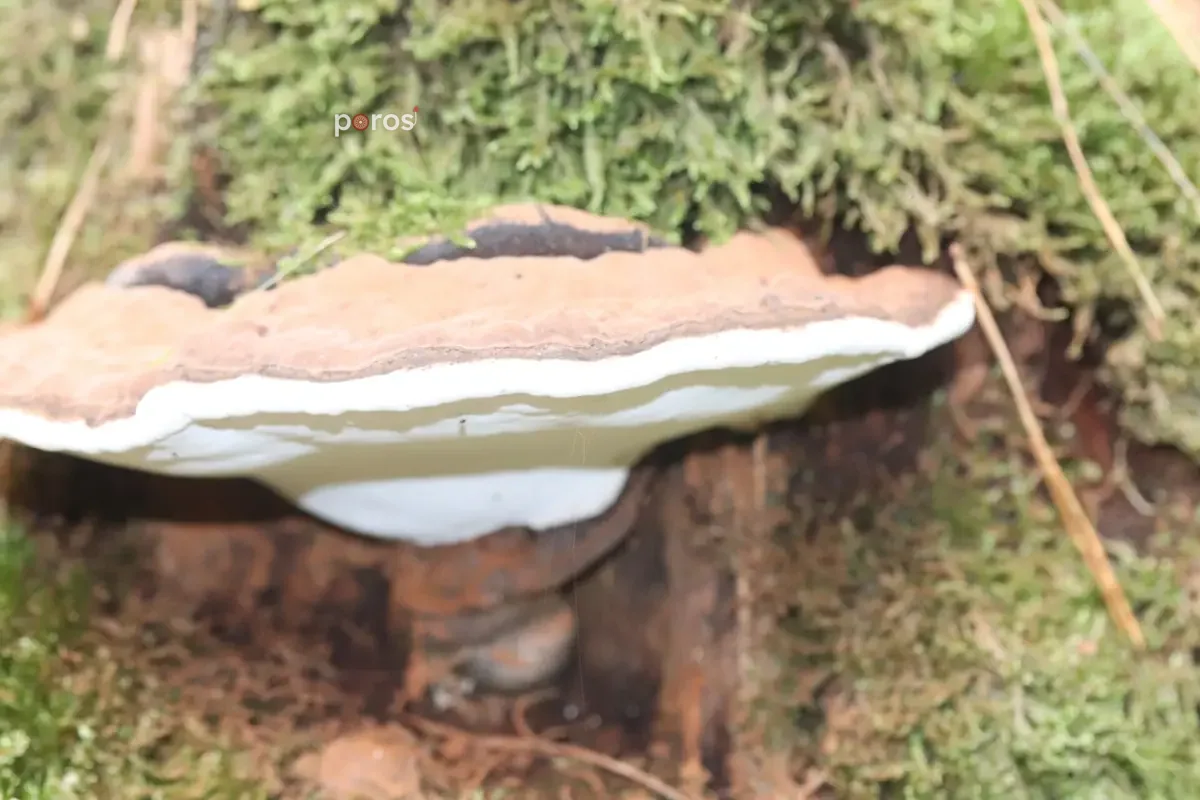 Artist’s bracketGanoderma applanatumInedible
-
 ReishiGanoderma lucidumTraditional use
-
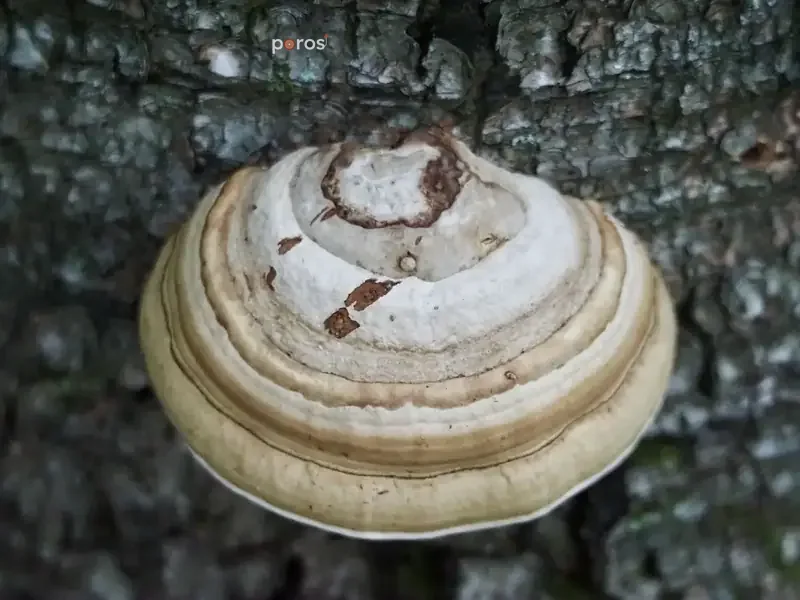 Tinder fungusFomes fomentariusInedible
-
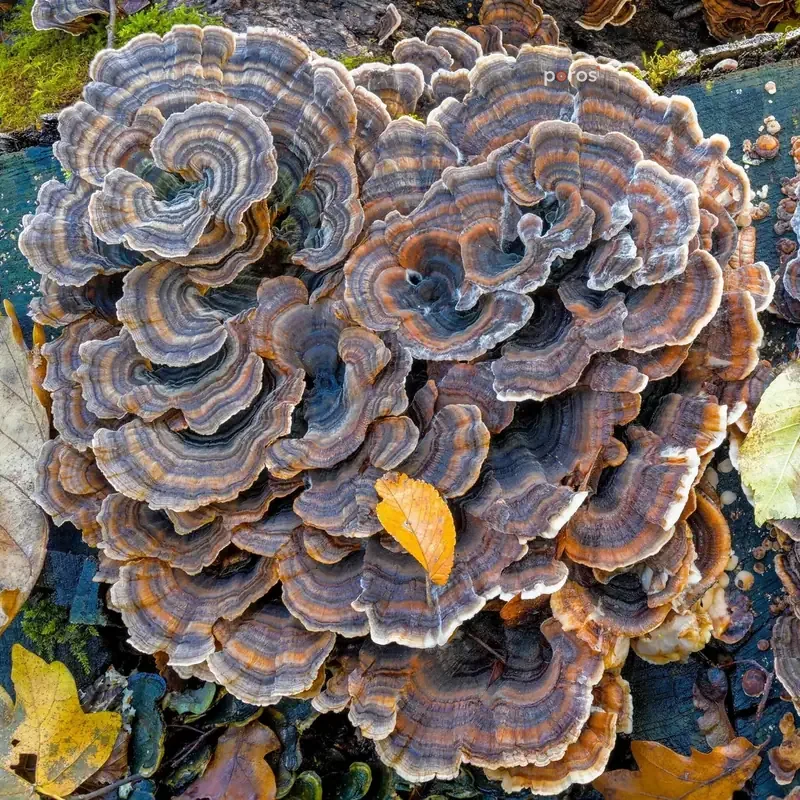 Turkey tailTrametes versicolorInedible
-
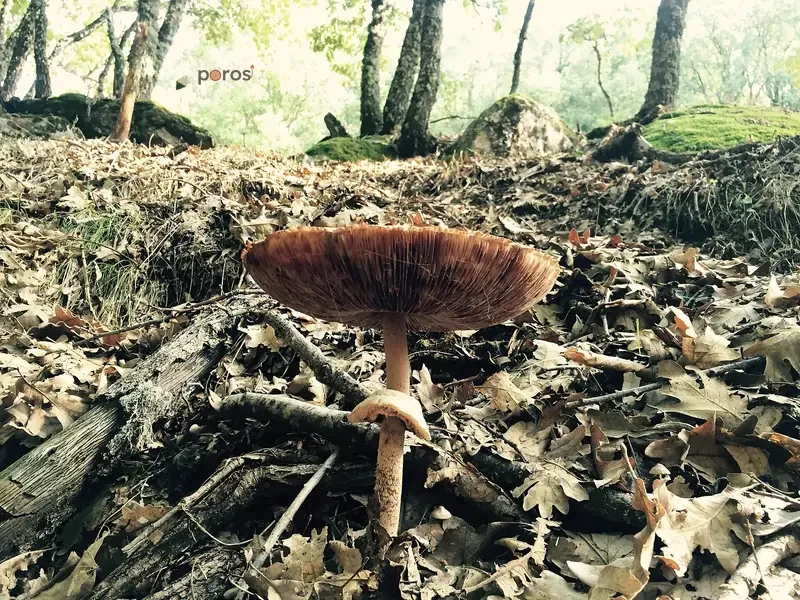 Anatolian matsutakeTricholoma anatolicumEdible species
-
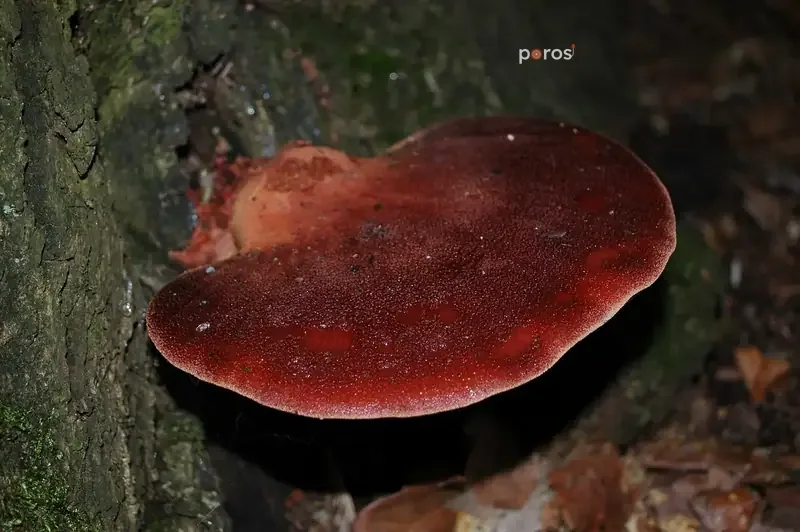 Beefsteak fungusFistulina hepaticaEdible species
-
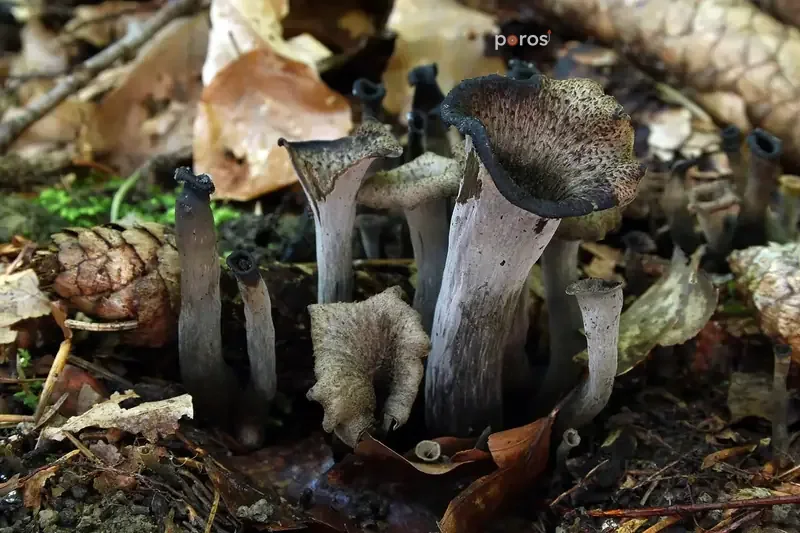 Black trumpetCraterellus cornucopioidesEdible species
-
 Bloody milk capLactarius sanguifluusEdible species
Sources
- Kılıç ve Keleş (2025), Anatolian Journal of Botany 9(2): Macrofungi determined in Akdamar (Gevaş-Van) district and its close environs dergipark.org.tr
- Keleş ve Kaya (2023), Anatolian Journal of Botany 7(2): Macromycetes determined in Çamlı (Of-Trabzon) village and its environs dergipark.org.tr
- Kaşık ve ark. (2022), KSÜ Tarım ve Doğa Dergisi 25(6): Macrofungi of Yenice (Karabük) District and New Records for Turkey dergipark.org.tr
All sources (7)
- Wikipedia (EN): Cerioporus squamosus en.wikipedia.org
- First Nature: Polyporus squamosus, Dryad's Saddle first-nature.com
- iNaturalist: Cerioporus squamosus (Türkçe ad ve Türkiye gözlemleri) inaturalist.org
- GBIF: Türkiye kayıtları gbif.org
Photo credits (8)
- Cerioporus squamosus · iNaturalist #281737458 · Darren Obbard · CC BY 4.0
- Cerioporus squamosus · iNaturalist #78935705 · Adam Kranz · CC0
- File:Cerioporus squamosus 196338530.jpg · Michel Langeveld · CC BY-SA 4.0
- Cerioporus squamosus · iNaturalist #248364719 · William J. Deml · CC BY 4.0
- Cerioporus squamosus · iNaturalist #3136140 · Shirley Zundell · CC BY 4.0
- Cerioporus squamosus · iNaturalist #162386711 · Mary Ellen · CC0
- File:Cerioporus squamosus 188985492.jpg · Michel Langeveld · CC BY-SA 4.0
- Cerioporus squamosus · iNaturalist #6559712 · Brian Dunnette · CC BY 4.0

