
Hemlock varnish shelf (hemlock reishi)
Ganoderma tsugae · Polyporaceae

Ganoderma tsugae, the hemlock varnish shelf, is a bracket fungus with a lacquered red-brown cap that grows on eastern hemlock (Tsuga canadensis) and other conifers in eastern North America. It is a close relative of reishi (Ganoderma lucidum) and looks very similar; the main difference is that it lives on conifer wood. It is too hard and bitter to eat as food; traditionally it is made into tea.
Also called: hemlock reishi, hemlock varnish shelf Turkish: Ganoderma tsugae
Last updated: Prepared by the Poros Mantar editorial team3 sources checkedReport a correction
Hemlock varnish shelf photos
-
© Erlon Bailey · CC BY-SA 4.0
-

© Erlon Bailey · CC BY-SA 4.0
-

© Fluff Berger · CC BY-SA 4.0
-
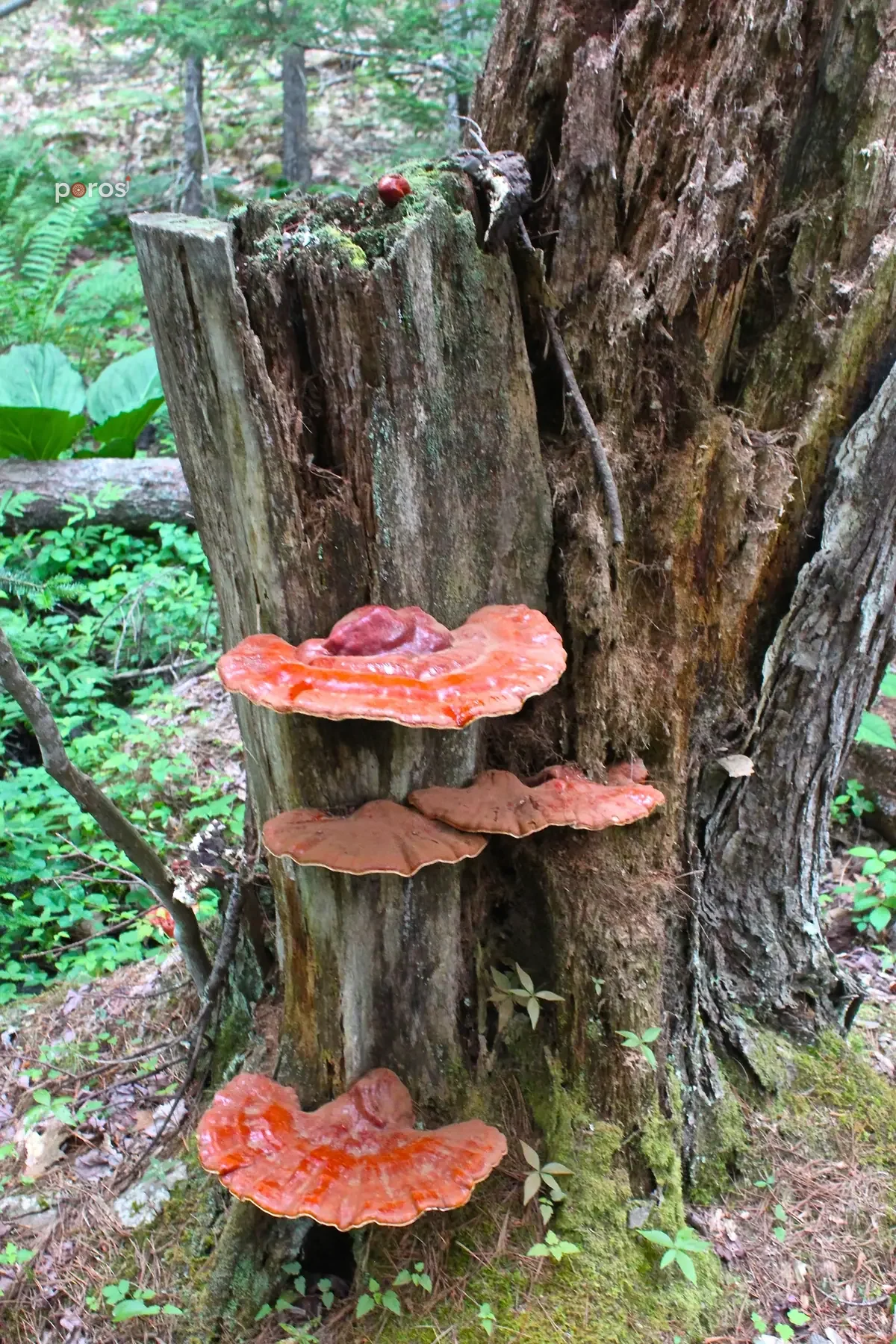
In habitat© Fluff Berger · CC BY-SA 4.0
-

Cap© Archer Jones · CC BY 4.0
-

© Shawn Taylor · CC BY 4.0
-
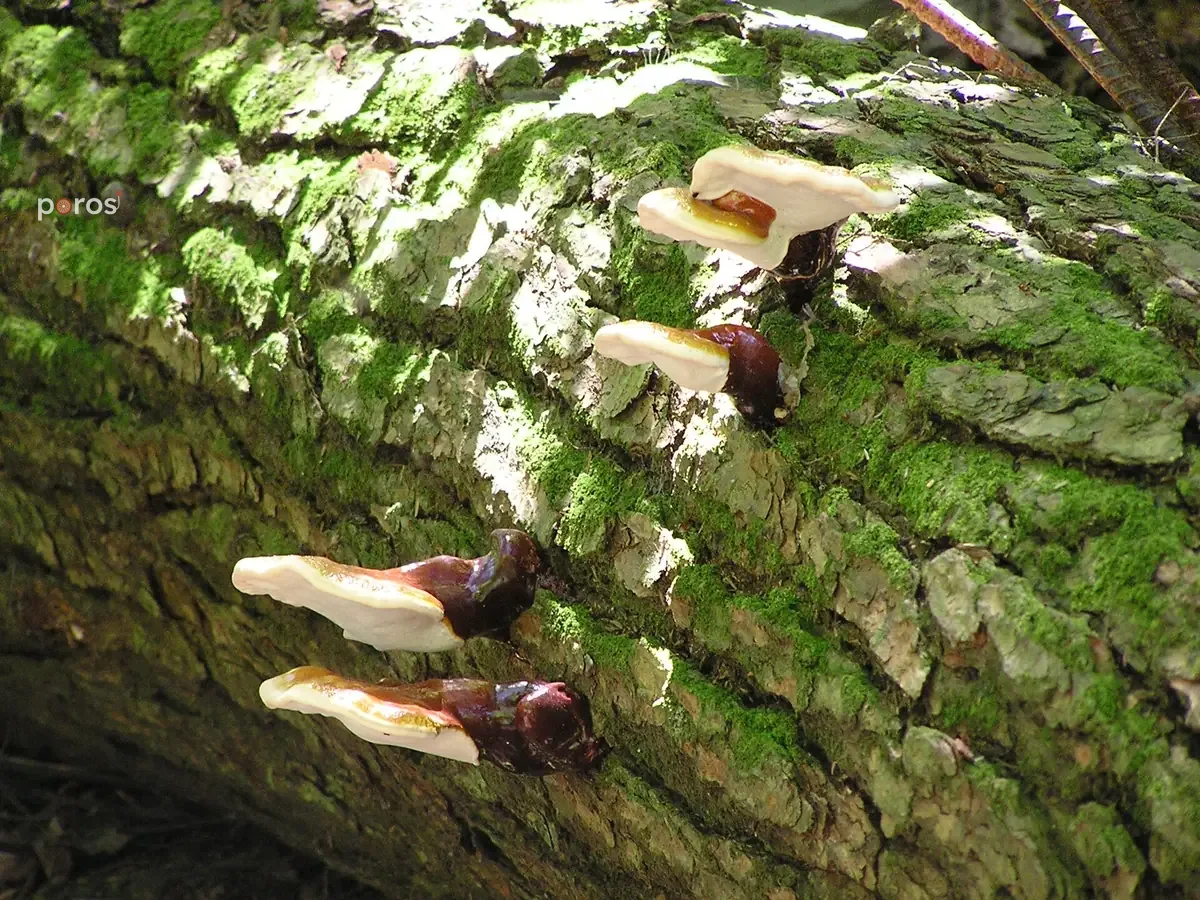
In habitat© RattBoy · CC BY-SA 3.0
-

© walt sturgeon (Mycowalt) at Mushroom Observer, a source for mycologic · CC BY-SA 3.0
-

Pores© Bianca Estefanía · CC BY-SA 4.0
-

Stem© nebrooks · CC BY 4.0
-

In habitat© Nathan Cobbett · CC0


These are licensed records of this species; photos alone are not enough to identify a mushroom.
Is the hemlock varnish shelf poisonous?
Our sources give no clear verdict on whether the hemlock varnish shelf is poisonous; that does not mean it is safe.
Is the hemlock varnish shelf edible?
It is not eaten as food: it is hard and bitter. Traditionally it is dried and made into tea.
How to recognise it
Appearance of hemlock varnish shelf
No ring or volva Spore print: Brown Faint and woody.
When and where
When to find hemlock varnish shelf
May–Sep
It grows from late spring to late summer; it is a woody annual bracket and dried specimens remain visible into autumn.
Where does hemlock varnish shelf grow?
It grows on stumps and trunks of dead or weakened conifers, especially eastern hemlock, rarely on broadleaf trees, causing white rot.
In Turkey
No record from Turkey: GBIF and iNaturalist hold no Turkish records. It ranges through eastern North America, from Canada down the Appalachians. In Turkey, lacquered red-brown brackets are usually reishi (G. lucidum) and the lacquered bracket (G. resinaceum).
Our map has no observations of hemlock varnish shelf from Turkey yet.
Look-alikes
What could it be confused with?
Hemlock varnish shelf can be mistaken for the species below. Each comparison shows Hemlock varnish shelf on the left, the look-alike on the right, and how to tell them apart.
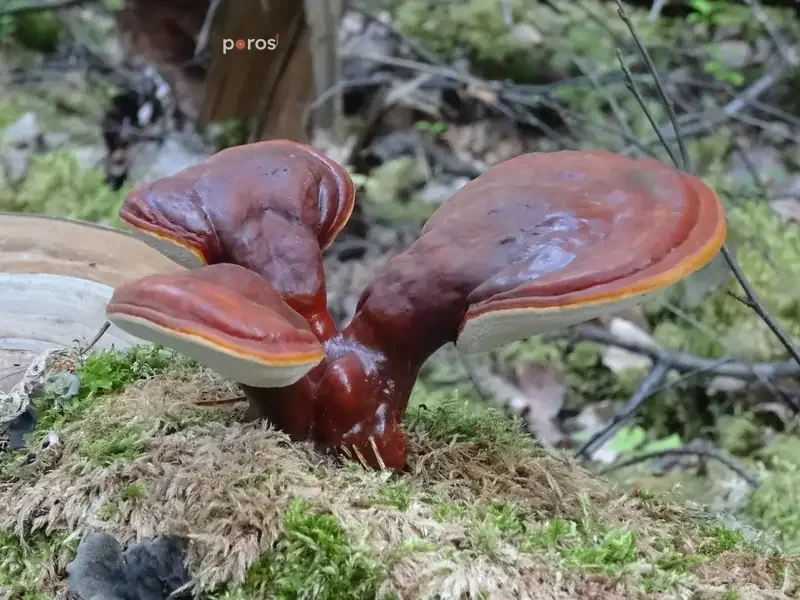
Reishi Ganoderma lucidum
How to tell It looks very similar, but it grows on broadleaf trees, especially oak, and its flesh is darker brown.

Artist's bracket Ganoderma applanatum
How to tell Its cap is unvarnished, matt grey-brown and perennial; its pores are bright white and darken when scratched.
Other look-alikes (1)
 Inedible
not Hemlock varnish shelf
Lacquered bracket Ganoderma resinaceum
It is stemless, larger and grows at the base of broadleaf trees; its varnish can soften like resin under a hot finger.
Hemlock varnish shelf and its look-alikes compared
| Species | Status | Underside | Spore print | Season |
|---|---|---|---|---|
| Hemlock varnish shelfGanoderma tsugae | Inedible | White to cream, small pores that brown when scratched | Brown | May–Sep |
| ReishiGanoderma lucidum | Traditional use | No gills; cream to brown underside with 4–5 fine pores per millimetre | Reddish brown | Jun–Nov |
| Artist’s bracketGanoderma applanatum | Inedible | The underside is white to cream with very fine pores (4–6 per mm) | Cocoa brown; it dusts the top of the bracket and nearby surfaces | Mar, May, Jul–Oct |
| Lacquered bracketGanoderma resinaceum | Inedible | White to cream, small pores that brown when handled | Brown | Jun–Jan |
The table is compiled from each species page. The status column is a guide only; do not eat a wild mushroom unless an expert has seen it in person. Compare look-alikes side by side
What it contains
Triterpenes and polysaccharides in Ganoderma tsugae are being studied in the laboratory; no therapeutic effect in humans has been proven.
General information, not a health claim.
Ganoderma tsugae is hard and bitter and is not eaten as food; it is traditionally made into tea. Its traditional use does not make it a treatment; ask your doctor if you have an illness or take medicines.
Grow it, buy it
Hemlock varnish shelf price list
| Product | Poros Mantar | Market |
|---|---|---|
| Hemlock varnish shelf tea | Made to order · ask | — |
| Hemlock varnish shelf capsules (food supplement) | Made to order · ask | — |
We make our hemlock varnish shelf products in small batches, to order; send a request and we email you the price and delivery date. The market column shows prices seen on other sellers' pages on the date given; they are not our prices and may have changed.
Frequently asked questions
Is the hemlock varnish shelf poisonous?
Our sources give no clear verdict on whether the hemlock varnish shelf is poisonous; that does not mean it is safe.
Is the hemlock varnish shelf edible?
It is not eaten as food: it is hard and bitter. Traditionally it is dried and made into tea.
What is Ganoderma tsugae?
It is a bracket fungus with a lacquered red-brown cap that grows on conifers in North America; it is a close relative of reishi.
How is it different from reishi?
They look very alike. Ganoderma tsugae grows on conifer wood and has whitish flesh; reishi (G. lucidum) grows on broadleaf trees and has darker flesh.
Does it grow in Turkey?
There is no Turkish record; it is a species of eastern North America.
Is it good for health?
Its triterpenes and polysaccharides are being studied in the laboratory, but no therapeutic effect in humans has been proven. Its traditional use does not make it a treatment; ask your doctor if you have an illness or take medicines.
Can it be cultivated?
Yes, it can be grown on conifer sawdust or logs.
When does it fruit?
It grows from late spring to late summer; dried specimens remain visible into autumn.
When is hemlock varnish shelf season in Turkey?
In our calendar, hemlock varnish shelf season runs May–Sep. It grows from late spring to late summer; it is a woody annual bracket and dried specimens remain visible into autumn.
Where does hemlock varnish shelf grow?
It grows on stumps and trunks of dead or weakened conifers, especially eastern hemlock, rarely on broadleaf trees, causing white rot.
Where is hemlock varnish shelf found in Turkey?
No record from Turkey: GBIF and iNaturalist hold no Turkish records. It ranges through eastern North America, from Canada down the Appalachians. In Turkey, lacquered red-brown brackets are usually reishi (G. lucidum) and the lacquered bracket (G. resinaceum).
What can hemlock varnish shelf be confused with?
Hemlock varnish shelf can be confused with reishi (Ganoderma lucidum, inedible), Artist's bracket (Ganoderma applanatum, inedible) and lacquered bracket (Ganoderma resinaceum, inedible). Look-alikes are compared on this page.
What is hemlock varnish shelf called in Turkish?
In Turkish, hemlock varnish shelf (Ganoderma tsugae) is called Ganoderma tsugae.
Related species
-
Artist’s bracketGanoderma applanatumInedible
-
 Blushing bracketDaedaleopsis confragosaInedible
-
 Hairy bracketTrametes hirsutaInedible
-
Lacquered bracketGanoderma resinaceumInedible
-
 Lumpy bracketTrametes gibbosaInedible
-
 Tinder fungusFomes fomentariusInedible
-
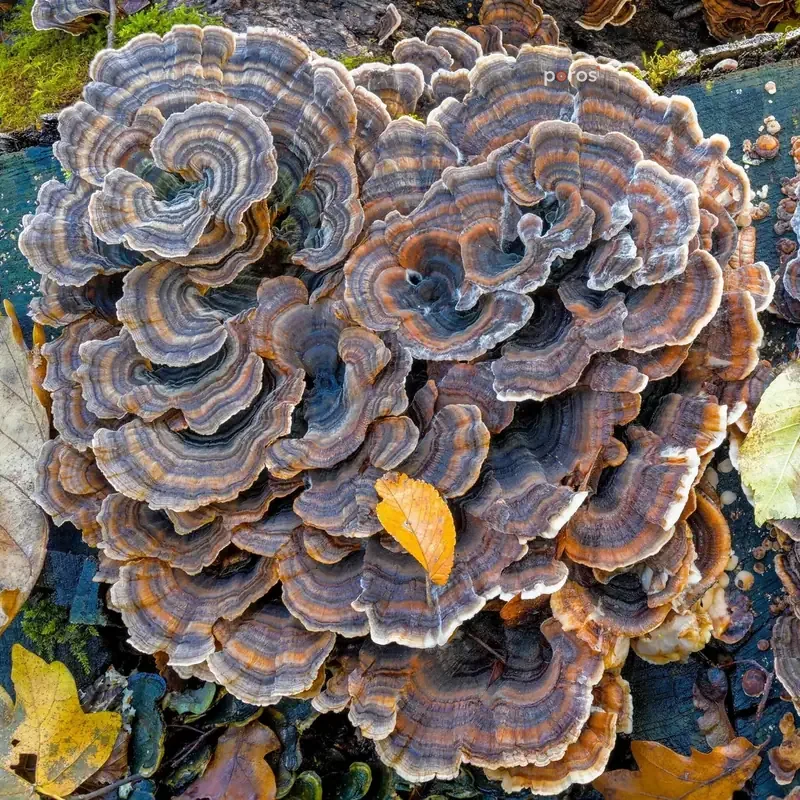 Turkey tailTrametes versicolorInedible
-
 Dryad’s saddleCerioporus squamosusEdible species
Sources
- Wikipedia (EN): Ganoderma tsugae en.wikipedia.org
- iNaturalist: Ganoderma tsugae (Türkçe ad ve Türkiye gözlemleri) inaturalist.org
- GBIF: Türkiye kayıtları gbif.org
Photo credits (11)
- Ganoderma tsugae · iNaturalist #5701631 · Erlon Bailey · CC BY-SA 4.0
- Ganoderma tsugae · iNaturalist #5701631 · Erlon Bailey · CC BY-SA 4.0
- Ganoderma tsugae · iNaturalist #1770946 · Fluff Berger · CC BY-SA 4.0
- Ganoderma tsugae · iNaturalist #1770946 · Fluff Berger · CC BY-SA 4.0
- Ganoderma tsugae · iNaturalist #225567989 · Archer Jones · CC BY 4.0
- Ganoderma tsugae · iNaturalist #12250427 · Shawn Taylor · CC BY 4.0
- File:Ganoderma tsugae.jpg · RattBoy · CC BY-SA 3.0
- File:Ganoderma tsugae Murrill 746424.jpg · walt sturgeon (Mycowalt) at Mushroom Observer, a source for mycologic · CC BY-SA 3.0
- File:Ganoderma Tsugae.jpg · Bianca Estefanía · CC BY-SA 4.0
- Ganoderma tsugae · iNaturalist #295737494 · nebrooks · CC BY 4.0
- Ganoderma tsugae · iNaturalist #365185020 · Nathan Cobbett · CC0


