
Charcoal burner (variegated brittlegill)
Russula cyanoxantha · Russulaceae

The charcoal burner (Russula cyanoxantha) is a brittlegill whose cap mixes purple, blue, green and grey in very variable shades. Unlike other Russula species, its gills are not brittle but flexible and feel greasy. It tastes mild and is considered one of the best edible Russulas in Europe.
Also called: charcoal burner, variegated brittlegill Turkish: Sırtıgökçe
Caution: the name “sırtıgökçe” is also used for another species: The sickener (poisonous)
Last updated: Prepared by the Poros Mantar editorial team4 sources checkedReport a correction
Charcoal burner photos
-
Cap© Andrea Mologni · CC BY-SA 4.0
-

Gills© Carminda Santos · CC BY 4.0
-

© Lucian Clanet · CC BY 4.0
-

© Lucian Clanet · CC BY 4.0
-

© Jerzy Opioła · CC BY-SA 4.0
-

© Per Marstad · CC BY 4.0
-

© Björn S... · CC BY-SA 2.0
-

© Patrick Bayan · CC BY 4.0
-

Gills© Bluenn Sapatsch · CC0
-

© MediAtta; kırpma: Ak ccm · CC BY-SA 3.0
-

Stem© james_ferns_etc · CC BY 4.0


These are licensed records of this species; photos alone are not enough to identify a mushroom.
Is the charcoal burner poisonous?
The charcoal burner is not listed as poisonous in our sources. The charcoal burner is edible when well cooked. The real risk is confusing it with death cap (Amanita phalloides) and the sickener (Russula emetica), so never eat a wild one without certain identification. If poisoning is suspected, call 112 at once (Turkish poison centre: 114) and keep any leftover mushroom.
Is the charcoal burner edible?
The charcoal burner is listed as edible in our sources; even so, never eat a wild one without certain identification: it has poisonous look-alikes, such as death cap (Amanita phalloides) and the sickener (Russula emetica). Do not eat it without an expert's approval. The charcoal burner is edible when well cooked. First check the stem base: a greenish-capped mushroom with a ring and a sac (volva) may be the death cap. The taste test is done only after Amanita has been ruled out and the mushroom is confirmed as a Russula: a tiny piece is touched to the tongue and spat out; any that taste peppery or bitter are not eaten. Do not eat a wild one an expert has not checked.
How to recognise it
Appearance of charcoal burner
No ring or volva Spore print: White Mild and pleasant.
When and where
When to find charcoal burner
Jun–Nov
It fruits from early summer to late autumn in broadleaf woods. Turkish mushroom observations fall between June and November; most Trabzon records are soil DNA samples taken in March 2015, not mushroom sightings.
Where does charcoal burner grow?
It grows in broadleaf and mixed woods, especially under beech, oak and chestnut, sometimes with conifers.
Where is charcoal burner found in Turkey?
Our map data holds 71 Turkish GBIF records (62 of them DNA records from soil samples in Trabzon, six from Istanbul and one each from Giresun, Kırklareli and Osmaniye) and 5 research-grade iNaturalist observations. Its Turkish name comes from iNaturalist Turkey. Worldwide it is found mostly in Europe, especially in beech woods; whether North American look-alikes are the same species is unclear.
Which months
- Jan1
- Feb0
- Mar0
- Apr0
- May0
- Jun1
- Jul0
- Aug1
- Sep2
- Oct2
- Nov1
- Dec0
4 provinces, 8 observations (GBIF, iNaturalist); months from observation dates. Record density also reflects where observers work.
Latest charcoal burner observations
-
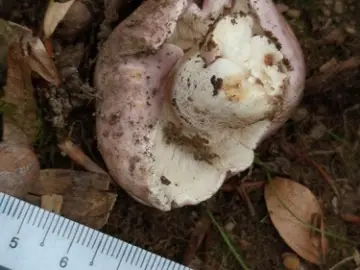 İstanbul23 Nov 2025 · iNaturalist© Umut Nuri Erdoğan · CC BY
-
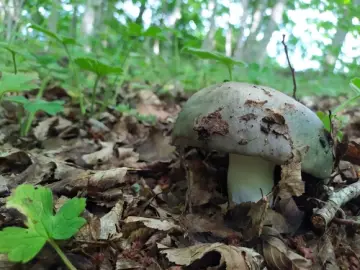 Kırklareli3 Jun 2020 · iNaturalist© Asrın Akıncıoğlu · CC BY
-
 Illustrative
Osmaniye19 Oct 2024 · iNaturalist
-
 Illustrative
İstanbul21 Sep 2024 · Mushroom Observer
-
 Illustrative
İstanbul21 Sep 2024 · Mushroom Observer
-
 Illustrative
Giresun8 Aug 2024 · iNaturalist
-
 Illustrative
İstanbul4 Jan 2024 · Mushroom Observer
-
 Illustrative
İstanbul18 Oct 2014 · iNaturalist
- See on the map
On "illustrative" cards the image is a photo of the species; the observation photo cannot be shown here because of its licence, but can be seen at the source.
Look-alikes
What could it be confused with?
Charcoal burner can be mistaken for the species below. Each comparison shows Charcoal burner on the left, the look-alike on the right, and how to tell them apart.
Take care when foraging: Poisonous look-alikes of Charcoal burner come first. If in doubt, leave it.

Death cap Amanita phalloides
How to tell Its cap can be olive green, but it has a membranous ring on the stem and a sac (volva) at the base; it is deadly.

The sickener Russula emetica
How to tell Its cap is bright red and it tastes very peppery; it is considered poisonous.
Other look-alikes (1)
 Edible species
not Charcoal burner
Green-cracking brittlegill Russula virescens
Its cap is green to grey-green and cracks into small mosaic-like patches as it dries; its gills are brittle.
Charcoal burner and its look-alikes compared
| Species | Status | Underside | Spore print | Season |
|---|---|---|---|---|
| Charcoal burnerRussula cyanoxantha | Edible species | White to cream and close | White | Jun–Nov |
| Green-cracking brittlegillRussula virescens | Edible species | White to cream, crowded, brittle gills | White to pale cream | Jun–Nov |
| Death capAmanita phalloides | Deadly poisonous | Gills white and free from the stem | White | Jul–Nov |
| The sickenerRussula emetica | Poisonous | Crowded, brittle, white to pale cream gills | White | Jul–Nov |
The table is compiled from each species page. The status column is a guide only; do not eat a wild mushroom unless an expert has seen it in person. Compare look-alikes side by side
How to cook and eat charcoal burner
Safety first. The charcoal burner is edible when well cooked. First check the stem base: a greenish-capped mushroom with a ring and a sac (volva) may be the death cap. The taste test is done only after Amanita has been ruled out and the mushroom is confirmed as a Russula: a tiny piece is touched to the tongue and spat out; any that taste peppery or bitter are not eaten. Do not eat a wild one an expert has not checked. If poisoning is suspected, call 112 (Turkish poison centre UZEM: 114) and keep any leftover mushroom.
How to store charcoal burner
Grow it, buy it
Charcoal burner price list
| Product | Poros Mantar | Market |
|---|---|---|
| Fresh charcoal burner | Made to order · ask | — |
| Dried charcoal burner | Made to order · ask | — |
We make our charcoal burner products in small batches, to order; send a request and we email you the price and delivery date. The market column shows prices seen on other sellers' pages on the date given; they are not our prices and may have changed.
Frequently asked questions
Is the charcoal burner poisonous?
The charcoal burner is not listed as poisonous in our sources. The charcoal burner is edible when well cooked. The real risk is confusing it with death cap (Amanita phalloides) and the sickener (Russula emetica), so never eat a wild one without certain identification. If poisoning is suspected, call 112 at once (Turkish poison centre: 114) and keep any leftover mushroom.
Is the charcoal burner edible?
The charcoal burner is listed as edible in our sources; even so, never eat a wild one without certain identification: it has poisonous look-alikes, such as death cap (Amanita phalloides) and the sickener (Russula emetica). Do not eat it without an expert's approval. The charcoal burner is edible when well cooked. First check the stem base: a greenish-capped mushroom with a ring and a sac (volva) may be the death cap. The taste test is done only after Amanita has been ruled out and the mushroom is confirmed as a Russula: a tiny piece is touched to the tongue and spat out; any that taste peppery or bitter are not eaten. Do not eat a wild one an expert has not checked.
Which other mushroom is called “sırtıgökçe” in Turkey?
Warning: the name “sırtıgökçe” covers both edible and poisonous species; never eat a mushroom on the strength of its name. Besides the species on this page (Russula cyanoxantha), the name “sırtıgökçe” is also used for The sickener (Russula emetica, poisonous). Turkish folk names shift from region to region, so tell species apart by the Latin name and the identification features, not by the local name.
How do you tell it from other Russulas?
Its gills do not shatter when touched but feel flexible and greasy; most other Russulas have brittle gills. Cap colour is too variable to rely on alone.
Where is it found in Turkey?
GBIF holds 71 records, 62 of them DNA records from soil samples in Trabzon; there are also records from Istanbul, Giresun, Kırklareli and Osmaniye.
Why is it called the charcoal burner?
Its English name likens the mix of purple, grey and green on its cap to the smoky colours of a charcoal kiln.
Can it be confused with the death cap?
Greenish specimens could be. The death cap has a ring and a sac at the base; the charcoal burner has neither, and its stem snaps like chalk.
What is the taste test for Russulas?
A tiny piece is touched to the tongue and spat out at once; Russulas that taste peppery or bitter are not eaten. The test is used only for Russulas, and only once the genus is certain.
When does it fruit?
From early summer to late autumn.
Is the name sırtıgökçe used for another mushroom?
Yes, and it matters. In the dialects of Kastamonu, sırtıgökçe and sırtıgızıl are recorded for the poisonous sickener (Russula emetica) (Acar, 2018). The charcoal burner on this page has a cap mixing purple, green and blue tones and flexible gills; the sickener has a bright red cap, brittle gills and a burning taste. Never eat a mushroom called sırtıgökçe just because of its name.
When is charcoal burner season in Turkey?
In our calendar, charcoal burner season runs Jun–Nov. It fruits from early summer to late autumn in broadleaf woods. Turkish mushroom observations fall between June and November; most Trabzon records are soil DNA samples taken in March 2015, not mushroom sightings.
Where does charcoal burner grow?
It grows in broadleaf and mixed woods, especially under beech, oak and chestnut, sometimes with conifers.
Where is charcoal burner found in Turkey?
Our map data holds 71 Turkish GBIF records (62 of them DNA records from soil samples in Trabzon, six from Istanbul and one each from Giresun, Kırklareli and Osmaniye) and 5 research-grade iNaturalist observations. Its Turkish name comes from iNaturalist Turkey. Worldwide it is found mostly in Europe, especially in beech woods; whether North American look-alikes are the same species is unclear.
What can charcoal burner be confused with?
Charcoal burner can be confused with green-cracking brittlegill (Russula virescens, edible species), death cap (Amanita phalloides, deadly) and the sickener (Russula emetica, poisonous). Look-alikes are compared on this page.
What is charcoal burner called in Turkish?
In Turkish, charcoal burner (Russula cyanoxantha) is called Sırtıgökçe.
Related species
-
 Bloody milk capLactarius sanguifluusEdible species
-
Green-cracking brittlegillRussula virescensEdible species
-
 Milk-white brittlegillRussula delicaEdible species
-
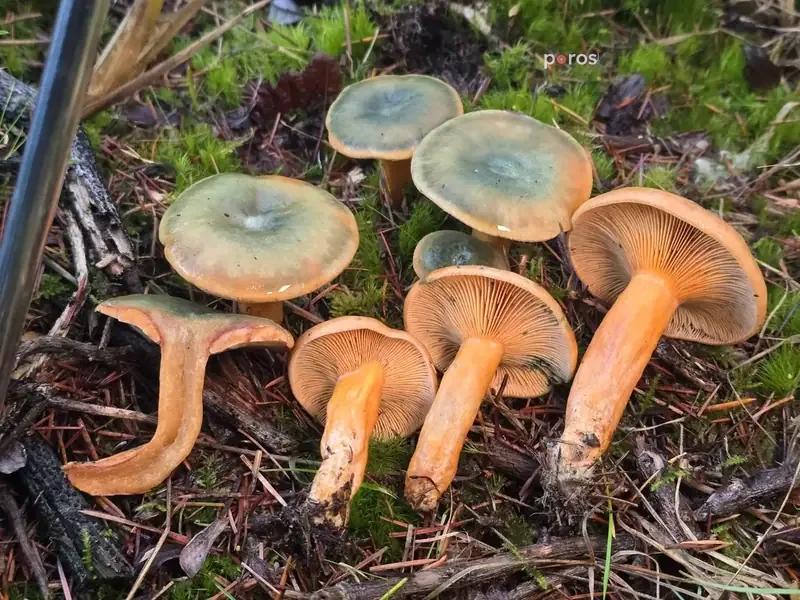 Saffron milk capLactarius deliciosusEdible species
-
 Weeping milk capLactifluus volemusEdible species
-
 False saffron milkcapLactarius deterrimusInedible
-
 Fiery milkcapLactarius pyrogalusInedible
-
 Salmon milkcapLactarius salmonicolorInedible
Sources
- Acar, E. (2018), International Journal of Humanities and Education: Kastamonu ve yöresi ağızlarında mantar adları (266 ad, Latince karşılıklarıyla tablo) dergipark.org.tr
- Wikipedia (EN): Russula cyanoxantha en.wikipedia.org
- iNaturalist: Russula cyanoxantha (Türkçe ad ve Türkiye gözlemleri) inaturalist.org
All sources (4)
- GBIF: Türkiye kayıtları gbif.org
Photo credits (13)
- Russula cyanoxantha · iNaturalist #106945103 · Andrea Mologni · CC BY-SA 4.0
- Russula cyanoxantha · iNaturalist #101994561 · Carminda Santos · CC BY 4.0
- File:Russula cyanoxantha 01.jpg · Lucian Clanet · CC BY 4.0
- File:Russula cyanoxantha 02.jpg · Lucian Clanet · CC BY 4.0
- File:Russula cyanoxantha G2.1.jpg · Jerzy Opioła · CC BY-SA 4.0
- File:Russula cyanoxantha two.jpg · Per Marstad · CC BY 4.0
- File:Russula cyanoxantha (44290996435).jpg · Björn S... · CC BY-SA 2.0
- Russula cyanoxantha · iNaturalist #236756599 · Patrick Bayan · CC BY 4.0
- File:Russula cyanoxantha gill press.jpg · Bluenn Sapatsch · CC0
- File:2010-09-29 Russula cyanoxantha cropped.jpg · MediAtta; kırpma: Ak ccm · CC BY-SA 3.0
- Russula cyanoxantha · iNaturalist #229809795 · james_ferns_etc · CC BY 4.0
- iNaturalist: İstanbul, 23 Nov 2025 · Umut Nuri Erdoğan · CC BY
- iNaturalist: Kırklareli, 3 Jun 2020 · Asrın Akıncıoğlu · CC BY


