
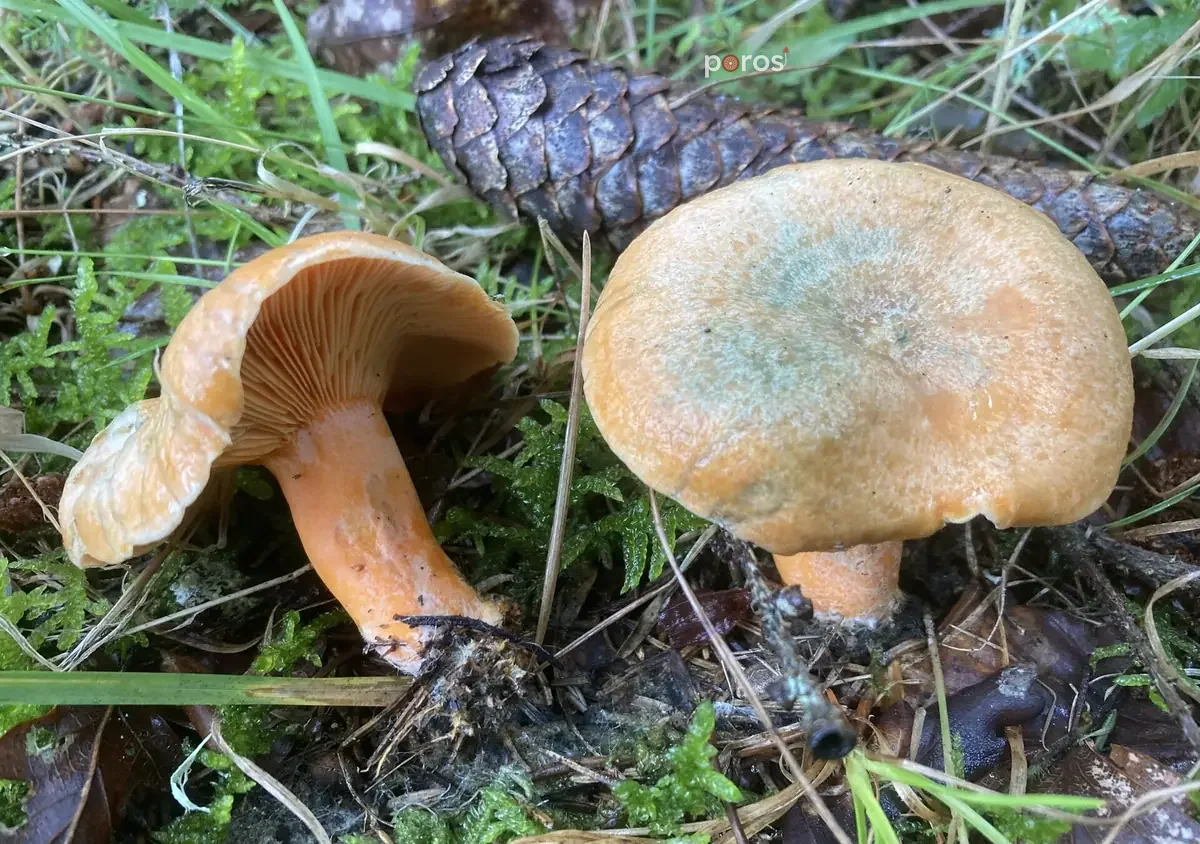


False saffron milkcap
Lactarius deterrimus · Russulaceae
Lactarius deterrimus is an orange-capped milkcap of spruce and pine woods that oozes orange milk when broken.
Last updated: Prepared by the Poros Mantar editorial team5 sources checkedReport a correction
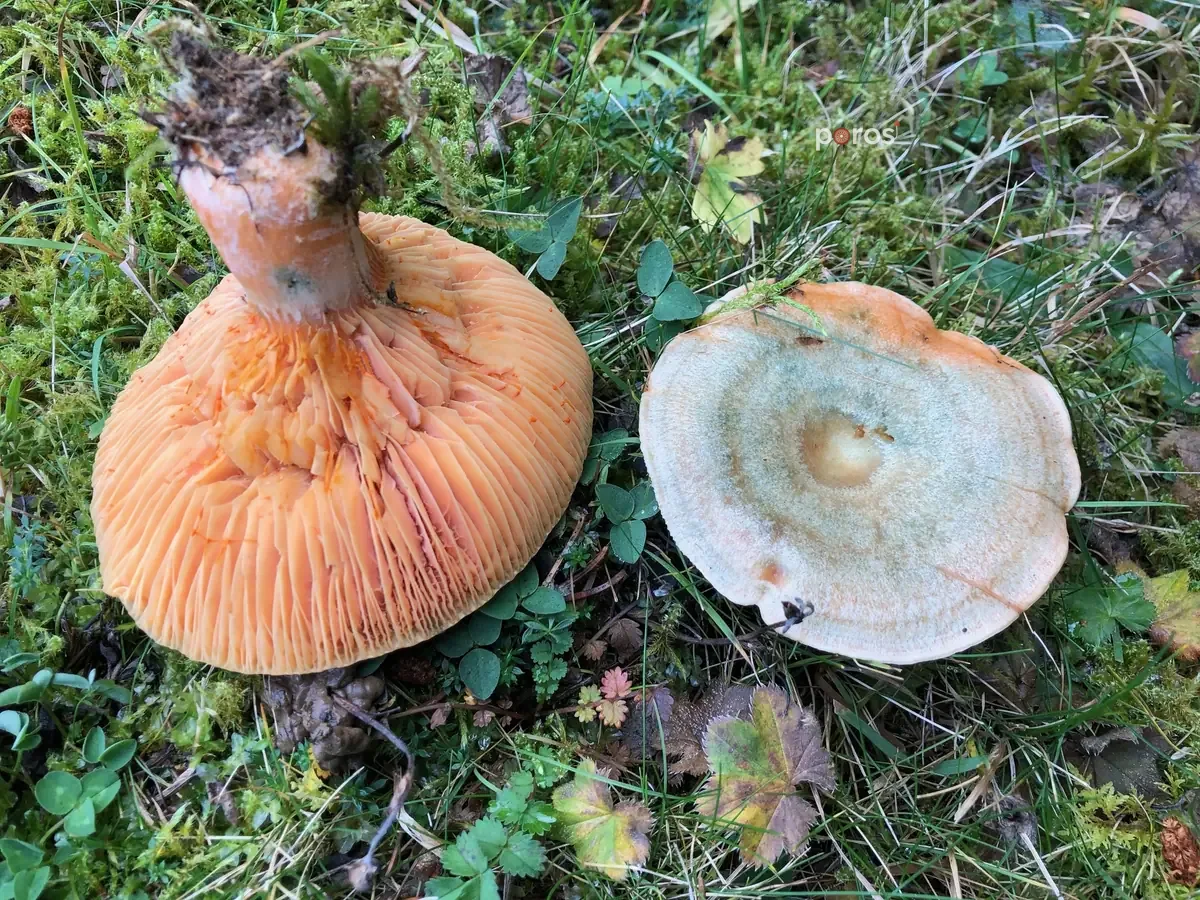
Lactarius deterrimus is an orange-capped milkcap of spruce and pine woods that oozes orange milk when broken. It is a close relative of the saffron milk cap (L. deliciosus), but it turns green faster and more extensively, lacks pits on the stem and tastes bitterish. Some sources list it as edible, yet its quality is poor and the saffron milk cap group is easily confused with poisonous milkcaps, so our advice is not to eat it.
Also called: false saffron milk cap, orange milkcap Turkish: Lactarius deterrimus, melki
How to recognise it
False saffron milkcap, part by part
No ring or volva Spore print: Pale pinkish buff Faintly fruity; taste bitterish.


When and where
Aug–Nov, Jan
- Janin season
- Feb
- Mar
- Apr
- May
- Jun
- Jul
- Augin season
- Sepin season
- Octin season
- Novin season
- Dec
Lactarius deterrimus fruits from August to November in Europe. Our single Turkish map record is from Muğla in January; in the mild Mediterranean winter the season can run late.
Where do false saffron milkcaps grow?
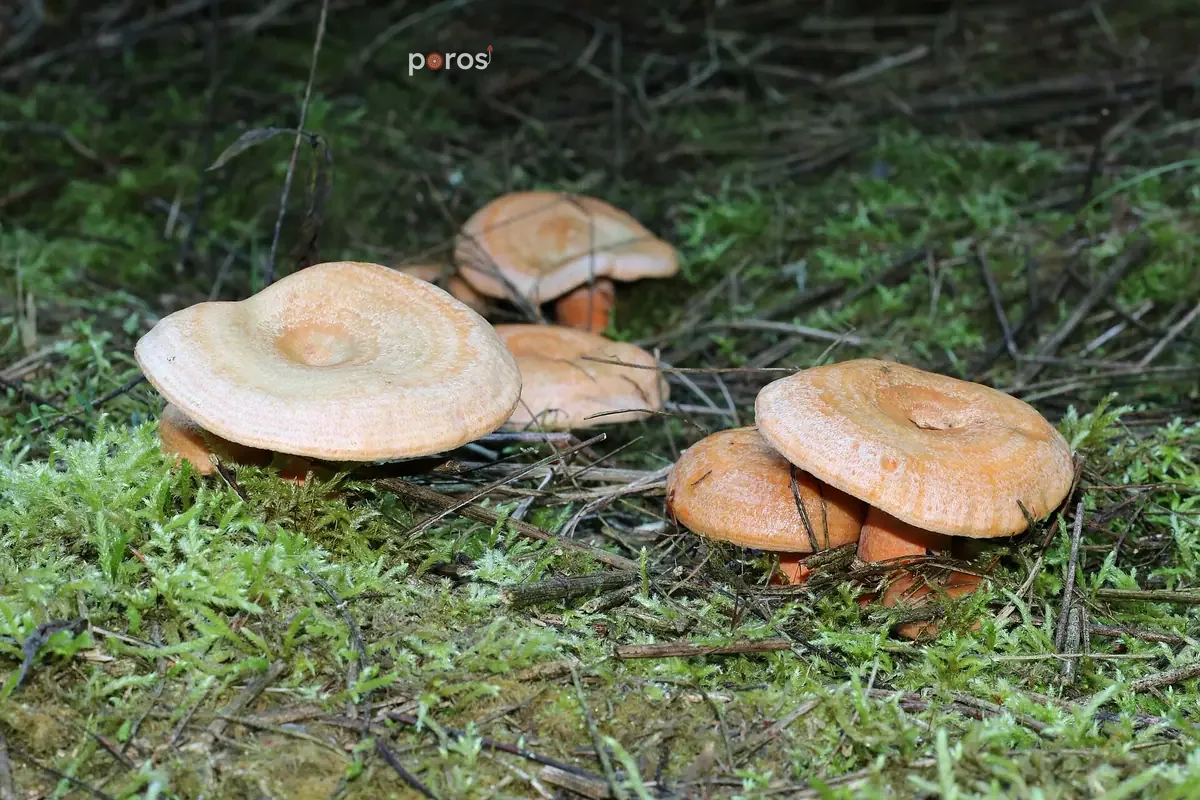
Mainly under spruce (Picea) on acidic soil, forming mycorrhizae with the tree; it also follows planted spruce. The Turkish records come from pine woodland.
Where is false saffron milkcaps found in Turkey?
Our map data (GBIF and iNaturalist) holds 1 Turkish record: Muğla, January. iNaturalist lists 7 research-grade observations from Turkey, under the Turkish name Melki. It has also been published from Burdur province (Solak et al., 2013, Mantar Dergisi). In Turkey the names kanlıca, çıntar and melki are shared by this species and L. deliciosus.
Which months
- Jan1
- Feb0
- Mar0
- Apr0
- May0
- Jun0
- Jul0
- Aug0
- Sep0
- Oct0
- Nov0
- Dec0
1 provinces, 1 observations (GBIF, iNaturalist); months from observation dates. Record density also reflects where observers work.
Latest false saffron milkcap observations
 Illustrative
On "illustrative" cards the image is a photo of the species; the observation photo cannot be shown here because of its licence, but can be seen at the source.
Look-alikes
What could it be confused with?
False saffron milkcap can be mistaken for the species below. Each card shows the look-alike and how it differs from False saffron milkcap.
 Edible species
not False saffron milkcap
Saffron milk cap Lactarius deliciosus
The saffron milk cap grows under pine, has darker orange pits on the stem, and its orange milk does not change colour. In L. deterrimus the milk turns wine-red within minutes and the stem is smooth.
 Edible species
not False saffron milkcap
Bloody milk cap Lactarius sanguifluus
The bloody milk cap has milk that is blood-red to purple from the start, and its gills are pinkish to purplish.
 Poisonous
not False saffron milkcap
Woolly milkcap Lactarius torminosus
The woolly milkcap is pinker, has a distinctly woolly cap margin, grows with birch and has white milk; it does not stain green.
 Poisonous
not False saffron milkcap
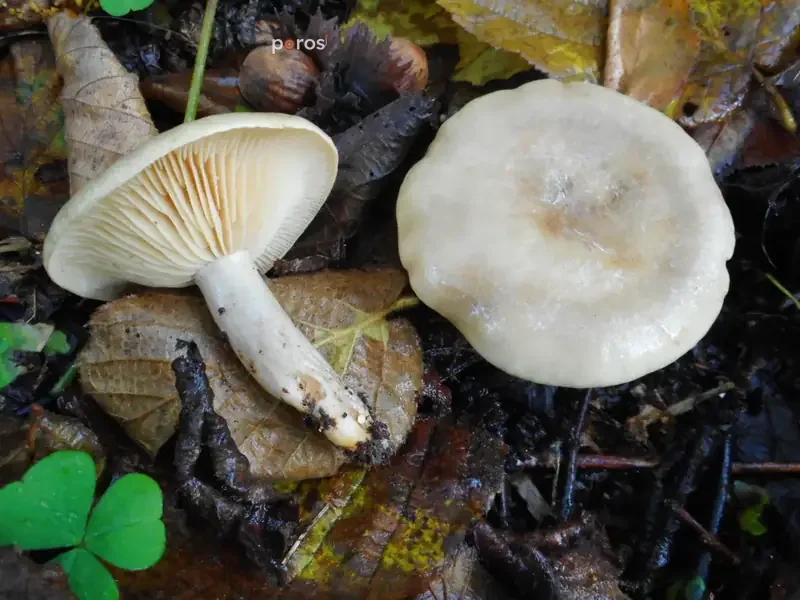
Bearded milkcap Lactarius pubescens
Pale pinkish cream with a hairy margin, found under birch; its milk is white and very acrid. No orange milk, no green staining.
 Inedible
not False saffron milkcap
Fiery milkcap Lactarius pyrogalus
The fiery milkcap is greyish brown, grows under hazel and hornbeam, and has burning-hot white milk.
 Inedible
not False saffron milkcap
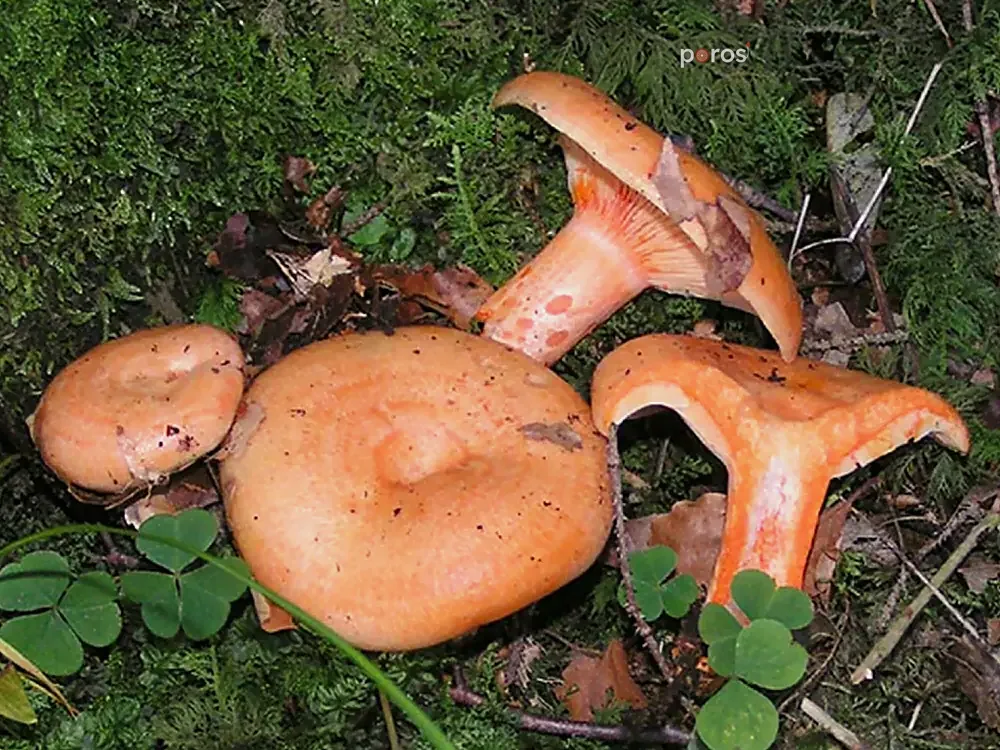
Salmon milkcap Lactarius salmonicolor
The salmon milkcap grows only under fir, has a salmon-orange cap and hardly ever stains green.
What it contains
Its culinary value is lower than the saffron milk cap's: the flesh is quickly maggoty and bitterish. The epithet deterrimus means 'the worst', a nod to this poor quality.
General information, not a health claim.
Some sources list Lactarius deterrimus as edible, but it is bitterish and of poor quality; the saffron milk cap group is often confused with poisonous milkcaps, and in Turkey such mix-ups have caused poisonings. Our advice is not to eat it. If poisoning is suspected, call poison control and keep any leftover mushroom.
Frequently asked questions
Is Lactarius deterrimus edible?
Our advice is not to eat it. Some sources list it as edible, but it is bitterish and poor, and it can be confused with poisonous milkcaps.
How does it differ from the saffron milk cap?
Its milk turns wine-red within minutes, the stem has no pits and it greens faster. The saffron milk cap's milk stays orange and its stem is pitted.
Is it poisonous?
It is not considered poisonous. The real risk is confusing it with white-milked, acrid poisonous Lactarius species.
Why does it turn green?
It is a trait of the saffron milk cap group: handled, cut or ageing spots turn green. In this species the greening is especially quick and extensive.
Which trees does it grow under?
Mainly under spruce; the Turkish records come from pine woodland.
When does it appear?
From August to November in Europe; our Turkish map record is from January.
What does melki mean?
Melki is the Turkish name iNaturalist gives this species; locally it is also used for the saffron milk cap (L. deliciosus).
Where is it found in Turkey?
Our map data holds 1 record from Muğla, and it has been published from Burdur. iNaturalist has 7 research-grade observations.
When is false saffron milkcap season in Turkey?
In our calendar, false saffron milkcap season runs Aug–Nov, Jan. Lactarius deterrimus fruits from August to November in Europe. Our single Turkish map record is from Muğla in January; in the mild Mediterranean winter the season can run late.
Where do false saffron milkcaps grow?
Mainly under spruce (Picea) on acidic soil, forming mycorrhizae with the tree; it also follows planted spruce. The Turkish records come from pine woodland.
Where are false saffron milkcaps found in Turkey?
Our map data (GBIF and iNaturalist) holds 1 Turkish record: Muğla, January. iNaturalist lists 7 research-grade observations from Turkey, under the Turkish name Melki. It has also been published from Burdur province (Solak et al., 2013, Mantar Dergisi). In Turkey the names kanlıca, çıntar and melki are shared by this species and L. deliciosus.
What can the false saffron milkcap be confused with?
The false saffron milkcap can be confused with saffron milk cap (Lactarius deliciosus, edible species), bloody milk cap (Lactarius sanguifluus, edible species), woolly milkcap (Lactarius torminosus, poisonous), bearded milkcap (Lactarius pubescens, poisonous), fiery milkcap (Lactarius pyrogalus, inedible) and salmon milkcap (Lactarius salmonicolor, inedible). Look-alikes are compared on this page.
What is the false saffron milkcap called in Turkish?
In Turkish, the false saffron milkcap (Lactarius deterrimus) is called Lactarius deterrimus; other local names include melki.
Related species
-
Fiery milkcapLactarius pyrogalusInedible
-
Salmon milkcapLactarius salmonicolorInedible
-
Bloody milk capLactarius sanguifluusEdible species
-
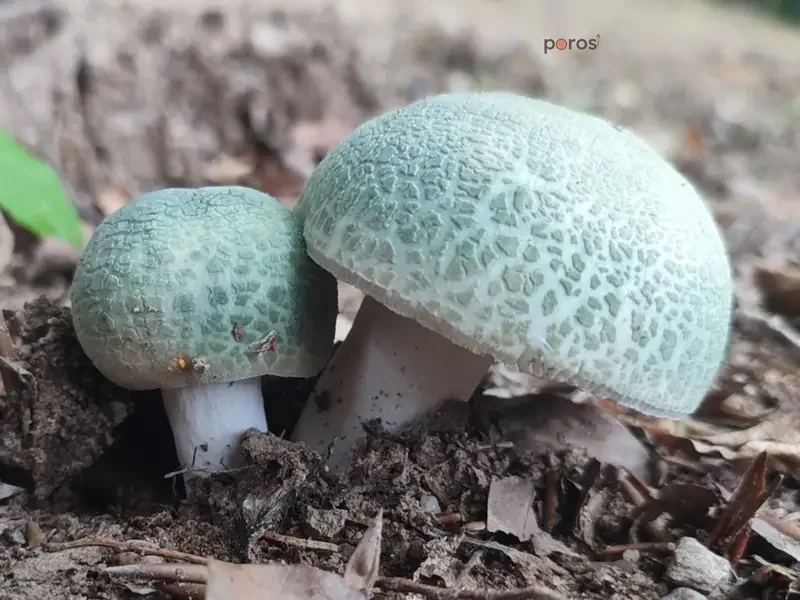 Green-cracking brittlegillRussula virescensEdible species
-
Saffron milk capLactarius deliciosusEdible species
-
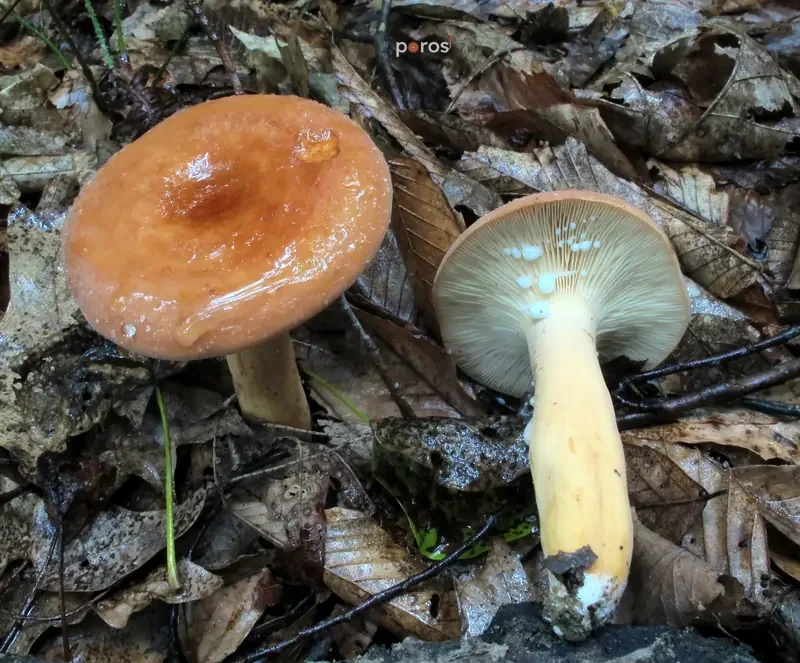 Weeping milk capLactifluus volemusEdible species
-
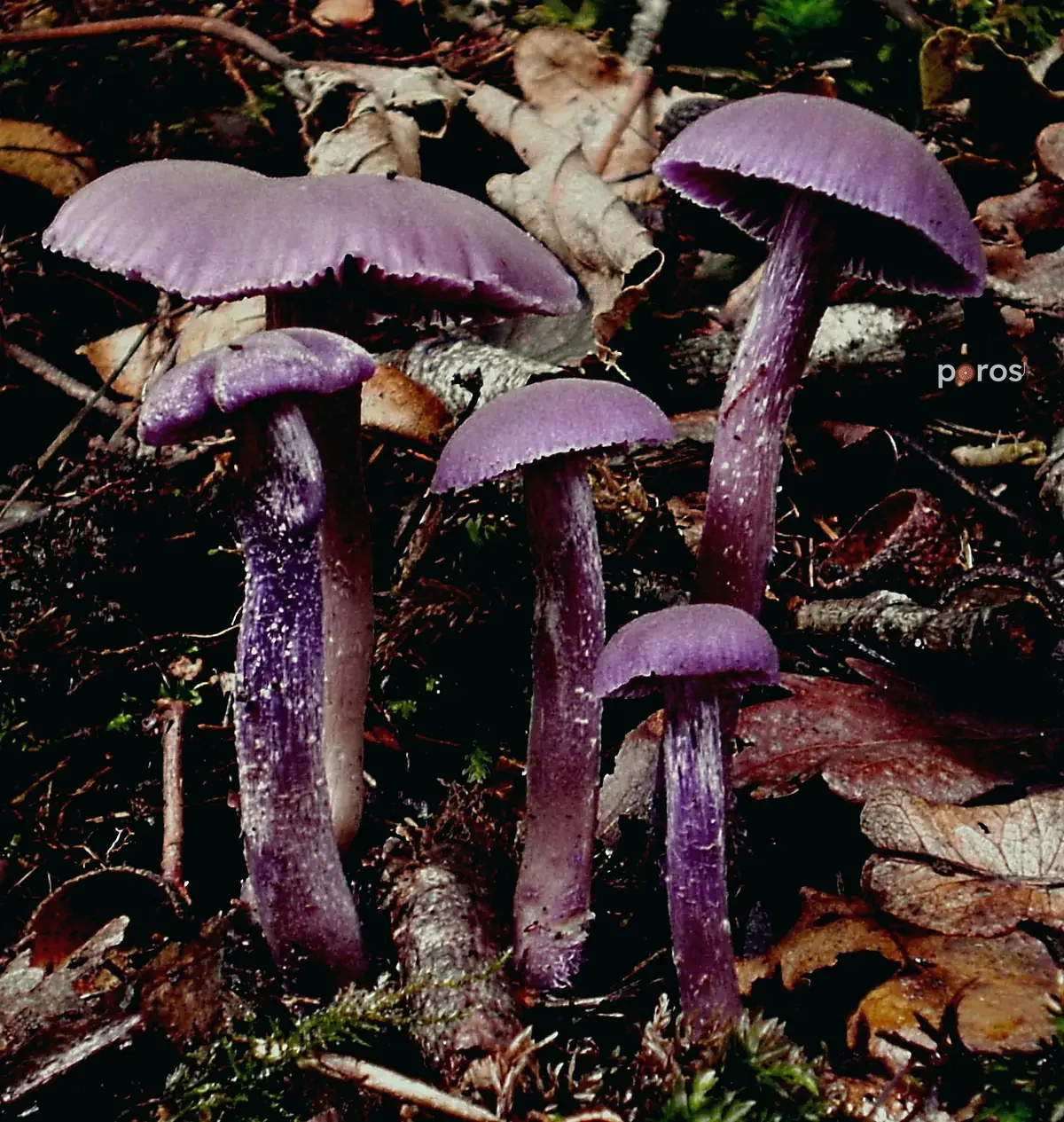 Amethyst deceiverLaccaria amethystinaInedible
-
 Artist’s bracketGanoderma applanatumInedible
Sources
- Solak, Allı, Işıloğlu, Güngör ve Kalmış (2013), Mantar Dergisi 4(2): Burdur İlinin Makrofungusları (Macrofungi of Burdur Province) dergipark.org.tr
- Wikipedia (EN): Lactarius deterrimus en.wikipedia.org
- First Nature: Lactarius deterrimus, False Saffron Milkcap first-nature.com
All sources (5)
- iNaturalist: Lactarius deterrimus (Türkçe ad ve Türkiye gözlemleri) inaturalist.org
- GBIF: Türkiye kayıtları gbif.org
Photo credits (8)
- File:Lactarius deterrimus 4.jpg · Lucian Clanet · CC BY 4.0
- Lactarius deterrimus · iNaturalist #64452452 · Jason Grant · CC BY 4.0
- Lactarius deterrimus · iNaturalist #235758687 · relew · CC BY 4.0
- Lactarius deterrimus · iNaturalist #244128572 · Sandy Rae · CC BY 4.0
- Lactarius deterrimus · iNaturalist #34068787 · Dorte Stokholm · CC BY 4.0
- Lactarius deterrimus · iNaturalist #398130888 · Марина Давлетшина · CC BY 4.0
- Lactarius deterrimus · iNaturalist #96854604 · Marilyne Busque-Dubois · CC BY 4.0
- File:Lactarius deterrimus 2026 G1.jpg · George Chernilevsky · CC BY 4.0

