


Fiery milkcap
Lactarius pyrogalus · Russulaceae
The fiery milkcap grows at the base of hazel trees.
Last updated: Prepared by the Poros Mantar editorial team7 sources checkedReport a correction
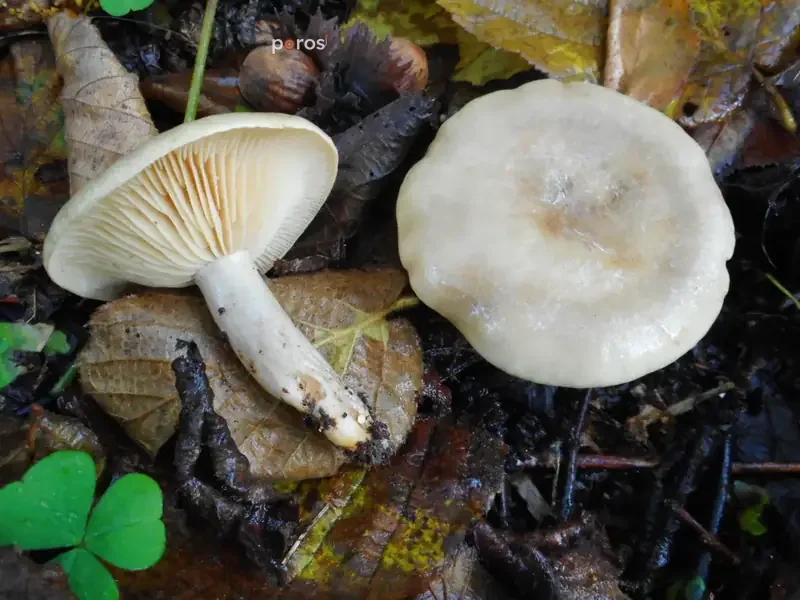
The fiery milkcap grows at the base of hazel trees. It has a grey-beige cap and releases white milk when cut. Its gills are widely spaced and yellowish, and the milk is very hot and acrid. It is not considered poisonous, but most sources treat it as inedible. In the Turkish Black Sea region it is reportedly gathered and pickled.
Also called: fire-milk lactarius Turkish: Fındık mantarı, fındık kirmiti, fındık tirmiti
Which species is fındık mantarı? The tirmit mix-up
Mantarlı Yaşam gives the name fındık mantarı ("hazel mushroom") to Lactarius pyrogalus and notes that it is also called fındık kirmiti, fındık tirmiti and tirmit. This page covers that species.
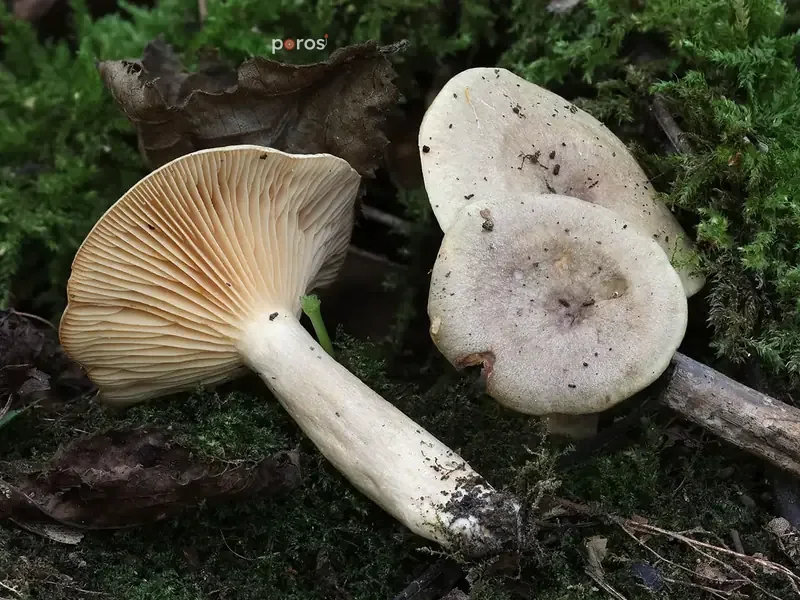
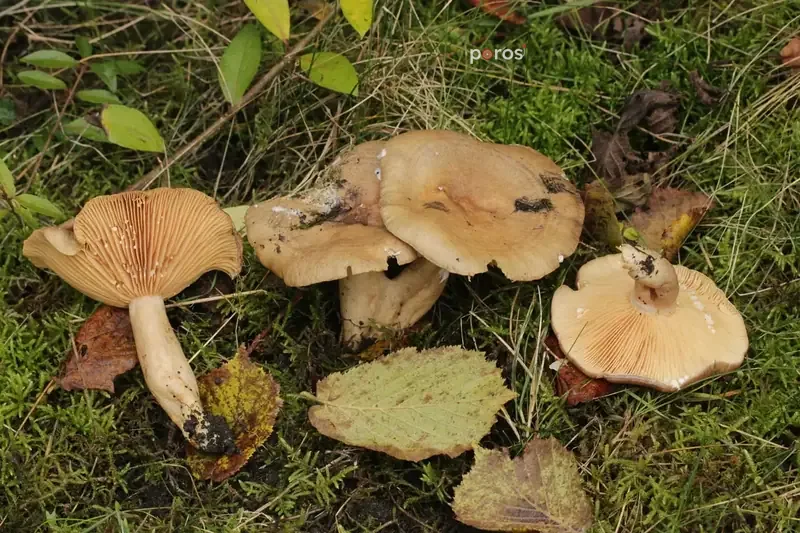
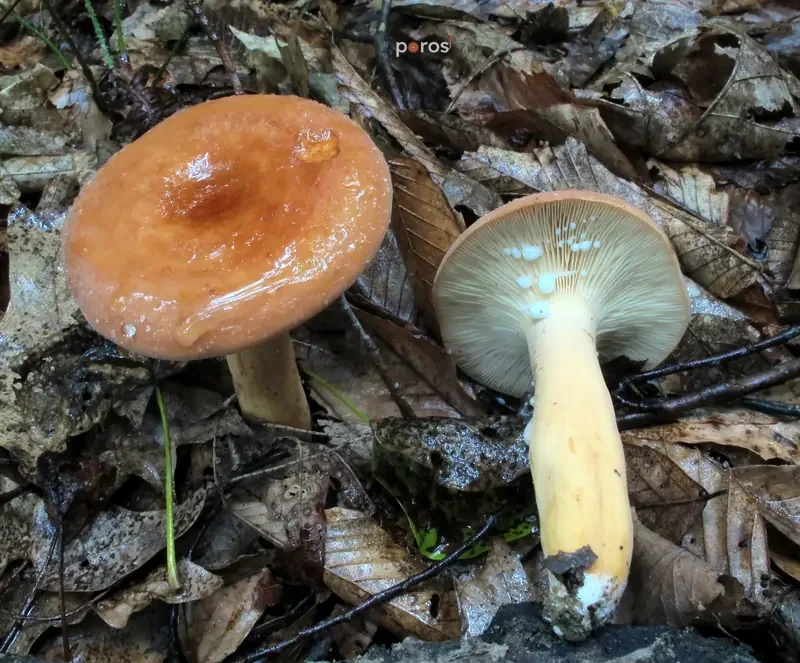
Some recipe sites, however, describe a "fındık mantarı (tirmit)" that may be the edible weeping milk cap (Lactifluus volemus), which Turkish Wikipedia calls tirmit mantarı. The two are easy to tell apart: the weeping milk cap has a velvety orange-brown cap, crowded gills, copious mild white milk and a fishy smell. The fiery milkcap has a grey-brown, zoned cap, distant yellowish gills and white milk that burns the tongue.
Why people eat it, and why we call it inedible
According to Mantarlı Yaşam the fiery milkcap is not poisonous, but its very acrid, astringent and sour taste means it is not considered edible in many countries. It is nevertheless eaten in parts of Eastern Europe and in Turkey, sold fresh or pickled in brine. Black Sea recipes boil it first, then sauté it with onion and peppers.
We list the fiery milkcap as inedible. Among milk caps there are poisonous species such as Lactarius helvus and ones that cause gastrointestinal poisoning such as Lactarius torminosus; the idea that every mushroom with milk is edible is wrong.
Similar milk caps
The fragrant milkcap (Lactarius glyciosmus) looks similar but smells strongly of coconut. Lactarius circellatus, found under hornbeam, is also often confused with it. The orange-milked saffron milk cap grows under pine and bruises green; do not expect it in a hazel orchard.
How to recognise it
Fiery milkcap, part by part
No ring or volva Spore print: Light ochre Faintly fruity; the milk is white and tastes very hot, acrid and acidic.


When and where
Aug–Nov
- Jan
- Feb
- Mar
- Apr
- May
- Jun
- Jul
- Augin season
- Sepin season
- Octin season
- Novin season
- Dec
The fiery milkcap fruits in late summer and autumn; European sources give August to October, and the single Turkish GBIF record is from October.
Where do fiery milkcaps grow?
It is mycorrhizal with hazel, growing singly or in scattered groups in hazel orchards and mixed woods with hazel.
Where is fiery milkcaps found in Turkey?
The only Turkish GBIF record of the fiery milkcap is from Akçakoca in Düzce (October 2019). A study by Ondokuz Mayıs University examined samples gathered by local people in Samsun and Ordu; the species is common in hazel orchards of the central Black Sea region.
Which months
- Jan0
- Feb0
- Mar0
- Apr0
- May0
- Jun0
- Jul0
- Aug0
- Sep0
- Oct1
- Nov0
- Dec0
1 provinces, 1 observations (GBIF, iNaturalist); months from observation dates. Record density also reflects where observers work.
Latest fiery milkcap observations
 Illustrative
On "illustrative" cards the image is a photo of the species; the observation photo cannot be shown here because of its licence, but can be seen at the source.
Look-alikes
What could it be confused with?
Fiery milkcap can be mistaken for the species below. Each card shows the look-alike and how it differs from Fiery milkcap.
 Edible species
not Fiery milkcap
Saffron milk cap Lactarius deliciosus
The saffron milk cap has a carrot-orange cap and milk, bruises green and grows under pine. The fiery milkcap has white milk and grows under hazel.
 Poisonous
not Fiery milkcap
Woolly milkcap Lactarius torminosus
Its salmon-pink cap is zoned with a distinctly woolly margin, and it grows under birch. It has white, acrid milk and causes gastrointestinal poisoning.
 Inedible
not Fiery milkcap
Coconut milkcap Lactarius glyciosmus
It is smaller, with a lilac-grey cap and a strong coconut smell, and grows under birch. Some local sources also give it the name fındık mantarı.
 Inedible
not Fiery milkcap
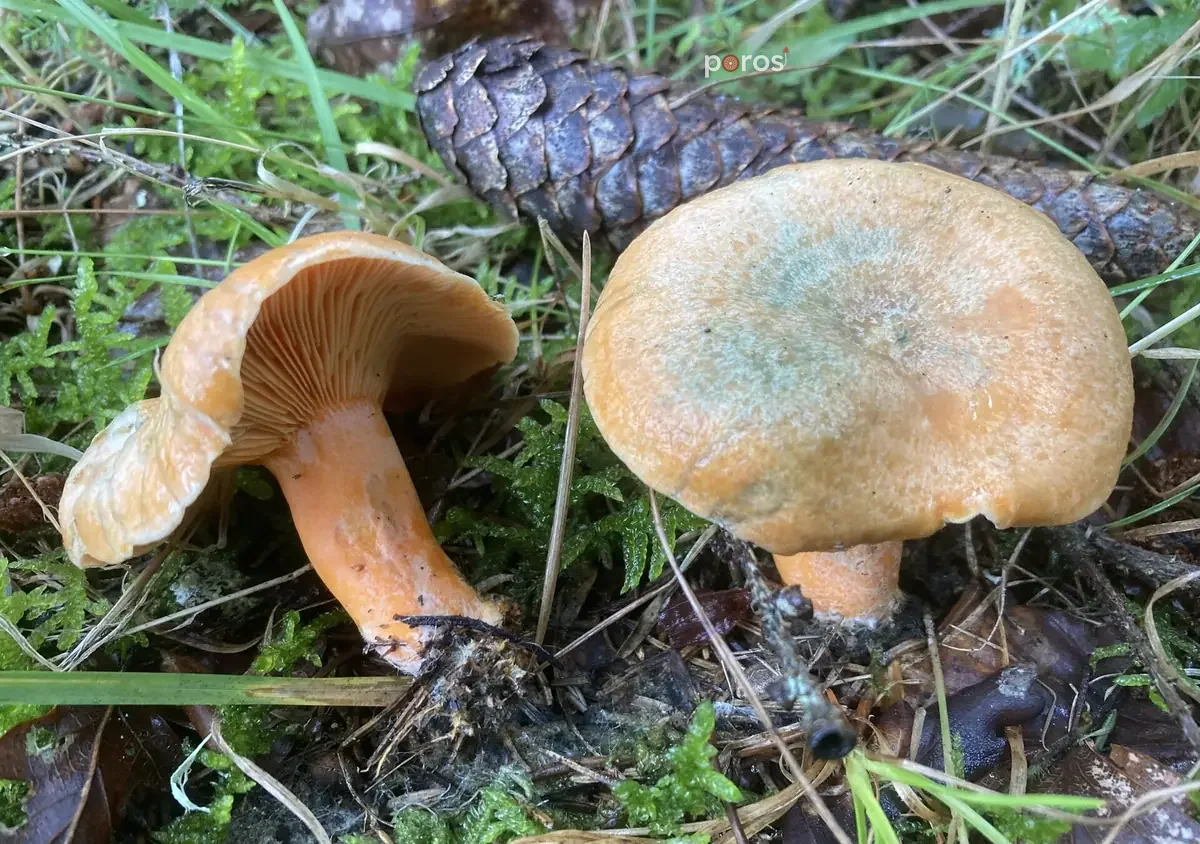
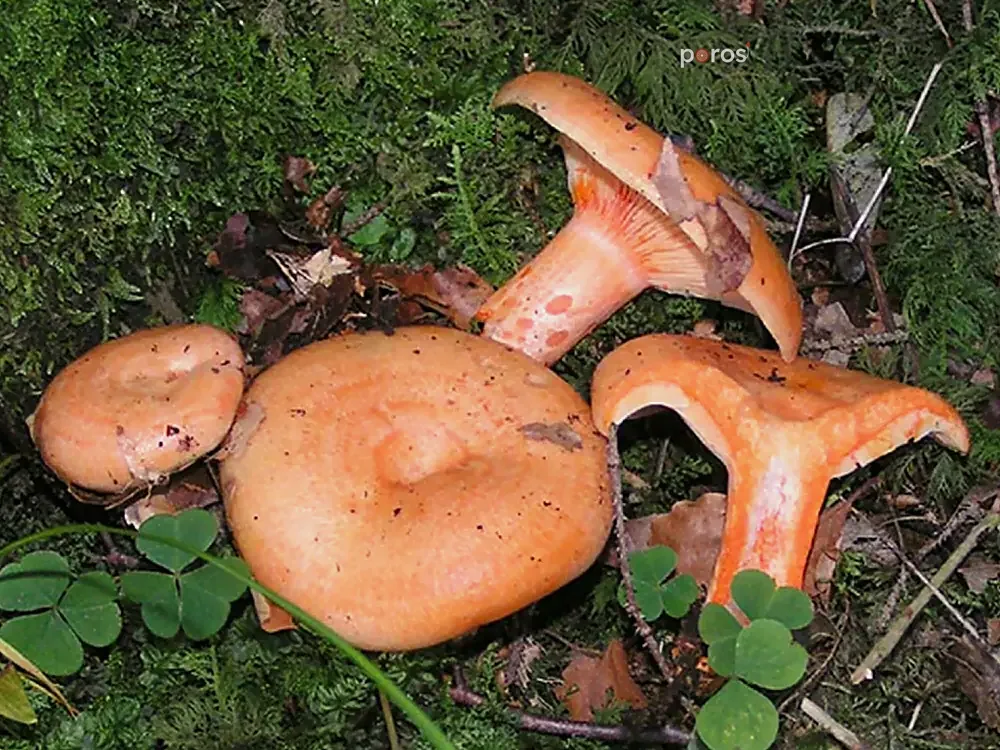
False saffron milkcap Lactarius deterrimus
Orange-capped with orange milk that stains green; the fiery milkcap is greyish brown with white, burning milk.
 Inedible
not Fiery milkcap
Salmon milkcap Lactarius salmonicolor
Salmon-orange with orange milk, under fir; the fiery milkcap is greyish brown with white, burning milk, under hazel.
What it contains
A study by Ondokuz Mayıs University on samples from Samsun and Ordu found 68.7% moisture and 4.4% protein in fresh samples. Source
General information, not a health claim.
The fiery milkcap is not considered poisonous, but its raw milk is very hot and acrid, and most sources treat it as inedible. Some milkcaps cause gastrointestinal poisoning; do not pick one unless milk colour, smell and host tree are confirmed. If poisoning is suspected, keep any leftover mushroom.
Frequently asked questions
Is the fiery milkcap edible?
It is not considered poisonous, but because its milk is very hot and acrid most sources treat it as inedible. It is reportedly pickled in the Black Sea region; that is a local habit, not a recommendation.
Are fındık kirmiti and fındık mantarı the same?
In most sources, yes: both refer to Lactarius pyrogalus. Some local sources, however, also give the name to the coconut-scented Lactarius glyciosmus.
How do you identify it?
A grey-beige cap under hazel, widely spaced yellowish gills, white and very acrid milk when cut, and a light ochre spore print.
How is it told apart from the saffron milk cap?
The saffron milk cap has orange milk, bruises green and grows under pine. The fiery milkcap has white milk and grows under hazel.
When does it appear?
In late summer and autumn; European sources give August to October.
Where does it grow in Turkey?
In hazel orchards of the central and western Black Sea region. The single Turkish GBIF record is from Düzce; study samples came from Samsun and Ordu.
Can it be grown at home?
No. It lives in partnership with hazel roots (mycorrhizal), so it cannot be grown from spawn or a kit.
Is the fiery milkcap poisonous?
The fiery milkcap is not considered poisonous, but its milk is very acrid and burning; most sources treat it as inedible, and so do we.
What are the other names of fındık mantarı?
Fındık mantarı is also called fındık kirmiti, fındık tirmiti and tirmit; its Latin name is Lactarius pyrogalus.
Is fındık mantarı the same as tirmit?
Fındık mantarı is sometimes called tirmit, but Wikipedia gives the name tirmit mantarı to the edible weeping milk cap (Lactifluus volemus). They differ in milk taste, gill spacing and cap colour.
How is fındık mantarı cooked?
In Black Sea recipes fındık mantarı is boiled first and then sautéed with onion and peppers, or pickled. Because of its acrid milk we treat it as inedible.
How much does fındık mantarı cost?
Fındık mantarı is not cultivated; it is gathered in season and sold fresh or pickled, at prices that vary by region. We do not list current prices.
When is fiery milkcap season in Turkey?
In our calendar, fiery milkcap season runs Aug–Nov. The fiery milkcap fruits in late summer and autumn; European sources give August to October, and the single Turkish GBIF record is from October.
Where do fiery milkcaps grow?
It is mycorrhizal with hazel, growing singly or in scattered groups in hazel orchards and mixed woods with hazel.
Where are fiery milkcaps found in Turkey?
The only Turkish GBIF record of the fiery milkcap is from Akçakoca in Düzce (October 2019). A study by Ondokuz Mayıs University examined samples gathered by local people in Samsun and Ordu; the species is common in hazel orchards of the central Black Sea region.
What can the fiery milkcap be confused with?
The fiery milkcap can be confused with saffron milk cap (Lactarius deliciosus, edible species), woolly milkcap (Lactarius torminosus, poisonous), coconut milkcap (Lactarius glyciosmus, inedible), false saffron milkcap (Lactarius deterrimus, inedible) and salmon milkcap (Lactarius salmonicolor, inedible). Look-alikes are compared on this page.
What is the fiery milkcap called in Turkish?
In Turkish, the fiery milkcap (Lactarius pyrogalus) is called Fındık mantarı; other local names include fındık kirmiti and fındık tirmiti.
Related species
-
False saffron milkcapLactarius deterrimusInedible
-
Salmon milkcapLactarius salmonicolorInedible
-
 Bloody milk capLactarius sanguifluusEdible species
-
 Green-cracking brittlegillRussula virescensEdible species
-
Saffron milk capLactarius deliciosusEdible species
-
 Weeping milk capLactifluus volemusEdible species
-
 Amethyst deceiverLaccaria amethystinaInedible
-
 Artist’s bracketGanoderma applanatumInedible
Sources
- OMÜ AVESİS: Some chemical components of Lactarius pyrogalus avesis.omu.edu.tr
- Wikipedia (EN): Lactarius pyrogalus en.wikipedia.org
- First Nature: Lactarius pyrogalus first-nature.com
All sources (7)
- GBIF: Türkiye kayıtları gbif.org
- Vikipedi (TR): Tirmit mantarı tr.wikipedia.org
- Mantarlı Yaşam: Fındık mantarı (Lactarius pyrogalus) mantarliyasam.com
- Yemek Cini: Fındık Mantarı (Tirmit) Kavurması yemekcini.com
Photo credits (8)
- Lactarius pyrogalus · iNaturalist #33745498 · Eugene Popov · CC BY 4.0
- Lactarius pyrogalus · iNaturalist #402481796 · Daniel Ghyselinck · CC BY 4.0
- Lactarius pyrogalus · iNaturalist #142099019 · Piermario Maculan · CC0
- Lactarius pyrogalus · iNaturalist #245770985 · Bohan Jia · CC BY 4.0
- Lactarius pyrogalus · iNaturalist #246169891 · Jean-Paul Boerekamps · CC0
- Lactarius pyrogalus · iNaturalist #406022458 · Björn Sothmann · CC BY-SA 4.0
- File:Lactarius pyrogalus 56448554.jpg · bjoerns · CC BY-SA 4.0
- Lactarius pyrogalus · iNaturalist #239142436 · relew · CC BY 4.0
