
Collared earthstar (saucered earthstar)
Geastrum triplex · Geastraceae

The collared earthstar (Geastrum triplex) starts as an onion-like bulb in leaf litter; its outer skin splits into 4–8 rays that open like a star, and the central sac puffs out spores. The sac usually sits in a collar or saucer, hence the name triplex. It is one of the largest earthstars, reaching 10 cm when open. It is not edible.
Also called: collared earthstar, saucered earthstar Turkish: Geastrum triplex Synonyms: Geaster triplex
Last updated: Prepared by the Poros Mantar editorial team5 sources checkedReport a correction
Collared earthstar photos
-
© Garrett Taylor · CC0
-

© Cobi Calyx · CC BY 4.0
-

© Sigrid Jakob · CC0
-

© Greg Tasney · CC BY-SA 4.0
-

© Andrew Conboy · CC BY 4.0
-

© Robert M Hallock · CC BY 4.0
-

© Tara Severns · CC BY 4.0
-

© Jose Enrique · CC BY 4.0
These are licensed records of this species; photos alone are not enough to identify a mushroom.
Is the collared earthstar poisonous?
The collared earthstar is not known to be poisonous, but it is not edible. If poisoning is suspected, call 112 at once (Turkish poison centre: 114) and keep any leftover mushroom.
Is the collared earthstar edible?
No, it is not edible. It is not known to be poisonous.
How to recognise it
Appearance of collared earthstar
No ring or volva Spore print: Brown, powdery Not distinctive.
When and where
When to find collared earthstar
Oct, Jan
It fruits in autumn and the dry bodies last through winter. Our Turkish records are from October and January.
Where does collared earthstar grow?
It grows, often in groups, in the leaf and needle litter of broadleaf and conifer woods as a saprotroph.
Where is collared earthstar found in Turkey?
Our map data (GBIF and iNaturalist) holds 6 Turkish records: Kastamonu (3), Muğla (2), Bolu (1). The records are from January, October.
Which months
- Jan2
- Feb0
- Mar0
- Apr0
- May0
- Jun0
- Jul0
- Aug0
- Sep0
- Oct3
- Nov0
- Dec0
3 provinces, 6 observations (GBIF, iNaturalist); months from observation dates. Record density also reflects where observers work.
Latest collared earthstar observations
-
 Illustrative
Muğla13 Jan 2022 · Mushroom Observer
-
 Illustrative
Muğla14 Jan 2018 · iNaturalist
-
 Illustrative
Kastamonu2 Oct 2016 · iNaturalist
-
 Illustrative
Kastamonu2 Oct 2016 · Mushroom Observer
-
 Illustrative
Kastamonu1 Oct 2016 · Floranatolica Community-Validated Observations from Türkiye
-
 Illustrative
Bolu · INSDC Host Organism Sequences
- See on the map
On "illustrative" cards the image is a photo of the species; the observation photo cannot be shown here because of its licence, but can be seen at the source.
Look-alikes
What could it be confused with?
Collared earthstar can be mistaken for the species below. Each comparison shows Collared earthstar on the left, the look-alike on the right, and how to tell them apart.

Barometer earthstar Astraeus hygrometricus
How to tell The barometer earthstar's rays close in dry weather and open when damp, their inner faces are net-cracked and the spore sac has no collar.
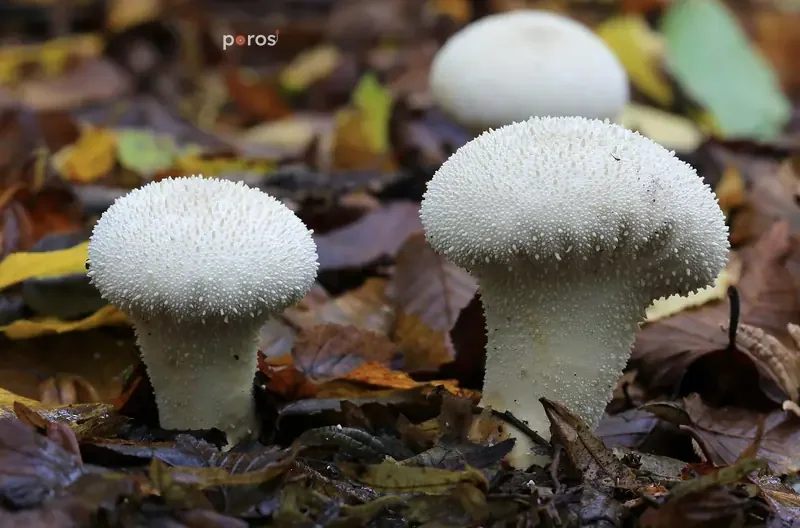
Common puffball Lycoperdon perlatum
How to tell The common puffball's skin does not split into rays; its pear-shaped body is covered in small spines.
Collared earthstar and its look-alikes compared
| Species | Status | Underside | Spore print | Season |
|---|---|---|---|---|
| Collared earthstarGeastrum triplex | Inedible | The spore sac sits in a collar or saucer, with a fibrous, slightly sunken mouth on top | Brown, powdery | Jan, Oct |
| Barometer earthstarAstraeus hygrometricus | Inedible | No gills or pores | Brown | Dec–Jan, Mar–Apr |
| Common puffballLycoperdon perlatum | Edible species | No gills or pores | Olive-brown powder | Aug–Jan |
The table is compiled from each species page. The status column is a guide only; do not eat a wild mushroom unless an expert has seen it in person. Compare look-alikes side by side
The collared earthstar is not known to be poisonous, but it is not edible. The unopened bulb can be mistaken for puffballs and other round fungi; always cut such fungi in half. If poisoning is suspected, call 112 or the Turkish poison centre (114).
Frequently asked questions
Is the collared earthstar poisonous?
The collared earthstar is not known to be poisonous, but it is not edible. If poisoning is suspected, call 112 at once (Turkish poison centre: 114) and keep any leftover mushroom.
Is the collared earthstar edible?
No, it is not edible. It is not known to be poisonous.
How do you identify it?
In leaf litter, 4–8 thick star-like rays around a brown spore sac that sits in a distinct collar or saucer.
What can it be confused with?
The main look-alikes are: Barometer earthstar, Common puffball. The differences are listed in the look-alikes section; with poisonous look-alikes, always check the cross-section and habitat.
Where does it grow?
It grows, often in groups, in the leaf and needle litter of broadleaf and conifer woods as a saprotroph.
When does it appear?
It fruits in autumn and the dry bodies last through winter. Our Turkish records are from October and January.
How does it release its spores?
When a raindrop or twig hits the spore sac, a puff of spores shoots out of the mouth on top like smoke.
Where is it found in Turkey?
Our map data holds 6 records: 3 from Kastamonu, 2 from Muğla and 1 from Bolu.
When is collared earthstar season in Turkey?
In our calendar, collared earthstar season runs Oct, Jan. It fruits in autumn and the dry bodies last through winter. Our Turkish records are from October and January.
Where does collared earthstar grow?
It grows, often in groups, in the leaf and needle litter of broadleaf and conifer woods as a saprotroph.
Where is collared earthstar found in Turkey?
Our map data (GBIF and iNaturalist) holds 6 Turkish records: Kastamonu (3), Muğla (2), Bolu (1). The records are from January, October.
What can collared earthstar be confused with?
Collared earthstar can be confused with barometer earthstar (Astraeus hygrometricus, inedible) and common puffball (Lycoperdon perlatum, edible species). Look-alikes are compared on this page.
What is collared earthstar called in Turkish?
In Turkish, collared earthstar (Geastrum triplex) is called Geastrum triplex.
Related species
-
 Amethyst deceiverLaccaria amethystinaInedible
-
 Anemone stinkhornAseroe rubraInedible
-
 Artist’s bracketGanoderma applanatumInedible
-
Barometer earthstarAstraeus hygrometricusInedible
-
 Birch polyporeFomitopsis betulinaInedible
-
 Bitter boleteTylopilus felleusInedible
-
 Bitter oysterPanellus stipticusInedible
-
 Black witches’ butterExidia glandulosaInedible
Sources
- Wikipedia (EN): Geastrum triplex en.wikipedia.org
- iNaturalist: Geastrum triplex (takson, adlar ve fotoğraflar) inaturalist.org
- GBIF: Geastrum triplex gbif.org
All sources (5)
- GBIF: Türkiye kayıtları gbif.org
- iNaturalist: Türkiye gözlemleri (araştırma düzeyi) inaturalist.org
Photo credits (8)
- Geastrum triplex · iNaturalist #16088911 · Garrett Taylor · CC0
- Geastrum triplex · iNaturalist #84645347 · Cobi Calyx · CC BY 4.0
- Geastrum triplex · iNaturalist #244988194 · Sigrid Jakob · CC0
- Geastrum triplex · iNaturalist #219944995 · Greg Tasney · CC BY-SA 4.0
- Geastrum triplex · iNaturalist #184474115 · Andrew Conboy · CC BY 4.0
- Geastrum triplex · iNaturalist #188720712 · Robert M Hallock · CC BY 4.0
- Geastrum triplex · iNaturalist #125551223 · Tara Severns · CC BY 4.0
- Geastrum triplex · iNaturalist #97846937 · Jose Enrique · CC BY 4.0