
Salmon coral (beautiful clavaria, yellow-tipped coral)
Ramaria formosa · Gomphaceae

The salmon coral (Ramaria formosa) is a 10–25 cm coral fungus of deciduous woodland with salmon-pink branches tipped with yellow. Eating it has a strong laxative effect, with abdominal cramps, vomiting and diarrhoea. It is confused with the yellow coral (R. flava) and other coral fungi; Ramaria species are very hard to tell apart in the field. In Turkey there is one GBIF record from Gümeli in Zonguldak province.
Also called: beautiful clavaria, yellow-tipped coral Turkish: Sürgün tellice, gelin parmağı, saçak mantarı, tel mantarı, telteli, tellüce, püşküllü
The name “gelin parmağı” is also used for: Yellow coral fungus
The name “saçak mantarı” is also used for: Yellow coral fungus
Last updated: Prepared by the Poros Mantar editorial team7 sources checkedReport a correction
POISONOUS — do not eat.
The salmon coral is poisonous. According to sources abdominal cramps, nausea, vomiting and severe diarrhoea begin 1–3 hours after the meal and usually settle within a day. The toxin is unknown. Because Ramaria species cannot be safely told apart, coral fungi with pink or orange tones or a bitter taste should not be picked. If poisoning is suspected, call 112 (Turkish poison centre UZEM: 114) and keep any leftover mushroom.
Salmon coral photos
-
© Alan Rockefeller · CC BY-SA 3.0
-

© Jose Angel Urquia Goitia · CC BY-SA 4.0
-

© Jerzy Opioła · CC BY-SA 4.0
-

© linkie · CC BY 4.0
-
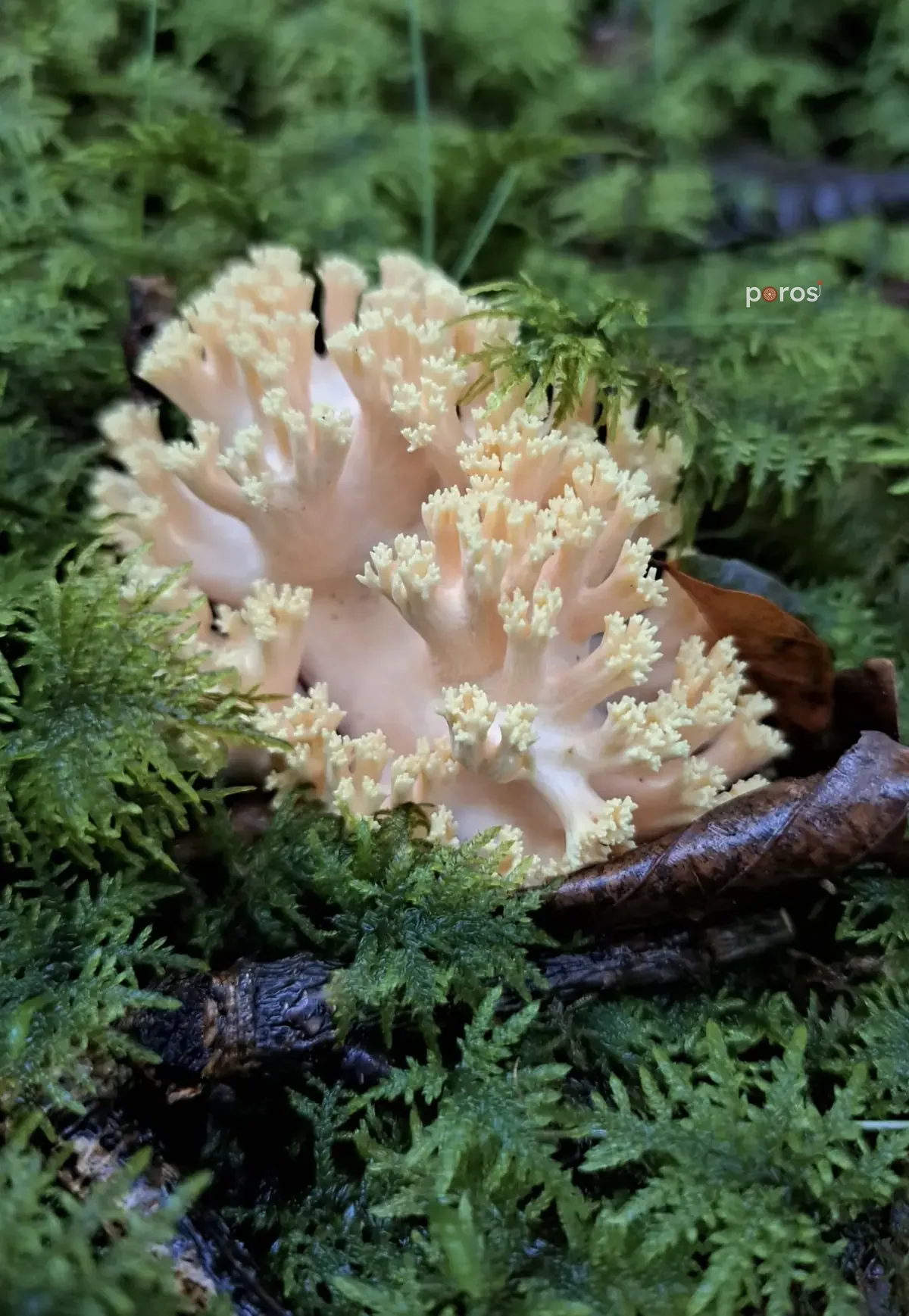
In habitat© Jose Angel Urquia Goitia · CC BY-SA 4.0
-

© Dr. Hans-Günter Wagner · CC BY-SA 2.0
-

© Jose Angel Urquia Goitia · CC BY-SA 4.0
-

Spore print© Alan Rockefeller · CC BY-SA 3.0
These are licensed records of this species; photos alone are not enough to identify a mushroom.
Is the salmon coral poisonous?
Yes, the salmon coral is poisonous and must not be eaten. It has a strong laxative effect, causing cramps, vomiting and diarrhoea. If poisoning is suspected, call 112 at once (Turkish poison centre: 114) and keep any leftover mushroom.
Is the salmon coral edible?
No, the salmon coral must not be eaten; it is poisonous. It can be picked by mistake for cauliflower mushroom (Sparassis crispa). If poisoning is suspected, call 112 at once (Turkish poison centre: 114) and keep any leftover mushroom.
How to recognise it
Appearance of salmon coral
No ring or volva Spore print: Ochre-yellow Not distinctive; taste bitterish.
Where does salmon coral grow?
Mycorrhizal with beech, oak and other broadleaf trees; grows among leaf litter, mostly on calcareous soil.
Where is salmon coral found in Turkey?
Our map data holds one GBIF record from the Gümeli area of Zonguldak and no research-grade iNaturalist observations from Turkey. Its Turkish name on iNaturalist is Sürgün Tellice. It is one of the species coral-fungus pickers in the western Black Sea beech forests should watch for.
- Zonguldak1
Which months
- Jan0
- Feb0
- Mar0
- Apr0
- May0
- Jun0
- Jul0
- Aug0
- Sep0
- Oct1
- Nov0
- Dec0
1 provinces, 1 observations (GBIF, iNaturalist); months from observation dates. Record density also reflects where observers work.
Latest salmon coral observations
 Illustrative
On "illustrative" cards the image is a photo of the species; the observation photo cannot be shown here because of its licence, but can be seen at the source.
Look-alikes
What is it mistaken for?
Salmon coral can be mistaken for the species below. Each comparison shows Salmon coral on the left, the look-alike on the right, and how to tell them apart.
Poisoning risk: Salmon coral gets picked by people who think they have found one of the edible species below. If even one feature does not match, do not eat it.

Cauliflower mushroom Sparassis crispa
How to tell The cauliflower fungus forms a cream, frilly ball of flat, curled lobes at the base of pines.
Other look-alikes (2)
 Inedible
not Salmon coral
Yellow coral fungus Ramaria flava
The yellow coral's branches are sulphur to lemon yellow throughout, with no pink tones. Even so, Ramaria species are very hard to separate in the field.
 Inedible
not Salmon coral
Upright coral Ramaria stricta
The upright coral grows on rotting wood; its branches are upright and parallel, light tan to cinnamon with paler tips, and bruise reddish-brown. The salmon coral grows on soil and has salmon-pink branches with yellow tips.
Salmon coral and its look-alikes compared
| Species | Status | Underside | Spore print | Season |
|---|---|---|---|---|
| Salmon coralRamaria formosa | Poisonous | Spores form on the branch surfaces | Ochre-yellow | Aug–Nov |
| Yellow coral fungusRamaria flava | Inedible | There are no gills or pores | Orange-yellow to ochre | Jul–Nov |
| Cauliflower mushroomSparassis crispa | Edible species | No gills or pores | White to pale cream | Aug–Nov |
| Upright coralRamaria stricta | Inedible | The whole branch surface bears spores and bruises reddish-brown | Ochre-yellow | Oct |
The table is compiled from each species page. The status column is a guide only; do not eat a wild mushroom unless an expert has seen it in person. Compare look-alikes side by side
Frequently asked questions
Is the salmon coral poisonous?
Yes, the salmon coral is poisonous and must not be eaten. It has a strong laxative effect, causing cramps, vomiting and diarrhoea. If poisoning is suspected, call 112 at once (Turkish poison centre: 114) and keep any leftover mushroom.
Is the salmon coral edible?
No, the salmon coral must not be eaten; it is poisonous. It can be picked by mistake for cauliflower mushroom (Sparassis crispa). If poisoning is suspected, call 112 at once (Turkish poison centre: 114) and keep any leftover mushroom.
How is it told from the yellow coral?
The salmon coral has salmon-pink branches with yellow tips; the yellow coral is yellow throughout. As separation is hard, coral fungi with pink tones should not be picked.
Is it found in Turkey?
GBIF holds one record from the Gümeli area of Zonguldak.
When do symptoms start?
According to sources within 1–3 hours, usually settling within a day. If in doubt, call 112.
Where does the Turkish name come from?
Sürgün Tellice is the Turkish name iNaturalist gives the species; its branching recalls young shoots.
Does cooking make it safe?
No, cooked mushrooms cause the same symptoms.
Where does it grow?
In beech and oak woods among leaf litter, mostly on calcareous soil.
Is gelin parmağı poisonous?
In Sinop, Kastamonu and Giresun, gelin parmağı ("bride's finger") is used for all coral-shaped Ramaria fungi without telling species apart (Acar, 2016 and 2018; Karakayalı et al., 2022), so a mushroom called by that name may well be the poisonous salmon coral on this page. In Kastamonu, saçak mantarı, tel mantarı, telteli, tellüce and püşküllü are linked specifically to Ramaria formosa (Acar, 2018). The salmon coral is a strong purgative causing vomiting, diarrhoea and cramps; do not pick a branched coral fungus with pink-salmon tones.
Which other mushroom is called “gelin parmağı” in Turkey?
Besides the species on this page (Ramaria formosa), the name “gelin parmağı” is also used for Yellow coral fungus (Ramaria flava, inedible). Turkish folk names shift from region to region, so tell species apart by the Latin name and the identification features, not by the local name.
Which other mushroom is called “saçak mantarı” in Turkey?
Besides the species on this page (Ramaria formosa), the name “saçak mantarı” is also used for Yellow coral fungus (Ramaria flava, inedible). Turkish folk names shift from region to region, so tell species apart by the Latin name and the identification features, not by the local name.
When is salmon coral season in Turkey?
In our calendar, salmon coral season runs Aug–Nov. Fruits from August to November in deciduous woodland.
Where does salmon coral grow?
Mycorrhizal with beech, oak and other broadleaf trees; grows among leaf litter, mostly on calcareous soil.
Where is salmon coral found in Turkey?
Our map data holds one GBIF record from the Gümeli area of Zonguldak and no research-grade iNaturalist observations from Turkey. Its Turkish name on iNaturalist is Sürgün Tellice. It is one of the species coral-fungus pickers in the western Black Sea beech forests should watch for.
What can salmon coral be confused with?
Salmon coral can be confused with yellow coral fungus (Ramaria flava, inedible), cauliflower mushroom (Sparassis crispa, edible species) and upright coral (Ramaria stricta, inedible). Look-alikes are compared on this page.
What is salmon coral called in Turkish?
In Turkish, salmon coral (Ramaria formosa) is called Sürgün tellice; other local names include gelin parmağı, saçak mantarı, tel mantarı, telteli, tellüce and püşküllü.
Related species
-
Upright coralRamaria strictaInedible
-
Yellow coral fungusRamaria flavaInedible
-
 Cinnamon bracketHapalopilus rutilansPoisonous
-
 Common earthballScleroderma citrinumPoisonous
-
 Common ink capCoprinopsis atramentariaPoisonous
-
 Devil’s boleteRubroboletus satanasPoisonous
-
 Eastern jack-o’-lanternOmphalotus illudensPoisonous
-
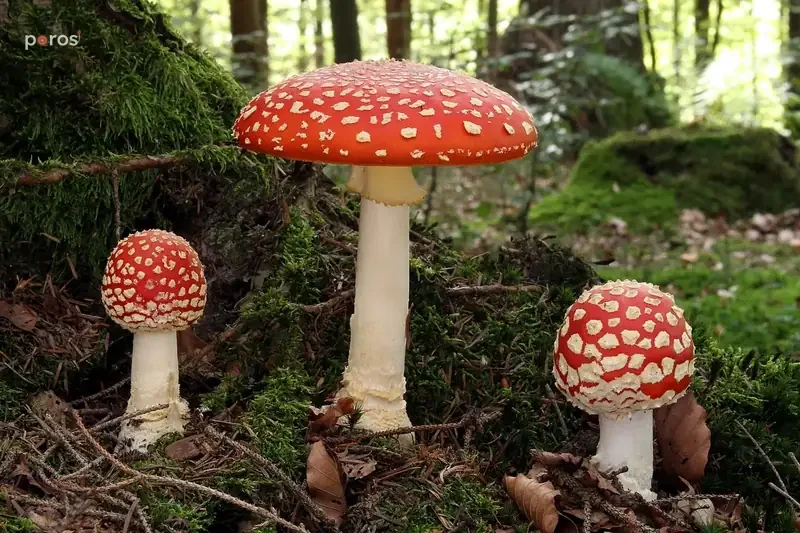 Fly agaricAmanita muscariaPoisonous
Sources
- Acar, E. (2018), International Journal of Humanities and Education: Kastamonu ve yöresi ağızlarında mantar adları (266 ad, Latince karşılıklarıyla tablo) dergipark.org.tr
- Acar, E. (2016), Uluslararası Sosyal Araştırmalar Dergisi 9(43): Sinop ve yöresi ağızlarında mantar adları sosyalarastirmalar.com
- Karakayalı, Z., Enes, K. ve Kanca, B. (2022), ODÜ Sosyal Bilimler Araştırmaları Dergisi: Giresun'da doğal olarak yetişen yenilebilir mantarların gastronomik değeri (yöresel adlar; Türkçe adlar Sesli vd. 2020 Türkiye Mantarları Listesi'nden) dergipark.org.tr
All sources (7)
- Wikipedia (EN): Ramaria formosa en.wikipedia.org
- First Nature: Ramaria formosa, Salmon Coral first-nature.com
- iNaturalist: Ramaria formosa (Türkçe ad) inaturalist.org
- GBIF: Türkiye kayıtları gbif.org
Photo credits (8)
- File:Ramaria formosa Alan Rockefeller.JPG · Alan Rockefeller · CC BY-SA 3.0
- File:Ramaria formosa goitik.jpg · Jose Angel Urquia Goitia · CC BY-SA 4.0
- File:Ramaria formosa BS6.jpg · Jerzy Opioła · CC BY-SA 4.0
- File:Ramaria formosa 101440924.jpg · linkie · CC BY 4.0
- File:Ramaria formosa 2.jpg · Jose Angel Urquia Goitia · CC BY-SA 4.0
- File:Ramaria formosa (4) (38312423292).jpg · Dr. Hans-Günter Wagner · CC BY-SA 2.0
- File:Ramaria formosa 7.jpg · Jose Angel Urquia Goitia · CC BY-SA 4.0
- File:Ramaria formosa spores 1000x.JPG · Alan Rockefeller · CC BY-SA 3.0


